Shane MacGowan, shy and complex genius behind The Pogues, dies aged 65
Musician had just returned home to be with his wife, Victoria Mary Clarke, after a lengthy stay in hospital
Shane MacGowan, the shy, complex, brilliant frontman of Anglo-Irish band The Pogues, has died aged 65.
The news of his death was confirmed by his wife, Irish journalist and author Victoria Mary Clarke, who said in a statement: “Shane will always be the light that I hold before me and the measure of my dreams and the love of my life”.
“[He] has gone to be with Jesus and Mary and his beautiful mother Therese. I am blessed beyond words to have met him and to have loved him and to have been so endlessly and unconditionally loved by him and to have had so many years of life and love and joy and fun and laughter and so many adventures.
“There’s no way to describe the loss that I am feeling and the longing for just one more of his smiles that lit up my world. Thank you... for your presence in this world, you made it so very bright and you gave so much joy to so many people with your heart and soul and your music. You will live in my heart forever. Rave on in the garden all wet with rain that you loved so much. You meant the world to me.”
The couple had just celebrated their fifth wedding anniversary.
For many years, one only had to look at MacGowan’s mouth to get an idea of his intemperate lifestyle. Writing for The Independent in 2015, journalist Richard Jinman described it as “a monument to rock’n’roll excess; a frightening cavity hollowed out by misadventure and misbehaviour”. MacGowan confirmed a longstanding rumour that some of the damage was caused by biting into a vinyl copy of The Beach Boys Greatest Hits, Volume 3: “I was out of my head,” he told The Independent. Convinced he was conducting talks with “the Americans” after World War Three, he declared, “this is what I think of American culture”, and took a bite out of the record.
Yet from MacGowan’s cavernous mouth, littered with a few eroded excuses for teeth, came some of the greatest poetry (or Poguetry) of the 20th century. Informed by his voracious love of literature, from Oscar Wilde to James Joyce (he read Ulysses when he was 10 years old), MacGowan’s songs melded punk with traditional Irish folk, producing immortal songs such as “The Old Main Drag”, “A Pair of Brown Eyes” and, of course, “Fairytale of New York”. The Pogues also recorded definitive covers of classic Irish songs, from “The Irish Rover” to “Dirty Old Town”.
Born to Irish immigrant parents in Kent on Christmas Day in 1957, MacGowan and his family moved to London after a brief spell in Tipperary, where he first became acquainted with Guinness, aged five. He received a scholarship to study at London’s prestigious Westminster School, but was kicked out just six months later after being caught selling drugs to other pupils. His first stint in rehab took place when he was 17 – he admitted himself to the notorious Bethlem hospital after suffering a valium-induced breakdown at art college.
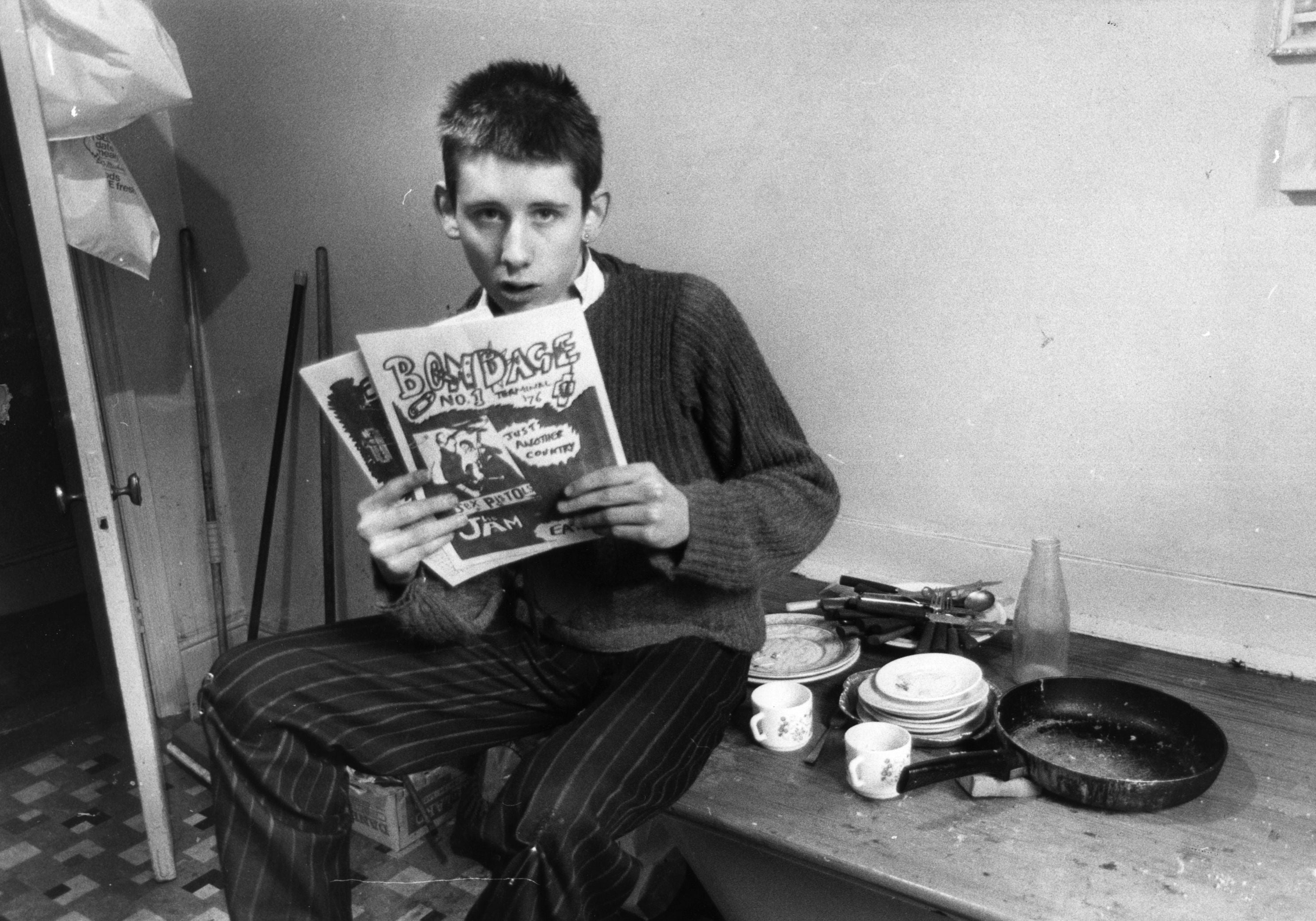
Once released from the psychiatric ward, the 19-year-old MacGowan made himself known to London’s punk scene. He published a zine, Bondage, and could frequently be spotted in the front row at various gigs, going under the alias Shane O’Hooligan. “I’ve been lucky,” he told the Guardian in 2004. “The first band I saw when I walked out of the madhouse was the Sex Pistols.”
In his biography, A Furious Devotion: The Life of Shane MacGowan, Richard Balls told of how the teenage upstart once made headlines after getting into a brawl with Mo-dettes bassist Jane Crockford. “Cannibalism at Clash gig,” squealed the NME headline in 1976 (the bloodied MacGowan’s injuries were actually caused by a broken bottle, rather than having his ear bitten off, as was widely reported at the time).

Enjoy unlimited access to 100 million ad-free songs and podcasts with Amazon Music
Sign up now for a 30-day free trial. Terms apply.
ADVERTISEMENT. If you sign up to this service we will earn commission. This revenue helps to fund journalism across The Independent.
Enjoy unlimited access to 100 million ad-free songs and podcasts with Amazon Music
Sign up now for a 30-day free trial. Terms apply.
ADVERTISEMENT. If you sign up to this service we will earn commission. This revenue helps to fund journalism across The Independent.
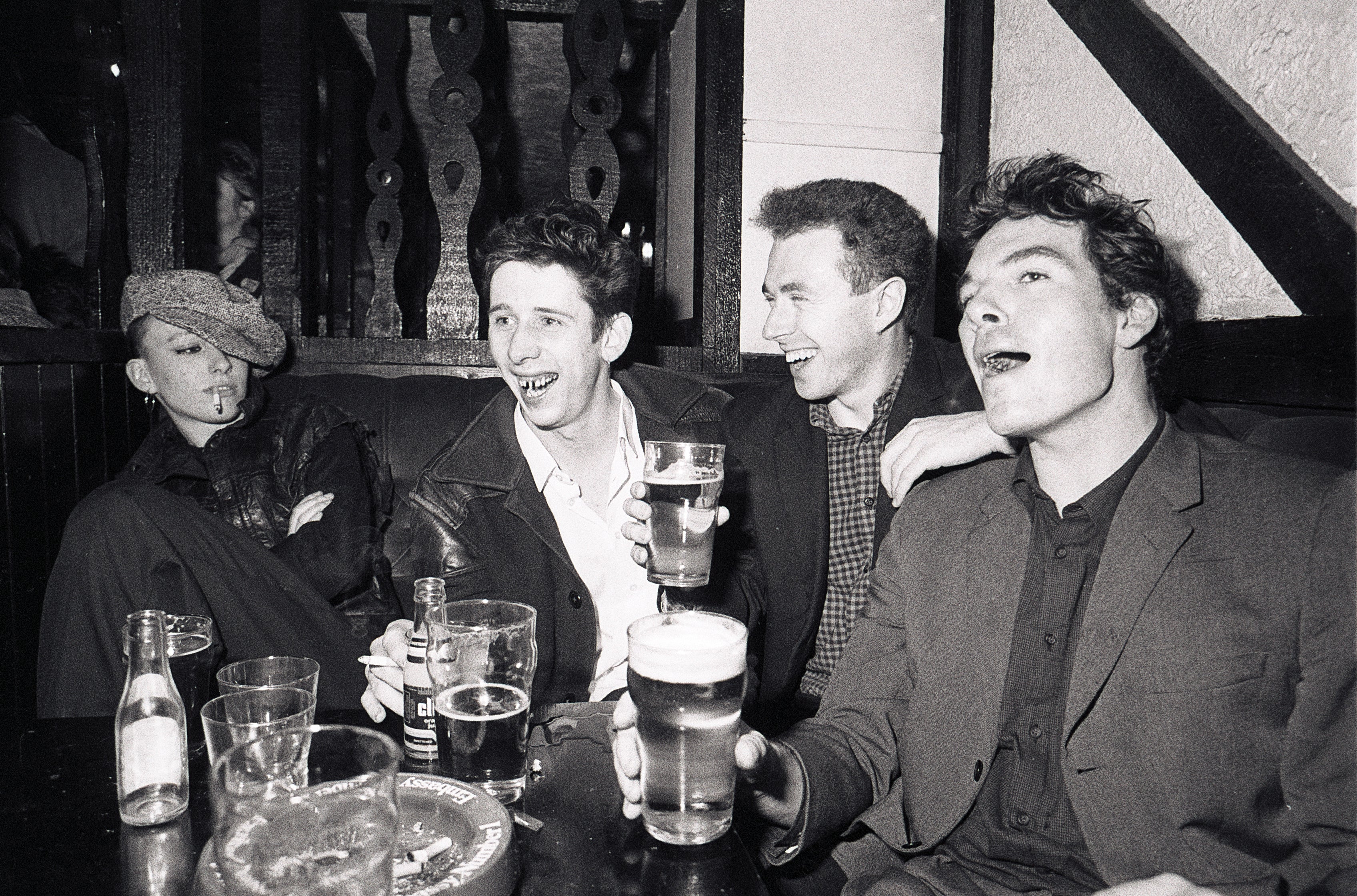
MacGowan was introduced to the future members of The Pogues through Peter “Spider” Stacy, whom he met at a Ramones gig at the Roundhouse in London in 1977. “Bonk?” he suggested, when asked how he bonded with Stacy, comparing them to “punk’s Morecambe and Wise”. At the time, MacGowan was in his own band, The Nips, formed with his girlfriend Shanne Bradley, but he also played with Stacy’s group, the Millwall Chainsaws (later renamed to The New Republicans).
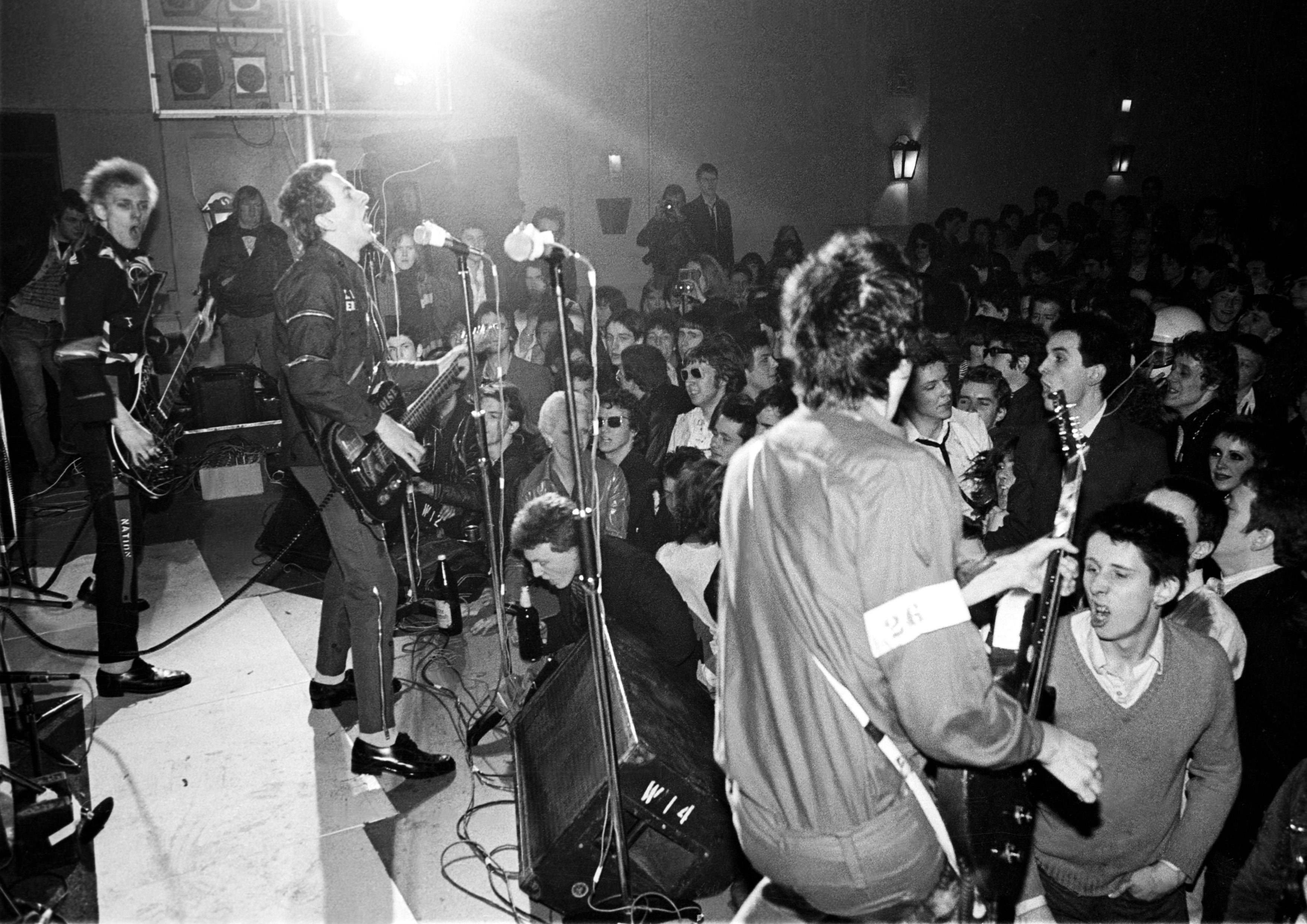
Their political-leaning songs for The Pogues – whose full name “Pogue Mahone” was an anglicisation of the Irish Gaelic phrase for “kiss my arse” – were informed by their punk backgrounds, while also making use of traditional Irish instruments such as the mandolin, banjo, and tin whistle. Just a few weeks after their first gig at The Pindar of Wakefield in October 1982, Cait O’Riordan (bass) and Andrew Ranken (drums), joined MacGowan, Stacy (tin whistle), James Fearnley (accordion) and Jem Finer (banjo) for their show at the 100 Club.
O’Riordan, who joined when she was 17 then left four years later, said she didn’t remember much about her years with the band. “I was just drunk... I was the only girl, and I had a lot of chips on my shoulder, so I tried to drink as much as them and be the roughest and toughest. And, of course, I can’t drink; I’d get drunk so fast,” she told the Irish Times magazine in 2007.
What she did remember was the moment she met MacGowan: “I was a music-mad kid, and after school, which was right out near Heathrow, I’d go into London and into this record shop. And, one day, they were just closing up and asked me if I wanted to go to the pub with them. Shane walks in, and I recognised him, because he’d been in a band called The Nips,” she recalled. “And the first time I met him I said, ‘Wow, you’re a Nip,’ and he said, ‘Am I?’ and pulled a big face at me. I can’t believe how lucky I was. But I don’t think I ever took him for granted. I always knew he was a genius, but I don’t think I realised how much of a one-off he was. I think I just assumed everyone I’d meet was going to be a genius.”

In his biography, Balls suggests that much of MacGowan’s writing delved into the experience of being Irish in London, explaining the sense of nostalgia often present in The Pogues’ music. Many fans would relay this idea to MacGowan himself over the years: “The more I listened to your songs, I think they broadened our sense of ourselves, broadened our sense of Irishness, and deepened our culture,” former Sinn Fein leader Gerry Adams told him in the 2020 documentary, Crock of Gold.
The Pogues quickly developed a reputation for their boisterous live shows, then gained wider attention when they opened for The Clash during their 1984 tour. Following the release of their debut album, Red Roses For Me, they caused a stir with an appearance on Channel 4’s influential programme The Tube, and then with the music video for their single “Waxie’s Dargle”, in which Stacy can be seen repeatedly thwacking himself over the head with a beer tray.
Assisted by musician and producer Elvis Costello, the band recorded their second album, Rum Sodomy and the Lash, in 1985. The title was a quote widely misattributed to Winston Churchill, who denied saying it, while the cover art replaced the faces in Theodore Gericault’s The Raft of the Medusa with those of the band members.
By this point, MacGowan had asserted himself as one of the greatest lyricists of his generation. Take “The Sick Bed of Cúchulainn”, a hallucinatory fantasy – referencing both Viennese opera singer Richard Tauber and Irish republican Frank Ryan – inspired by the mythical Irish warrior who was so consumed by battlelust that he couldn’t tell friend from foe. Possibly this was MacGowan’s attempt to explain his own self-destructive behaviour, fuelled by drink and drug abuse. On the tragic “The Old Main Drag”, a sustained accordion note is a horn sounding across the docks, rousing weary workers from their beds. MacGowan sings from the perspective of a dying, abused rent boy who arrived in London with dreams of stardom.
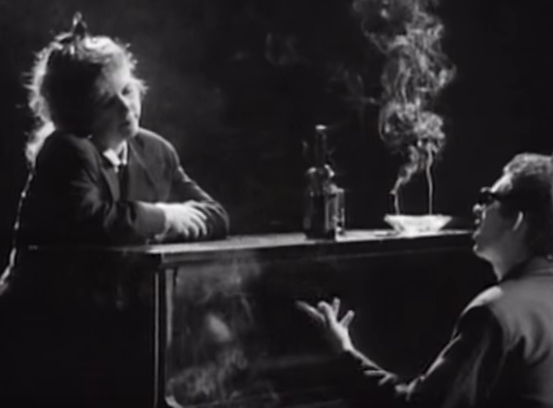
Between the collaborations with Nick Cave, Sinead O’Connor, Steve Earle and Johnny Depp, undoubtedly the most famous of MacGowan’s songs is “Fairytale of New York”, regarded by many as the greatest Christmas song of all time. It supposedly came about after Costello bet MacGowan that he couldn’t write a duet to sing with O’Riordan.
Recorded in the sweltering July heat in 1987 at RAK Studios, the track features Kirsty MacColl butting heads with MacGowan, playing a couple whose American dream is lying broken and freezing in an ice-cold puddle by the sidewalk. A young Matt Dillon starred as the cop who has to arrest MacGowan in the music video. Already a big fan of The Pogues, he was reportedly so nervous about manhandling him in the scene that MacGowan snapped: “Just kick the s**t out of me and throw me in the cell and then we can be warm!”
MacGowan suffered from periods of ill health for many years, including bouts of pneumonia that sent him in and out of hospital. Indeed, many fans had feared for the shambolic artist ever since he almost drank himself to death in his twenties; MacGowan himself once crowed that, aged 21, he was given six weeks to live. Yet he felt journalists misinterpreted his apparent death wish: “Of course I like life,” he told The Guardian in one of his last interviews, in 2022. “Shane never seems to want not to live,” his wife Clarke added. “That’s what’s weird.”
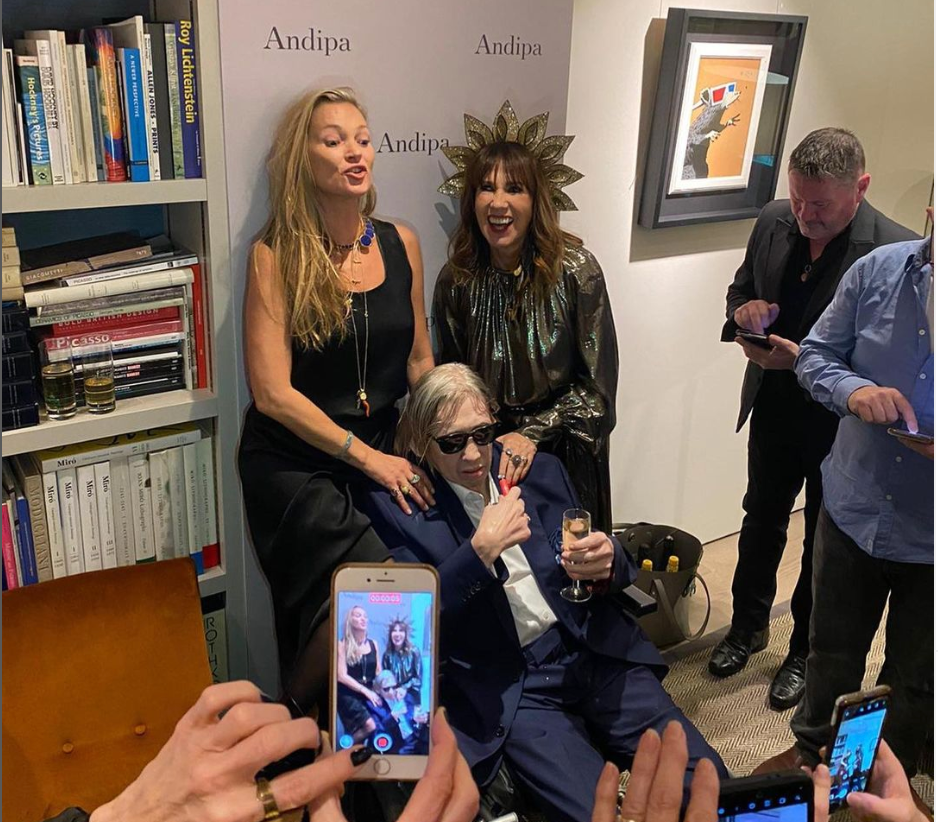
It was Clarke who launched a fundraising campaign so MacGowan could be fitted with a new set of teeth in 2015, in an operation described as the “Everest of dentistry”. The nine-hour procedure, which was filmed as part of a documentary, Shane MacGowan: A Wreck Reborn, left him with “a gleaming set of 28 gnashers on a titanium frame”. He also used a wheelchair after breaking his pelvis in a freak accident while leaving a studio in 2016.
MacGowan married Clarke in an intimate ceremony at Copenhagen City Hall in 2018, surrounded by close family and friends including MacGowan’s longtime pal Johnny Depp, with whom he collaborated on a number of occasions. Depp, who also played guitar at the wedding, once claimed that MacGowan’s paintings and drawings deserved greater acknowledgement. A lifetime’s worth of his artwork was collected and curated in a folio book, The Eternal Buzz and the Crock of Gold, in 2022. Depp also produced the documentary Crock of Gold – A Few Rounds with Shane MacGowan, in 2020.
MacGowan is survived by his wife, Victoria.
Join our commenting forum
Join thought-provoking conversations, follow other Independent readers and see their replies
Comments
Bookmark popover
Removed from bookmarks