Madagascar: Is there a coup, and why has the president fled the country?
Andry Rajoelina alleges attempts to assassinate him and carry out a coup
Madagascar’s president said he had escaped with his life to a “safe place” following a military rebellion.
In a speech broadcast on national TV from an undisclosed location, Andry Rajoelina, 51, claimed there was an attempt to assassinate him by a band of military personnel and politicians and effect a coup following weeks of protests seeking his resignation.
The anti-government protests had reached a tipping point after an elite military unit, Capsat, joined the demonstrators and publicly demanded Mr Rajoelina’s resignation.
It was Capsat that led the apparent coup attempt. Capsat played a key role in bringing Mr Rajoelina to power as a transitional leader following a military-backed coup in 2009. The unit claimed it had now taken charge of all armed forces in the country.
Parliamentary opposition leader Siteny Randrianasoloniaiko told Reuters that Mr Rajoelina had departed Madagascar on Sunday. The president’s office declined to comment on the unfolding situation in the Indian Ocean island nation.
“We called the staff of the presidency, and they confirmed that he left the country,” Mr Randrianasoloniaiko said, adding that Mr Rajoelina’s whereabouts remained unknown.
The president’s first address after fleeing the country was delayed several times on Monday as the military threatened to seize the national TV headquarters.
“Since 25 September, there have been attempts on my life and coup attempts. A group of military personnel and politicians planned to assassinate me,” the leader said. "I was forced to find a safe place to protect my life.”
“There is only one way to resolve these issues,” Mr Rajoelina added, “that is to respect the constitution in force in the country.”
Appearing to sound defiant, he said he would not "allow Madagascar to be destroyed".
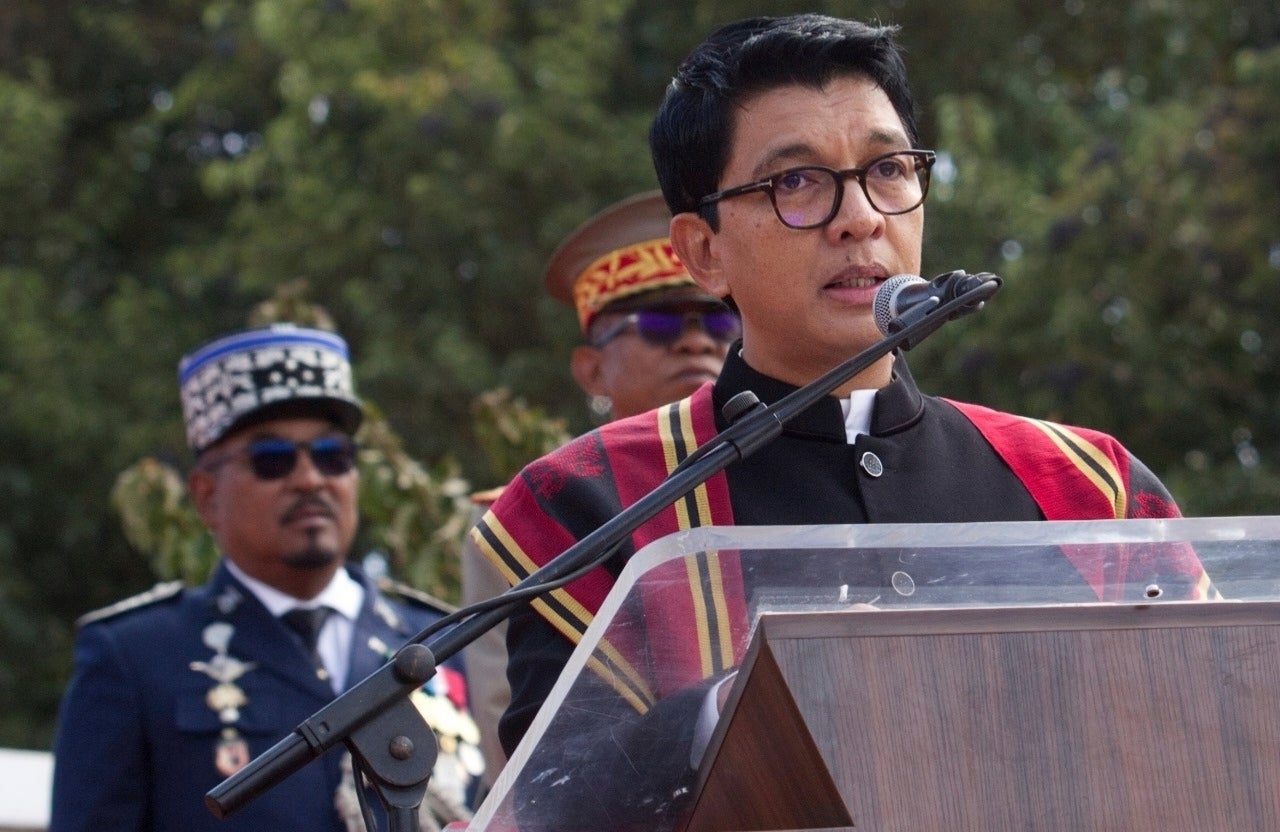
President flees the country
A military source told Reuters that Mr Rajoelina flew out of the country on a French military plane on Sunday. French radio station RFI claimed he had struck a deal with French president Emmanuel Macron.
The source said that a French army Casa plane landed at Madagascar’s Sainte Marie airport on Sunday.
“Five minutes later, a helicopter arrived and transferred its passenger into the Casa,” the source said, adding that Mr Rajoelina was the passenger.
Responding to the reports, the French foreign ministry referred the Associated Press to a statement issued by the French embassy. “No French military intervention is underway or planned in Madagascar, whose sovereignty and territorial integrity France fully respects,” it said.
Madagascar is a former colony of France and Mr Rajoelina reportedly has French citizenship, which has been a source of discontent in his country.
Elite unit claims control of the military
Mr Rajoelina didn’t identify who was behind the attempted coup, but the Capsat military unit appeared to be in a position of authority and on Sunday appointed a general as the new head of Madagascar’s armed forces. The appointment was accepted by the minister of defence.
A commander of Capsat, Colonel Michael Randrianirina, said his troops had exchanged gunfire with security forces who were attempting to quell weekend protests and one of his soldiers was killed.
But there was no major fighting on the streets, and soldiers riding on armoured vehicles and waving Madagascan flags were cheered by people in Antananarivo.
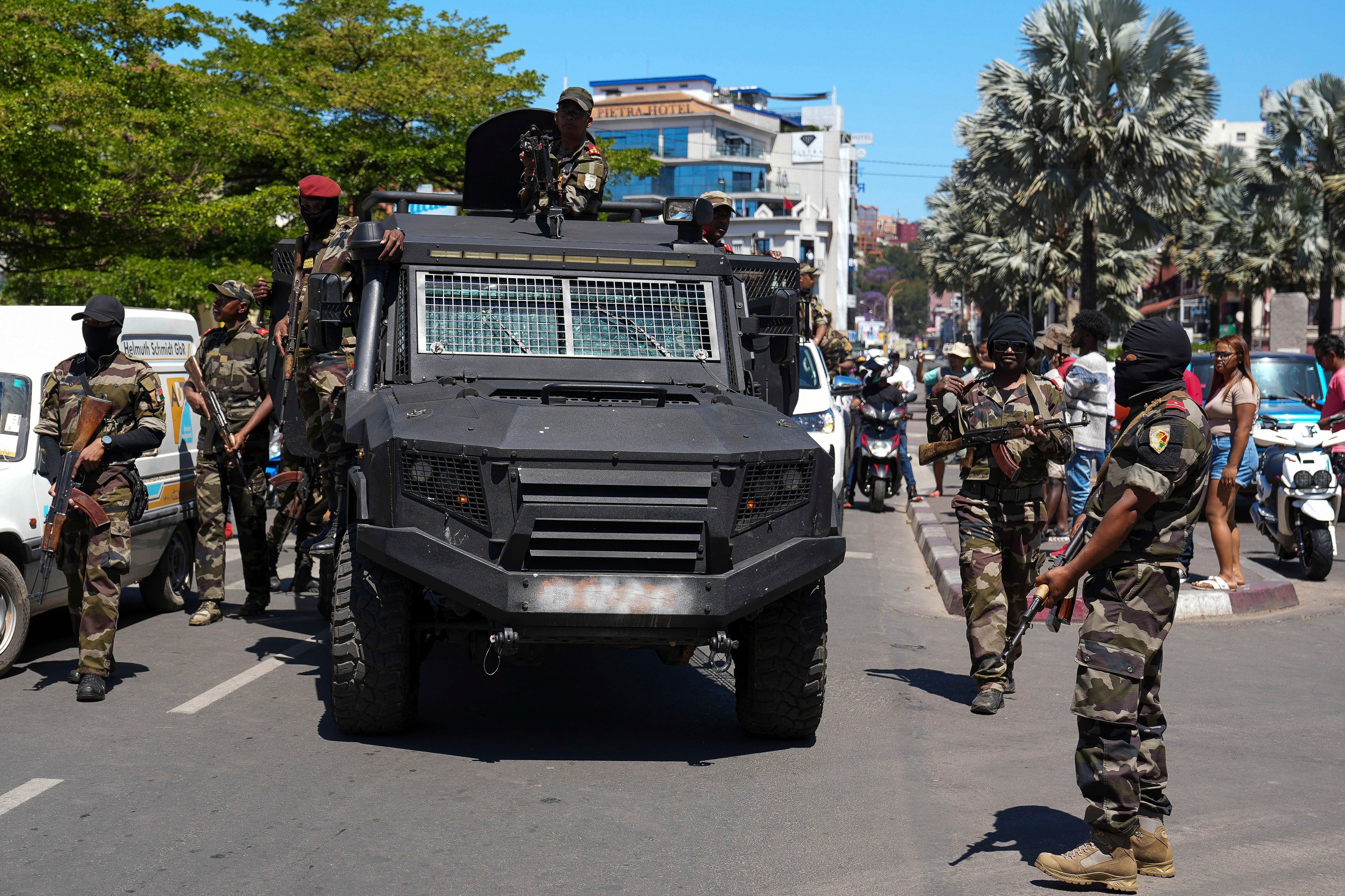
Mr Randrianirina said the army had “responded to the people’s calls” but denied that a coup was in progress.
Speaking at the nation’s military headquarters on Sunday, he told reporters that it was up to the Madagascan people to decide whether Mr Rajoelina should leave power and a new election be held.
The US embassy in Madagascar advised US citizens to shelter in place because of a “highly volatile and unpredictable” situation.
The African Union urged all parties, “both civilian and military, to exercise calm and restraint”.
Weeks of anti-government protests
Madagascar has been shaken by three weeks of the most significant unrest in years. The protests, which erupted on 25 September over water and power outages, were driven by a group calling itself “Gen Z Madagascar”.
The UN said the demonstrations left at least 22 people dead and several dozen injured. The government disputed these figures.
The protests quickly snowballed into an expression of broader dissatisfaction with the government and the leadership of Mr Rajoelina.
Protesters have raised many issues, including poverty and the cost of living, access to tertiary education and alleged corruption and embezzlement of public funds by state officials as well as their families and associates.
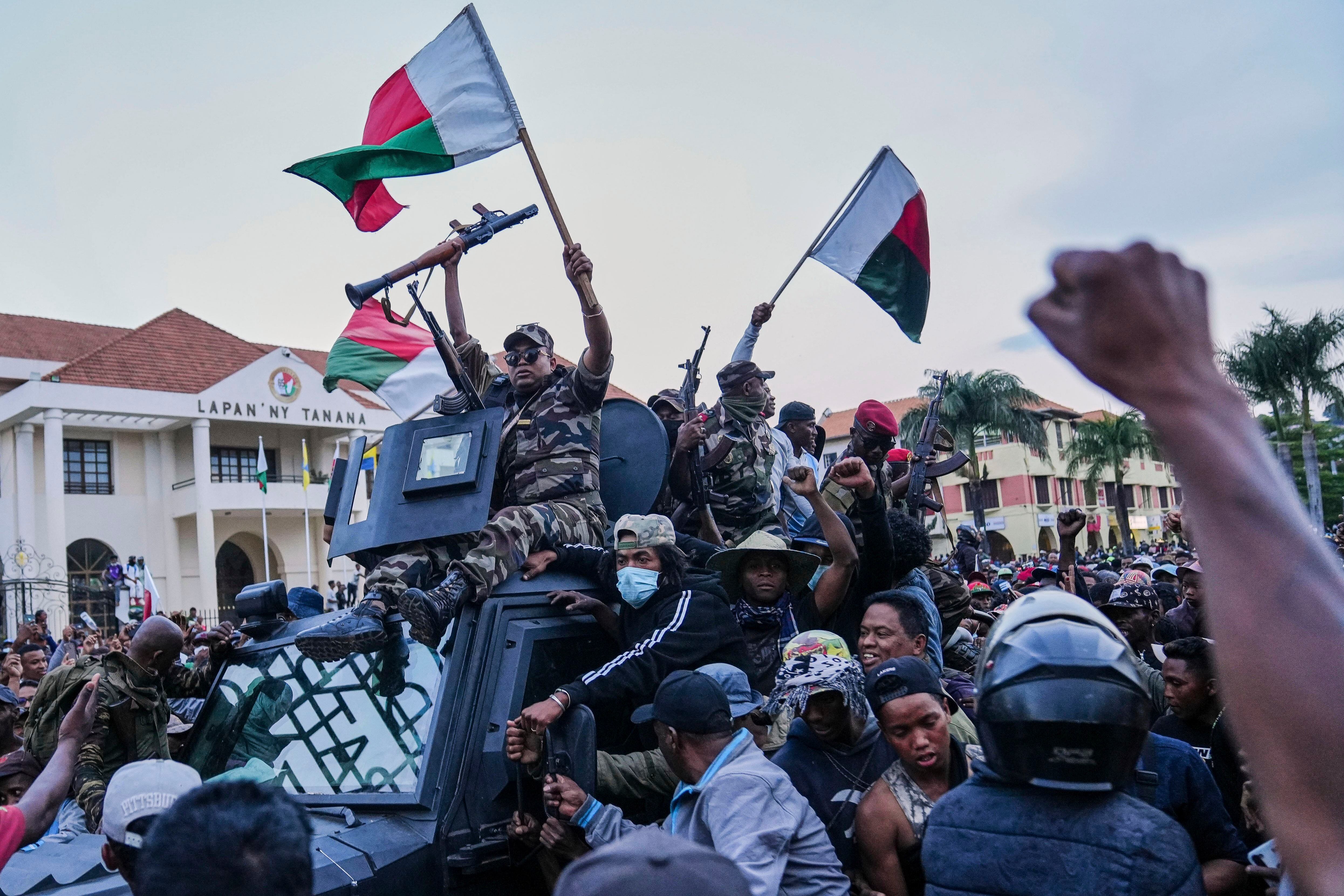
Civil society groups and trade unions have also joined the protests, which resulted in night-time curfews being enforced in Antananarivo and other major cities.
The Gen Z protesters who inspired the protests mobilised over the internet. They said they were inspired by other protests that toppled governments in Nepal and Sri Lanka.
A history of political crises
A number of Madagascar’s leaders have previously been removed in coups and the country has a history of political crises since it gained independence from France in 1960.
Mr Rajoelina first came to prominence as the leader of a transitional government following a 2009 coup that forced then president, Marc Ravalomanana, to flee the country.
Mr Rajoelina was elected president in 2018, and was re-elected in 2023 in a vote boycotted by opposition parties.
Additional reporting by Reuters.
Join our commenting forum
Join thought-provoking conversations, follow other Independent readers and see their replies
Comments
Bookmark popover
Removed from bookmarks