JPMorgan’s Jamie Dimon warns national economy may soon ‘deteriorate’
Recent economic data shows both job growth and inflation slowed in May
JPMorgan Chase CEO Jamie Dimon has warned the U.S. economy may soon “deteriorate.”
“I think there’s a chance real numbers will deteriorate soon,” Dimon said at a Morgan Stanley conference on Tuesday, according to CNBC.
He explained that the impacts of the pandemic-era government spending and monetary policy that helped support the economy have faded, making the country vulnerable to a downturn in the coming months.
While employment and consumer spending are up, Dimon noted a weakening confidence in consumers and business leaders in the wake of the Trump administration’s tariff policies.
Dimon appeared to be dismissive of the data, saying “neither consumers nor businesses ever pick the inflection points,” and the economy’s “soft landing” was likely to look weaker going forward.
“Employment will come down a little bit. Inflation will go up a little bit,” he said.
“Hopefully, it's just a little bit," Dimon said.

 Aldi is cutting prices on hundreds of items to help consumers deal with ‘sticker shock’ in the rest of the world
 Inflation holds steady as data shows how prices are faring after Trump’s ‘Liberation Day’ tariffs
- Trump says Trade War ‘deal with China is done’ and he and Xi agree on minerals: ‘FULL MAGNETS’
Dimon, who is known for his cautious economic outlooks, also pointed out that reduced immigration could weaken the economy through its impact on the labor market.
Recent economic data shows both job growth and inflation slowed in May.
Consumer prices rose 0.1 percent on a monthly basis in May, while annual inflation stood at 2.4 percent, according to the Department of Labor’s consumer price index.
Last month, year-long inflation stood at 2.3 percent.
The report captures the period after Trump unveiled his global reciprocal tariffs in April and provides some insight as to whether businesses are bearing the brunt of the duties themselves or passing them on to customers.
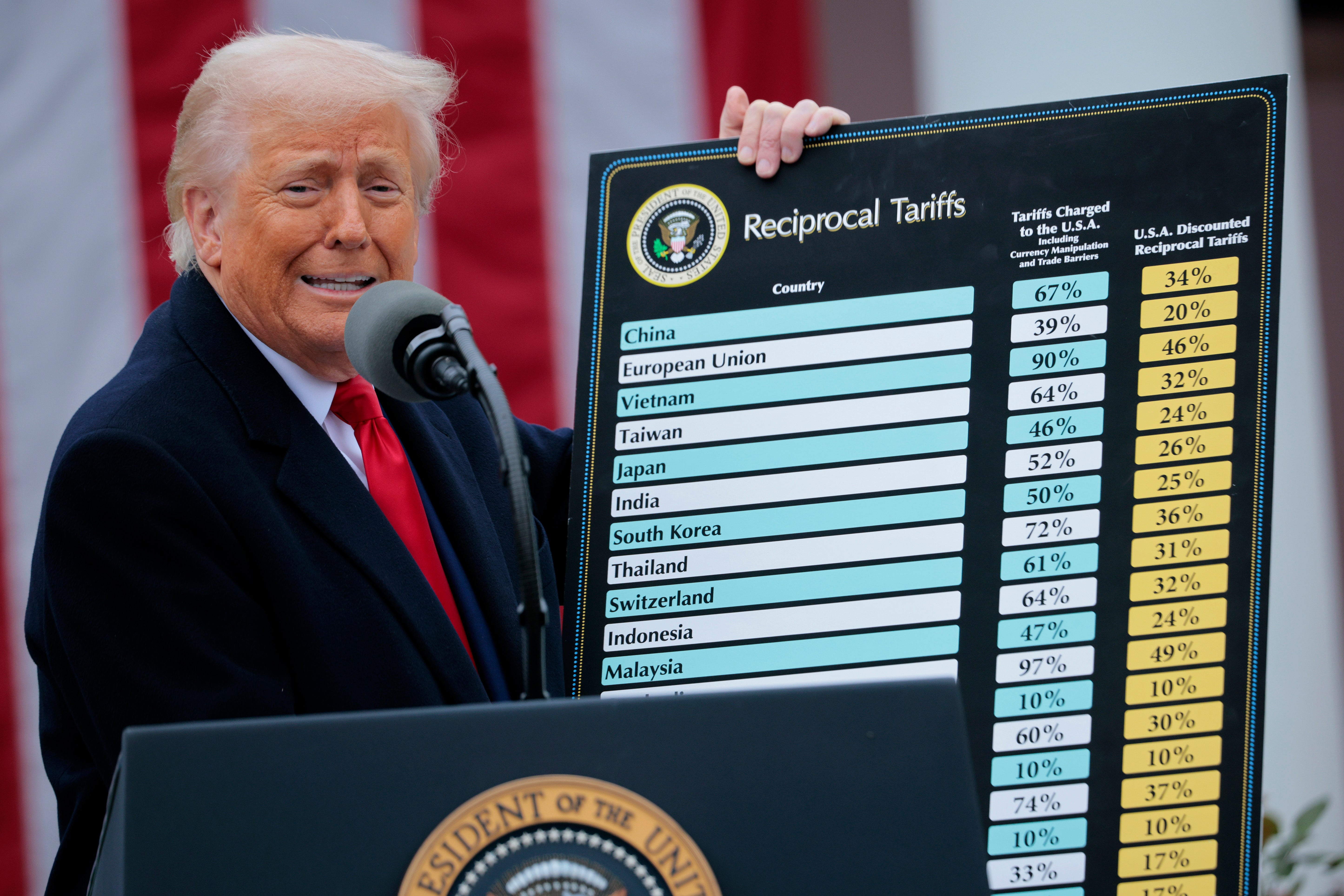
Since Trump announced his global reciprocal tariffs and the stock market was spooked, many of the duties were paused. But 10 percent tariffs for most countries remain.
Inflation has been slow to respond to the tariffs as most retailers are selling merchandise accumulated before the import duties took effect.
While analysts predicted a bigger increase, some still warned that the future is uncertain because tariffs keep changing.
Join our commenting forum
Join thought-provoking conversations, follow other Independent readers and see their replies
Comments
Bookmark popover
Removed from bookmarks