Flesh-eating screwworm that has threatened US cattle has now been found in a person
The USDA estimates that the screwworm fly parasite could cause at least $1.8 billion in economic damages to Texas
A flesh-eating New World screwworm fly parasite has been detected in a human for the first time in the U.S., according to the Department of Health and Human Services.
The individual was diagnosed after returning to the U.S. from a trip to El Salvador. An earlier report suggested the individual had traveled to Guatemala, but that information has since been updated.
Workers at the U.S. Centers for Disease Control and Prevention and the Maryland Department of Health confirmed the parasite on August 4.
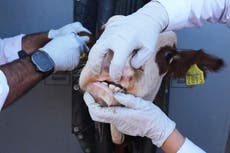
"This is the first human case of travel-associated New World screwworm myiasis (parasitic infestation of fly larvae) from an outbreak-affected country identified in the United States," HHS spokesperson Emily Hilliard said in a statement.
Hilliard said that the "risk to public health in the United States from this introduction is very low."
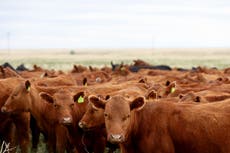
The parasite is the larvae of the New World screwworm, which is a flesh-eating bacterium that can cause serious health problems for cattle. The screwworm has not affected any cattle in the U.S. this year, but has been feeding on cattle in Central America and Mexico.

An expansive and expensive push to eliminate the parasite occurred in the 1980s and 1990s in Central America, but it has reemerged over the last two years, according to NBC News.
On August 15, US Secretary of Agriculture Brooke Rollins traveled to Texas to announce that a five-part plan was being put in place to prevent future screwworm fly infestations.
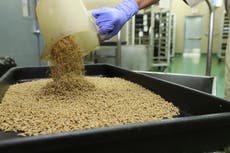
The plan involves breeding billions of sterile screwworm flies and dumping them into affected areas in the hopes that it will drive down the numbers of the next generation of screwworm flies.
The sterilized male flies mate with females, but the female's eggs won't hatch. Authorities hope to eradicate the flies. The same method was successfully used in the 1960s to reduce the screwworm fly population in the U.S.
At the time of its announcement, the sterilization program was intended to begin in "two or three years," but the growing screwworm fly population may convince U.S. officials to fast-track the plan.
Texas Governor Greg Abbott warned that the state's $867 billion agriculture industry — which employs 2 million people — is "at risk because of the new world screwworm."
Last year, the USDA estimated that an outbreak of the parasite in Texas could cost the state at least $1.8 billion.
Rollins announced in May that the USDA would suspend its imports of cattle, horses, and bison from Mexico after the parasites were detected in animals from the Mexican states of Oaxaca and Veracruz.
Join our commenting forum
Join thought-provoking conversations, follow other Independent readers and see their replies
Comments
Bookmark popover
Removed from bookmarks