JPMorgan concedes it closed Trump’s accounts after Jan. 6 attack
JPMorgan Chase now confirms it closed Trump’s accounts after mob of his supporters stormed halls of Congress
Banking giant JPMorgan Chase acknowledged for the first time that it closed the accounts of President Donald Trump and several of his businesses in the political and legal aftermath of the January 6, 2021 attacks on the U.S. Capitol.
The disclosure marks the latest development in a legal saga over Trump’s alleged “debanking” after the president sued America’s largest bank for $5 billion alleging his accounts were closed for political reasons.
The acknowledgment came in a court filing submitted this week in Trump's lawsuit against the bank and its CEO Jamie Dimon.
“In February 2021, JPMorgan informed Plaintiffs that certain accounts maintained with JPMorgan’s CB and PB would be closed,” JPMorgan's former chief administrative officer Dan Wilkening wrote in the court filing. The “PB” and “CB” stands for JPMorgan's private bank and commercial bank.
In a letter to Trump submitted to the court Friday, dated February 19, 2021, the bank said it was recommending that he “find a more suitable institution with which to conduct business.”
“With that in mind, this letter is to respectfully inform you that we will need to end our current relationship,” the letter to Trump said.
Until now, JPMorgan has never admitted it closed the president's accounts, and would only speak hypothetically about when the bank closes accounts and its reasons for doing so.
In a previous statement, the bank said it “does not close accounts for political or religious reasons” but does so when accounts “create legal or regulatory risk for the company.”
Trump initially sued JPMorgan in state court in Florida, where Trump has his primary residence at his Mar-a-Lago compound in Palm Beach. JPMorgan Chase is seeking to move the case to federal court in New York, which is where the bank accounts were located and where Trump kept much of his business operations until recently.
Trump accuses the bank of trade libel and accuses Dimon himself of violating Florida’s Unfair and Deceptive Trade Practices Act.
In the original lawsuit, Trump alleges he tried to raise the issue personally with Dimon after the bank started to close his accounts, and that Dimon assured Trump he would figure out what was happening. The lawsuit alleges Dimon failed to follow up with Trump.
Further, Trump’s lawyers allege that JPMorgan placed the president and his companies on a reputational “blacklist” that both JPMorgan and other banks use to keep clients from opening accounts with them in the future.
JPMorgan previously said it believes the suit has no merit.
“Debanking” occurs when a bank closes the accounts of a customer or refuses to do business with a customer in the form of loans or other services. Once a relatively obscure issue in finance, debanking has become a politically charged issue in recent years, with right-wing figures arguing that banks have discriminated against them and their affiliated interests.
“In a devastating concession that proves President Trump’s entire claim, JPMorgan Chase admitted to unlawfully and intentionally de-banking President Trump, his family, and his businesses, causing overwhelming financial harm,” the president’s lawyers said in a statement.
Trump is “standing up for all those wrongly debanked by JPMorgan Chase and its cohorts, and will see this case to a just and proper conclusion,” they added.
Debanking first became a national issue when right-wing figures accused Barack Obama’s administration of pressuring banks to stop extending services to gun stores and payday lenders under “Operation Choke Point.”
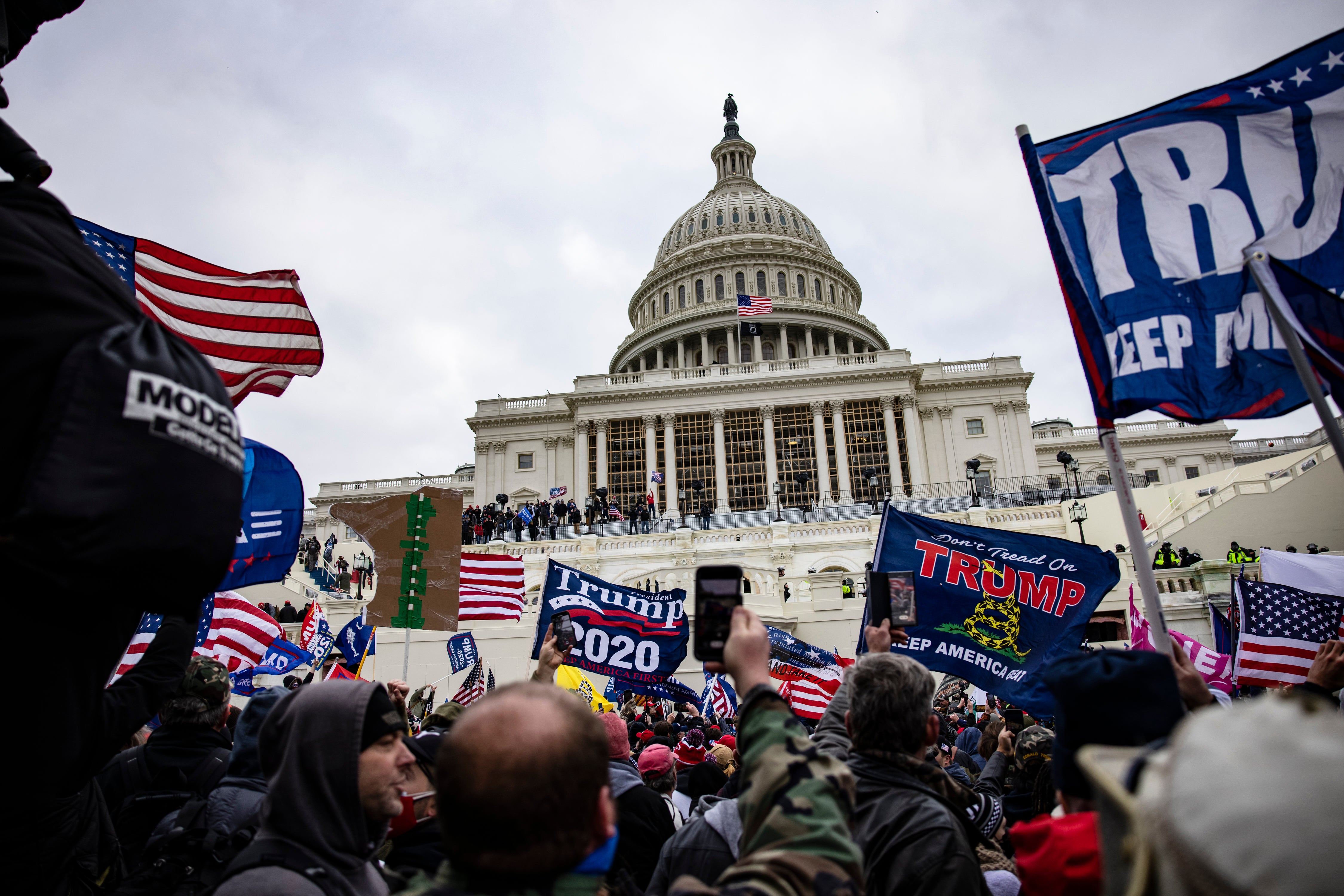
Trump and his allies have alleged that banks cut them off from their accounts under the umbrella term of “reputational risk” after January 6, when a mob of his supports stormed the halls of Congress in a failured effort to derail the results of the 2020 presidential election, which Trump lost.
After Trump returned to the White House last year, the president’s banking regulators have moved to stop any banks from using “reputational risk” as a reason for denying service to customers.
This is not the first lawsuit Trump has filed against a big bank alleging that he was debanked.
The Trump Organization sued credit card giant Capital One in March 2025 for similar reasons and allegations. That case is ongoing.
Bookmark popover
Removed from bookmarks