Residents forced to abandon Sicilian homes teetering on crumbling cliff edge
1,500 residents were evacuated from their homes after the landslides
A Sicilian couple are fighting to save their livelihood after a massive landslide in Niscemi destroyed their home last week, forcing them to salvage what they could from their collapsing pizzeria.
Benedetta Ragusa and Toni Rinnone raced against time, retrieving appliances and kitchenware as the ground continued to shift beneath them.
Firefighters stood by, assessing cracks in the walls and monitoring earth movements before stepping in to help, pushing a refrigerator up the street to safety.
"Unfortunately our house was first to collapse in Niscemi, so we didn't even have the chance to recover our mementos from inside that little home," Mr Rinnone said.
Despite the devastating loss of their home, the couple had held onto hope for their business.
"We still had faith in the shop, in the premises we had, so we wouldn't completely fall apart. Instead, it seems that that, too, is collapsing, bit by bit. It's a bit tough to deal with," he added.
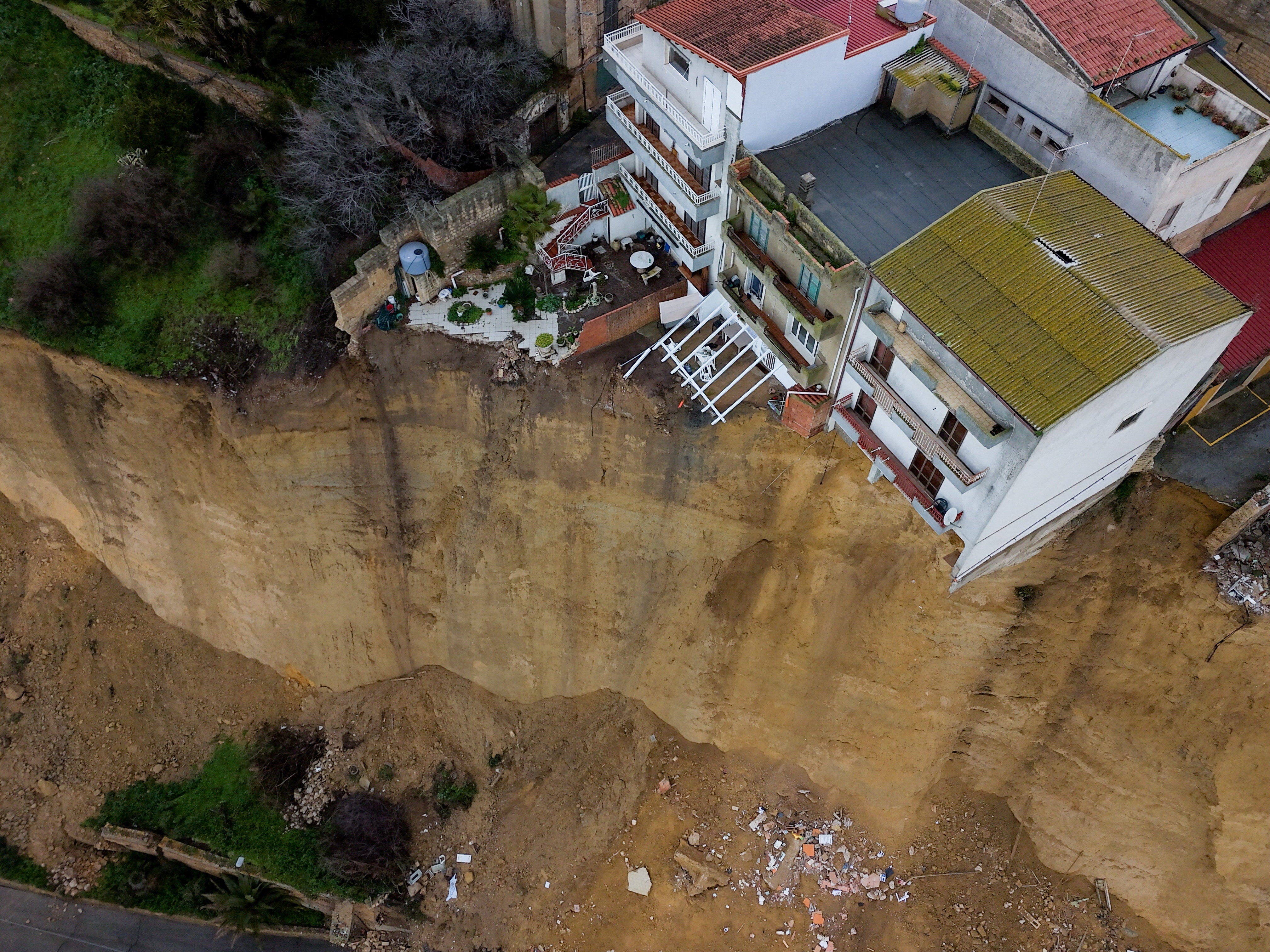
Niscemi, a town of around 25,000 residents, is situated on clay and sandstone cliffs, dominating a plain in southern Sicily that leads to the Mediterranean Sea some 30 kilometres away.
The area has a long history of landslides, with records dating back to the 1790s, and the last major rupture occurred in 1997.
Despite warnings of instability, nothing was done to shore up the town's fragile foundations, and on 25 January ,following a ferocious storm that drenched the land, a four-kilometre-long (2.5-mile) stretch of hillside collapsed.
Buildings slipped into the void, others were lacerated by cracks spreading across their walls. Authorities hastily created a "red zone" down the eastern edge of the town, 150 metres (490 ft) deep, and ordered the evacuation of some 1,500 people.
Those who want to retrieve anything from inside the cordoned-off area have to be accompanied by emergency crews and must move quickly. No time for reminiscing.
"It feels like we're at war," said Ragusa as she rushed to gather glasses, plates and pans, piling them into a van.

Aerial views show a dramatic beige scar down one side of Niscemi, with mounds of earth lying on the plain below, the surrounding greenfields crisscrossed with cracks and crevices, suggesting the whole landscape was being torn apart.
Buildings and severed roads hang over the edge of the land that remains intact. Below it, the broken stubs of drains and water pipes poke out from newly exposed earth.
"Unfortunately, the situation is truly critical. We have a city, its historic centre, seriously at risk," said Gianfranco Di Pietro, a geospatial data engineer.
"It is still too early to know what our future will look like. But we hope to secure this historic part of the city as soon as possible, to rebuild, to provide housing again to those who have lost it, and to stabilise the entire slope."
Locals could be forgiven for being sceptical.
After the 1997 landslide, experts said parts of the town had been built on unstable ground and urgent work was needed, including installing proper drainage to stop the ground from saturating during storms.
But plans for such work stalled amid a mix of legal disputes and local bureaucracy that regularly throttle public works projects across Italy.
Niscemi Mayor Massimiliano Conti told reporters his town had only in December received funding needed to pay for safety work tied to the 1997 disaster. But that plan had been washed away, like the cliffs it was meant to safeguard.

The public prosecutor's office in nearby Gela has opened an investigation into the negligent disaster.
"It is right that those responsible for this should pay," Conti said.
With much of her pizzeria equipment secured, Benedetta Ragusa said she now faced a period of grief over her lost home and the dreams destroyed along with it.
Looking at drone footage, she can only make out her old bathroom wall with a mirror still attached. She was relieved she hadn't got back earlier and tried to save her belongings.
"Losing everything is terrible, losing your first home is terrible, but we were saved, because honestly, I don't know what would have happened if we had been inside," she said.
Astonishingly, lives were not lost in the disaster.
While Sicilians have a reputation in Italy for riding roughshod over regulations, locals rejected accusations on social media last week that they had ignored building rules while developing Niscemi.
"We risk losing everything, and people still find the time to talk badly about us, and that's not right," said French teacher Daniela Ferraro, whose home lay within the red zone.
Recent renovation work was carried out with the required permits and the property had been earthquake-proofed, she said, refusing to face the prospect of moving away from Niscemi.
"We will go to work like every day, we will keep rolling up our sleeves because we don't give up. Our land must be saved."
Join our commenting forum
Join thought-provoking conversations, follow other Independent readers and see their replies
Comments
Bookmark popover
Removed from bookmarks