Poland ready to lay mines for ‘East Shield’ amid Russian threat
Poland would be equipped with millions of mines under the East Shield programme
Poland is withdrawing from the Ottawa Convention, enabling it to deploy anti-personnel mines along its eastern border within 48 hours if a threat emerges, Prime Minister Donald Tusk announced on Thursday.
This move, part of Poland's "East Shield" project to secure its borders with Belarus and Kaliningrad, aligns with most of Russia's European neighbours (excluding Norway) also exiting the mine-banning treaty.
"We are in the process of finalising this mine project, which is crucial for our security, for the security of our territory and border," Mr Tusk told a press conference.
Deputy Defence Minister Pawel Zalewski told Reuters in December that Warsaw would resume production of anti-personnel mines for the first time since the Cold War, for deployment on its eastern border and potential export to Ukraine.
"We are interested in large quantities as soon as possible," Mr Zalewski stated, adding that the mines would form part of the 'East Shield' defensive initiative.
When questioned about the possibility of production commencing next year, following the completion of the withdrawal process from the Ottawa Convention, Mr Zalewski responded: "I would very much like that... We have such needs."
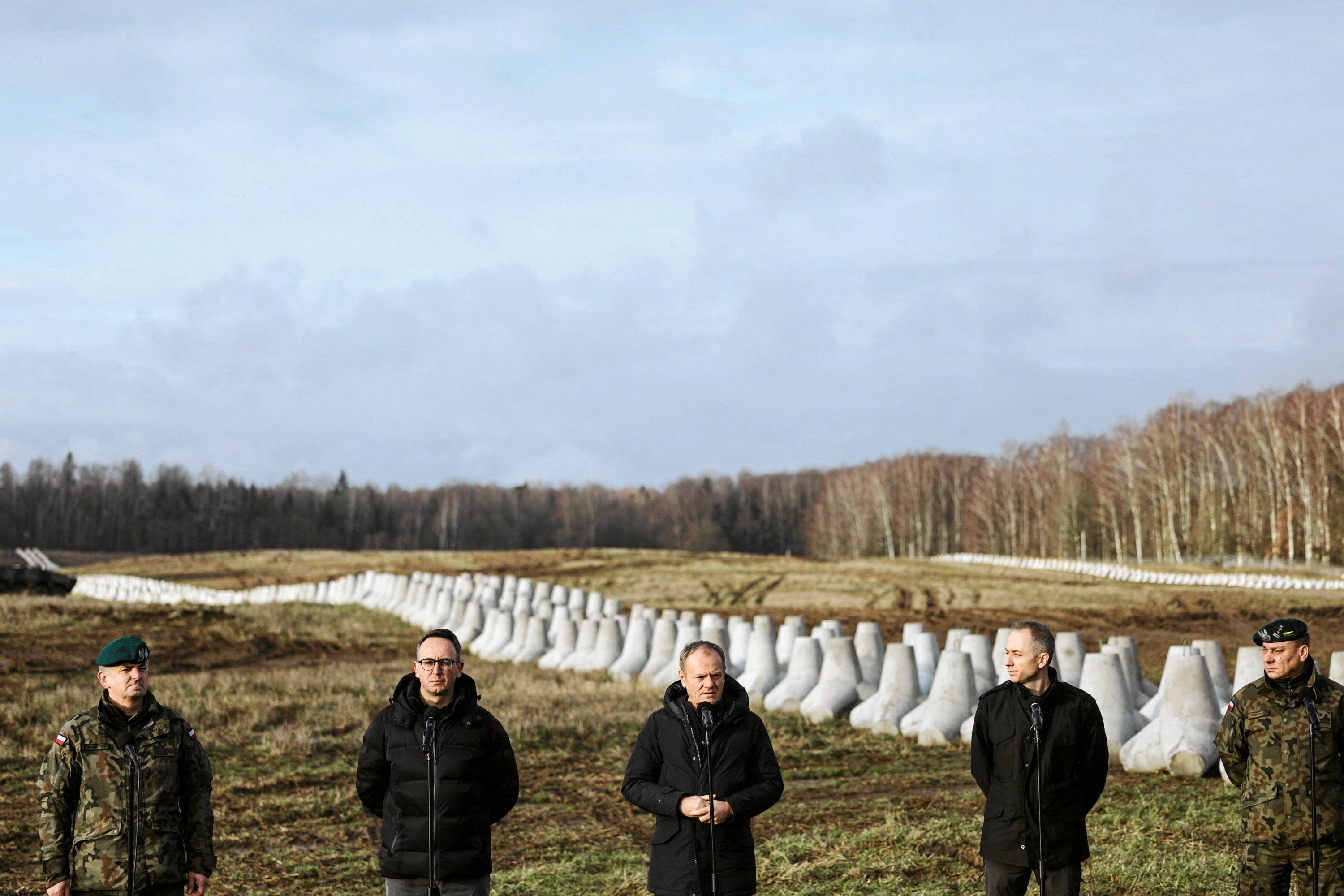
Poland began its Ottawa Convention withdrawal in August, with official exit set for 20 February 2026, after a six-month period.
According to the Landmine and Cluster Munitions Monitor, Poland told the UN in 1995 that it had abandoned production of anti-personnel mines in the mid-1980s and the export of such weapons had ceased.
Belma, the state‑owned company that already supplies the Polish army with several other types of mines, said in December 2025 that Poland would be equipped with millions of mines under the East Shield programme to secure its 800‑km (500-mile) eastern border.
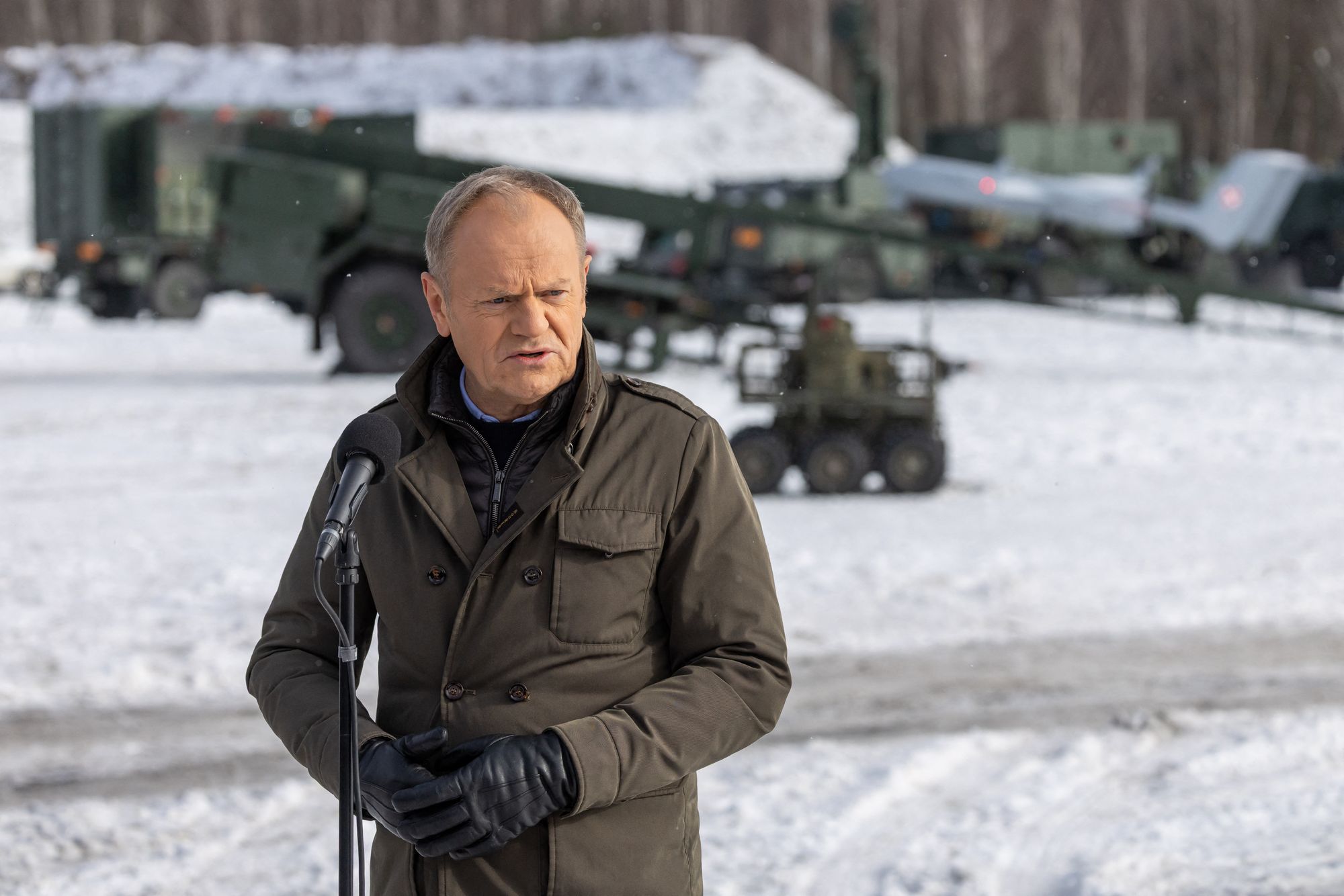
"We are preparing for Polish demand ... to amount to 5-6 million mines of all types," Belma's CEO Jaroslaw Zakrzewski told Reuters.
Belma's Zakrzewski said exports to Ukraine were possible and that NATO countries bordering Russia, including the Baltic states, had already signalled interest in buying anti‑personnel mines.
He said Poland's own needs would take priority, but any excess production could be supplied to allies in the region.
Join our commenting forum
Join thought-provoking conversations, follow other Independent readers and see their replies
Comments
Bookmark popover
Removed from bookmarks