What caused the Turkish C-130 plane crash? Experts weigh in on incident that killed 20 Nato soldiers
Former pilots say the speed at which the aircraft appears to have broken up mid-air suggests a ‘catastrophic event’ occurred
A Turkish military plane crashed in Georgia on Tuesday, killing all 20 people on board in the Nato member’s deadliest military incident for half a decade.
The C-130 cargo aircraft had only just departed Azerbaijan for Turkey before it came plummeting down. Footage posted on social media showed the plane breaking apart in midair, sending its parts hurtling towards the ground.
Turkish president Tayyip Erdogan said on Wednesday that authorities had found the black box after the crash in the Sighnaghi municipality of Georgia's Kakheti district. A 46-person team was dispatched from Turkey to carry out search and rescue operations alongside Georgian authorities.
But the incident remains shrouded in mystery, with Ankara yet to provide a reason for the crash. Experts, including a former C-130 pilot in the RAF, have raised questions over how the plane appeared to shatter into pieces so quickly.
The Independent talked to experts about what could have caused the crash?
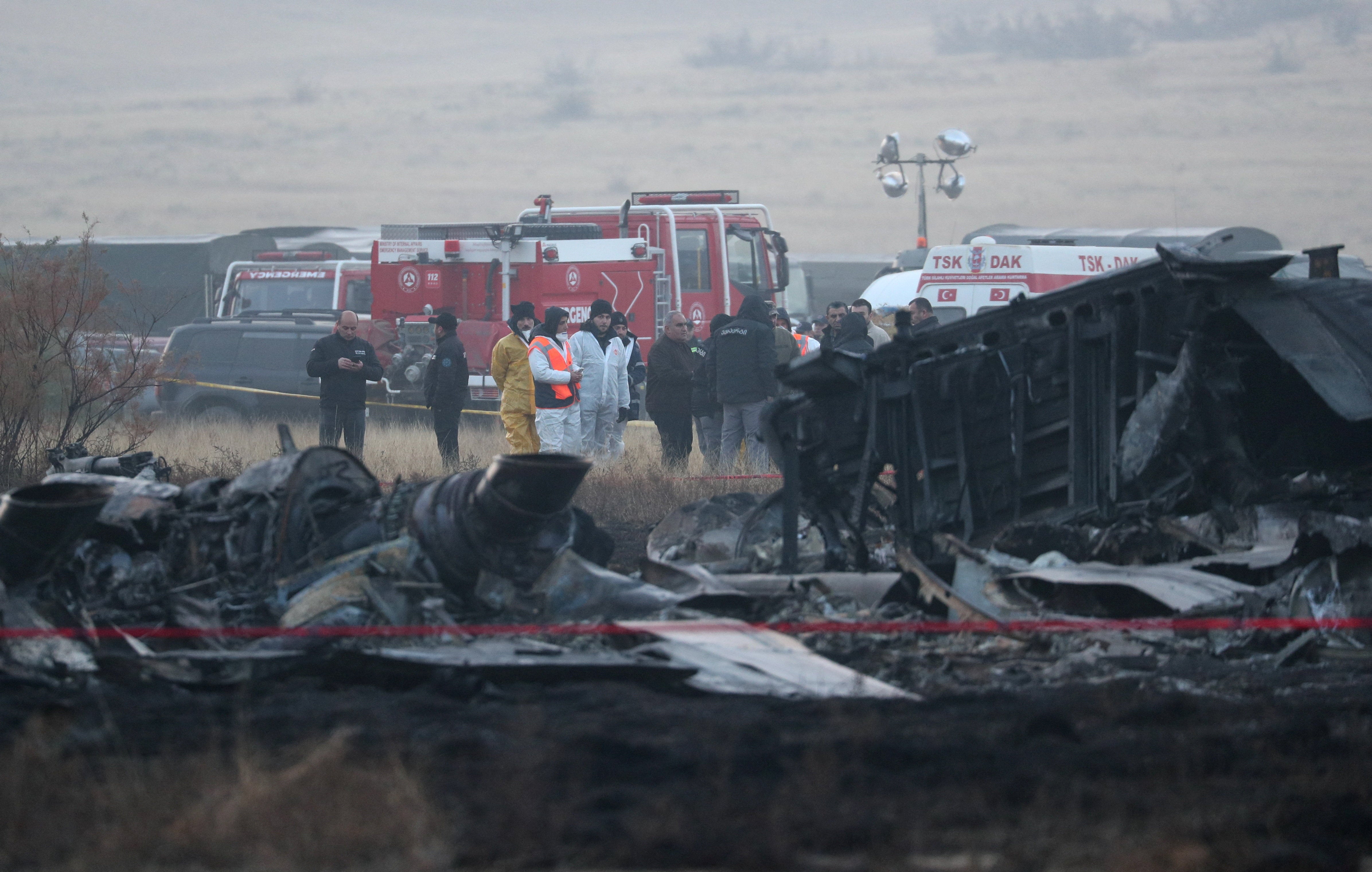
What is the C-130 Hercules and when did it crash?
The C-130 Hercules which crashed in Georgia was a 57-year-old military aircraft which had been flown regularly.
The model, which is used widely by air forces around the world, is a four-engine turboprop military transport aircraft capable of operating from unprepared runways.
FlightRadar24 and two Turkish defence analysts said the plane that crashed had entered the Turkish Air Force in 2010.
.jpeg)
Footage of the crash, which shows pieces of the plane plunging vertically into a mountainous area of Georgia, has raised key questions over why the plane came plunging down.
It comes weeks after Russian president Vladimir Putin admitted that his country’s air defences were responsible for shooting down an Azerbaijan Airlines plane that crashed in Kazakhstan 10 months earlier on Christmas Day, killing 38. But there have been no indications so far – or explicit accusations – of Russian involvement.
Incident unfolded ‘rapidly’
With the information currently available, indications suggest that something happened to the aircraft “very, very rapidly”.
This is according to Daniel Gustafsson, a former airline pilot and Aviation Content Specialist at Flightradar24.
“We know that they did not have time to call for a May Day. We don't see any indication of them using the transponder to call for an emergency as well. And as it was immediately put in a free fall, it indicates that something happened very, very, very rapidly.”
Scott Bateman, a former RAF pilot who flew the C-130 Hercules for 10 years, said that to see an airplane falling in the manner it did is “exceptionally rare”.
“To see an airplane falling as it was, split into three pieces but with the wing still in one piece, is exceptionally rare,” said Mr Bateman, who is also the author of the Sunday Times bestseller Hercules: The Story of an RAF Legend.
“The front of the aircraft has obviously broken off forward of the wing, yet the back of the aircraft has broken off behind the wing,” he added.
“Some catastrophic event has happened that has caused that. I wouldn't like to speculate what that is, because I would have no idea. I have never seen anything like this before.”
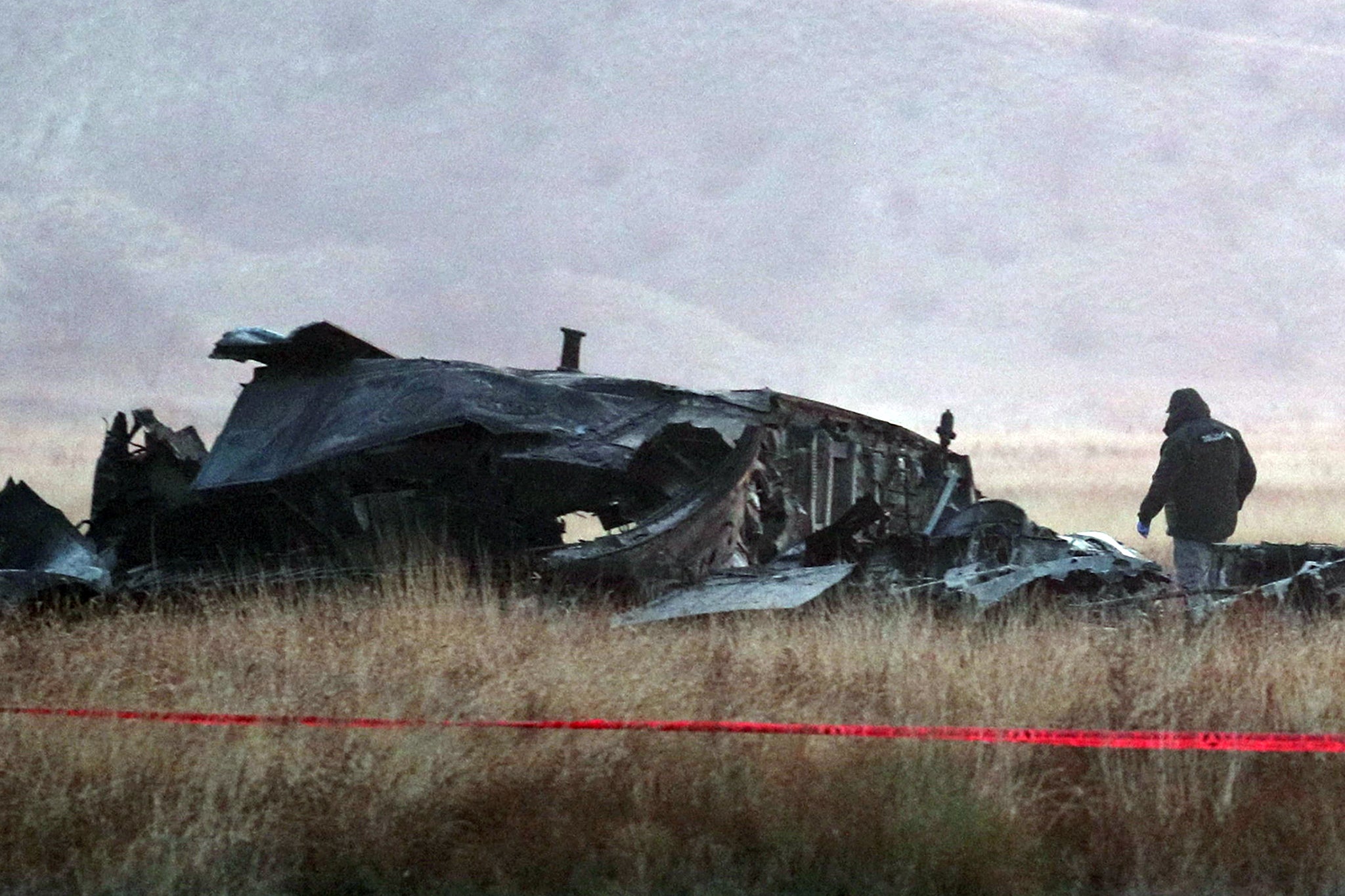
Experts say a mid-air explosion is possible
European security expert Samuel Doveri Vesterbye, who is the director of the European Neighbourhood Council, said that aviation professionals had suggested it was “odd” that the aircraft split up before hitting the ground.
“Dozens of experienced pilots and aircraft engineers have watched the publicly-available-crash-video and explain that it’s odd that multiple aircraft pieces are falling to the ground, explaining there could have been an in-air-explosion,” he wrote in a post on X.
But Mr Bateman cast doubt over suggestions that the plane had exploded mid-air.
“If you look at an airplane that explodes, it generally breaks up around where it explodes. It would be very unusual for the back to come off and the front to come off and to leave the middle bit in one piece,” he said.
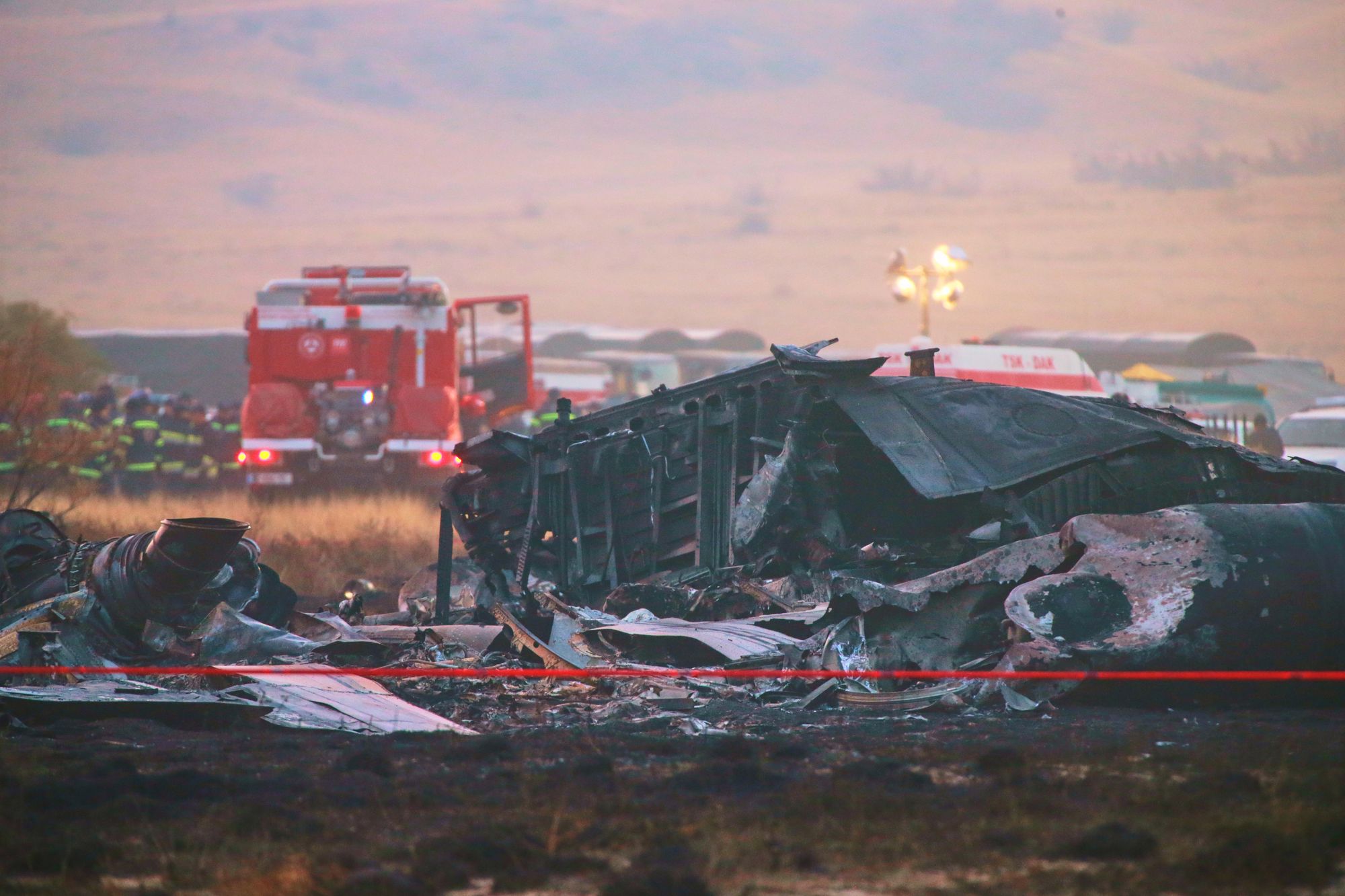
Mr Gustafsson said it could have exploded mid-air, with the evidence pointing to “some form of a catastrophic event” taking place.
“Something happened for sure, because it's more or less [an] out of the blue spiral dive,” he added. “This is not normal. Now, something may have broken off and then the rest broke during the fall because of the forces. But what happened is very unclear.”
A mid-air explosion is possible, but it is unclear what could have prompted this.
It is “definitely not unheard of” for a catastrophic mechanical failure to be behind this type of instant crash, he said, adding that “things go very fast like this”.
Did the aircraft’s age play a role?
The C-130 Hercules is the “longest military aircraft in continuous production in the world”, Mr Bateman said, with more than 70 years of service.
“Airplanes don't age in the same way as perhaps cars would,” he explained, adding that they “constantly get upgraded to bring them from to an acceptable standard for flying around today”.
“This is a very forgiving aircraft. It's a very simple aircraft. It's known non-combat record is exceptionally safe.”
Mr Gustafsson said the age of an aircraft in itself is “not a good indication” as to why an aircraft crashes.
“If you hear 57 years old in aircraft, you think immediately that this is really old. And yes, it is really old, but they're usually very well maintained. And the Hercules itself, there are plenty of aircrafts flying worldwide that are around this age, so it's not unheard of or uncommon,” he said.
Join our commenting forum
Join thought-provoking conversations, follow other Independent readers and see their replies
Comments
Bookmark popover
Removed from bookmarks