What the Greenland locals really think of Trump – and why he could be in for a shock
When Dennis Lehtonen, 30, left city life behind for one of the remotest places on Earth, he could not have imagined the extremes that awaited him. Three years later, after enduring –37C temperatures, using bags as toilets and sledding 20km to the nearest local shop, he explains why he has stayed – and what Greenland’s response to the US president really looks like


My journey to Greenland really began in 2018, when I saw someone capture the planet Saturn from their backyard using a telescope. It ignited my passion for the night sky and, as a photographer, I wanted to explore the most unusual places on the planet, where true dark skies can be found. I first headed to Finnish Lapland to see the northern lights, but the ultimate destination was always Greenland. That vast, ice-covered island far in the north stood out as a place I wanted to get to know above all others, so I sent several job applications despite not speaking Danish or Greenlandic. Eventually, I found myself working in a fish factory, which my family found amusing, as I have always disliked fish.
It has been nearly three years since I left Vantaa, the city next to Helsinki, where I’m from, for life in small villages in one of the remotest places on Earth. Having spent that time travelling and working from settlement to settlement, I have watched with some amusement as these sparsely inhabited lands are suddenly being discussed and argued about on the world stage.
When President Trump first said he wanted to buy Greenland, I asked many local people what they thought. I didn’t hear a single person say it would be a good idea then, and I am still waiting. As for the most recent soundbite from the president about looking down the coast and seeing “Russian and Chinese ships all over the place”, the typical response here is: “Trump is talking nonsense again.”
But then Katie Miller, the wife of Stephen Miller, a former senior adviser to Trump, posted a picture of Greenland draped in the American flag, accompanied by the ominous single word “SOON”, and suddenly everything feels a bit more serious. Not for nothing are Greenlandic people now flooding social media with pictures of Greenland in the colours of their flag.
The truth is, life here couldn’t be more starkly different from what the average American is used to. In fact, it is probably worse than they could ever imagine in their wildest nightmares.


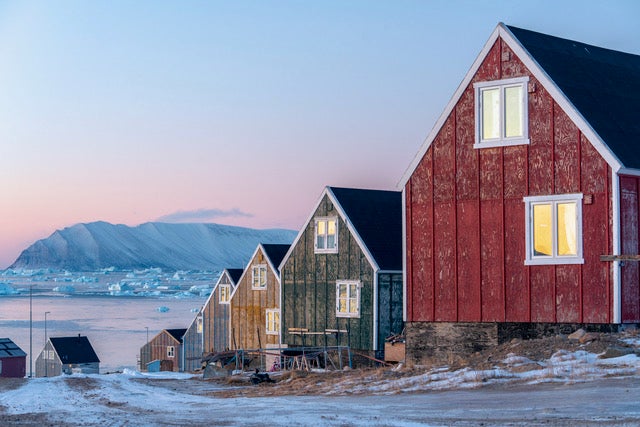
The luxury of running water practically never exists outside the larger towns. Instead, there is often a nearby lake and a facility that pumps water to a “water house”, where people fill containers to take home and shower in a communal building. In places where no lake is available – such as the small settlement of Naajaat – residents collect drinking water by melting icebergs during winter.
Bags are used as toilets, and when full, they are piled up, often alongside other rubbish. Historically, burning was the way to dispose of waste, but due to environmental concerns, it is now removed by ship, which can become quite the problem in remote settlements where a vessel may only arrive once a year.
Since April 2023, I have worked in seven different fish factories across Greenland. The first place I lived was Maniitsoq, a town of 2,500 people with four grocery shops, cars and a tiny airport. Most of the time, however, I have lived in settlements where populations range from tens to hundreds.
.jpeg)
There are no nurses in these settlements. In an emergency, a designated person writes a description of the situation, contacts a nearby healthcare centre, and a helicopter may be dispatched – weather permitting. A dentist typically visits for only a few days each year.
Many houses are heated by burning diesel or petroleum. Last New Year, when temperatures dropped to around –37C, I had only a small fire heating my house after the pipes clogged with dirt. The indoor temperature quickly fell below freezing, and I spent the night sleeping in the local church.
Most settlements have a small village shop known as pilersuisoq, which sells a bit of everything: food, clothing, fishing and hunting equipment, and even rifles. Fresh fruit and vegetables are hit and miss. The further north and more remote you go, the less likely you are to find any, and when you do, prices are high. A single cucumber can cost 36 Danish kroner, around $6 (or £4.50).
As winter approaches, the last ship of the year arrives in many places in December. Locals mark the occasion with fireworks and shout “Qujanaq”, thanking the crew for bringing food for the season. The next ship often doesn’t arrive until May, when the sea ice melts – nearly half a year later, when fireworks will be set off again. Until then, we survive on frozen vegetables.
Nutaarmiut, a tiny island settlement of just 30 people, where I worked, had no shop at all. During winter, we travelled 20km over the sea ice to the neighbouring settlement of Tasiusaq to shop, loading as much as possible onto sleds. But when the sea ice thins here, Nutaarmiut becomes inaccessible, as it is not even served by helicopters.
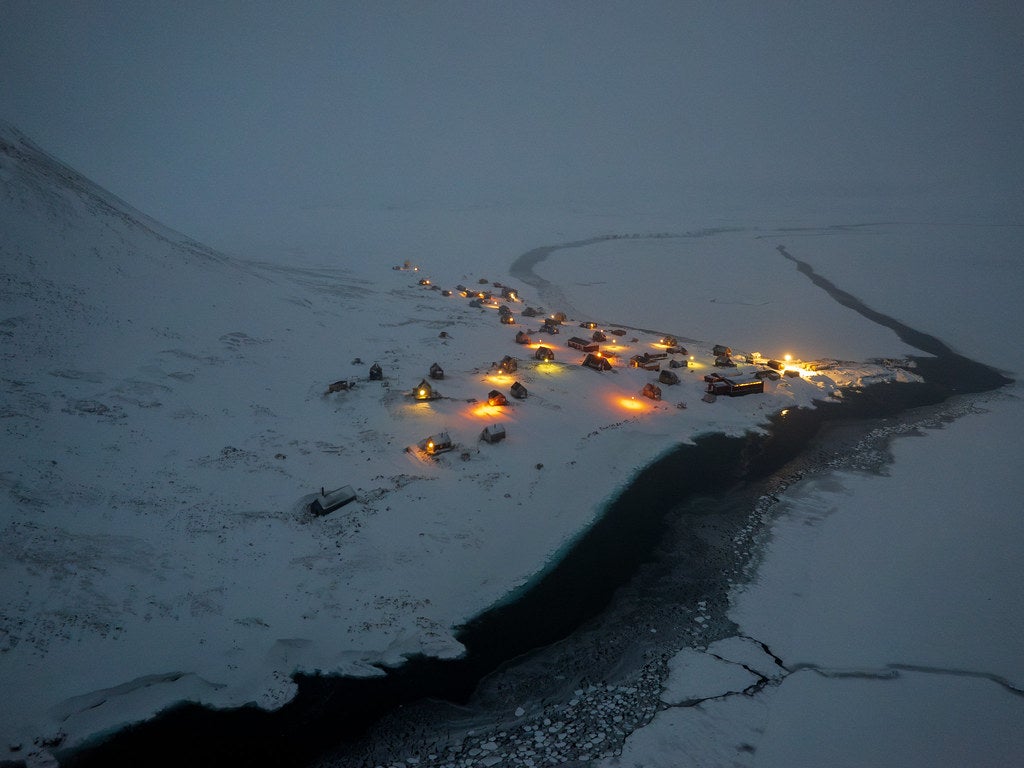
In the four months I lived there, I went to a shop only twice; once, I didn’t visit one for 82 days. The fish factory freezer contained a large box of toast, and I would often take a bag home to eat with canned ham. Ironically, in these factories, we rarely eat the fish we produce; most of that goes to Denmark.
People in these communities are often warm and welcoming. There are frequent events known as kaffemik, where everyone is invited into a home to eat, drink and spend time together. Last winter, I celebrated the birthday of a two-year-old boy in Savissivik. I counted 36 people inside the small house and asked someone, “Is everyone in the village here?” He looked around for a moment and replied: “Six people are missing.”
I often went hunting on the sea ice with a local hunter, Olennguaq, using sled dogs. During the polar night, hunters use nets to catch seals, as it is too dark to spot them on the ice with rifles. When we returned home to eat seal with rice prepared by his wife, Naduk, he told me that before the internet arrived, children used seal bones as toys. Internet access reached Savissivik around 2007, leaving the seal bones behind.
Savissivik lies more than 1,000km north of the Arctic Circle. Many of the local Inughuit people were forcibly relocated in the 1950s to make way for the Thule air base, later renamed Pituffik space base. People still miss their old lands, which they say offered better hunting.
Helicopters flying to Savissivik often make a temporary stop at the US-run Pituffik space base, which requires a special permit. The Pituffik crew loads the helicopter with fresh fruit for the settlement and distributes Christmas presents to all children under 16 in this northernmost region of Greenland.
As strange as it may sound, my time here has taught me that I don’t need most of the services found in cities – all those things we tell ourselves we can’t live without. What I do need is a clear purpose. For me, that purpose has been to document life here: the people, how they live, the stories they tell and the lessons they can teach us.

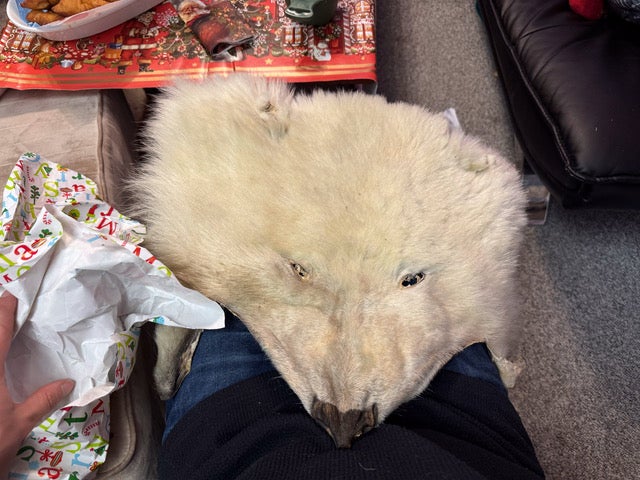
Even after three years, I still feel excited whenever I arrive in a new settlement. Working in fish factories has allowed me to get to know communities that would otherwise be difficult to access or connect to in any meaningful way. They are the backbone of the local economy and exist in most places. Visiting a settlement without work is often challenging, and finding accommodation can be difficult. I have spent months living in laundry rooms, dining halls and with local families. But I have made friendships for life. This Christmas, I received gloves made from the skin of a seal-polar bear from my host family, and a year ago, I received the skin of a polar bear head as a gift.


It might sound like a strange existence for a 30-year-old, but as the internet works in nearly every settlement in Greenland, I am still able to keep in touch with my friends, which I do almost daily. And it’s weirdly social, too. Most of the time when I visit a place I have never been to before, I recognise some people there as the population around here is so small, and everyone knows each other. Especially in the north. I visit home at least once a year and use the services that I can’t find in these small Greenland villages. Getting a haircut is one of them.
Greenland has been under Denmark’s jurisdiction for around 300 years. Home rule was introduced in 1979, and since 2009, Greenlanders’ right to independence by referendum has been recognised. While feelings towards Denmark are generally less hostile than those directed at the United States, many people here remain angry at being treated as inferiors. Historical wrongs are not forgotten – including a decades-long programme in which thousands of Greenlandic Inuit girls and women were fitted with contraceptive devices without their knowledge or consent by Danish health authorities. Denmark apologised for this dark chapter in 2025, and while it supports Greenland’s public finances with a grant worth roughly £460m a year, most people here hope Greenland will eventually become independent.
Greenlanders continue to move to the larger towns, leaving many settlements facing severe depopulation. It is entirely possible that some of the smaller places I have lived in no longer exist today. The smallest settlement by population is now Kangerluk, home to just one family. If they move away, it will likely be closed. I hope to visit there before that happens, to help capture the beauty of it forever.
I will arrive, hopefully, before the Americans do.
Join our commenting forum
Join thought-provoking conversations, follow other Independent readers and see their replies
Comments
Bookmark popover
Removed from bookmarks