Study reveals devastating effect solar storms could have on satellites
Even single collision between satellites may develop into a cascade
The rapidly growing traffic of satellites in low Earth orbit is increasingly becoming vulnerable to space weather events and could tumble like a “house of cards” after a major solar storm, a new study warns.
Studies have warned that solar storms can take out the navigational and communications systems of satellites, which enable them to manoeuvre away from each other and prevent collisions.
Even a single collision between satellites may develop into a cascade that could threaten orbits for decades, according to previous research.
As the number of satellites in orbit rapidly increases in this era of mega-constellations like SpaceX Starlink probes, the chances of satellites colliding grow dramatically.
However, there hasn’t been a proven way to measure exactly how stressed the Earth’s orbital environment has become, say researchers, including those from Princeton University.
Now, scientists have developed a “Crash Clock” to quantify the fragility of satellites in low Earth orbit.
This measure estimates how long it may take for a pile-up to happen in low Earth orbit if satellites suddenly stopped avoiding each other, such as likely in the event of a devastating solar storm.
“It is a measure, in part, of the degree to which the orbital environment is a house of cards,” researchers write in the yet-to-be peer-reviewed study.
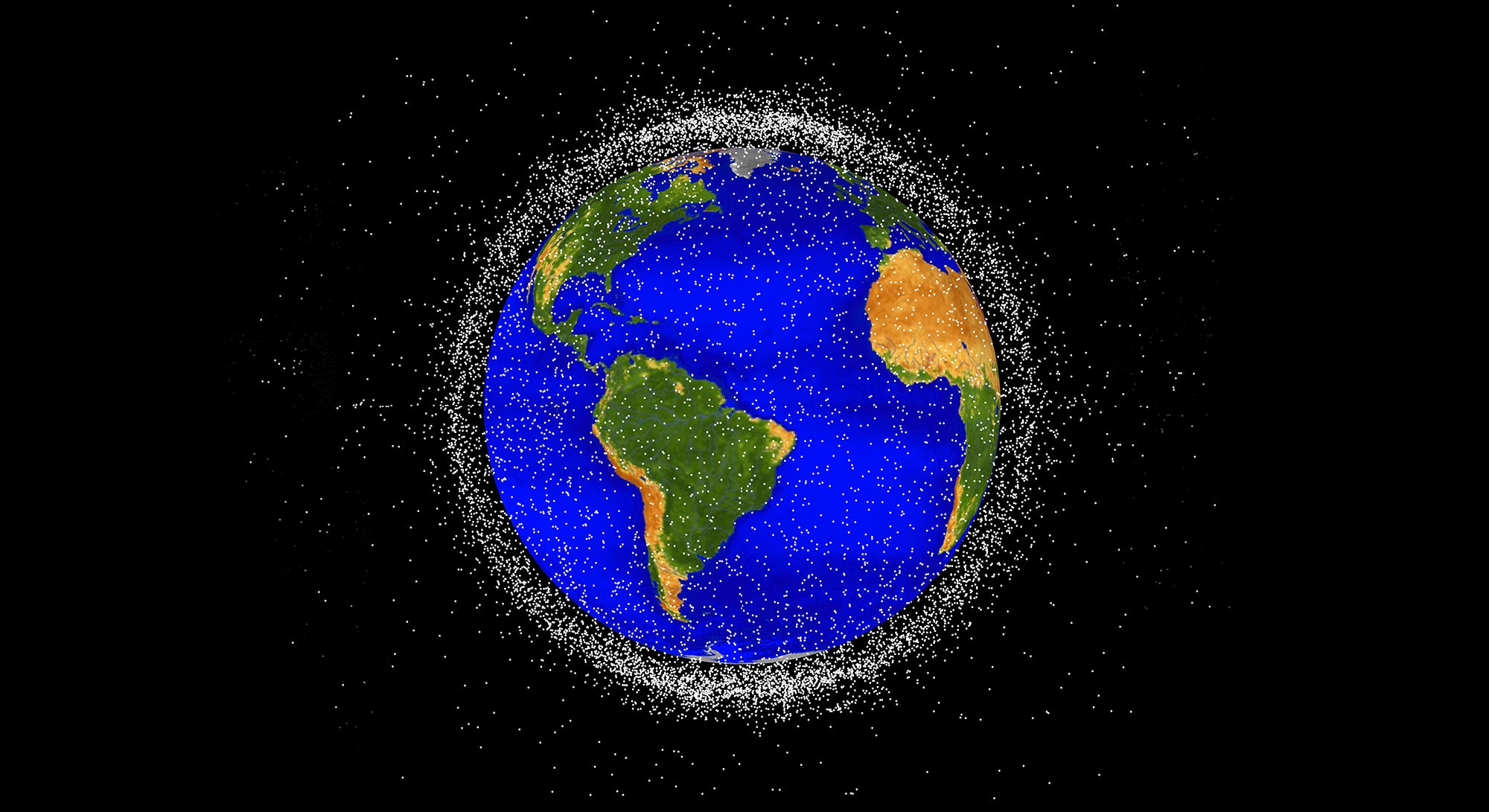
Before companies and governments began launching satellite swarms, a collision cascade may have taken about four months to develop after an event like a solar storm.
But the enormous increase in the number of satellites in orbit since 2018 has brought down the number of days for a collision to under three days, the new study warns.
This represents a 30 per cent probability of one or more satellite collisions happening during 24-hour period of the probes remaining non-manoeuvrable, scientists explain.
Researchers warn that this probability is within the “caution region”.
Further increase in orbital traffic could raise collision risk further into the “danger region”, implying a 50 per cent chance of at least one collision within 24 hours, they say.
The research takes into consideration the number of collision avoidance manoeuvres performed by satellites each year.
Citing a SpaceX report, scientists noted that Starlink satellites make about 40 such manoeuvres per satellite per year, “or one collision avoidance manoeuvre every 1.8 minutes across the whole mega-constellation”.
“The number of collision avoidance manoeuvres made by Starlink has historically been doubling every six months,” they write in the study.
A higher density of satellites in orbit since 2018 has led to more frequent close approaches, making collision avoidance even harder, the study warns.
Now, at the most crowded altitude ranges, such as around 550 km above Earth, satellites may come within 1 km of each other, often within minutes, researchers warn.
“A Crash Clock value of less than three days is already a reason for concern, as major solar storms, such as the May 2024 Gannon storm, can have lingering impacts for the satellite population,” they write.
“As the number of required manoeuvres continues to increase, temporary lapses in collision avoidance capabilities...will become increasingly catastrophic in their potential consequences,” scientists warn.
Join our commenting forum
Join thought-provoking conversations, follow other Independent readers and see their replies
Comments
Bookmark popover
Removed from bookmarks