Beauty brands are cashing in on the beautiful game – and are showing women’s football is big business
The summer success of the Lionesses has sparked renewed commercial interest in women’s football, with a different type of sponsor now knocking on the doors of WSL clubs, writes Lawrence Ostlere


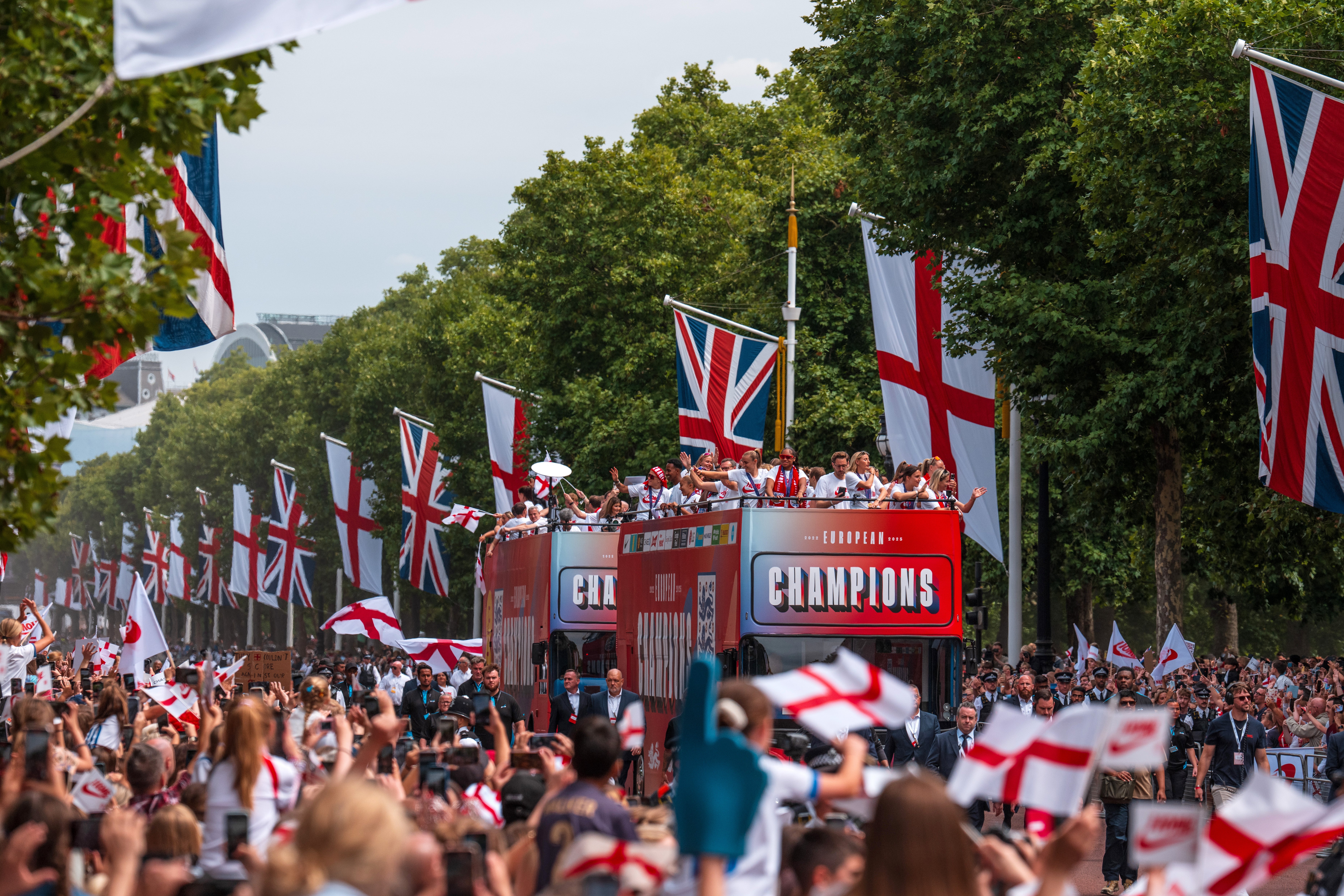
Women’s football is having another moment. More than 16 million people watched England win Euro 2025 in July – the most-watched TV spectacle of the year – and, as the game leaves behind its summer glow, there is momentum to be seized.
Average Women’s Super League crowds are set to bounce this season just as they did after success at the 2012 London Olympics, the 2019 World Cup and the 2022 Euros. There are more seats to fill than ever before after Arsenal, Aston Villa and Leicester committed to play in their clubs’ main stadium this season. It is what the WSL’s chief executive, Nikki Doucet, recently called an “ignition moment” for the game.
With new fans come new brands. The self-governing WSL, which split from the Football Association’s control two years ago, announced bumper commercial partnerships with Nike and British Gas this summer, and it is not just giant corporations like long-term lead sponsor Barclays who are investing generously in the game. Increasingly, it is now lifestyle brands being drawn in, like the American cosmetics company e.l.f. – which announced a new sponsorship deal with Tottenham Hotspur this season.
It marks something of a gear shift: the cosmetics industry has historically stayed clear of women’s football, seeing sport as a separate world, but that perspective is changing. “In the last few years, beauty brands have opened their eyes and woken up to the fact that, first of all, their consumers are also sports fans,” says Lisa Parffitt, co-founder of sports marketing agency The Space Between. “If you look at athletes now, they want to look great because that makes them feel good and they feel really empowered.”
Cosmetics brands have become prominent sponsors across US sport over the past two years, particularly in the Women’s National Basketball Association, like Maybelline’s $400,000-per-year deal to be the league’s official beauty partner in Canada. In the UK, women’s rugby has begun embracing its feminine side too – see the England team’s recent commercial tie-ins with the Spice Girls and Barbie in the lead up to their rousing World Cup triumph last month. Now the industry is knocking on doors in women’s football.
This type of partnership used to be about aligned values on issues such as diversity and inclusion for brands, rather than any great commercial advantage. But they are increasingly being drawn to women’s football by the sheer volume of eyeballs in stadiums, on TV and on social media.
“The value brands get from the athletes involved, the authentic representation that the players bring, the ‘national treasure’ status of some of the athletes now – they have celebrity power,” Parfitt says. “That’s what’s changed in women’s football and women’s sport for brands. Assessing it as a sponsorship property, the audience scale and data that hasn’t been there [in the past], what we’re now seeing in women’s football is that you’ve got both [shared ethos and a large audience]. That’s why you’re starting to see a lot more investment from new brands entering the space.
“I would expect to see the WSL commercial programme continue to expand pretty rapidly with more of these types of brands, and you’re already seeing that happening with the top tier of the women’s game starting to now be really commercially strong.”
Outside the English bubble, women’s football has never attracted more interest, illustrated by Netflix’s bold commitment to stream the next two World Cups – Brazil 2027 and USA/Mexico 2031 – in full, showing every game live, the first time Netflix has broadcast an entire major sports tournament. Netflix plans to supplement the action on the pitch with a behind-the-scenes docuseries to tell the kind of human stories which have successfully hooked new viewers across a raft of sports, from F1’s Drive to Survive to Tour de France: Unchained.
A central pillar of women’s football’s commercial success is its image as a wholesome, family show. Baby brands like Joie and Nuna can now be seen on the kits of two major European clubs, Manchester City and Paris Saint-Germain. Women’s football has carved out its own identity, one built not on fierce tribalism but on inclusivity, spanning genders and generations.

“The family aspect of the women’s game is important and it’s definitely a differentiator,” Parfitt says. “If you turn up to go and see Arsenal Women at the Emirates Stadium, the feeling that you get is very, very different than watching a men’s game because there is a much younger audience – there’s a higher-pitched scream,” she laughs.
“It’s a family day out. Those [family and lifestyle] brands are going to be doing a lot more live activation and marketing around the stadiums. There are 20 million women’s football fans now in the UK alone, representing a massive audience and a big opportunity. And that 20 million has very broad demographics, it spans from four to 104 – it’s a unique cross-generational reach.”
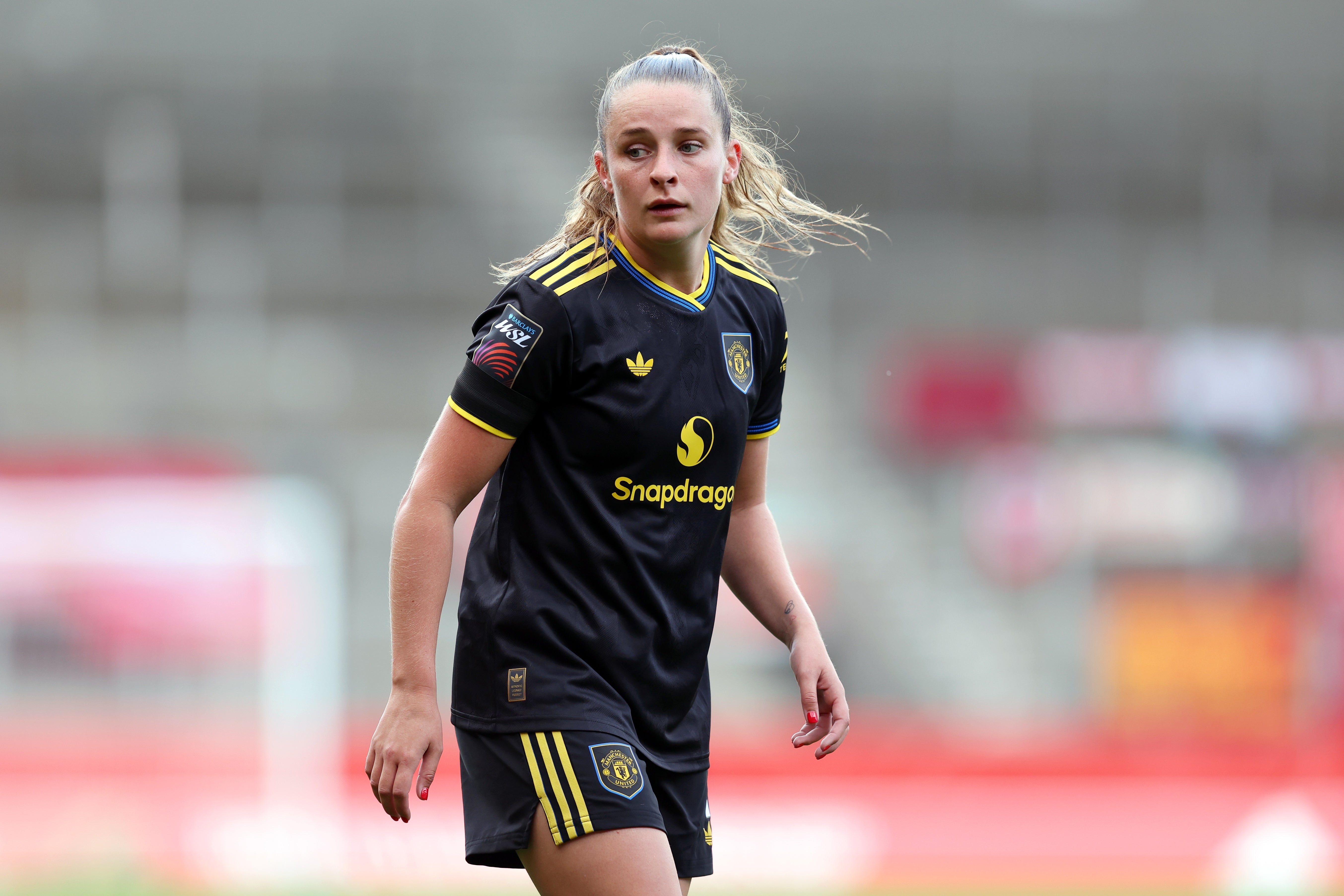
A key question amid all this budding growth is whether the players will really feel the benefit. The majority of the WSL and WSL2 matches play out in the shadow of the international game, while the public spotlight in the UK remains on only a select few Lionesses, like Ella Toone, who has become a household name having scored in the Euro 2022 final and played a key role in England’s Euro 2025 triumph too. The Manchester United midfielder has successfully cultivated her own persona through her BBC podcast and YouTube presence, and has recently signed a deal with Charlotte Tilbury.
Toone has started her own creative agency called Amicizia Studios with her publicist James Marshall, to help fellow players build their public profiles and earn sponsorship deals from the world of sport and beyond. “Over 50 per cent of the league [WSL] don’t have a brand behind them,” says Marshall. “So that needs to change, and that’s one thing me and Ella want to push for.”
Zoe Kalar, the founder of social media platform Weare8, agrees. Weare8, which sponsored Italian women’s club FC Como last season, pays users to watch adverts as part of a model that allows its content creators to earn direct revenue from follower engagement. Kalar believes the game’s entire financial model needs reworking to prevent players being “held hostage” by clubs and brands.
“I think the promise [of commercial opportunity for women’s players] is great, the promise is amazing,” Kalar says. “The reality is it’s not happening, yet. I believe it will happen dramatically in the next three years, but it will only happen if there is radical innovation in the media structures and economic models.
“How do you get the money to flow to all clubs, all players and the fans? You only do that through radical transformation of social media. One of the rockstar players might go and get some amazing deal from a brand directly to appear in their ad campaign, but I think that is still such a rare thing ... I don’t think the deals that need to happen are happening yet, and they’re not reclaiming their power. They can only reclaim their power when that woman, that player, owns her audience, when she has all the power and all the value, and that is exactly what I want to bring her.”
Kalar thinks players are sometimes used by brands for what they represent – diversity, equality – and are not always fairly rewarded. “It’s so far from where it needs to be,” she says. “I think there’s a lot of women-washing.”
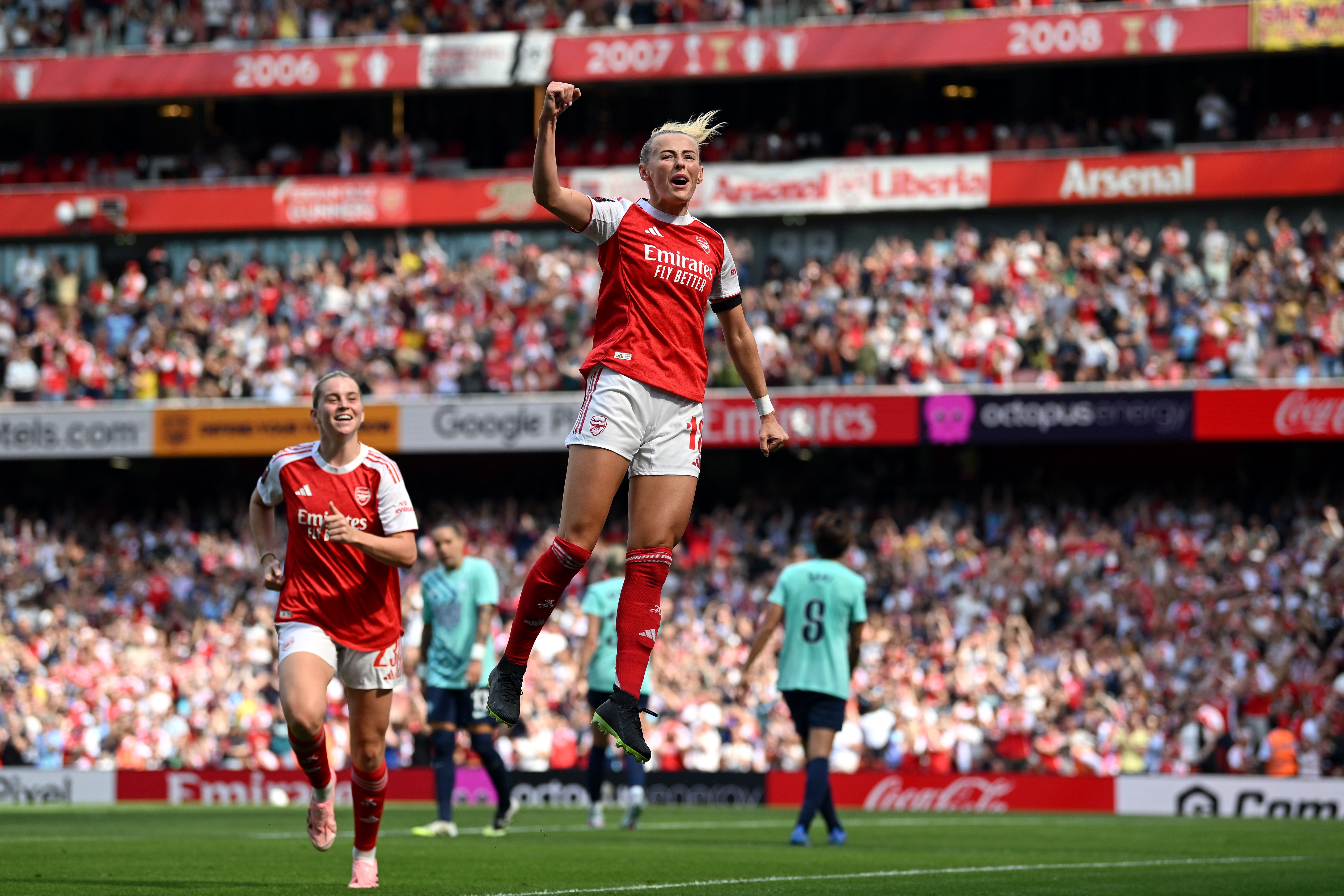
For all the giddy success of England’s Euros win this summer, the club game still faces steep challenges. WSL attendances actually dipped slightly last season, without the boost of an international tournament as a launchpad. Most clubs struggle to turn a profit as self-contained entities. Broadcast revenues have slightly increased to around £8m per season but remain relatively small in wider sporting terms. The Premier League earns more than £3bn annually from its TV deals.
“More players are feeling the benefit of the recent boom but not across all leagues, not every player,” adds Parfitt. “It’s going to take a long time to filter down.”
Yet there is undoubtedly something stirring. Increasingly, the game is being viewed as a commercially attractive entertainment product, carving out its own distinct identity in the cluttered sporting landscape. Slowly but surely, the WSL is treading its own path, and it has the wind behind it. Chief executive Doucet is unequivocal about the destination: “Our job now is to make sure that we’re creating the best professional league in the world.”
Join our commenting forum
Join thought-provoking conversations, follow other Independent readers and see their replies
Comments
Bookmark popover
Removed from bookmarks