The unseen man controlling every last detail of the Ryder Cup
Ten years of meticulous preparation have made Bethpage Black ready for the Ryder Cup this weekend, and behind it all is director of agronomy Andrew Wilson. Here, he tells Lawrence Ostlere what it has taken to get the first municipal golf course to host the event into pristine shape, and why every detail matters


The Ryder Cup is only hours away, and at Bethpage Black, the finishing touches are being put on the beautiful course on Long Island, New York. The greens are being cut to a thousandth of an inch, and little green nurseries are tucked all over the site to help plug hundreds of one-inch pitch marks so that it will look pristine.
It has taken 10 years of planning, ever since Bethpage was awarded this Ryder Cup, to deliver three days of sporting drama.
“It’s kind of like getting ready for a big wedding,” says the director of agronomy at Bethpage State Park, Andrew Wilson – a big, smiling New Yorker. If the Ryder Cup is a wedding, then Wilson is the wedding planner. “It’s very exciting; there’s a million little details and you can drive yourself crazy, and everyone will probably spend too much money, and hopefully everyone has a good time.”
Bethpage is unusual in that it is not a snooty private club but an open public park, the first municipal golf course to host the Ryder Cup. “A lot of the locals, they’re really proud of the place,” says Wilson. “They call us ‘The People’s Country Club’, so we try to live up to that.”
There are no members here, no pompous clubhouse rules. There are five courses, colour-coded by difficulty, and they are open to all comers. Black is the most famous, a long brute that has hosted two US Opens and a PGA Championship.



Yet even on what is a famous and revered site, tee times are available online to New York state residents a week in advance for only $75 (£55.50 – most green fees on the UK’s major-hosting courses are six times that price). Non-residents from out of state and around the world can book five days out and pay $150.
There are a few walk-on slots each day for early arrivals, which creates something akin to the Wimbledon queue overnight in the car park. Punters are regularly seen practising on the putting green at 11pm under floodlights, before holing up in a campervan ready for the first tee at 7am. It is, some say, the golf course that never sleeps.
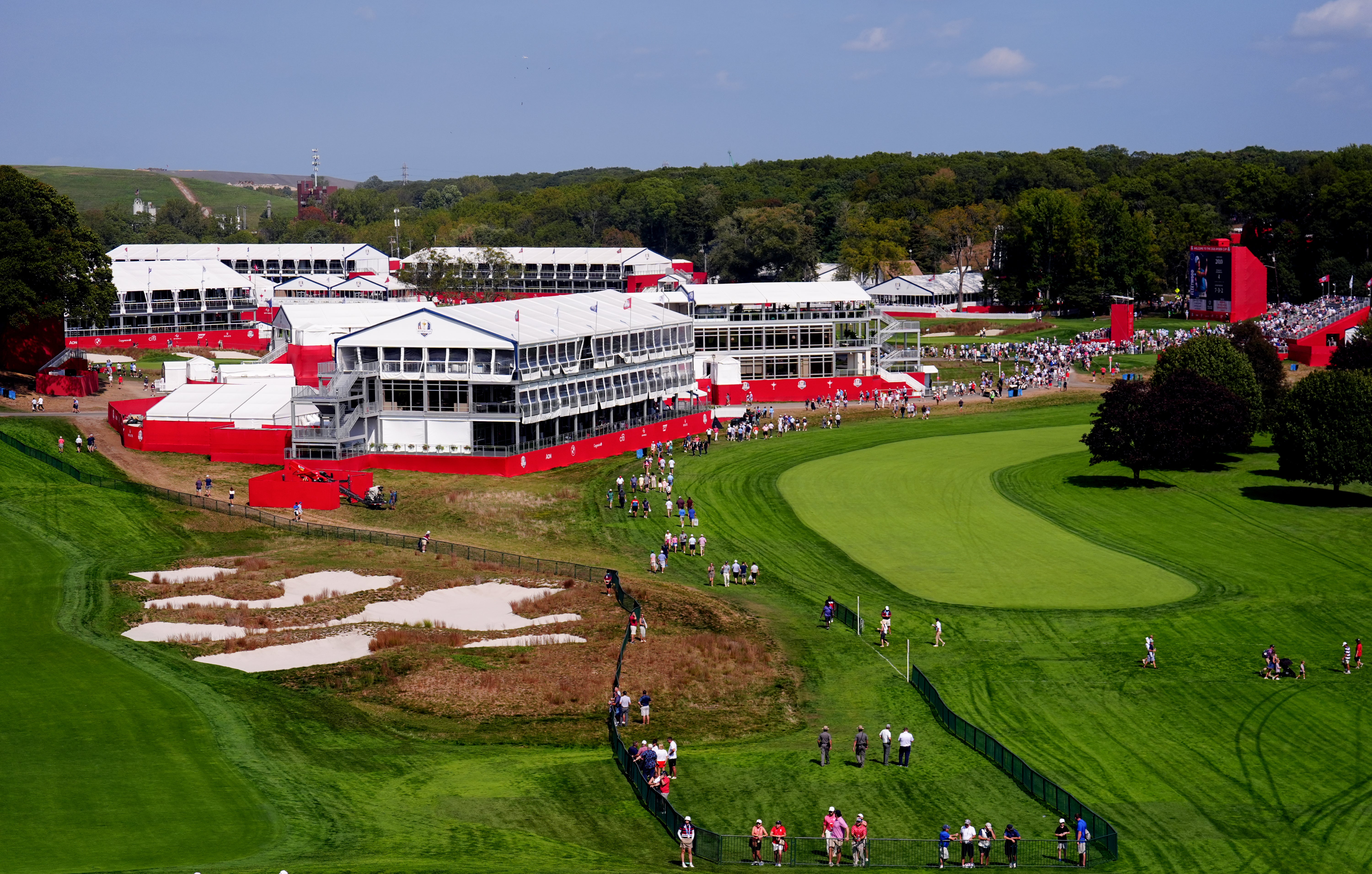
Thousands of golfers make the pilgrimage each year because Bethpage carries mythical status as a uniquely cruel challenge, one not so much to enjoy as to escape from alive. It is nicknamed “The Beast”, and a famous sign at the first tee warns against going any further unless you are a “highly skilled golfer”.
But despite its aura, Bethpage is a welcoming place, and the good-humoured Wilson epitomises its grounded ethos. He grew up nearby, mowed some lawns as a teenager, and got his first job here. The award of the US Open in 2002 helped professionalise the place, turning it slowly from what Wilson calls a “rounds factory” into a highly sophisticated piece of agricultural engineering.
He cites the giant irrigation project underneath Bethpage Black’s seven-and-a-half-acre web of bunkers, which required every grain of sand to be removed and then replaced so that a new drainage system could be installed. “It’s called a silly name – ‘Better Billy Bunker’ – which is a gravel system underneath that you then glue together, and it means we can get two inches of rain and 99 per cent of the sand stays where it is.”
Wilson chuckles at the idea that the event, which is taking place in Farmingdale, New York State, is being anchored to New York City by organisers. This is a familiar reality in golf, of course, which likes to warp geographical boundaries for commercial ends. The last Ryder Cup wasn’t really in Rome, and the first LIV Golf tournament wasn’t really in London, but you can’t launch a rebel golf tour in “St Albans”.
“There’s a comedian who joked, ‘No one says I’m from Farmingdale, New York City,’” Wilson laughs.
But he has no doubt that the Ryder Cup will play out inside a New York-ish spirit, and draws on tennis as a comparison. “Wimbledon is almost like Augusta, where it’s like this odd hush over the crowd, whereas the US Open in New York has a bit of a buzz in the background the whole time. That’s what Bethpage is like.”
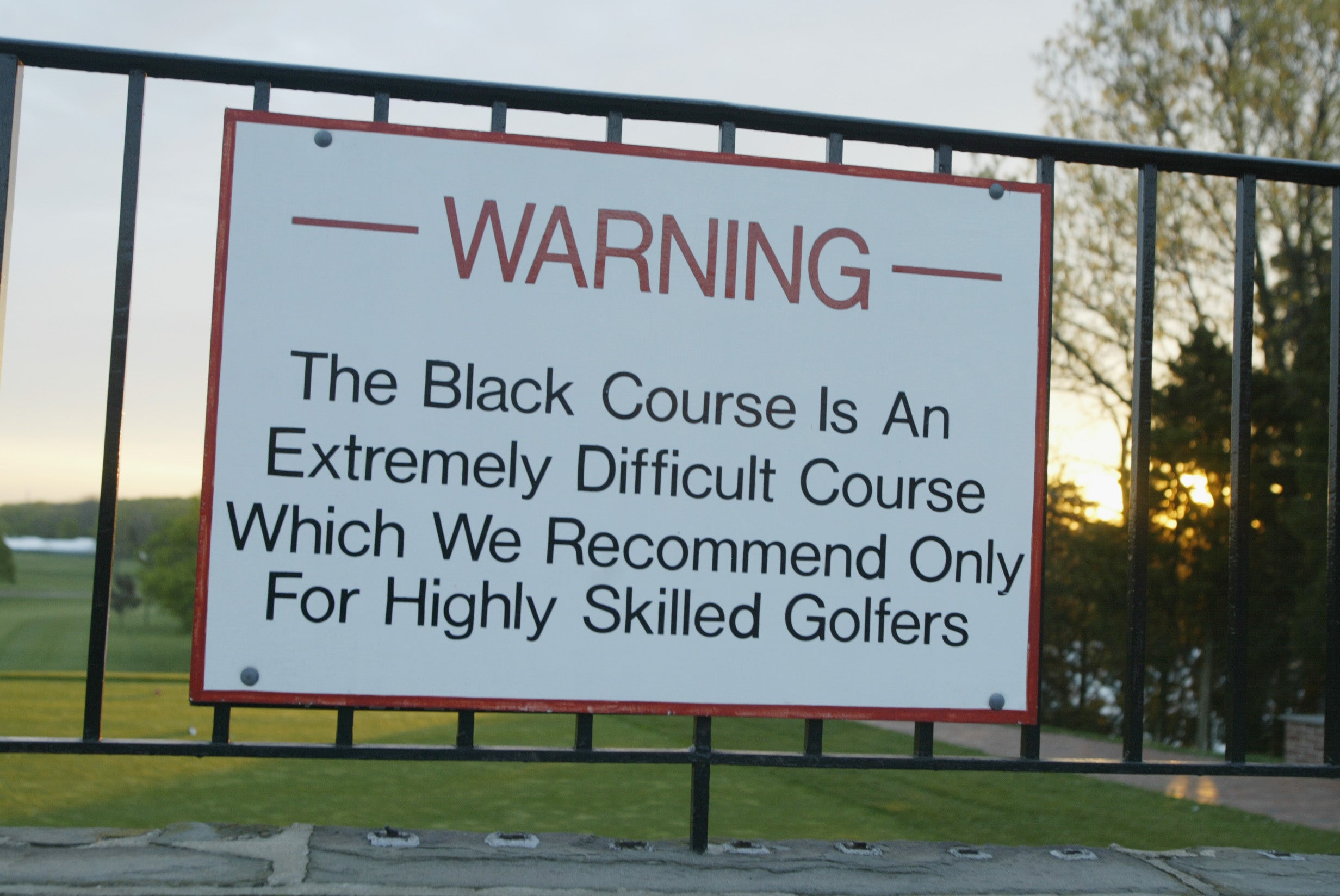
Bethpage has hosted major tournaments before, but this is on another scale. The entire state park was transformed into a construction site over recent weeks. The red course is now covered in hospitality tents, and the yellow course has been paved over for media parking. The Black course normally hosts 30,000 rounds a year, and Wilson’s team attempted to keep punters coming through the gates for as long as possible, but the Ryder Cup teams’ locker rooms were built in the car park, and so they finally had to close on 18 August.
Up until the past couple of weeks, teams of people were furiously working away to get Bethpage ready. “We had a few hundred construction guys zipping around all over the place,” Wilson says, “between the crew to build out the hospitality, there’s a crew that builds the bleachers, there’s a crew that builds the TV towers for NBC and Sky.”

Barely a blade of grass has been knocked out of place since then, outside of the two teams’ recent scouting missions to Bethpage, although it is not just golfers who cut up Wilson’s pristine course. “We just finished the practice greens surrounding the clubhouse, and last week there was a camera crew here, and there was a ‘putting green closed’ sign right in the centre – with their camera crew tripod stood right next to it. They’re like, ‘Oh, we didn’t see it’,” he laughs.
“Patience and diligence, I think, are the two main character traits you need to get ready for something like this.”
Wilson and the regular Bethpage State Park employees are being supported by 75 volunteers from around the world, including expert European greenkeepers, taking up a mower or a rake to get the show ready. The greens are cut to 0.105 inches. The tee boxes are 0.325. The rough has been cut down from its typical four inches so that holes will more often be decided by great putts rather than lost balls in the long grass. This is, first and foremost, a stage for great entertainment.
All the planning, all the sweat, all the minute details are ready to come to fruition. The drama of a truly great Ryder Cup is almost incomparable in sporting terms, and the scene is set.
And yet ultimately, the fate of Wilson’s work is in the lap of the gods. “I guess that’s similar to a wedding, too,” he smiles. “You put all this effort in, and it comes down to the weather.”
Join our commenting forum
Join thought-provoking conversations, follow other Independent readers and see their replies
Comments
Bookmark popover
Removed from bookmarks