The two big questions before Aryna Sabalenka and Elena Rybakina’s Australian Open final rematch
Three years on from a classic, Sabalenka’s big-game temperament and Rybakina’s serve will define the Australian Open final after two very different journeys to a long-awaited rematch
Three years ago, as Aryna Sabalenka and Elena Rybakina served up an instant classic of an Australian Open final, it was difficult to imagine how two players who had produced such a dramatic contest of high-level ball-striking would not simply go on to dominate the hunt for grand slam titles.
Instead, it proved to be a breakthrough for the champion, in Sabalenka, and a turning point in the opposite direction for the beaten finalist, in Rybakina. While Sabalenka became a four-time grand slam champion, reaching seven consecutive finals at the hard-court events, Rybakina faded from the picture.
.jpeg)
The consistency that has marked Sabalenka’s ascent to become the game’s undisputed No 1 was lacking from Rybakina, the Russian-born 2022 Wimbledon winner who represents Kazakhstan. Frustrating spells of illness and injury followed, along with the suspension of her long-term coach, the Croatian Stefano Vukov, amid an investigation into potential breaches of the WTA’s Code of Conduct and allegations of “abusive behaviour” towards her.
Vukov, who denied any wrongdoing, appealed against his suspension and his ban from the tour was lifted in August. Rybakina spoke up in his defence while he was suspended and highlighted his importance now that she has returned to the Australian Open final. “I think it's a big help, because of course he knows me the best,” she said. “With his advice on the court during the matches, it definitely makes a difference. Same as my other team members.”
Since Wimbledon, no other player has won as many matches as Rybakina, whose late-season surge carried her not only into the WTA Finals as a last-minute qualifier in Riyadh in November, but to the biggest single payday in women’s tennis history as she defeated Sabalenka to win the prize of £3.98m.


With that victory, the 26-year-old Rybakina reminded everyone that she is a contender for more grand slam titles. And so, three years on from their Melbourne classic, Sabalenka and Rybakina will meet again after they both powered into Saturday’s final.
Sabalenka and Rybakina both got there in the end. They are the first players to reach a grand slam final without dropping a set since Serena and Venus Williams at Wimbledon in 2008, while also the first pair to go from contesting in the final of the WTA Finals, at the end of one season, to the final of the Australian Open, at the start of the next, since 2000.
Sabalenka’s continued presence in the biggest matches of the year is not a surprise; the Belarusian has rolled into a fourth consecutive Australian Open final while displaying the immense improvements she has brought to all aspects of her game, particularly her mentality and added variety. Of the last six grand slam tournaments, Wimbledon is the only final Sabalenka has not reached, following her semi-final defeat to Amanda Anisimova.
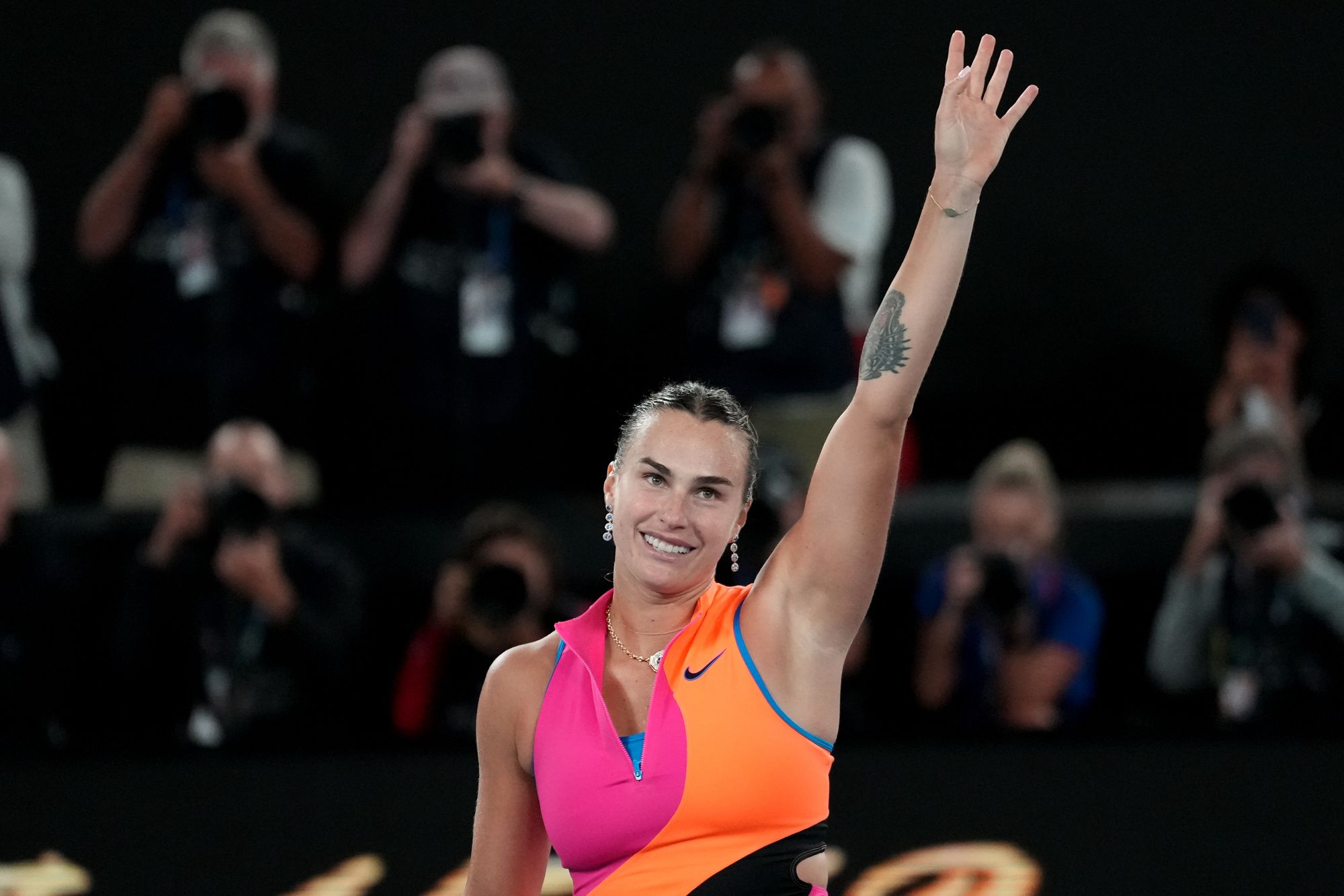
But, once again, the biggest question facing the most complete game on the women’s tour is her temperament in finals. That may seem unfair, but Sabalenka’s record in finals since the start of 2025 is 5-5, and her meltdowns in final defeats to Madison Keys at the Australian Open and Coco Gauff at Roland Garros was the defining aspect of those matches.
Sabalenka was controlled in her US Open final victory over Anisimova in September, only for her defeat to Rybakina in Riyadh in November to expose the only glaring vulnerability the top seed has to defend. As she seeks a third Australian Open title in four years, Sabalenka vowed there would be no repeat.
“I actually know what was wrong in all of those finals that I played and I lost, and I would say that last year was lots of lessons, lots of things to learn about myself, and it’s definitely not gonna happen again this season,” Sabalenka said after her 6-3 6-2 win over Elina Svitolina.
She said her frustrations would come from failing to accept that grand slam finals are invariably fraught with difficulty, and that her opponents are there to make it challenging. She believes she has turned a corner. “Right now my mentality is like, I'm ready to do whatever,” she said.
With this week’s wins against Iga Swiatek and now Jessica Pegula in the semi-finals, Rybakina has won eight matches in a row against top-10 opponents since the WTA Finals. Out of anyone on the WTA, she has the ability - through her massive serve and flat, destructive groundstrokes - that can take the racket out of Sabalenka’s hand. Even when Rybakina has gone through tough periods of form, she has found wins against Sabalenka and has won six of their last 10 meetings.
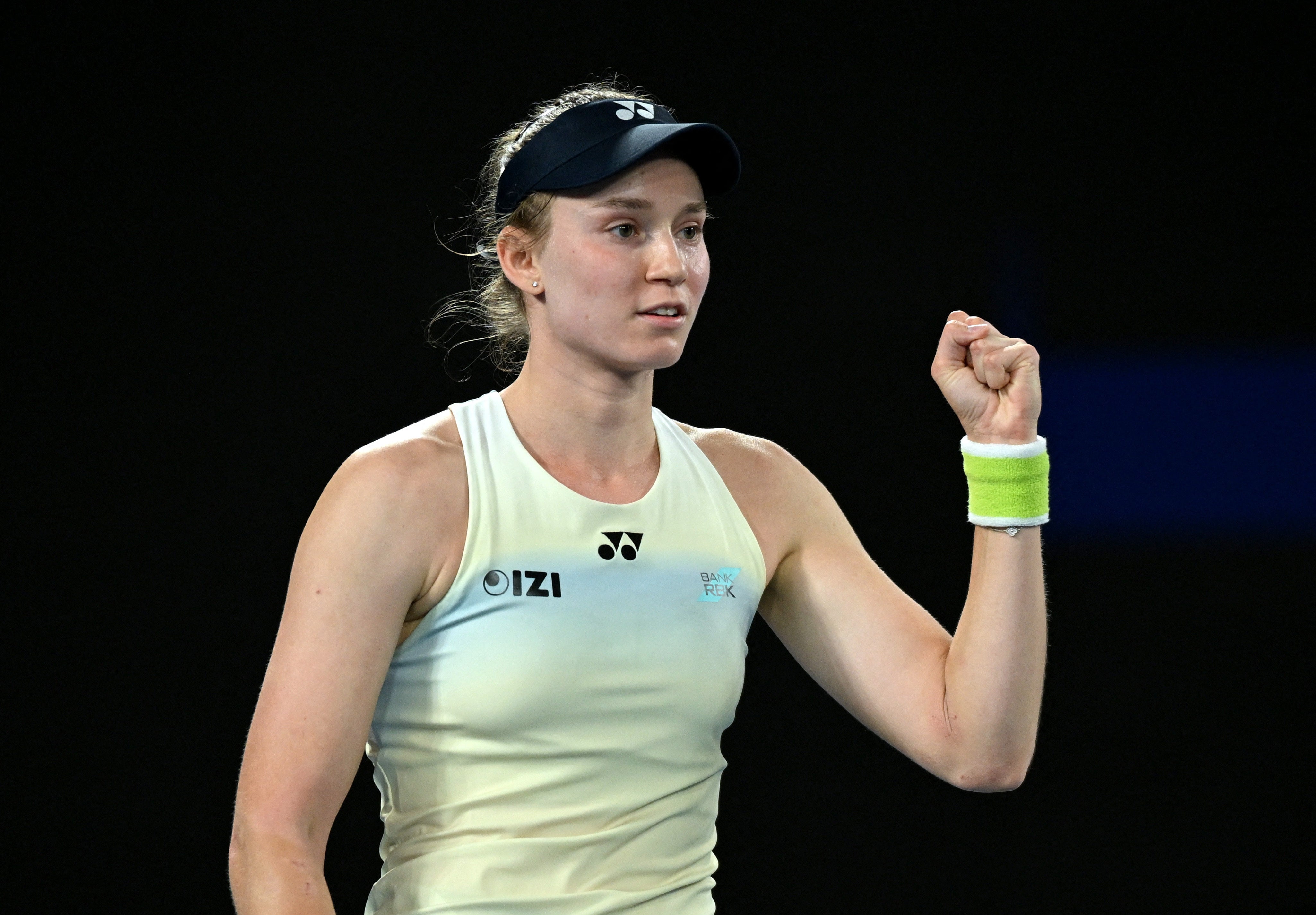
With Rybakina, though, so much relies on the serve. It wobbled as she tried to close out the second set against Pegula, where she was broken twice when serving for the match. Her first-serve percentage fell under 50 in the quarter-final against Swiatek, a statistic she cannot afford to replicate when she faces such an aggressive opponent in Sabalenka. If Rybakina finds her first-serve with more regularity, she could be unstoppable.
“The serve, quite often it might not work as much as I want, and you need to be ready to win with other aspects of your game,” Rybakina said. “I think now I'm just trying to stay more calm in these situations, trying to think, adjust during the match. For now, it's been working.”
The conditions in Riyadh, where Rybakina produced a masterclass to beat Sabalenka 6-3 7-6 (7-0) under a roof and at some altitude, are very different to Melbourne. That is one clear difference ahead of their Australian Open final rematch.
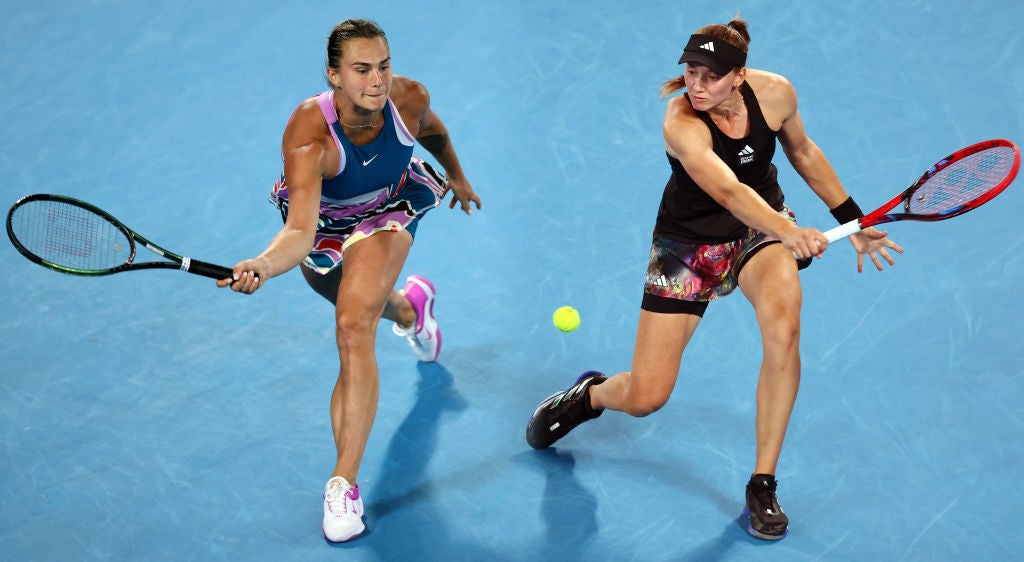
Another is simply how much has happened to both players since January 2023, with the highs of Sabalenka’s triumphs to the lows of her major defeats, with Rybakina’s fall from grand slam contention and her rise back again.
“Me and her, we both are different players. We went through different things. We're much stronger mental and physically, and we're playing better tennis now,” Sabalenka said.
Her 4-6, 6-3, 6-4 victory over Rybakina three years ago came in an absorbing two and a half hours. Since the fourth round, this year’s tournament has produced just one match that has gone to a final set. There has been a distinct lack of drama. Three years on, the hopes for Sabalenka and Rybakina’s rematch will be high.
Join our commenting forum
Join thought-provoking conversations, follow other Independent readers and see their replies
Comments
Bookmark popover
Removed from bookmarks