The impact of climate change on Winter Olympics snowmakers
Winter Olympics snowmakers face the tough task of creating competitive conditions amid climate change
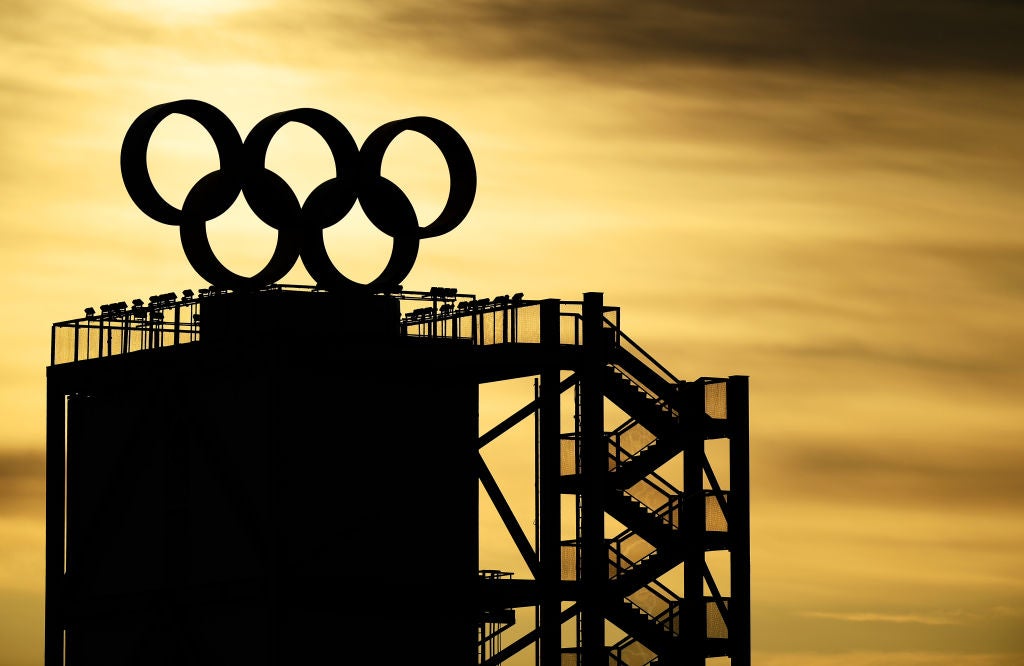
The race is on for snowmaking teams preparing for the Milano Cortina 2026 Winter Olympics, as they battle increasingly narrow cold windows to create competition conditions.
Climate change is steadily redefining the boundaries of what technology can achieve, forcing organisers to rely heavily on artificially produced snow.
Across Italy’s Alpine venues, the declining and less predictable natural snowfall means months of preparation must now be squeezed into brief periods of sub-zero temperatures, leaving minimal room for error.
Established resorts like Livigno, Bormio, Cortina d’Ampezzo, and Antholz-Anterselva have significantly expanded their existing infrastructure, adding reservoirs, pump stations, and snow guns to meet the stringent Olympic requirements.
In Livigno alone, over 600,000 cubic metres of snow have been generated since mid-December for freestyle and snowboard events.
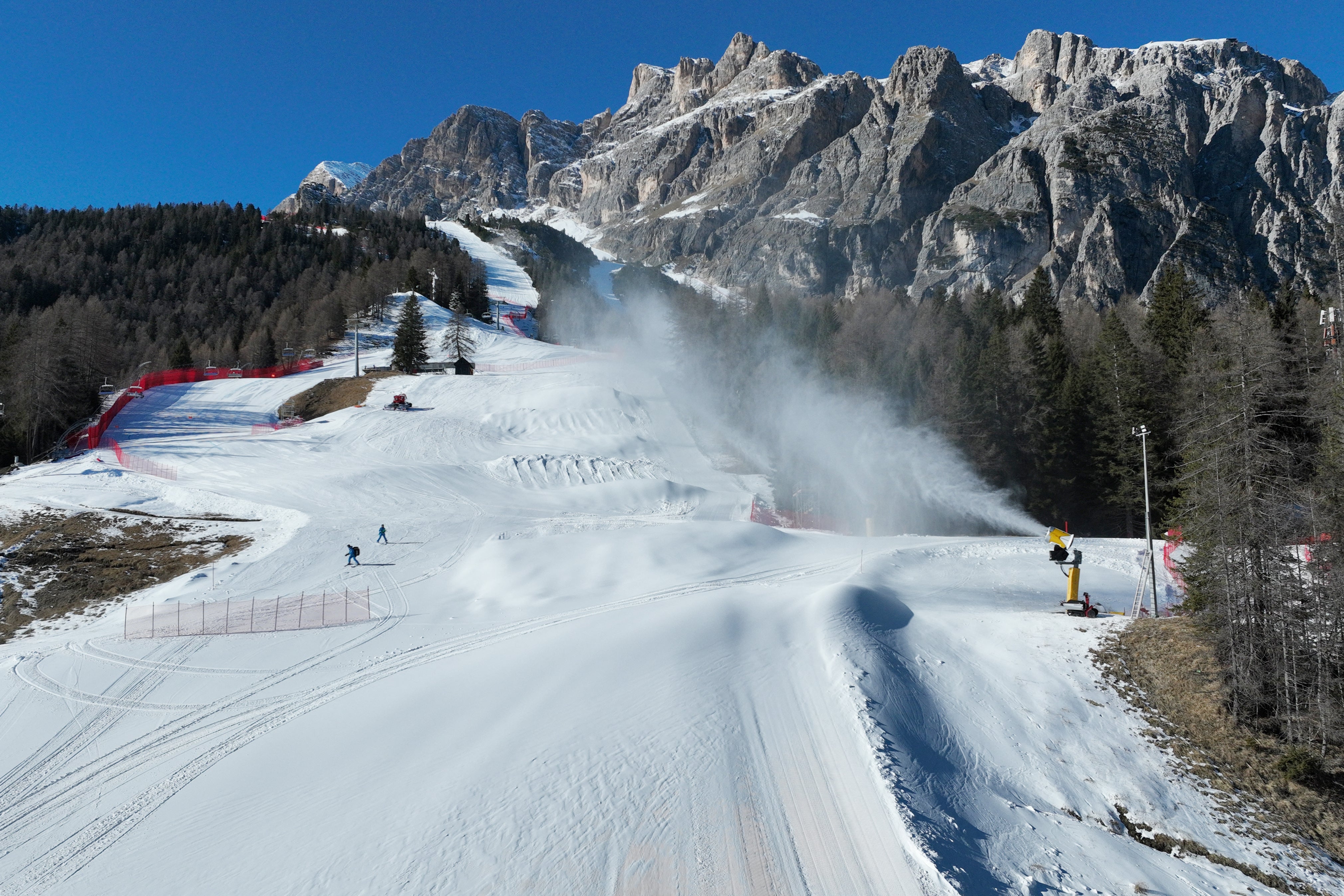
Nemanja Dogo, executive technical manager at snowmaking specialist TechnoAlpin, which supplies systems to numerous Olympic and World Cup venues, explained that production is accelerated during short cold spells.
"After Christmas we had temperatures down to minus 22 degrees, which was a very good period to make snow," Dogo stated.
Snowmaking typically requires wet-bulb temperatures of approximately minus 2 to minus 2.5 degrees Celsius for efficient snow formation. However, these crucial windows are shrinking.
"The windows to get ready for the first of December are getting shorter and shorter," Dogo warned.
Climate researchers confirm that this loss of preparation time is one of the most evident operational impacts of warming winters.
Caitlin Hicks Pries, an associate professor of biological sciences at Dartmouth who studies winter climate change, highlighted the dual challenge: "It’s not just like the fact that you’re losing natural snow, you’re also losing the days that you need to make snow."
Europe is particularly vulnerable to these changes. Hicks Pries added: "The farther south in Europe you are, the more likely you are to have these snow droughts."
This forces resorts to produce vast quantities of snow very quickly, placing immense pressure on infrastructure, staffing, and energy systems during fleeting cold snaps.
Despite these challenges, snowmaking technology has advanced considerably over the past two decades, driven by automation, improved forecasting, and efficiency gains.
What once took around 150 hours to prepare a priority slope had fallen to about 100 hours by 2018. Today, many resorts aim to complete priority slopes in approximately 50 hours, according to Dogo.
"With the same power consumption as 10 to 15 years ago, we can now produce about 25% more snow," he noted, revealing that TechnoAlpin invests roughly 8 million euros annually in research and development.
Much of this investment has focused on software that integrates snow guns, pump stations, and weather forecasts, enabling resorts to predict snow production and operate systems automatically to minimise waste.
However, climate scientists caution that technological progress cannot override fundamental physical constraints. Hicks Pries reiterated: "We need low freezing temperatures for snow. We need low freezing temperatures to make snow."
Energy consumption remains a significant concern as resorts intensify snowmaking efforts under tighter deadlines.
Dogo indicated that snowmaking systems typically operate for 250 to 300 hours per year. Fan guns consume around 20 to 25 kilowatts per hour, while lance guns use 1.5 to 4 kilowatts per hour, depending on conditions.
In Austria, the entire ski industry, encompassing snowmaking, lifts, and hotels, accounts for about 2 per cent of national electricity consumption, with a smaller proportion in Switzerland.
Hicks Pries contextualised snowmaking’s energy footprint, stating: "Electricity demands for snowmaking are about 2 to 4% of a snow resort’s total carbon emissions." She added: "Transportation together is 50 to 80%."
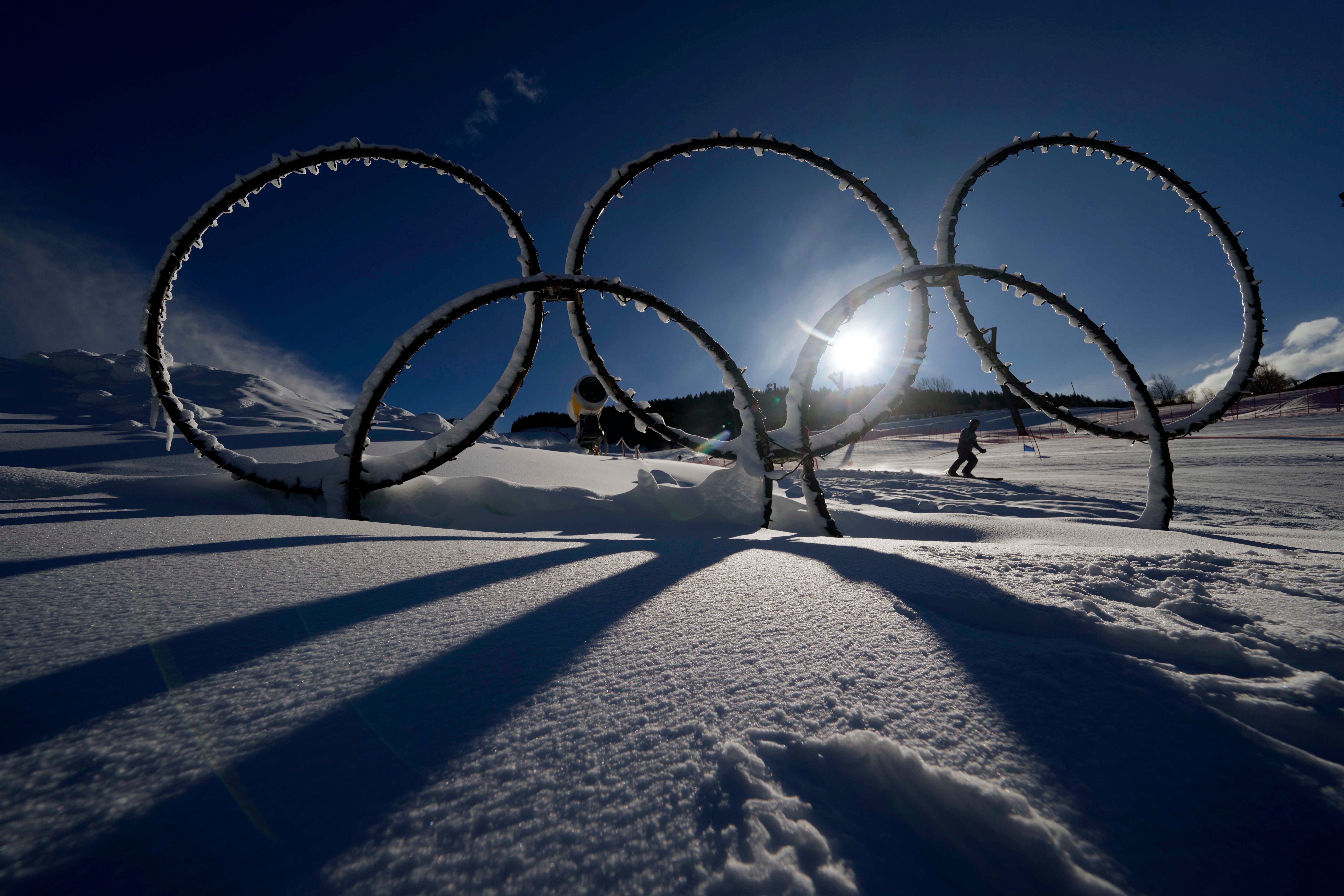
While critics suggest that rising energy prices and diminishing cold windows could render large-scale snowmaking increasingly expensive, Dogo remains optimistic.
He does not anticipate snowmaking becoming economically unsustainable in the near future, citing continued global growth in skier numbers.
"The key is efficiency," he asserted. "Producing more snow with the same power, and switching systems on when conditions are right and off immediately when they are not."
For the International Olympic Committee, the Winter Games are becoming a critical test of how effectively snowmaking can counteract climate pressures.
Several studies indicate that the number of cities capable of reliably hosting the Winter Olympics is dwindling, raising serious questions about the long-term viability of the event.
Hicks Pries warned that snowmaking has its limits, and under continued warming, the risks will only escalate.
"With four degrees Celsius of warming, 98% of European ski resorts are going to be threatened with low snow supply," she cautioned.
"Right now, snowmaking can cover for the change that we’re seeing if they have the resources. But that can’t go on."
Join our commenting forum
Join thought-provoking conversations, follow other Independent readers and see their replies
Comments
Bookmark popover
Removed from bookmarks