Sam Altman fails to get eyes on his ‘creepy’ startup
OpenAI boss is less than 1 per cent of the way to reaching his goal of 2 billion iris scans
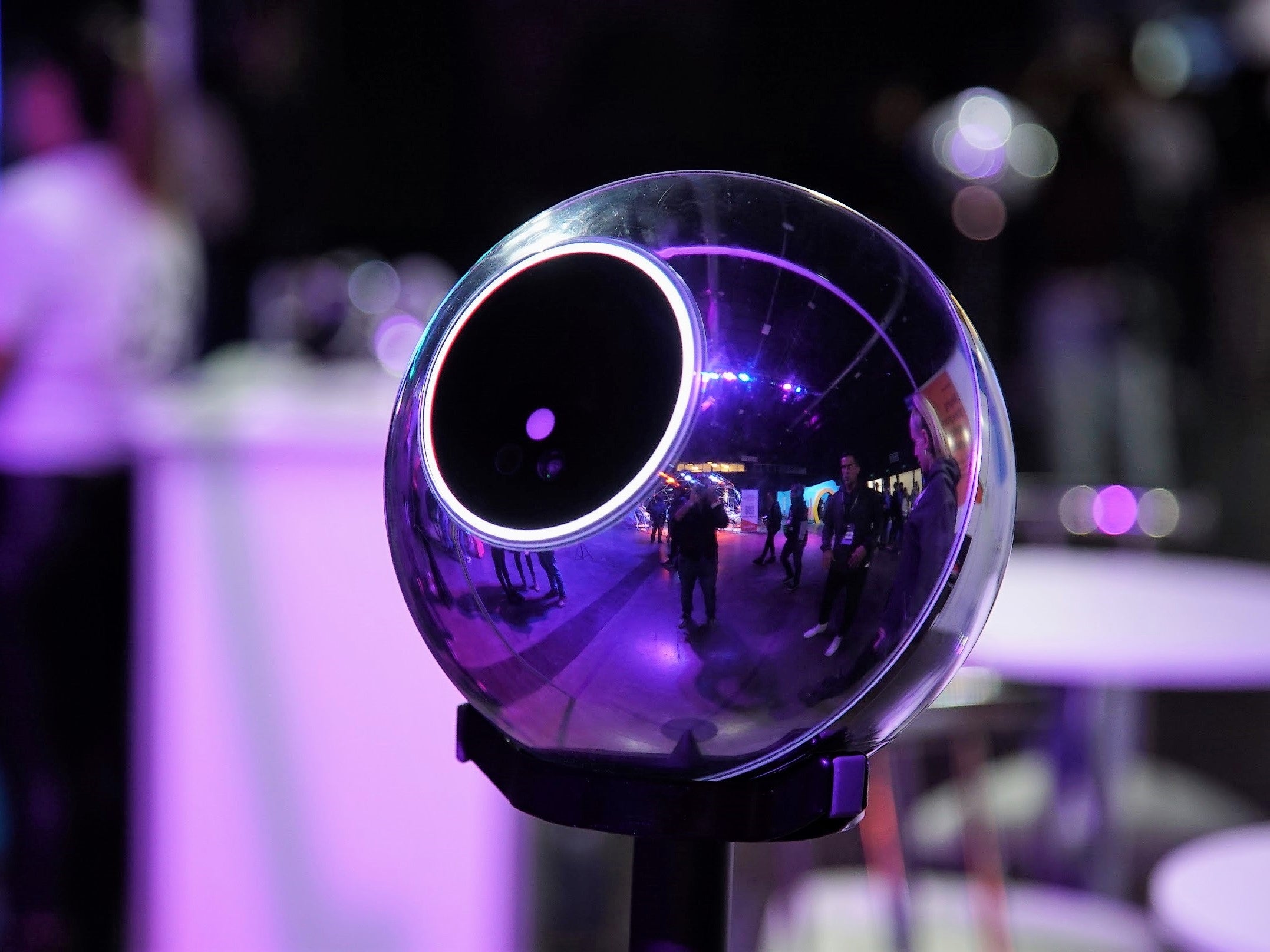
Sam Altman’s attempt to revolutionise identity verification and cryptocurrency by scanning people’s eyeballs has failed to get anywhere near its vision of 2 billion sign-ups.
Two years after the launch of the eye-scanning startup Worldcoin, which has since been renamed to just World, the venture has reached 17.5 million users – less than 1 per cent of Mr Altman’s stated goal.
The figures, first reported by Business Insider, come despite launches in 21 countries – including the UK – and investment of more than $240 million.
The project is run by Tools for Humanity, which was co-founded by the OpenAI boss in 2019 to build “technology for humans in the age of AI”.
World uses a football-sized device called an Orb to scan people’s irises in order to create a unique code to verify that an individual is a human and not AI.
In exchange for scanning their eyes, users receive some tokens of World’s WLD cryptocurrency, which currently has a market cap of around $1.7 billion.

The code generated by the Orb can be used to sign into online games and applications like Minecraft and Reddit.
Shortly after launching Worldcoin in 2023, Mr Altman said the goal was to create “a global financial and identity network based on proof of personhood”, adding, “this feels especially important in the AI era.”
After seeing 2 million sign ups during the beta stage of the venture, Mr Altman said he was “hopeful for that number to get to 2 billion now!”
The Independent has reached out to Tools for Humanity to see if there is a timeline for reaching this number of users.
The project has been dubbed “creepy” and faced pushback among regulators and privacy advocates in several countries over concerns about the data it collects.
Some have warned that the sensitive nature of the biometric data means it could be exploited by nefarious actors, though World has defended its data security practices.
“Iris images are securely stored on the mobile device of the World ID holder as a Personal Custody package – nowhere else,” a company blog post states.
“When a person uses their proof of human, or World ID, a zero-knowledge proof (ZKP) prevents third parties from knowing the person’s public key or tracking the person across applications. ZKPs also protect the use of World ID from being tied to any personal data.”
Join our commenting forum
Join thought-provoking conversations, follow other Independent readers and see their replies
Comments
Bookmark popover
Removed from bookmarks