Will new EES rules leave me cruising for a bruising?
Simon Calder answers your questions on permits, budget airline history and in-flight meals

.jpeg)
Q I am very confused about this new entry-exit system for the European Union, especially for cruise holidays. I’m taking a cruise from Southampton around the Mediterranean and then back to Southampton. Do I need an EES permit before starting my cruise, and do I need EES to get off the ship for a day excursion and then back onto the ship?
Ahmed S
A You are not alone in feeling confused about the EU entry-exit system (EES). The digital borders scheme limped into existence, way behind schedule, on 12 October this year. The basic premise: “third-country nationals” such as British passport holders must register their facial biometric and fingerprints, along with personal data from their passport, when first crossing a frontier of the Schengen area.
This zone comprises the European Union minus Ireland and Cyprus plus Iceland, Norway and Switzerland. On subsequent Schengen border crossings, the facial biometric will be checked against this record. But there is no need to organise anything in advance. The traveller is passive, not active; during the roll-out phase (until April 2026), they might be asked for fingerprints and a photo, or they might not.
After that, biometrics will be mandatory. However, cruise passengers whose journey begins and ends at a port outside the Schengen area are immune. The Home Office says: “Sailings that start and finish their journey outside of the Schengen area (for example, at a UK port) will generally be exempt from EES checks, including for any day trips into the Schengen area that are part of their itinerary.”
Cruise ships usually arrive at a port of call in the morning and leave in the evening. There is something of a bureaucratic grey area if the vessel overnights at a European port, but initially (at least) I predict this will be treated as two separate day trips, with no red tape.
For completeness: anyone on a “fly cruise” joining and/or leaving the ship in a Schengen area port could be subject to the entry-exit system. And the European System for Travel Information and Authorisation (Etias), perhaps the permit you have in mind, is due to take effect from late 2026. But once again, cruise passengers like you should be immune from those rules.
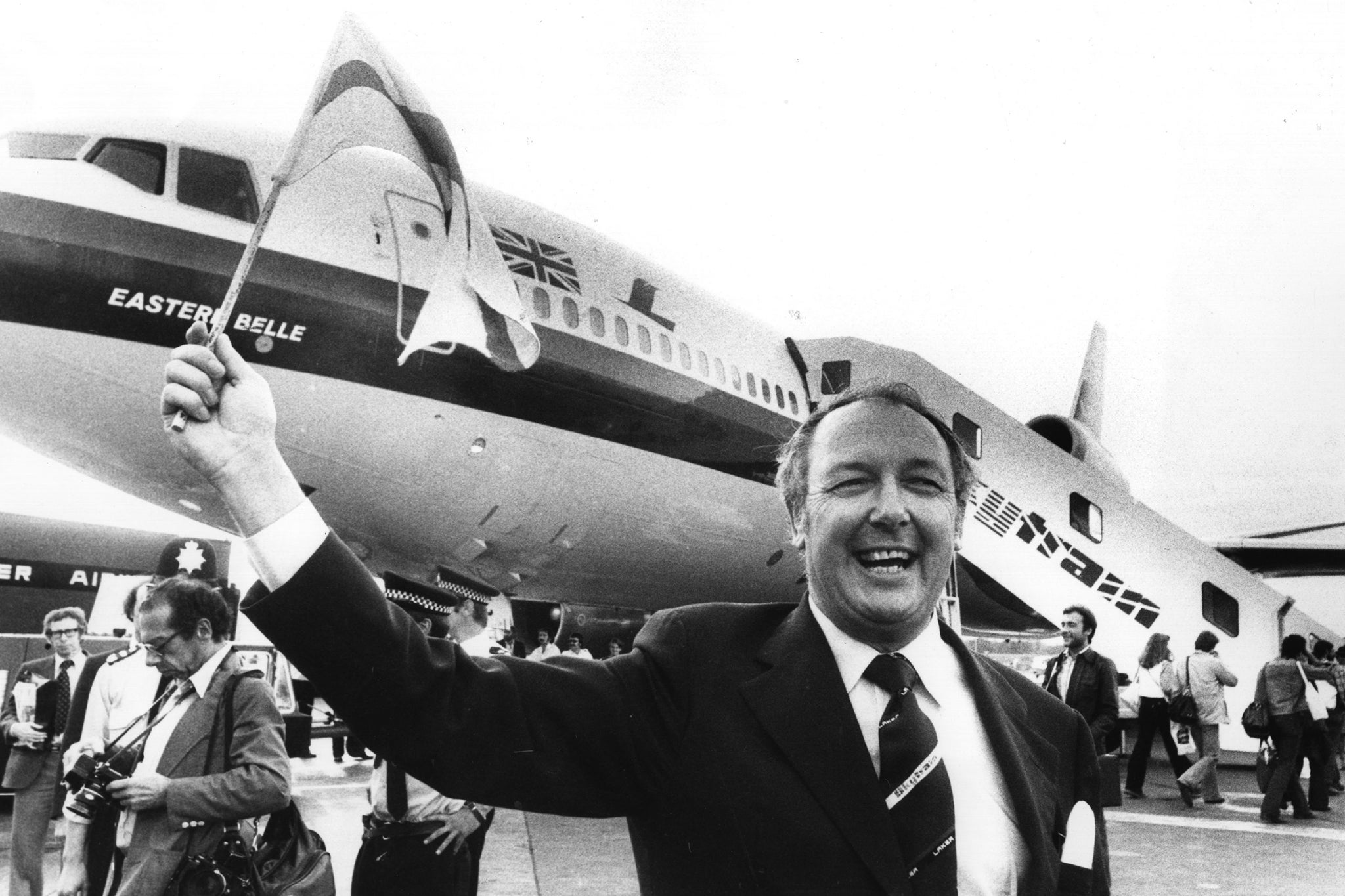
Q You have been writing about easyJet’s 30th anniversary, and say the first flight on 10 November 1995 was “the start of the low-cost revolution in the skies”. But surely the pioneer of low-cost air travel was Freddie Laker’s Skytrain?
Frank K
A I chose the term “low-cost revolution” with care. For younger readers, what Freddie Laker achieved for aviation in the 1970s was remarkable. The entrepreneur, who was later knighted, single-handedly took on the cosy cartel of airlines flying the Atlantic. After years of being rebuffed by both the UK and US governments, but refusing to back down, he finally saw his Skytrain operation from London Gatwick to New York JFK take off in 1977 – at fares way below the competition. Part of the deal was that meals cost extra – popularising the phrase “no frills”.
Compared with state-run BOAC and his US rivals, Pan Am and TWA, Laker Airways was certainly a low-cost operation. But the reason I don’t credit Sir Freddie with the title of revolutionary is that the operation survived for only five years before the airline went bust. A later legal settlement acknowledged that the rival carriers had sought to put Laker out of business by cutting their fares to unprofitable levels and winning over his customers.
Many aspects of Skytrain were conventional; for example, the airline sold through travel agents. It took until 1995, when easyJet arrived, for an airline to decide it would sell all tickets direct, immediately cutting a significant percentage of costs. Other innovations from Stelios Haji-Ioannou, the visionary founder, included free seating on board, which cut complexity, and selling seats at marginal cost – as low as £14.50 in the first year – in order to fill planes. While such cheap seats are commonplace now, no one had tried it before Stelios.
EasyJet was also the first effective adopter of the internet. To cut costs still further (specifically, the commission paid to telephone sales teams), the airline said tickets for over a month ahead would be sold only online. Soon afterwards, passengers who insisted on booking by phone were charged extra.
Ryanair, which has become by far the biggest budget airline in Europe, has picked up lots of easyJet’s ideas. But easyJet broke the mould.
.jpeg)
Q My new husband just flew from Guinea via Paris Charles de Gaulle on Air France. The flight was about seven hours. He said the chicken dinner was horrid with no flavour, and that breakfast was “a biscuit”. Whatever happened to the travel experience?
Jules S
A I have long been fascinated by Guinea. The former French colony is in the middle of the southwest shore of west Africa, facing across to South America. It is almost identical in size to the UK, and its capital, Conakry, has an unparalleled location: perching at the end of the Kaloum Peninsula, poking out into the Atlantic Ocean. Just offshore, the Loos Islands look enchanting on the map. Their shape resembles two doting parents protecting a child.
I have yet to reach Guinea. But should I travel there on Air France via Paris, Brussels Airlines via the Belgian capital or (more likely) Royal Air Maroc via Casablanca, I shall have no great expectations about the quality of food on the homeward flight.
Airline catering is a challenging business. At big airports such as Paris CDG, meals are prepared in industrial kitchens with ingredients sourced from near and far. I imagine your husband had few complaints about the outbound leg from the French capital to Conakry.
Flying in the opposite direction is a different proposition. Such is the length of the outbound flight that carrying meals for the return would not be practical, except perhaps for the breakfast biscuit. So Air France must cater the flight in Guinea. Conakry airport handles a fair number of longhaul flights, to Istanbul and Dubai as well as Paris and Brussels. But supplying them with top-grade in-flight fare is likely to prove tricky – not least procuring appetising and nourishing ingredients in what the British government says is “one of the poorest countries in Africa”.
The same applies for flights from a number of nations in Africa – though the offerings from Addis Ababa, Nairobi, Johannesburg and Cape Town are usually excellent. Elsewhere, I have experienced disappointing in-flight catering when travelling in the former Soviet Union, which I imagine is a hangover from the days of state-run Aeroflot.
I hope, at least, that Air France had a decent bar offering for your husband; the wine will certainly have been flown from Paris.
Email your question to s@hols.tv or tweet @SimonCalder
Join our commenting forum
Join thought-provoking conversations, follow other Independent readers and see their replies
Comments
Bookmark popover
Removed from bookmarks