Will Eurostar trains ever stop at Ebbsfleet again?
Simon Calder answers your questions on the Eurostar’s stopping points, crying infants ruining expensive flights, and how best to see Japan

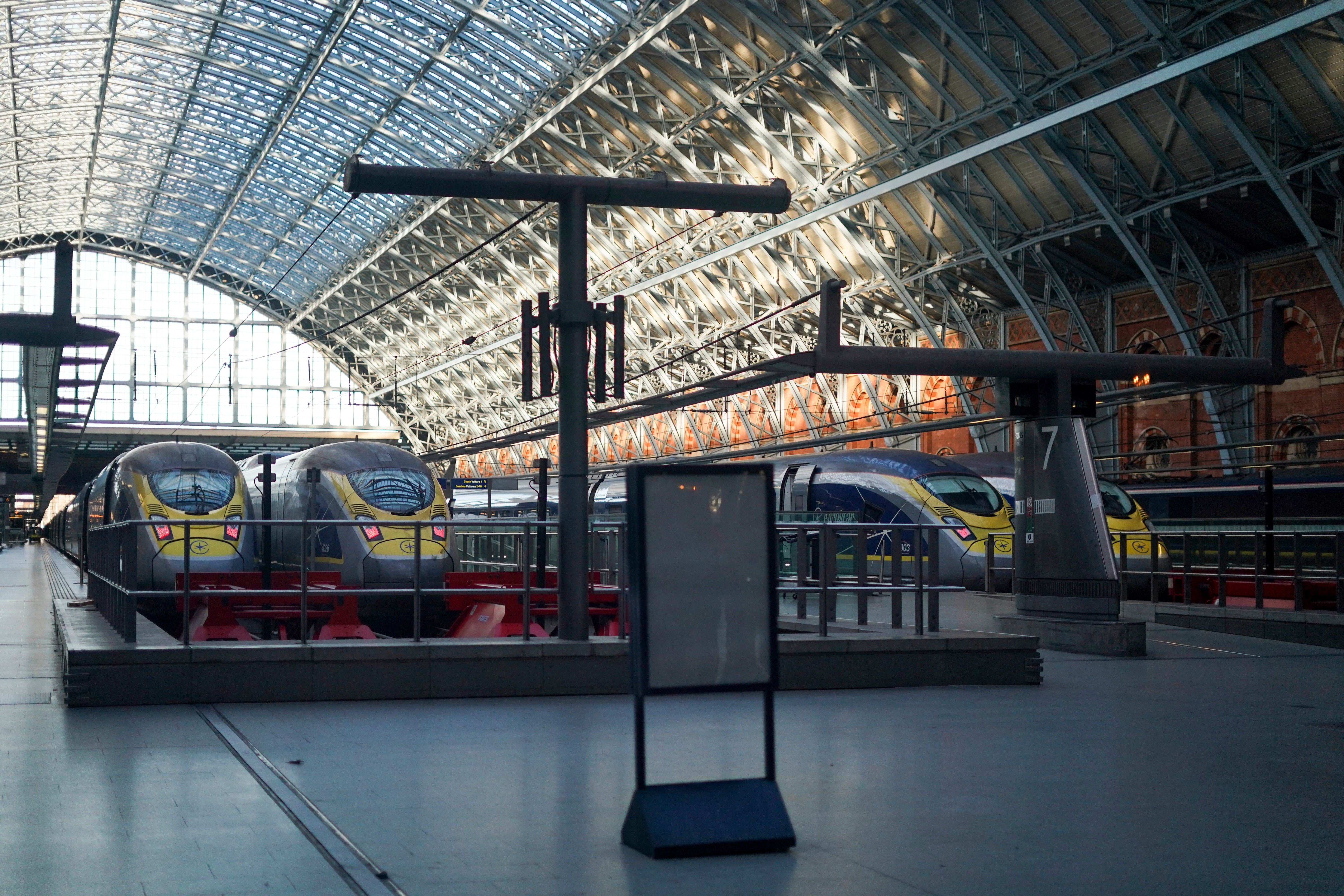
Q A question about trains to Europe from Kent. With tiny political shifts towards our European chums, are my dreams of a reopened Ebbsfleet station any closer?
Blaggard (via Ask Me Anything)
A When High Speed One, the rail link from London St Pancras International to the Channel Tunnel, cut through the middle of Kent, part of the payback was two stations with direct trains to continental Europe. Services from St Pancras would stop at Ebbsfleet in the northeast of the county and Ashford International in the southeast en route to Paris and Brussels.
Until 2020 a certain proportion of Eurostar trains stopped at one or the other station. It was an expensive operation: passengers needed to be screened by French Police aux Frontieres officers and security staff before boarding. Once Covid struck, Ebbsfleet and Ashford International were promptly shut down. During the pandemic, Eurostar lost a fortune running near-empty trains between St Pancras and the continental capitals – even without the extra running costs of the Kent stations.
Brexit took effect at the start of 2021. The UK’s insistence on British passport holders being treated as “third-country nationals” sharply increased the workload of French border staff and the space required for processing. With the EU entry-exit system (EES) requiring even more resources, Eurostar has no appetite for reopening the stations. The firm is now harvesting impressive profits from its monopoly position in a large, lucrative market.
Virgin Trains has been given the go-ahead to run trains in competition with Eurostar from about 2030. Richard Branson’s company is interested in reviving the Kent market. But the price must be right, which could include the government or local authority stumping up millions for the necessary infrastructure reconfiguration. I can see this happening only at one station initially: Ashford International. It has a wide potential catchment across the county and into Sussex and even Essex, once the Lower Thames Crossing is completed.
Reducing border friction with the EU would improve the economics of stopping in Kent. But the county’s people voted 51:49 in favour of the sunlit uplands of Brexit. I think Kent’s Europe-bound passengers will be waiting a while yet.

Q For an overnight flight from Orlando in April, we treated ourselves to a business class flight. The marketing for this cabin set our expectations high for a relaxing experience with “fully lie-flat seats to help you get a great sleep”. Sadly, it was anything but relaxing, due to a baby crying for the duration of the flight. We were certainly not led to expect that babies were allowed in the business class cabin, and we believe we suffered a “constructive” downgrade to an experience more in line with an economy cabin. Surely we were mis-sold the business class experience?
Anonymous (via Ask Me Anything)
A L’enfer, c’est les autres, wrote Jean-Paul Sartre: “Hell is other people”. The French philosopher and writer was not specifically referring to overnight flights. But spending long hours in an aircraft cabin while a noisy fellow passenger (of any age) renders sleep impossible could infuriate the most serene traveller.
It is bad enough in economy; I was among dozens of passengers who were kept awake aboard an all-night flight from Bogota in Colombia to Heathrow airport due to an infant achieving extraordinary decibel levels. It must be doubly annoying when you have paid a small fortune to fly in business class.
Unfortunately, I can see no grounds for any kind of compensation claim. Airlines typically make bold assertions about premium cabins, but most make no guarantees about who your fellow passengers might be. Just as people can’t choose their families, airlines can’t choose their passengers. A few Asian airlines offer child-free zones, but I know of none across the Atlantic.
Were you to have been promised a lie-flat bed and top-grade in-flight entertainment, but then ended up with neither due to a last-minute aircraft replacement, you could make a claim against the airline. But in your circumstances, the best I can suggest is writing a polite note explaining your less-than-ideal experience. That may be enough to earn you a few thousand frequent flyer points to make amends. Together with the points you presumably earned on the business class flight, you might have enough for a future upgrade…

Q We are planning a five-week trip to Japan in September. Bullet trains are the quickest way to get between major cities. However, in less populated areas, transport seems more difficult. As they drive on the same side of the road as us, we are thinking of hiring a car. Do you have any thoughts on this?
Eileen G
A Japan is a top destination for many people at the moment. It is intriguing, beautiful and safe. Reaching the country involves a long and fairly expensive journey; travelling via China is likely to deliver the lowest fare, and also a swift journey despite the change of plane. Chinese airlines, unlike British and Japanese carriers, fly over Russia, which is a much shorter journey. In addition, you will be able to arrange an “open-jaw” itinerary, flying into Sapporo in the north of the country and out from Kansai airport near Osaka.
Your timing is excellent; the heat and humidity of the summer will have eased. On a five-week trip, I imagine you want see as much as possible of the country. So start in the north – on the island of Hokkaido – then gradually make your way south. Plan to spend at least a week in Tokyo: it is an engrossing city. Then wend your way via Hakone National Park and the Mount Fuji area to Kyoto, another city worth a good few days. Other destinations, including Hiroshima and Nagasaki, are well worth a side-trip.
Annoyingly the Japan Rail Pass is no longer the bargain it was, and advance-purchase tickets for Shinkansen bullet trains are largely unknown. So you may prefer to save a lot of cash by using excellent long-distance coaches instead.
Rural Japan is largely mountainous, but I don’t recommend renting a car. Even in remote areas, public transport is adequate. Besides keeping costs down, you will avoid the stress of navigating around, and finding places to park in towns and cities.
Email your question to s@hols.tv or tweet @SimonCalder
Join our commenting forum
Join thought-provoking conversations, follow other Independent readers and see their replies
Comments
Bookmark popover
Removed from bookmarks