Can you help me organise my south Indian odyssey?
Simon Calder answers your questions on first class UK train travel, flight trackers and flying non-stop to Australia


Q I’m looking at Kerala in February. All of the organised tours are too temple-oriented for us. Where do I start doing it myself? We would like to do at least one train journey.
Cathy M
A Kerala in February should be blissful. I adore this south Indian state at any time of year, but February is hot, sunny and dry – with 367 miles of coastline. My prescription begins with the flight plan. Book an “open-jaw” itinerary through one of the Gulf-based airlines out to Kochi (formerly Cochin) and back from the state capital Thiruvananthapuram (formerly Trivandrum). I used Gulf Air via Bahrain, but Emirates and Qatar Airways will also have plenty of options via Dubai and Doha, respectively.
Devote a few days to the fine city of Kochi (Cochin), one of my all-time Indian highlights. Fort Kochi occupies the tip of a peninsula a few miles from the cheerful chaos of the main city. It is a serene mix of diverse places of worship, colonial remnants and charming places to stay. You can get over the jet lag and prepare yourself for the cultural immersion ahead.
A relatively short distance south, the port city of Alappuzha is the gateway to the backwaters of Kerala. This network of lakes, lagoons, canals and rivers reveals how humanity can thrive on the water. A day-trip (easily arranged locally) will give you a taste of life among the reeds, but ideally sign up for a night or two on a houseboat.
From Alappuzha it is an easy three-hour rail journey to Thiruvananthapuram. The train trip will give an excellent introduction to Indian Railways, the greatest transport undertaking on earth. In the state capital, the main attraction is indeed a temple: Sree Padmanabhaswamy. I hope you find it worth the wait.
Finally, I am a fan of booking a package through a UK operator with good local organisations working on its behalf. Before you decide to go it alone, have a conversation with a company such as Mercury Holidays – which runs group tours, but which is also happy to put together bespoke itineraries to your specification.

Q Can you please tell me the cheapest way to travel from Liverpool to London by first class train? As we travel elsewhere, too, I wonder if there is a cheap method nationally? We are not restricted by time as we travel for pleasure. I am 67 and my wife is 64.
David B
A If you do not already each own a Senior Railcard, apply ahead of your next journey. You will save one-third on most rail trips – the main exception being the morning peak only when travelling between two stations in southeast England, parts of East Anglia and the West Country. The price is £35 for a year, or £80 for three years – which works out at under £27 annually, and insulates you against possibly rises in the cost of a railcard for a few years.
On the Avanti West Coast route from Liverpool Lime Street to London Euston, there are actually three classes of travel: First, which includes meals and drinks; Standard Premium, which is the same posh seats as First but without the catering; and Standard.
It is good news that you are flexible about timing, because the best fares are for advance tickets for midweek trains in the middle of the day and late evening. Booking about three weeks ahead on the Avanti West Coast website or app, you can find plenty of availability at £83 in First, £39 in Standard Premium and £17.50 in Standard (these fares are all assuming you use a railcard). Looking for the very cheapest, it’s the 8.51pm, which reaches the capital at four minutes to midnight; it saves about £3 on the two lower categories, but First remains resolutely the same.
I am happy in Standard on Avanti West Coast. But I can see the appeal of bigger seats (three abreast instead of four) and less crowded carriages. Were I ever to go up in the world, I would stick at Standard Premium. The £44 per person saving compared with “real” First would buy a lot of fancy eats and drinks at M&S Simply Food at Lime Street station (and even more from Sainsbury’s Local just across the road from the Liverpool terminus).
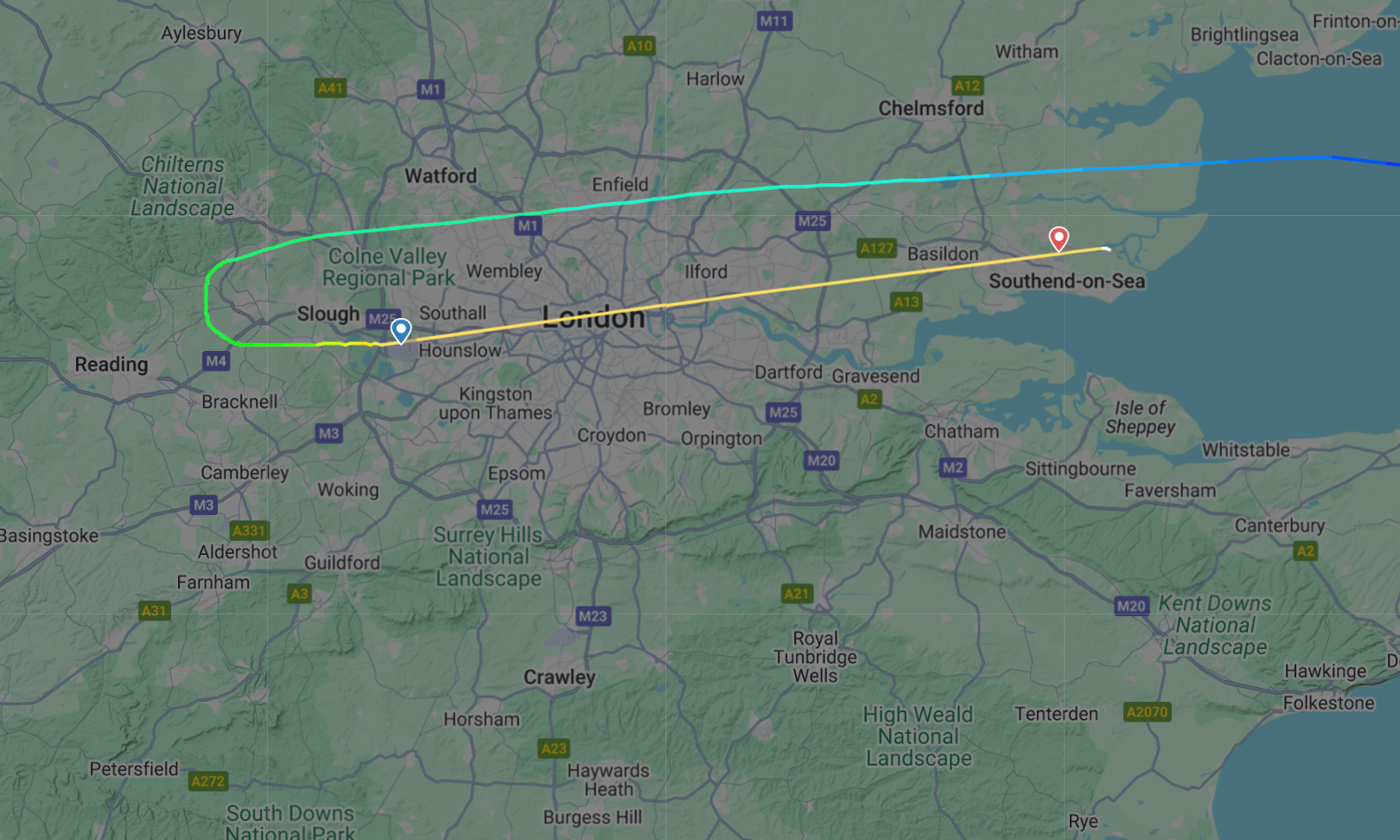
Q On a flight from Milan Malpensa to London Stansted, we diverted to Paris Beauvais for a medical emergency. We were on the ground a little while, something went on at the front of the cabin, and then we were on our way again. My question is about flight tracking and whether there is any obligation to keep “live” flight details going?
Our family were tracking our flight on Flightradar24. At Beauvais the flight “disappeared” off the screen and did not reappear, although we were quite safely on our way to Stansted. This, naturally, caused concern to our family. Is this usual procedure or just a blip?
John M
A One minor miracle of the 21st century is that you and I can track almost any flight worldwide. This is thanks to a community who maintain more than 50,000 “ADS-B” (Automatic Dependent Surveillance – Broadcast) receivers.
These provide live data from aircraft transponders to Flightradar24, providing positional information that is then processed into a global view of aviation. (Other organisations offer a similar insight into real-time flying.)
Anyone with an internet connection can get overview of a specific airport, region or individual flight. When travelling, I routinely use Flightradar24 to track the aircraft that is expected to operate my flight. When diversions happen, it is a different picture. For the onward flight from Beauvais to Stansted, the airline is likely to have assigned a different flight number. However, you (or the people who are expecting you) can simply click on the registration number of the aircraft and find out where it is.
The free service makes clear that sometimes it may not be 100 per cent accurate; right now, for example, I can see that British Airways flight BA108 from Dubai to Heathrow appears to have diverted to Southend. Now, I don’t believe that actually happened, and that this is one of those occasional glitches. But overall we are lucky to have such an excellent source.
Q I have read your latest article on non-stop flights from London to Sydney. The question is, why would anyone want to?
Rachel A
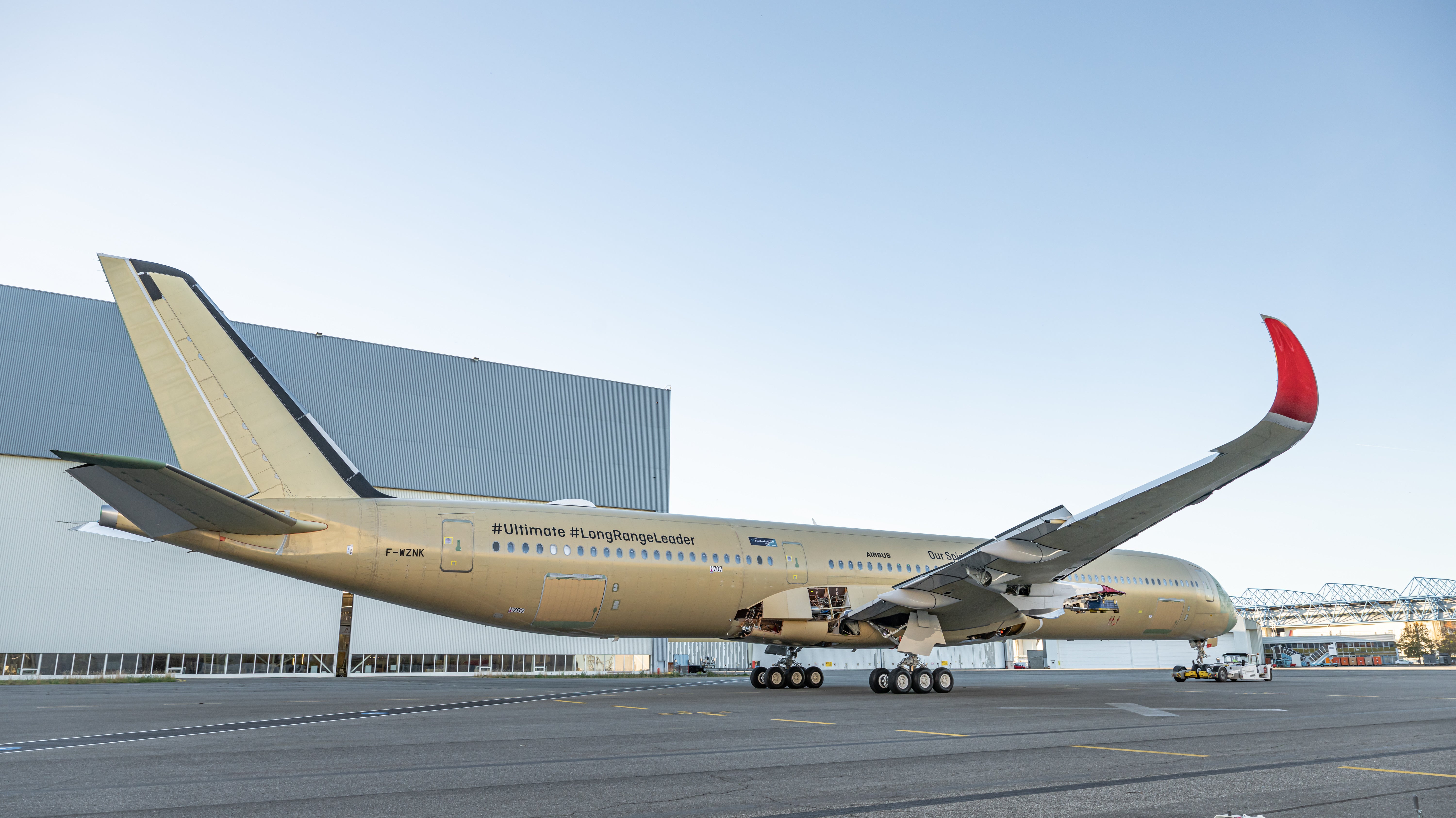
A Qantas plans to fly non-stop between London and Sydney from early in 2027, using a specially modified fleet of Airbus A350 jets. The distance between the two cities is 10,573 miles, making it by far the longest route in the world. The journey is likely to take around 19 hours from London, 20 hours from Sydney; the aircraft can stay aloft for 22 hours.
The latest step in the protracted journey to the world’s longest flight is that the first plane has been revealed to the world. And for the maiden flight, many passengers will be aviation geeks. I met a fair few of them on the first commercial non-stop flight from the UK to Australia, from London to Perth on Qantas in 2018, and on Global Airlines’ inaugural A380 flight from Glasgow to New York earlier this year.
Beyond day one, the Australian airline has its sights on a much broader market. The primary target: business travellers whose sole aim is to travel as swiftly and comfortably as possible between Europe’s and Australia’s main financial centres. They (or their companies) will think nothing of paying £10,000 return for the privilege of boarding a plane in London, being wined, dined and rested in business class and stepping off in Sydney. If all 52 business seats are filled at good fares, the flight will be well on the way to breaking even. Some executives will pay even more for first class, though only six suites are available – and these will be much in demand by high net worth individuals who are insensitive to price.
Heading down the pecking order, the 40 premium economy seats and 140 economy seats are likely to be filled by an older demographic, typically grandparents visiting their offspring at the other end of the route. They will be glad of the option not to have to change planes at a random airport in the Middle East or Asia, where it always seems to be 4am. Those with mobility issues will be particularly glad of the non-stop opportunity, easing the hassle of air travel. But the vast majority of travellers between the UK and Australia, including me, will opt for cheaper, indirect flights.
Email your question to s@hols.tv or tweet @SimonCalder
Join our commenting forum
Join thought-provoking conversations, follow other Independent readers and see their replies
Comments
Bookmark popover
Removed from bookmarks