The Independent's journalism is supported by our readers. When you purchase through links on our site, we may earn commission.
How to spot a hidden camera in your holiday home
Exclusive: The Independent speaks to a bug-sweeping expert about how to can spot covert surveillance devices
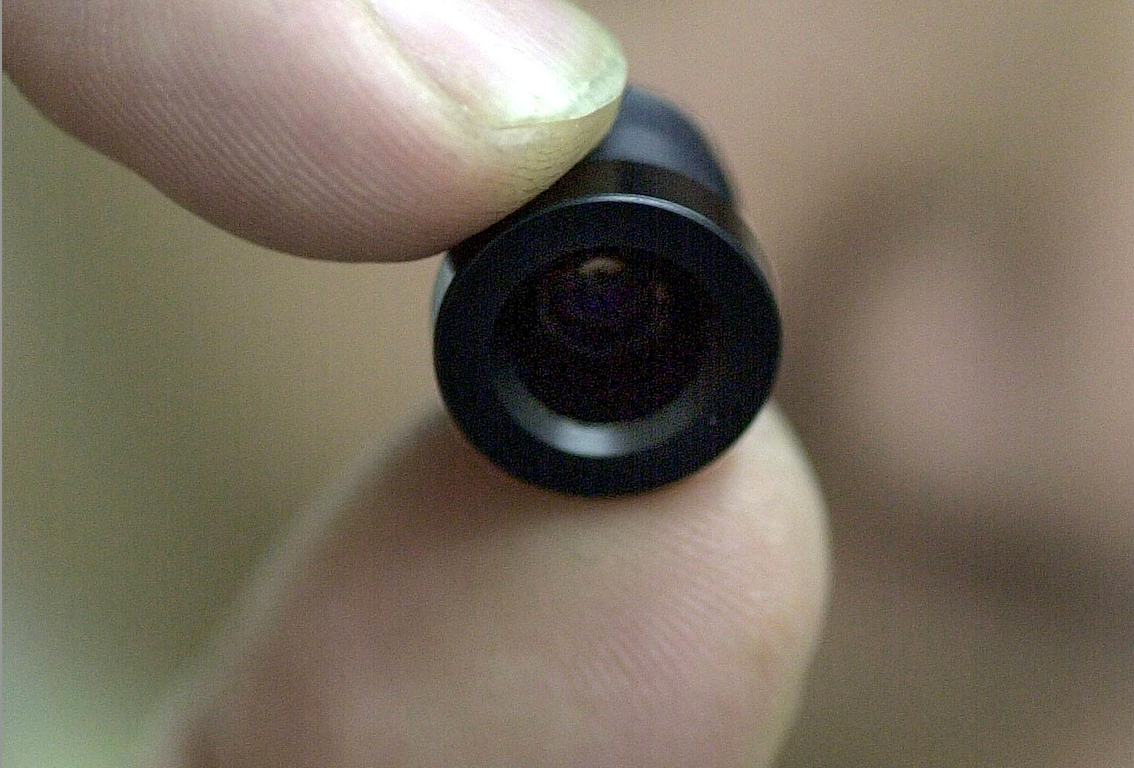
Choosing to book a holiday home over a hotel has its perks. More independence and privacy means that holidaymakers can fully settle down and relax.
Yet stories of travellers discovering hidden cameras in their short-term rentals have raised concerns about safety and security.
In May last year, a doctor was jailed over voyeurism offences after recording more than 24 people over the course of three years at his holiday home in Glasgow.
One victim became suspicious of two air fresheners facing the toilet and shower and discovered small surveillance devices. A third camera was later found inside a smoke alarm.
Similarly, a couple on holiday in Puerto Rico last June found spy cameras hidden throughout their Airbnb which had recorded video and sound of them having sex, plus footage of their two children in the bathroom.
Scrolling back through the footage, the guests found videos of the hosts setting up and installing one of the cameras.
Airbnb states it does not have any tolerance for hidden cameras and will ban hosts from the website if they are caught secretly filming their guests.
The rental platform introduced rules in April 2024 which state that it does not allow hosts to have “security cameras or recording devices that monitor indoor spaces in homes, even if these devices are turned off.”
“Hidden cameras have always been prohibited and will continue to be prohibited,” its guidance states.
Other platforms, such as Vrbo, have similar policies, which rule that surveillance devices should not be used inside a property.
While stories such as the above are incredibly rare, they can be alarming for travellers. Luckily, there are quick checks that can be done to provide peace of mind.
Jack Charman is the managing director of National Private Investigators, a UK-based team of private detectives that also provides bug sweeping services, detecting covert camera installations alongside other devices.
He says he has seen the rise of everyday items, such as Apple AirTags and cameras, be “weaponised” to invade privacy.
Mr Charman and his company regularly conduct sweeps at hotels and rentals for high-profile clients. He shared his tips with The Independent as a guide for everyday holidaymakers.
Do your research
Before a search, it's important to know exactly what it is you’re looking for.
Mr Charman says: “These devices [such as covert cameras] are available to buy very cheaply, with next-day delivery from Amazon and from online ‘spy’ shops.”
“Scroll through the types of devices that are available, such as cameras hidden in alarm clocks.
“Then, if you go into an Airbnb and recognise that alarm clock, you can look into it closer. It may have slots underneath it where a Sim card or an SD card can go.”
“Ninety-nine per cent of the devices that are found are commercially available to everyone.”
Use your phone torch
The torch on a phone is a useful tool for discovering hidden technology. If a device is hidden in the property and is illuminated by the torch, its lens could “flare” in the light, revealing its location.
Mr Charman also suggested looking for pinpoint holes that look out of place on everyday objects, where a camera could be recording through.
But buying radio frequency (RF) detectors, usually used to identify transmitting electronics, is often a waste of time, says Mr Charman.
“RF detectors that you can buy online are just nonsense, because there's RF in the environment everywhere.”
“So many people come to me and say they’ve bought this RF detector, but there’s intermittent RF in the environment. If you’ve got wifi in the house, you probably wear a smartwatch, and that’s giving off RF,” he says.
Look for anything out of the ordinary
Mr Charman also says that if you are worried about hidden cameras, make sure you check the right places, instead of wasting time sweeping the entire property.
“There's no point in putting a camera under the stairs, for instance, because it's not going to see anything. A camera is likely going to be positioned up high with a view of the whole room, or if you were to go into a living room area, for example, somewhere around the TV is an ideal place to put a camera, because it's pointing back at the rest of the room.”
“Some devices can also be hidden in a bookshelf quite easily, because there's lots going on there.”
He also advised checking wifi and Bluetooth connections.
Open your phone settings and review nearby connections. Check for names like “IP camera”, “_cam” or anything that looks suspicious.
“It might sound really simple, but you’d be surprised,” he said.
“Looking for things which are just a little bit out of place, it could just be that alarm clock in the corner. It might not be positioned centrally. It might be off-centre and pointed at the bath in the corner of the room. Little things like that.”
What to do if you find a camera
The first thing you should do is to start documenting it, Mr Charman said. Get your phone out and video the device in situ.
Then report it to the police, as well as the platform or company you booked your holiday let through.
If the police can't come out and you have the funds, think about ringing a private company which can assess the situation properly, he added.
Join our commenting forum
Join thought-provoking conversations, follow other Independent readers and see their replies
Comments
Bookmark popover
Removed from bookmarks