Why Canada isn’t the trouble-free alternative to America you think it is
Canada’s tourism might be enjoying a ‘Trump Bump’, but travellers should beware its visa trap – as Jonathan Margolis, like many others, learned moments before his flight


Canada is having a moment this summer with bookings by European holidaymakers reportedly surging by 32 per cent – and almost all of this increase comes at the expense of the United States. Travellers are avoiding the US because of its newly hostile environment, a steady stream of visitors reporting arbitrary, despotic US border officials, and even, this past week, a possible requirement for visitors to the US to pay a deposit to enter its borders.
Canadians call their country’s soaring popularity the Trump Bump. Canada is often seen as an idealistic antidote to this American era: a safe, welcoming destination with spectacular scenery, no xenophobia, no guns, universal friendliness and politeness, a sensible government, and no thorny visa or ESTA requirements.
All of this is true, as my partner and I, as well as others, discovered last month – apart from the visa bit.
Because what most people don’t know – and flight booking sites and airlines mostly hide – is that Canada has a rigid Electronic Travel Authorisation (eTA) regime. And that if you don’t have an eTA, which is a visa in all but name, your airline will turn you away at the airport, no exceptions.
The Canadian eTA has existed since 2016, but wasn’t enforced strongly at the start.


The eTA is often issued online in a couple of minutes, much like the Australian version, which became the first in 1996. The Canadian immigration department says eTAs can take up to 72 hours to be issued. But for no given reason and with no way of speeding up your application, it can, in reality, take several days.
Facts we weren’t aware of when, in May, we booked a well-priced flight on Expedia to Calgary, flying Delta Air Lines via Minneapolis. It was only when we checked in the maximum 24 hours before the flight, that Delta warned us we needed to get the £4 eTA.
We applied. My partner received hers within two minutes. Mine still hadn’t come the next morning when we left for Heathrow. But having flown into Canada in 2018 without an eTA and driven in just last year without one, I assumed it was not mission-critical.
However, Delta refused to let me board. They can be fined €9,000 for every passenger they carry not correctly documented to their destination, they explained – I didn’t even have the option to leave the flight at Minneapolis (I have a US visa) and make my own way for the final leg.
We went home despondent and with no option but to buy two new tickets. The cheap ones we had were non-transferable. My eTA arrived after 35 hours from the Canadian immigration department, with no reason given for the delay.
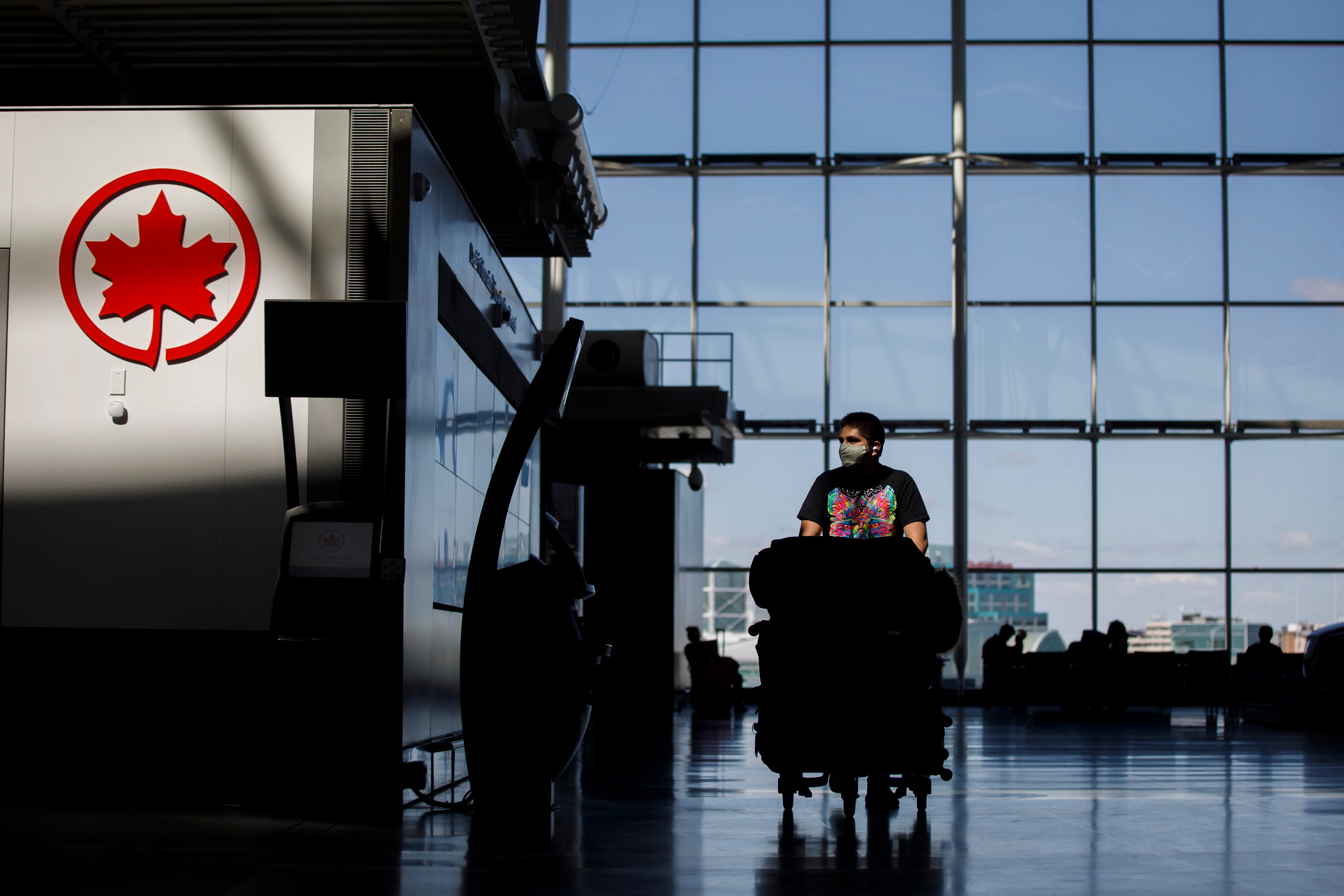
I spoke with Expedia, who said visas and eTAs are not their responsibility, and that their small print warns that travellers to check for visa requirements themselves.
It does indeed, if you can find it in the small print – but Expedia link you to a visa shop that charges £180 per person for the eTA – triple the rate of even other opportunistic commercial visa sites and 46 times the £3.93 charged by the official Canadian government eTA site.
Since we fell foul of the eTA trap, we have, without trying hard, found two families merely from our small group of friends affected by it.
The ex-Times journalist Michael Crozier, from north London, got caught out having also not been warned by his airline. He and his wife applied for the eTA at Spokane International Airport in the US. They were flying to Vancouver. Hers came in 20 minutes, but his took five hours – so they missed the flight.
“We booked the flight three months in advance, and it really wouldn’t have been hard for the airline to warn people clearly that some will need this visa,” Crozier told me. “We had no idea about it. The onus should be on the airlines and booking sites. What reason could they have for not flagging it up?”
Simon Hewitt, from Hampton, almost lost his family holiday because he knew nothing about the eTA requirement.
The Hewitts were booked to fly to Calgary earlier this week. He bought the tickets weeks ahead, but got no warning, again, from Expedia or from the airline, that an eTA was needed. Simon is the marketing manager for a large German company, well-travelled, and famously ultra-organised.
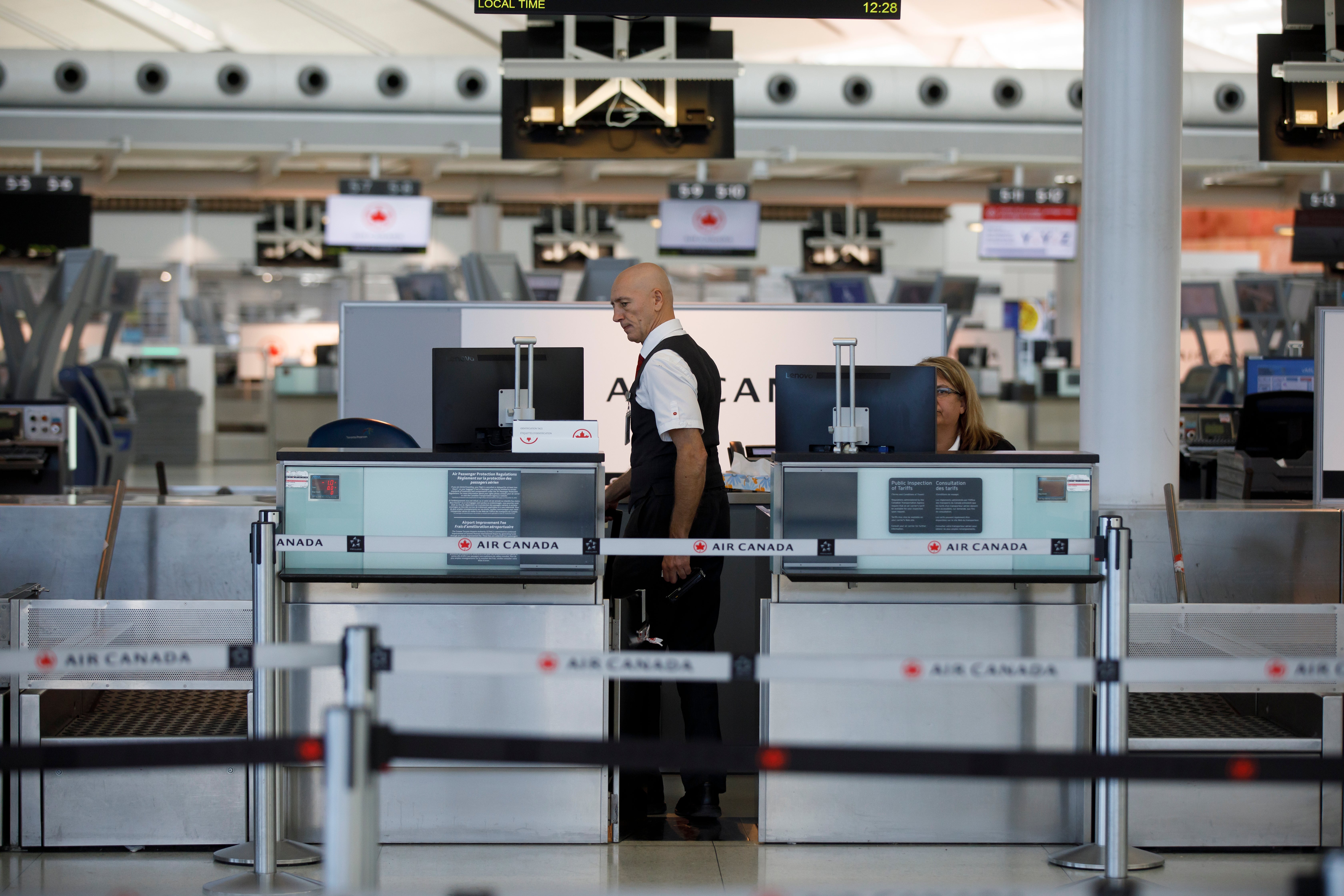
After our disaster, I had warned him to apply. The family still had two weeks to get the documentation. His wife’s and teenage kids’ eTAs came within minutes, but his took 10 days.
As the days went by, Hewitt tried to contact the Canadian immigration department. “It was like a labyrinth,” he says.
When I asked Expedia, Air Canada and British Airways why they don’t simply flag up clearly that your flight to Canada cannot go ahead if you don’t have an eTA, all predictably and wordily took the “it’s in the small print” approach.
Expedia – who defended recommending a company that charges £180 per person to obtain the visa on your behalf as an “optional, additional service” – showed that deep within its terms and conditions, they do link to the official Canadian government application site.
I asked the government body, Immigration, Refugees and Citizenship Canada, if they were having difficulties due to the influx of applications for eTAs this year.
“Most applicants get their eTA approval (via email) within minutes,” they replied. “However, some applications need more time to be processed. For example, some applicants must submit official documents that take several days to obtain from the appropriate authorities in their country. To avoid travel delays, applicants should get their eTA before booking their flight to Canada.”
I asked an experienced Canadian immigration barrister, Will Tao of Heron Law Offices near Vancouver, if he was hearing stories of chaos from within the immigration service.

“The system has always been mostly automated,” Tao says, “I think they must have expanded the number of rules and flags, to triage more humans in the interventions and take into account their power of cancellation, which was expanded in January. But only the department can possibly confirm this.”
“They used to advertise eTAs as taking no more than 7 minutes. Go figure!” the lawyer adds.
The strangest thing about the Canadian eTA, meanwhile, is that while it is supposedly to maintain their borders, it doesn’t apply to land and sea entries to the country.
The rationale, Tao says, is in the original proposal for the eTA, which says, “It is not anticipated that travellers will switch their mode of transport to avoid the $7 fee.” Right.
Regardless, a lesson. And one to remember: for all travellers in the coming year, the eTA issue is going to expand far beyond Canada.
Australia and New Zealand have an eTA, but their systems are easy, efficient and quick. A new eTA system in Britain is up and running, but by all accounts, is running smoothly.
From next year, British travellers will require an eTA to go into the EU. Canada has a relatively efficient bureaucracy. With the likes of many EU countries, the same can’t be said.
Join our commenting forum
Join thought-provoking conversations, follow other Independent readers and see their replies
Comments
Bookmark popover
Removed from bookmarks