Driver-only operation: The confusing issue dividing the nation’s railways
Every day, millions of passengers travel on trains where the only member of staff on board is in the driving seat
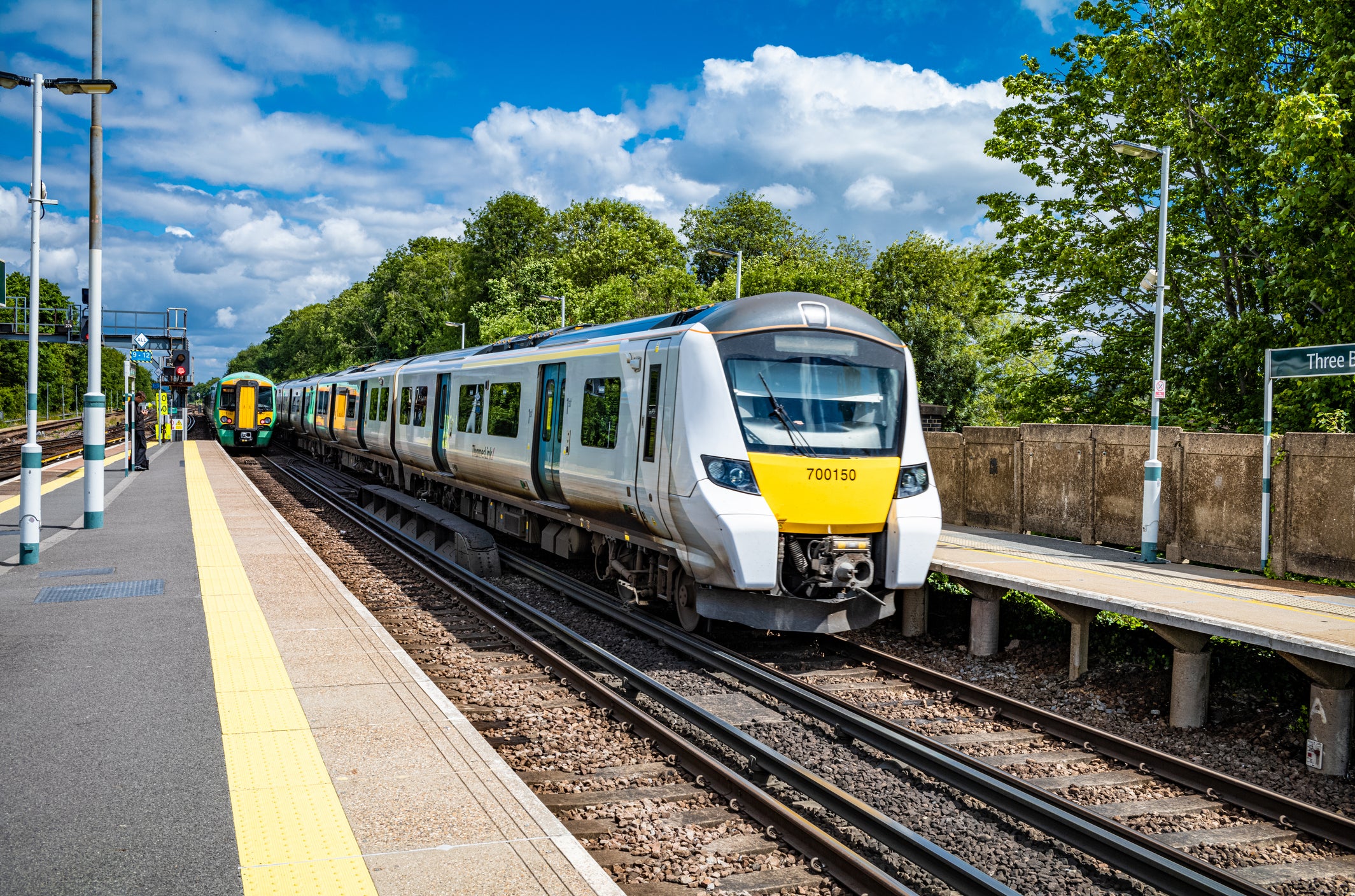
The RMT union is threatening industrial action against Chiltern Railways in a row about driver-only operation (DOO) trains.
The train operator plans to operate the new East West Rail link between Oxford and Milton Keynes with the driver as the only member of staff.
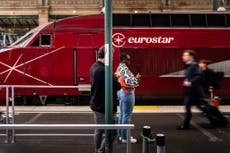
But RMT general secretary Eddie Dempsey says: “Passengers rightly value having the guarantee of a second member of staff on their services and RMT remains steadfastly opposed to driver-only operation.”
His predecessor Mick Lynch told MPs on the transport select committee: “We will never sign up to accepting DOO.”
That might give the impression the concept is new. In fact, many trains have been operated by a single person since the 1980s, when the train drivers’ union, Aslef, agreed to driver-only operation on the new Thameslink service.
Every day, millions of passengers travel on trains where the only member of staff on board is sitting at the front – mainly on short-distance trips in Greater London, but also on some journeys of over 100 miles.
These are the key questions and answers about this complex and contentious issue.
What is driver-only operation?
Strictly, driver-only operation describes when the only staff member working on a train is the driver. He or she opens (or more accurately unlocks) the doors on arrival at a station, and closes them when everyone is safely on board or on the platform.
Cameras are installed to ensure that the operation can be conducted safely by the driver.
The practice was introduced as a cost-cutting measure in an industry that is heavily subsised by the taxpayer.
DOO is a subset of driver-controlled operation (DCO). This covers all trains on which the driver opens and closes the doors.
All driver-only operated trains are by definition also DCO. But there are many DCO trains that have additional members of staff on board. This is the arrangement on, for example, Lumo services linking Edinburgh and Newcastle with London King’s Cross.
At the risk of introducing another confusing acronym, there are some trains where the driver opens the doors but the conductor/guard closes them. This is known as DOCC – short for “Driver opens, conductor closes”.


The theory is that the driver has a clear view arriving at a station that all is well, and so he or she can safely open the doors. But a guard closing the doors is likely to have a better view up and down the platform.
DOCC is standard on all Great Western Railway high-speed services linking London Paddington with South Wales and the West of England; shorter distances to and from the capital are DOO.
On LNER, which runs from London King’s Cross to Yorkshire, northeast England and Scotland, drivers open/unlock the doors, but train managers close them and signal to the driver that train is ready to depart. On older 225 rolling stock the train manager opens and closes the doors.
Most electric trains on the Scottish network are DCO, but DOCC applies on ScotRail trains linking Glasgow and Edinburgh via Falkirk. This is due to the terms of an old agreement dating to when the prime intercity link was served by diesel trains.
Where does DOO exist at present?
The Rail Delivery Group (RDG), representing train firms, says that driver-only operation is the normal mode on 45 per cent of UK trains – and that those trains carry 55 per cent of passengers nationwide.
All Greater Anglia trains, linking East Anglia and Essex with London Liverpool Street, are DOO – including the Stansted Express.
On Britain’s biggest rail franchise, Govia Thameslink Railway (GTR), all Thameslink and Great Northern trains are driver-only operation. These include some very long routes, including Peterborough to Horsham (118 miles), Brighton to Bedford (103 miles) and London King’s Cross to King’s Lynn (99 miles).

There is, though, little coherence. Between Brighton and Gatwick Airport, for example, Thameslink trains have only a driver on board, but Southern trains serving exactly the same stations always have an on-board supervisor as well. The two brands are both operated by the same organisation, but with different staffing agreements.
Southern trains largely within Greater London are DOO, but longer-distance Southern services – and Gatwick Express trains – always have an on-board supervisor in addition to a driver.
The mixed pattern is repeated elsewhere. On Southeastern, linking central London with Kent and East Sussex, metro services are driver-only while longer-distance trains (including the high-speed) line always have an on-board manager or conductor/guard.
What’s the difference between an on-board manager and conductor/guard?
An on-board manager does not open or close the doors. They are responsible for customer service on board, as well as checking tickets. They have safety training in case of emergencies. Sometimes they are known as “ticket examiners”.
A conductor/guard opens and closes (or sometimes only closes) the doors as well as providing customer service.
On most trains on South Western Railway (SWR), linking London Waterloo with Surrey, Hampshire and beyond, the guard opens and closes the doors. But new and much-delayed “Arterio” trains have DCO. A second member of staff is on board all SWR trains.
Is driver-only operation safe?
In 2018 the Rail Safety and Standards Board concluded :”Driver dispatch of trains is unquestionably safe according to all criteria.”
The Office of Rail and Road also investigated the practice in 2017 and concluded it “fully meets legal requirements for safe operation” – so long as “suitable equipment, procedures and competent staff” are in place.

But Eddie Dempsey of the RMT insists “a guaranteed safety critical second person on board a train” is essential for “performing a range of functions and responding appropriately to potentially dangerous incidents”.
Mick Whelan, outgoing general secretary of the train drivers’ union, Aslef, says of DOO: “The train drivers who do it, hate it, feel it’s unsafe. We believe it’s inherently unsafe.”
The union’s charter calls for “No extension of DOO schemes or introduction of DOO in the form of DCO or any other name”.
What about passenger safety and accessibility?
Safety and security, particularly for women passengers, and support for disabled travellers are crucial issues. The knife attack on an LNER train on 1 November 2025 has highlighted the possible risks.
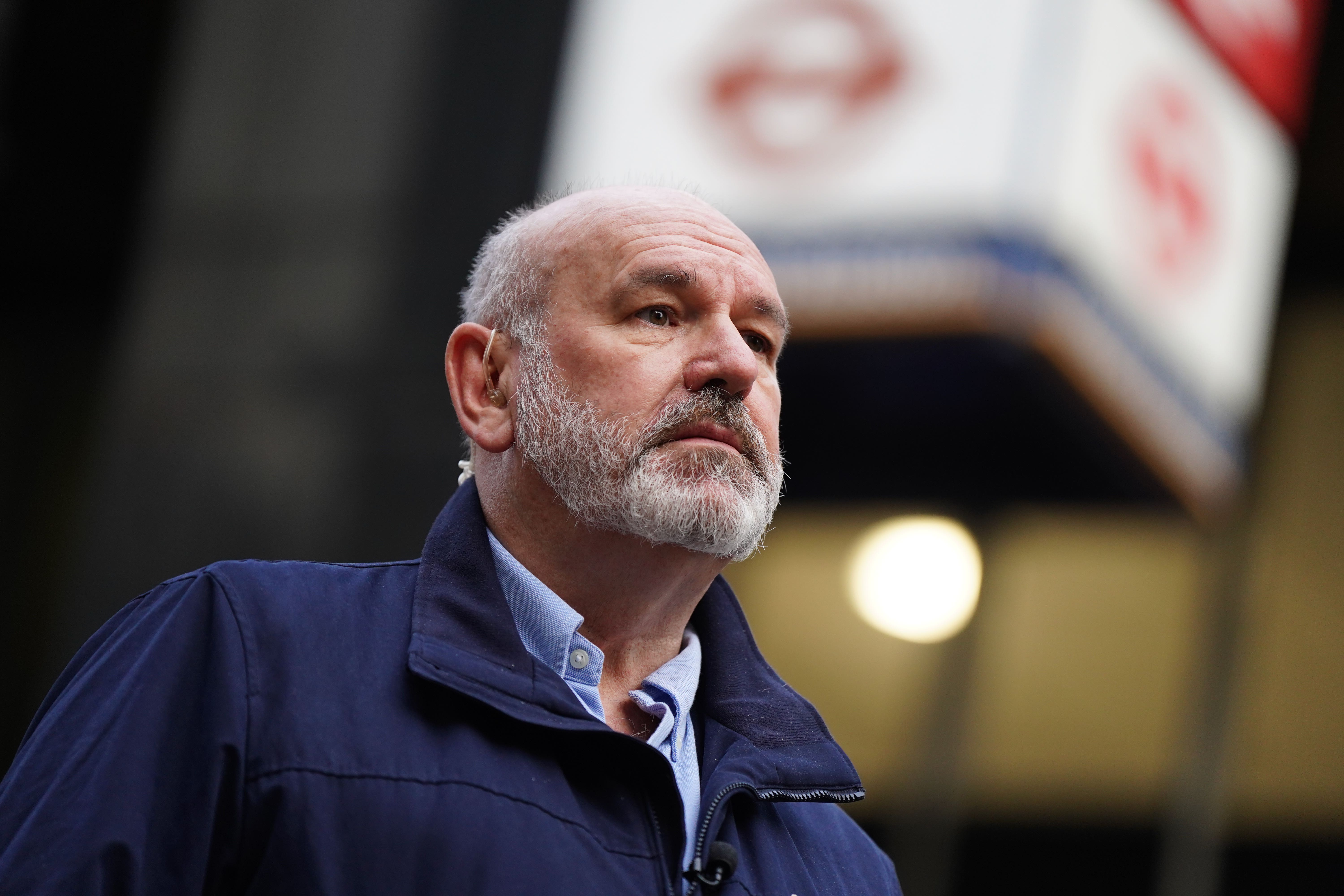
RMT union leader Eddie Dempsey says: “What is clear from the appalling mass stabbing at Huntingdon is that quick reactions of the guard and other onboard crew in raising the alarm, meant that the seriousness of the situation was fully understood by control, signalling and the BTP [British Transport Police], meaning appropriate action could be swiftly taken.”
In 2013, the Transport Select Committee said: “We are very concerned that proposals to reduce staffing at stations and on trains could make the railway less safe, particularly at night, and deter women and vulnerable users from travelling by train.
“We recommend the government develops a strategy for improving the security of the rail network, as well as perceptions of how safe the network is.”
Ideally every train would have on-board staff and every station would be staffed. This would undoubtedly increase passenger confidence and improve provision for less able travellers.
But the rail industry is currently losing billions of pounds each year and is being propped up by taxpayers’ cash to the tune of £400 per second.
The view from successive governments has long been that a balance needs to be struck between care for rail users and the cost to public funds.
Read more: ‘Splitting tickets’ can halve the cost of train trips
This piece was first published in January 2023, and has been revised and updated with the latest information.
Join our commenting forum
Join thought-provoking conversations, follow other Independent readers and see their replies
Comments
Bookmark popover
Removed from bookmarks