Eurowings flight faced overnight delay to avoid Iranian airspace
The Germany-bound flight was forced to make two diversions to complete its extended flight path
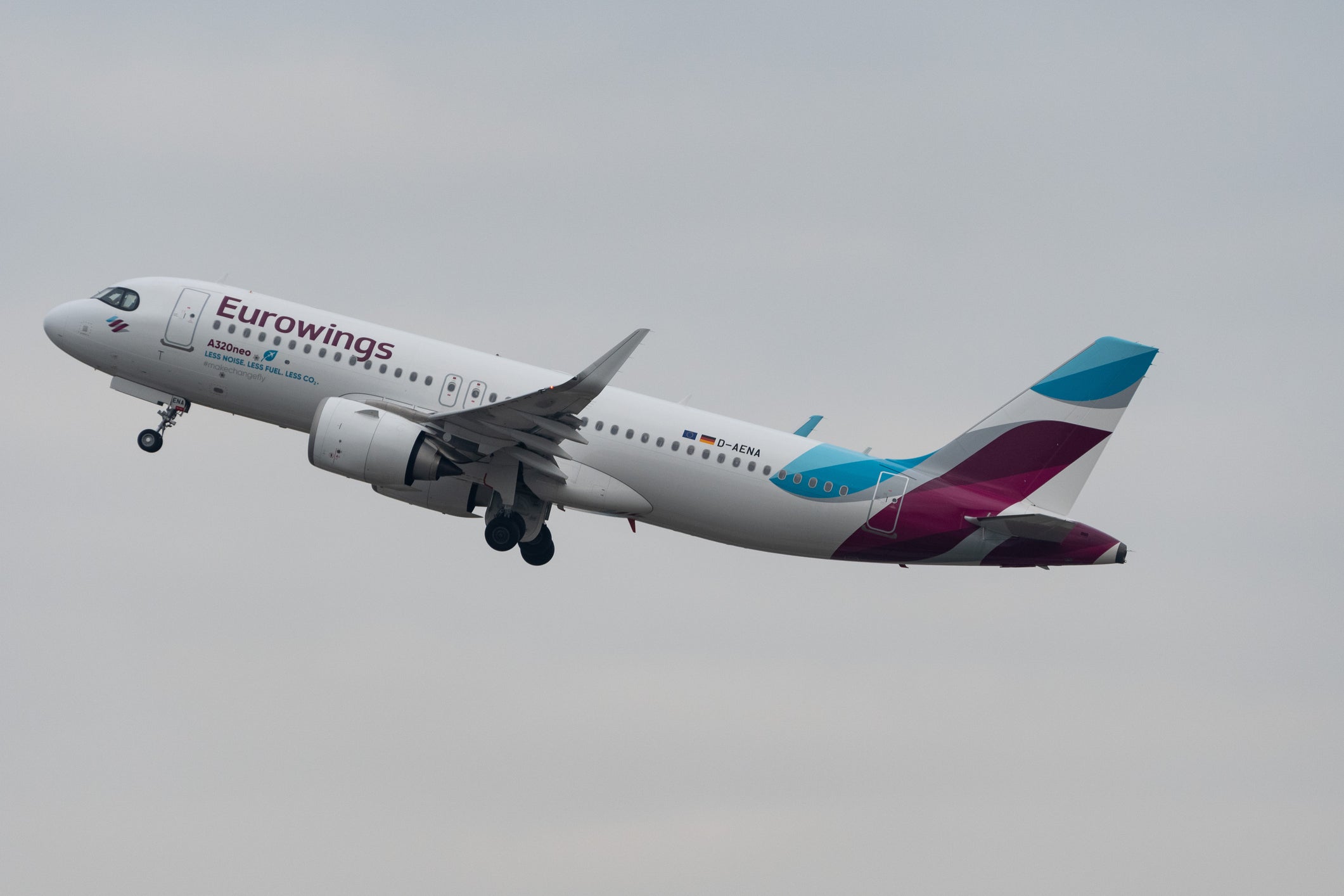
A Eurowings flight from the UAE to Germany faced an overnight delay and two diversions to avoid Iranian airspace last month.
Flight 1153 from Dubai to Stuttgart diverted from its original itinerary due to ongoing geopolitical tensions on 24 January.
With comments from President Trump threatening US intervention in Iran, many airlines have rerouted flights to avoid Iranian airspace.
The Lufthansa Group decided as a precautionary measure not to use Iranian or Iraqi airspace for flights by any of the group’s airlines.
According to FlightAware data, the Airbus A320neo flew just over six hours to a refuelling stop at Thessaloniki airport, Greece, required to complete the aircraft’s extended flight path.
The unscheduled refuel pushed the Eurowings’ flight arrival time past a landing curfew at Stuttgart airport, with the plane diverted to finally touch down in Nuremberg at around 1.30am – 11 hours after the usual direct flight from Dubai.
Direct flights between Dubai and Stuttgart usually take around six to seven hours.
Eurowings, a low-cost German carrier, operated the last leg of the journey, 30 minutes to Stuttgart, the next morning.
The airline told The Independent: “Last week, some flights from Dubai back to Germany have required a refuelling stop in Thessaloniki, Greece. This was due to a longer flight distance and stronger headwinds on the alternative route at the time.
Eurowings added: “Due to night flight restrictions at German destination airports (such as Berlin, Dusseldorf, Stuttgart), some flights landed later in Nuremberg and Cologne/Bonn, among other places.”
Several international airlines have rerouted or rescheduled flights over Iran, flying instead over Afghanistan or Saudi Arabia, amid heightened tensions with the US.
The Federal Aviation Administration (FAA) has maintained a ban on US carriers flying through Iranian airspace since early 2020, a restriction officially extended to at least October 2027 in 2024.
On 16 January, the European Union Aviation Safety Agency (EASA) said in a Conflict Zone Information Bulletin: “Considering the overall high level of tensions, Iran is likely to maintain elevated alert levels for its air force and air defence units nationwide.
“In the event of a U.S. intervention, the possibility of retaliatory actions against its assets in the region cannot be excluded, which could introduce additional risks to the airspace of neighbouring countries where the U.S. military bases are located.”
EASA advised airlines not operate within the airspace of Iran “at all altitudes and flight levels”, and to exercise caution within the airspace of neighbouring countries.
Read more: What rights do you have to compensation for cancelled or delayed flights?
Join our commenting forum
Join thought-provoking conversations, follow other Independent readers and see their replies
Comments
Bookmark popover
Removed from bookmarks