Will Great British Railways actually make any difference to my journey?
Train Talk: As the government reveals the new train designs and branding, minister Lord Hendy offers his solutions to common passenger problems
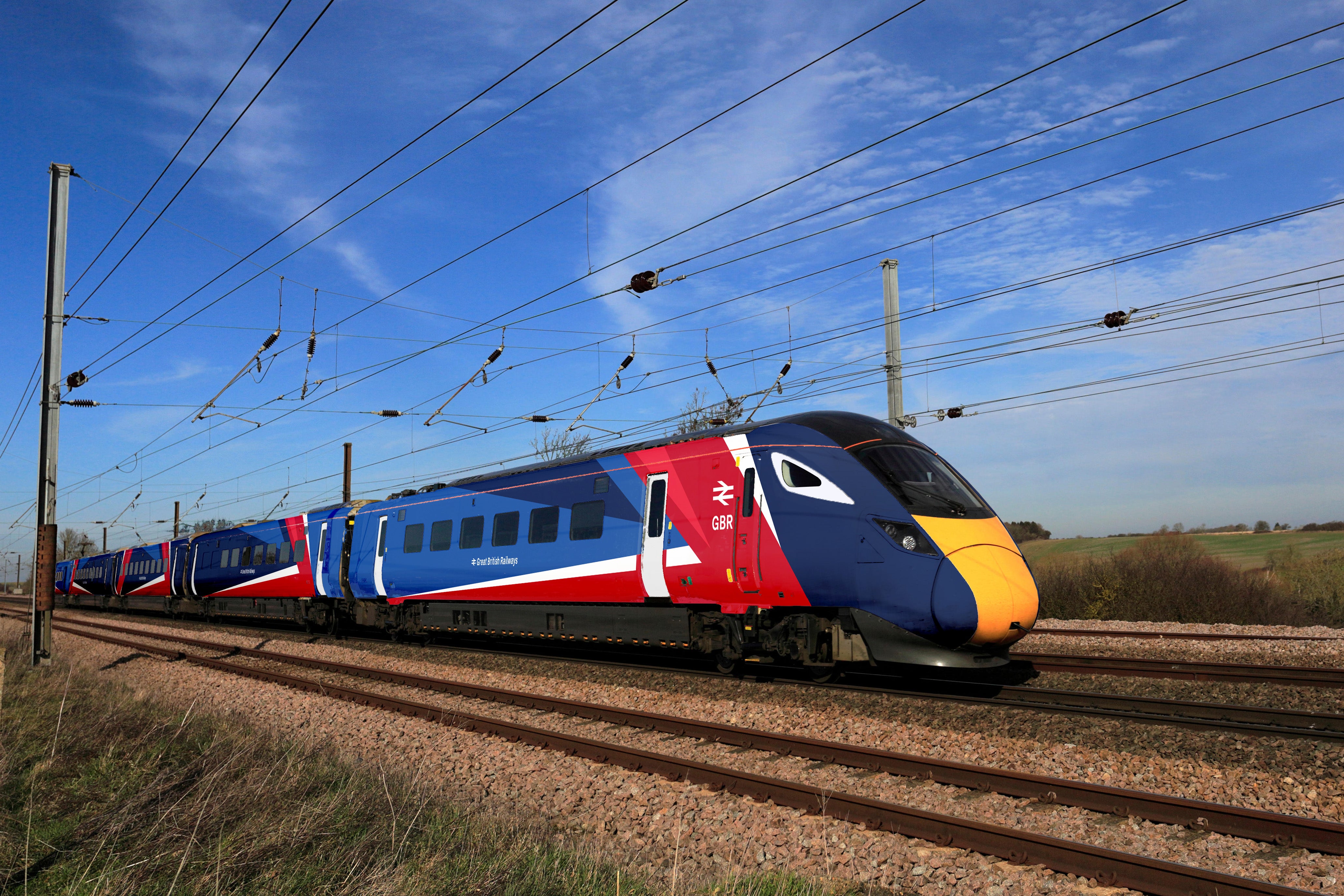
Red, white and blue: the colours and lines of the union flag have been deployed as the logo for Great British Railways (GBR). This nationalised body will replace the current patchwork of mostly private train firms running on public infrastructure.
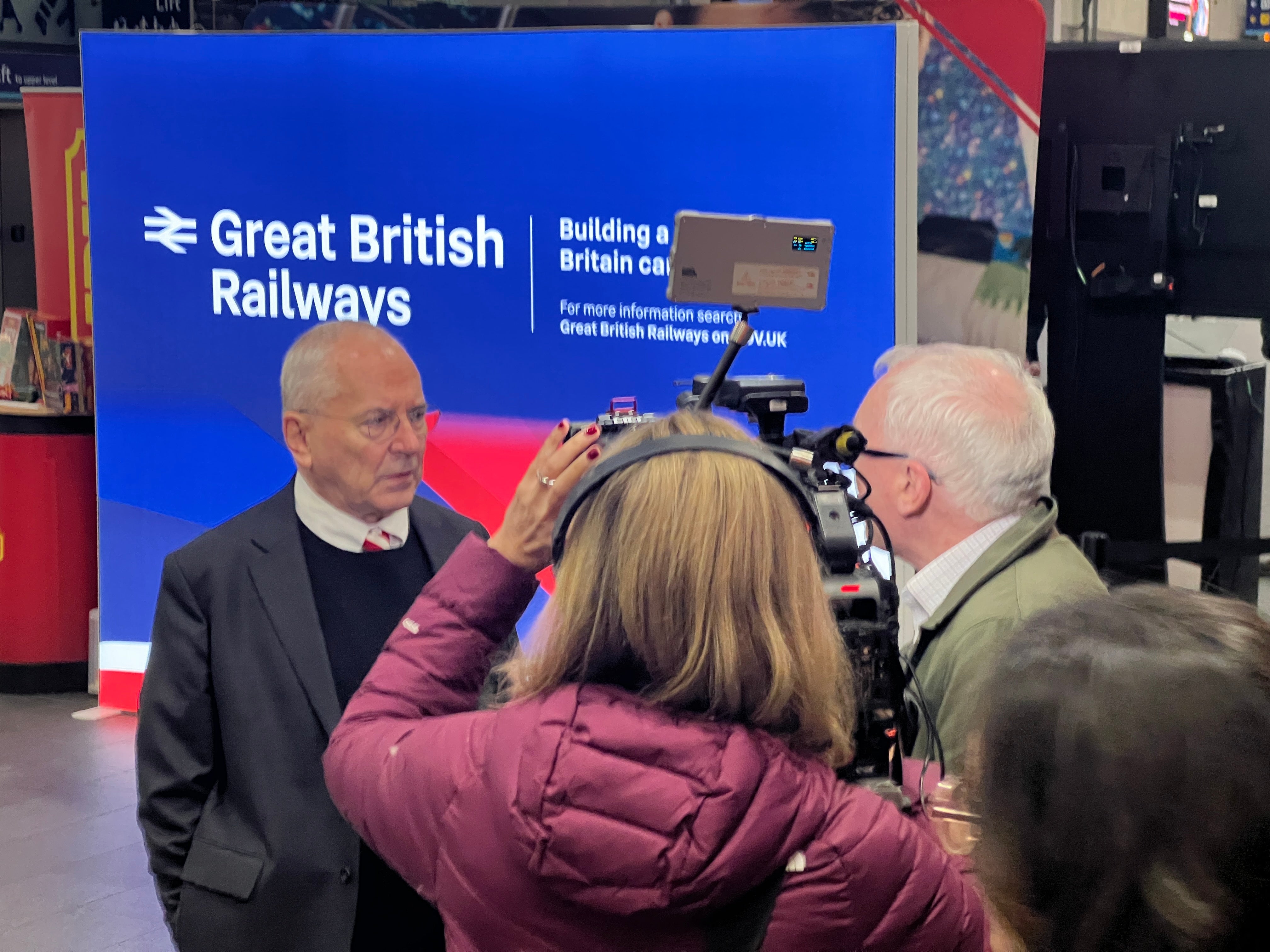
Speaking at London Bridge station in front of a “pop-up” showing the new branding, the transport secretary, Heidi Alexander, said: “I’m immensely proud to unveil the new look for Great British Railways.”
Yet among the 150,000 or so passengers starting or ending their journeys at London Bridge station on Tuesday, I saw only a handful showing any interest in how Great British Railways will look. What every train traveller wants to know: will my experience, from buying a ticket to reaching my destination, improve?
The rail minister, Lord Hendy, believes untangling the current corporate conflicts will deliver immediate benefits: “Just ask a railway manager and they’ll tell you how complex the interactions are. You don’t get anything done without a meeting and a table as long as this, with 20 people around it. You can’t get a light bulb changed without something like that. That’s not the right way to run a railway.
“We’re going to rekindle the passion of railway people and managers to provide a better service, grow revenue and reduce cost by giving them real authority – not this massive set of contractual interactions.”
Lord Hendy gives the example of Steve White, managing director of South Eastern Railway, running trains between London and Kent, and taking responsibility for the tracks, signalling and stations, too.
“He hasn’t got anybody to blame if the points fail or the drivers don’t turn up. He and his management team have got to fix it. I want people like that around the railway, focusing on what customers want. That’s the way to run a better railway.”
Improving operations is one thing; sorting out fares and ticketing is quite another. “We’re in the foothills of completely reforming a fare system that simply doesn’t work,” the minister says.
“In urban areas, what people want is pay-as-you-go. I used to run TfL (Transport for London). You put your card on the machine; you trust the machine to charge you the right amount of money.”

Some say the best way to simplify fares is to return to the principle of getting exactly what you pay for: charging per mile, as was the case for third-class passengers. For seven decades, the rate was one old penny (0.4p).
But the minister says a return to pay-per-mile does not work for long-distance travel. The result, he says, would be that the 6pm LNER departure from London King’s Cross to Edinburgh “would have about 14,000 people trying to catch it on a Friday evening”. He aims “to try and smooth the edges so that the first off-peak train does not have people hanging out of the windows, and the last peak train isn’t half empty because the fares are so high nobody wants to pay them”.
Near the top of the Great British Railways agenda: a website and app to deliver tickets smoothly. Yet independent rail retailers – particularly Trainline – are already doing that. So why would GBR want its own version?
“We’ve got 14 train company websites currently,” he tells me. “They all work differently, they all look different, and they work differently.
“Any decent retailer would get that lot together, get the best out of them all, and sell its own product to the public without booking fees. That’s what GBR will do. I think that’s quite reasonable.
“There ought to be a level playing field. There are some big people in that market – Trainline – and some small people; they should all have access to the same fares. But there’s no reason why GBR shouldn’t sell its own products well. You’d expect that at John Lewis and you’d expect it at Tesco, so you should expect it at Great British Railways.”
Join our commenting forum
Join thought-provoking conversations, follow other Independent readers and see their replies
Comments