Hundreds queue to flee Santorini as quakes continue
Hundreds of quakes have rattled the volcanic islands of Santorini and Amorgos in the Aegean Sea
Hundreds of people packed a port in Santorini in the early hours of Tuesday to board a ferry and reach safety in Athens as a series of earthquakes kept shaking the famous Greek tourist island.
Since Friday, hundreds of quakes have rattled the volcanic islands of Santorini and Amorgos in the Aegean Sea.
Authorities have closed schools in Santorini and the smaller islands of Ios, Amorgos and Anafi until Friday as a precaution.
Mobile phones on the island blared with alert warnings about the potential for rockslides, while several earthquakes caused loud rumbles.
Authorities banned access to some seaside areas, including the island’s old port, that are in close proximity to cliffs.
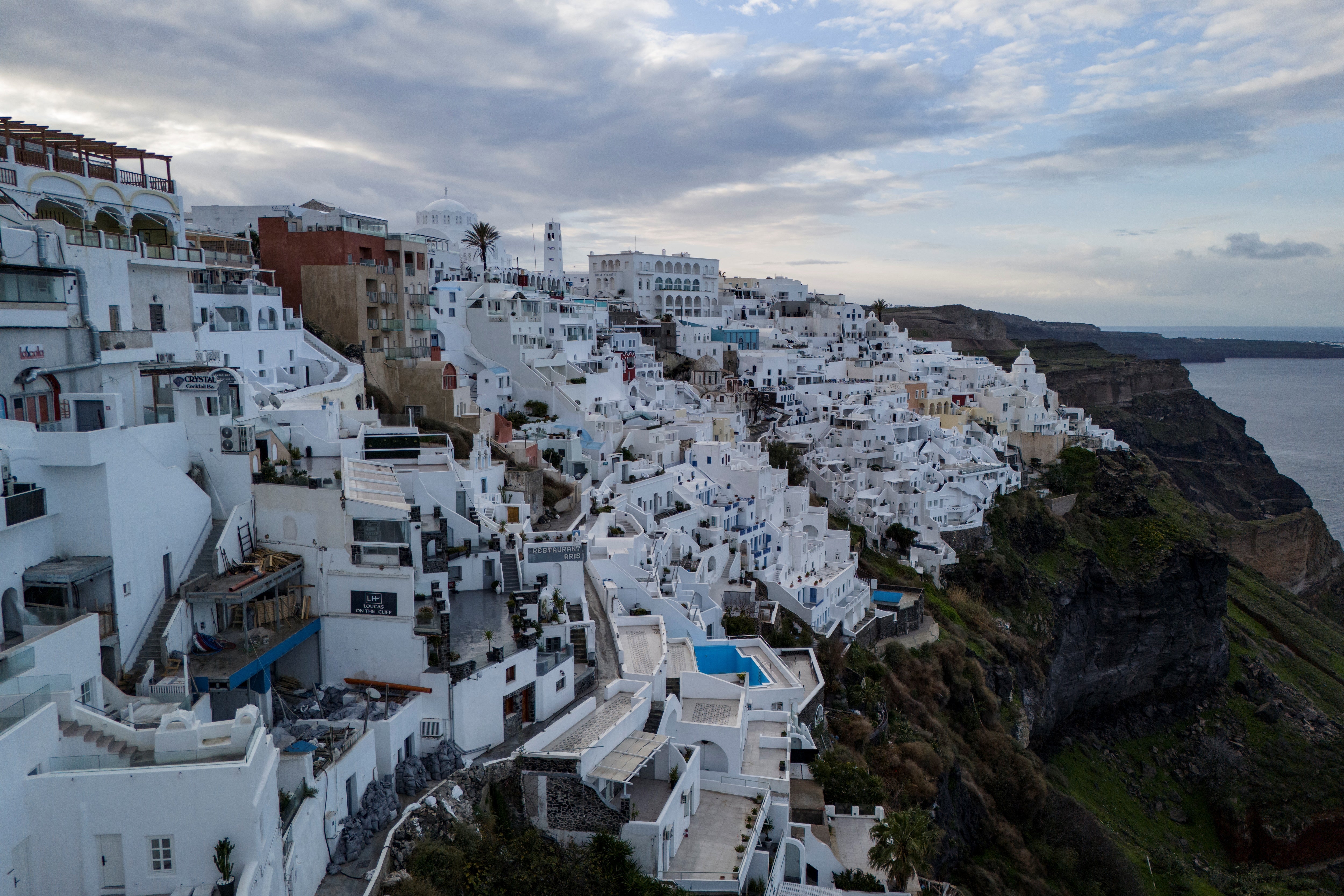
The European Mediterranean Seismological Center (EMSC) recorded a 4.7 magnitude tremor at 06.53 GMT on Tuesday. The island's iconic white and blue villages, many of which cling precariously to steep cliffs overlooking the sea, are particularly vulnerable.
"Everything is closed. No one works now. The whole island has emptied," said one 18-year-old resident, Dori, as he boarded a ferry to Athens. The ongoing seismic activity has brought daily life to a standstill, prompting an exodus of residents seeking safety elsewhere.
"We will go to Athens until we see how things develop here."
More people were expected to fly out on an additional flight on Tuesday.
With seismologists estimating that the intense seismic activity could take days or weeks to abate, people were advised to stay out of coastal areas due to the risk of landslides and avoid indoor gatherings.
Residents and tourists were advised to avoid large indoor gatherings and areas where rock slides could occur, while hotels were instructed to drain swimming pools to reduce potential building damage from an earthquake. Fire service rescuers who arrived on the island on Sunday set up yellow tents as a staging area inside a basketball court next to the island’s main hospital.
Greece is one of the most earthquake-prone countries in Europe as it sits at the boundary of the African and Eurasian tectonic plates whose constant interaction prompts frequent quakes.
Santorini took its current shape following one of the largest volcanic eruptions in history, around 1600 BC. The last eruption in the area occurred in 1950.
Join our commenting forum
Join thought-provoking conversations, follow other Independent readers and see their replies
Comments
Bookmark popover
Removed from bookmarks