Big skies and brotherly love: How an outdoor adventure to Montana’s Glacier National Park changed my male friendships forever
A journey into the Montana wilderness offered a welcome opportunity for real connection, competition and dark humour for Alex Hannaford and two of his oldest friends

We’re floating downstream, somewhere on the Middle Fork Flathead River in Montana. To our right are a million acres of pine forest, rugged mountains and pristine lakes that make up Glacier National Park. To our left are two-and-a-half million acres of pine forest, rugged mountains, and pristine lakes that make up Flathead National Forest.
We’re sandwiched in the middle of such vast and stunning wilderness that, ordinarily, it – and the bald eagle soaring above us – would have been a distraction, except for the fact that Mia, our rafting guide, is demonstrating a man overboard drill. “Hold them by their lifejacket,” she says, “then count one, two, three – and wait for the bubbles to stop.”
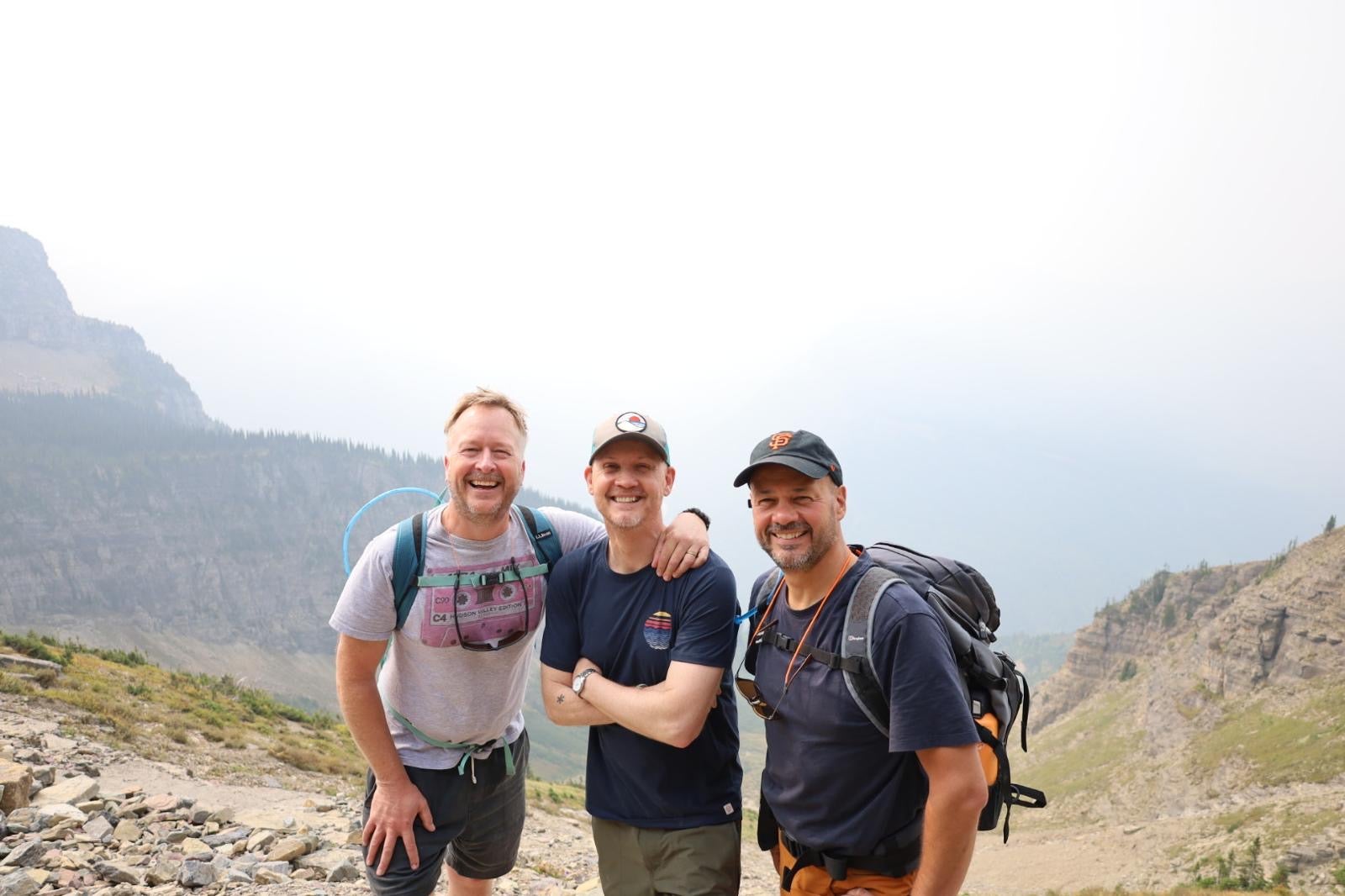
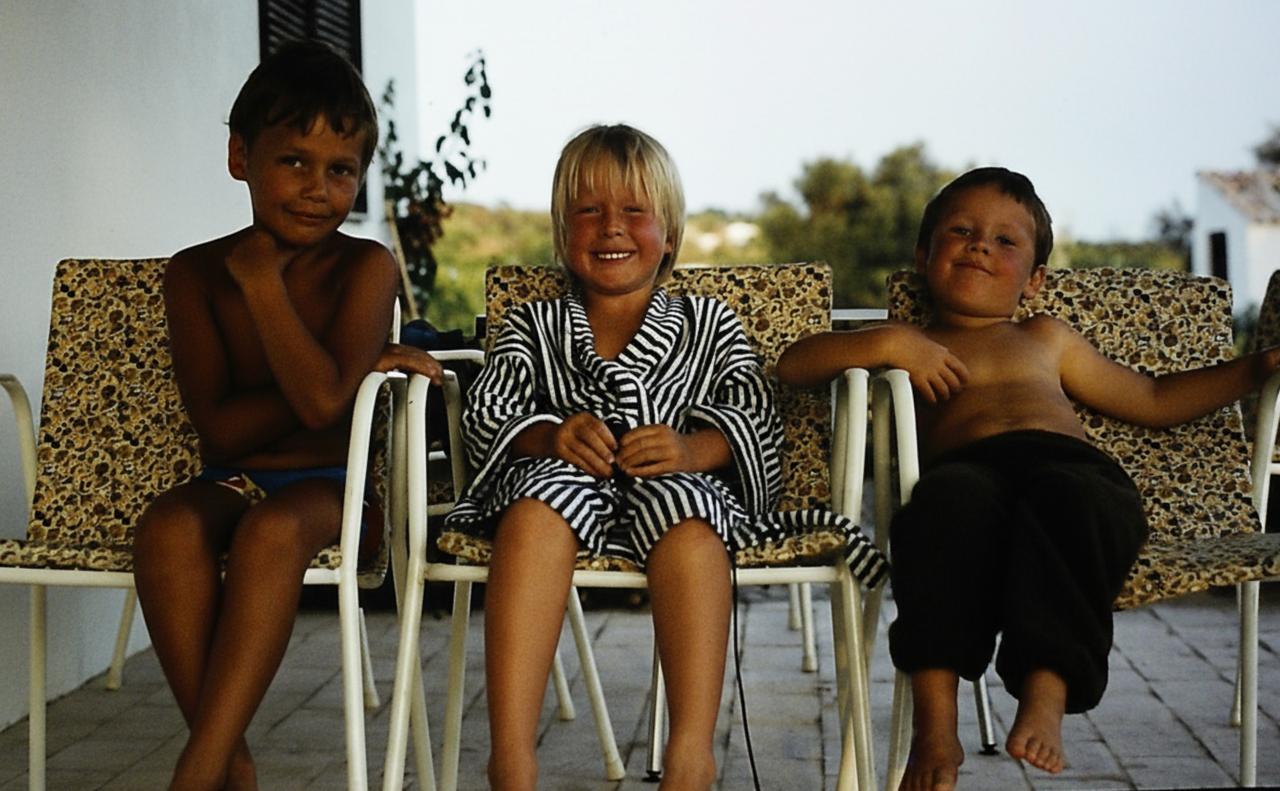
Mia has found the right audience for dark humour. I’ve been friends with Dan and Matt for five decades and we seem to spend the majority of our time together making jokes, often at each other’s expense. We grew up in a London suburb; I went to playschool with Dan and was with him the day his brother, Matt, was born. We’re a year apart – I’m in the middle – and they’re like the brothers I never had. But in 50 years of friendship, despite being best men at our respective weddings and countless family holidays together, we’ve somehow never been away just the three of us. “Nice!” Matt wrote on our WhatsApp thread when we started imagining this trip. “Might this be the end of our friendship? Or the beginning?”
In September, the snowmelt-powered rapids from earlier in the year had mellowed, leaving less white-knuckle stretches of whitewater. It’s a good job, because in the raft with us is Chris and her 80-year-old mother-in-law, Ann, a former nurse who says it’s her first time rafting.
At a bend in the river, Mia tells us to stop paddling and points to a train carriage that had, sometime in the distant past, washed down the cliff during devastating floods and is still visible below the surface in its watery grave.
Read more: The US state the world wants to visit in 2026
The next morning, we set our alarms early and drive an hour to the west entrance of the national park. Glacier is so-called because of its 26 glaciers – large bodies of ice that form over hundreds of thousands of years and which then flow slowly downhill under their own weight, carving out the landscape. Since the 1960s, every named glacier in the park has shrunk, some by more than 80 per cent, a sad consequence of the fact that this area is warming at nearly two times the global average.
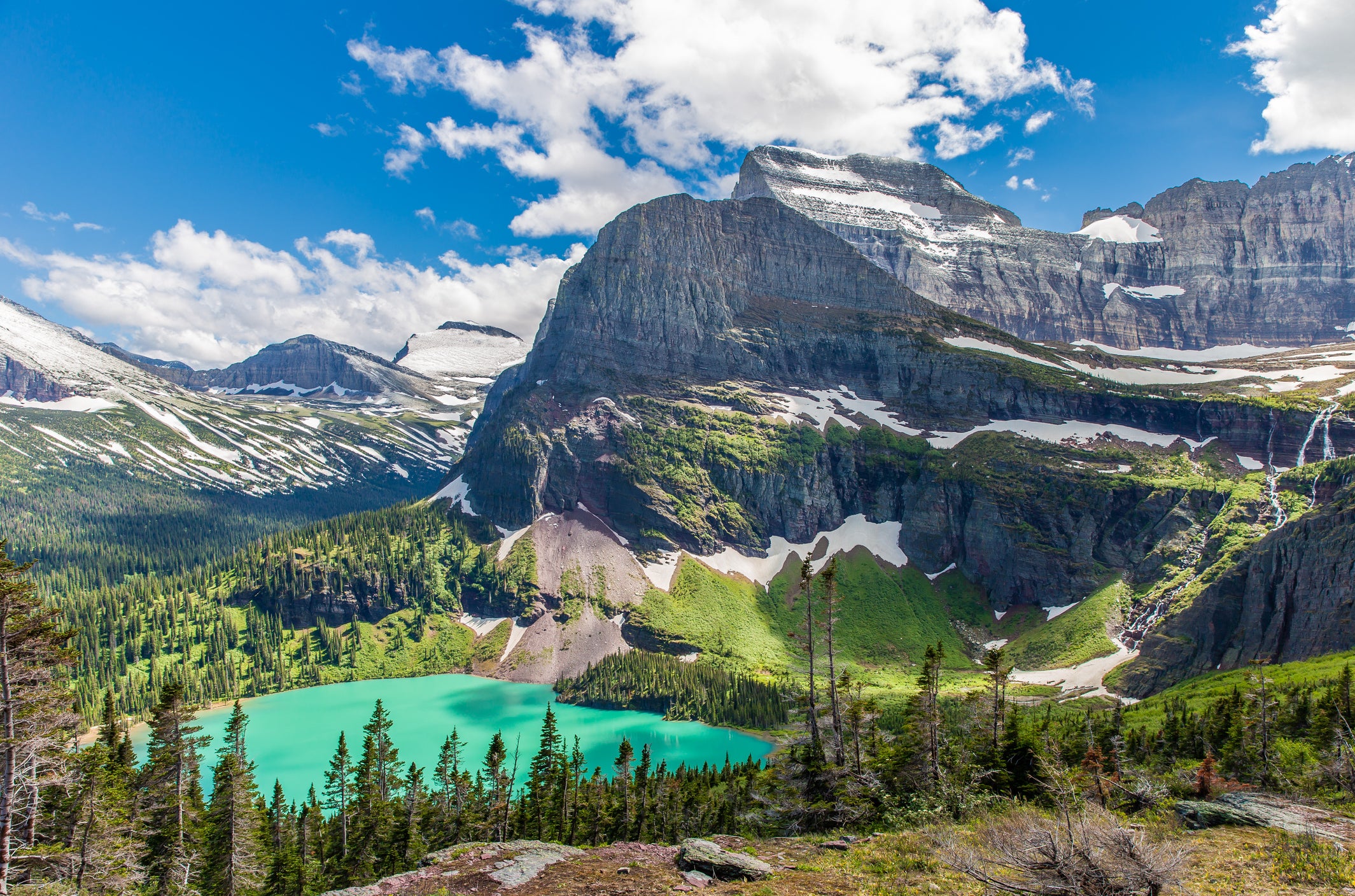
After being told by fellow hikers, hotel concierges and signs that grizzly bears are everywhere, Dan, Matt and I ensure we’re each armed with bear spray. As we set off along Highline Trail, a stunning mountain route that skirts the Continental Divide, a long conversation ensues about how it’s probably all a scam and, at $40 (£30.50) a can, we could have probably just bought one between the three of us.
Suddenly, Matt spots something on the ground in front of him. “Bear shit,” he proclaims.
“No, it’s not,” I say. “Don’t be ridiculous. It’s just berries.” Later that evening, I Google “bear scat” and find it looks the same as the dark reddish-brown piles Matt had so confidently identified. It’ll take me two days to admit he was right.
Read more: Forget Route 66: Five under-the-radar road trips that get to the heart of America
Dan starts telling a story about how he once went climbing with the famous British mountaineer Sir Chris Bonington and we ignore him and change the subject. Matt decides to teach us about how glaciers are formed and I argue with him even though I don’t know what I’m talking about. Our wives had each asked what we’d talk about on this trip, hoping perhaps for a deep emotional connection. “Maybe we have more fact-based conversations?” Dan wonders, “Even if we make the facts up.”
Of course, we don’t just tell jokes at each other’s expense and regale each other with interesting tidbits, although that does seem to take up most of our airtime. No topic is off limits, and the three of us have never really had a problem with being honest and even vulnerable with each other. Too much time has passed; there’s too much history between us that I think we know that there’ll never be (much) judgement.
I’d been reading about how male loneliness was starting to be treated as a widespread health problem and that, as a result, there was a movement toward men-focused retreats aimed at helping us build closer, lasting friendships. I don’t take Dan and Matt, or any of my other close friendships, for granted – even if the ribbing can be relentless.
After hiking four-and-a-half miles, we stop for a break. After spotting two big horn sheep higher up the mountain, I spent 20 minutes trying to coax a Columbian ground squirrel out of a hole. Meanwhile, Dan discovers that our crisp packets have inflated and are almost bursting from the altitude.
Read more: Virginia from mountains to coast: A slow road trip through peaks, islands and marshes
I take my shoes off to air out my feet and a woman in her sixties pauses to ask if I’m okay.
“I know it looks like he’s lame,” Matt tells her. “Do you have a gun so we can put him out of his misery?”
She laughs and makes a “gun-cocking” motion with her hands. “Everyone has a gun,” she says. “This is Montana.”
Back at the car, we realise we’ve hiked about eight miles. My thighs and calves are burning, but Dan and Matt pretend they’re absolutely fine and could have hiked another eight miles, and I remember I have other friends that I could have asked to come with me on this trip instead. Matt and I are in the car while Dan shakes a stone from his shoe before approaching the rear door. I pull away, just a few feet. He approaches again. I pull away again. And so on, until I, at least, am crying with laughter. It’s a joke that never seems to get old for the rest of the trip.
When we went rafting, we could smell smoke from wildfires burning in Canada – the border is only 60 miles or so away, but by day three, a spot of overnight rain has made it dissipate altogether.
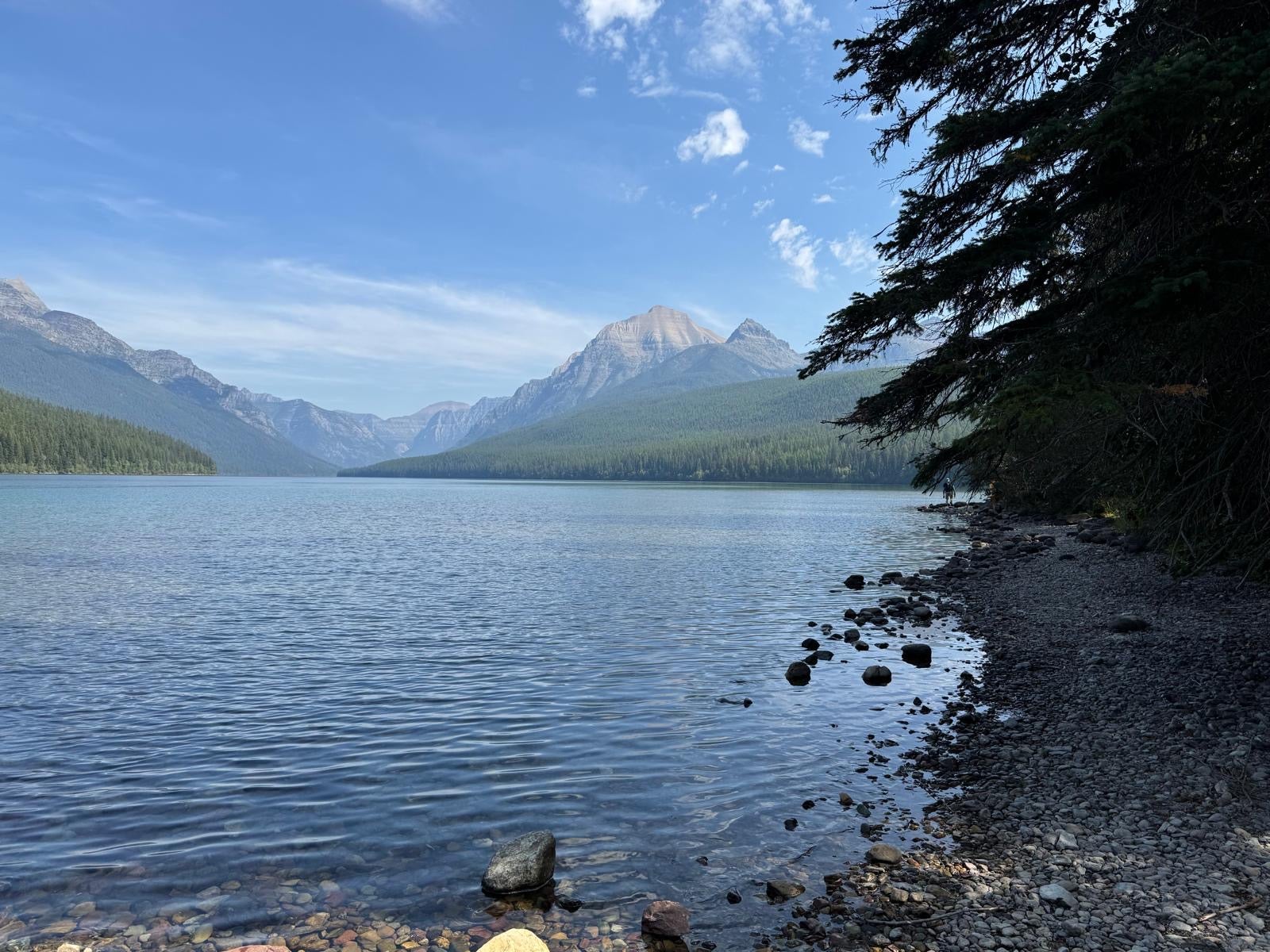
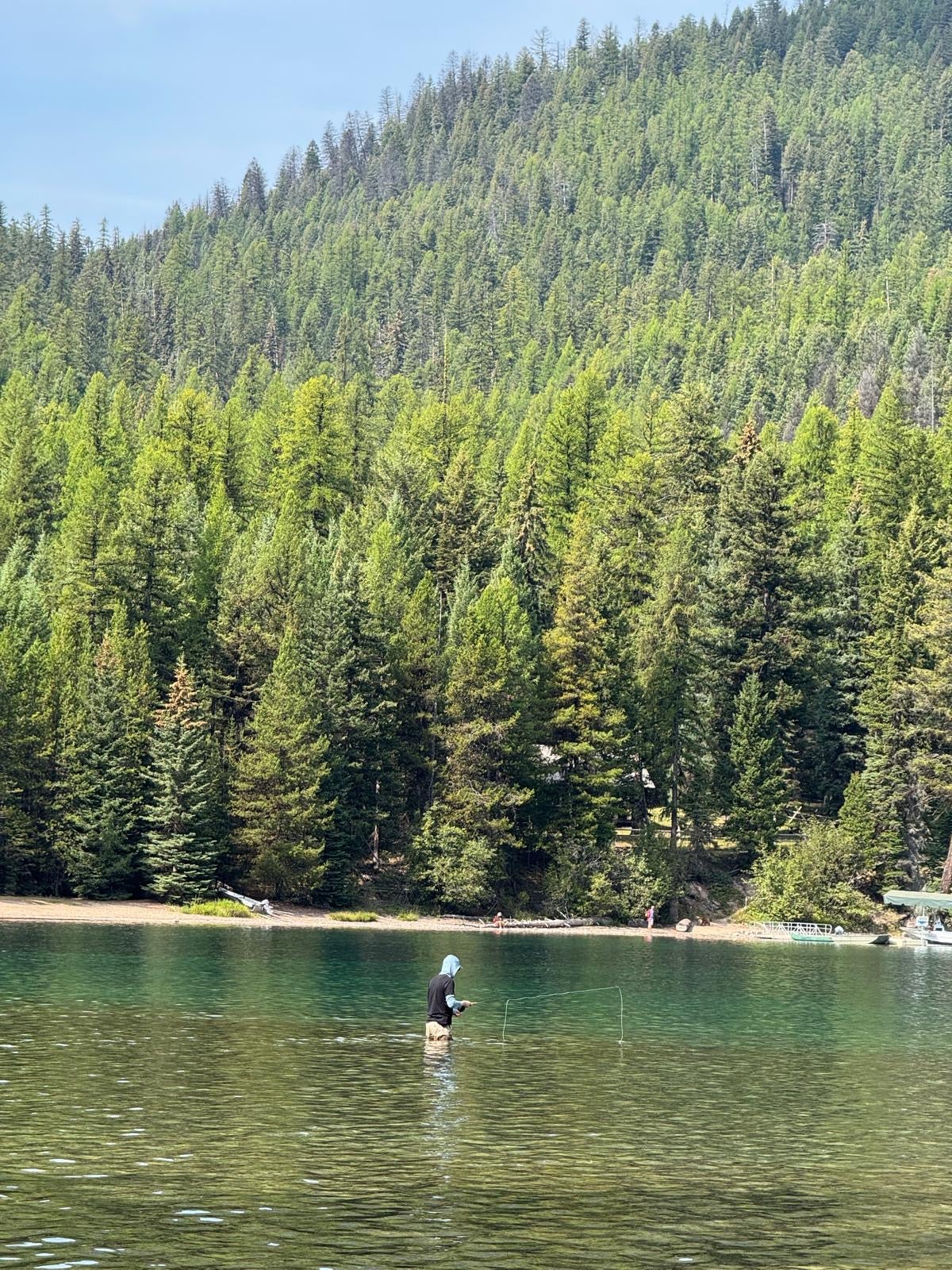
We hike around Stanton Lake, a scenic, alpine-fringed body of water in the Great Bear Wilderness, just outside the park. It’s only a four-mile round trip, starting with a high elevation climb and ending on a little stone beach. Unlike the trail yesterday, we only encounter a few other humans – a reminder that America’s national forests can be just as beautiful as national parks, and often much quieter.
A few hours later, as we hike back to the car, Matt slips down a dusty incline while trying to crab-crawl due to an aching knee. I burst out laughing. “You idiot,” Dan says. But Matt’s already on his feet before I can pull out my phone and take a picture. Thirty seconds later, I lose my footing on the same slope and sprain my ankle – an injury that will take three weeks to heal. Matt pulls out his phone and begins snapping pictures. One, after another.
Read more: What I learned going off grid with my 10-year-old daughter on an Alps adventure
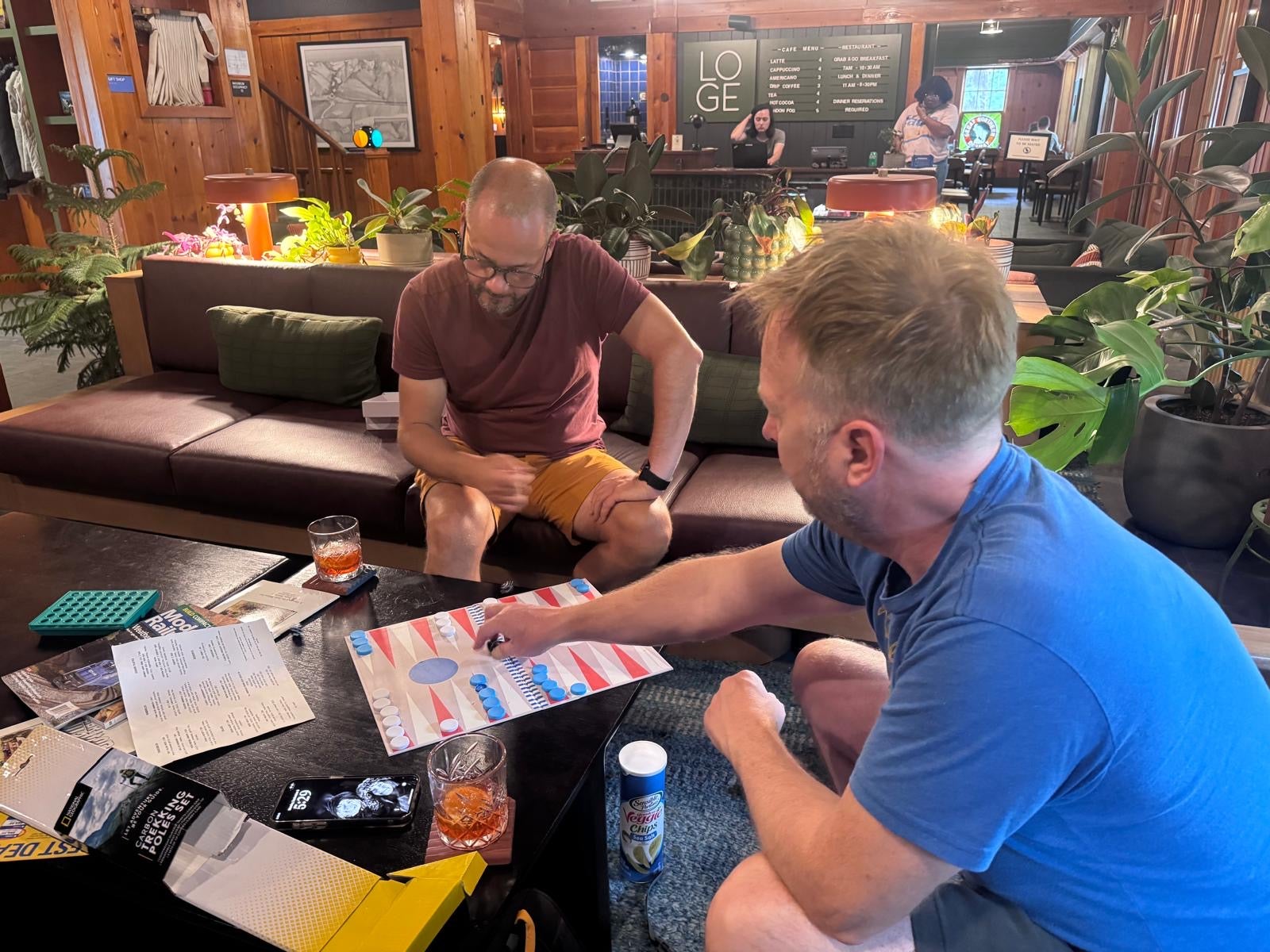
That afternoon, we check into a beautiful wooden lodge hotel, originally built by the Great Northern Railway in 1913 for its workers. I spend most of our stay with a bag of ice wrapped around my ankle, learning to play backgammon and eating humble pie. Talking of pie, it turns out huckleberry pie is everywhere, and Montanans put huckleberries, a local delicacy, in everything from soaps to syrup.
There’s time before we head back to our respective corners of the Earth – me to upstate New York, which I call home, Matt, to California and Dan to London – for us to indulge in a little fly fishing. “It’s called fishing, not catching,” the woman in the rental shop assures us, assuming none of us are actually good enough to land a trout. Matt immediately tells her he’s an expert.
I discover why I’d read it’s a good idea to take a four-wheel-drive vehicle along the North Fork, as most of it is unpaved. “As you drive along the dusty, bumpy, and slow-going North Fork roads,” the park's website says, “imagine the challenges faced by early settlers. Isolation, short growing seasons, wild country, and harsh weather tested those brave enough to live in this remote and demanding location.” We pull over so Dan can take a wee. As he approaches the car, I drive off. He approaches again, and I pull away once more.
Within minutes of us arriving at the river, Matt’s up to his waist in the frigid water, without waders, determined to land a trout. The sun’s warm as we watch a man on the opposite bank catch a fish about once every five minutes. Still, I tell myself, it’s not about catching anything. It’s about listening to the silver birch trees singing in the breeze as summer turns to autumn. It’s about camaraderie and friendship, and spending quality time with these two boys I’ve known my whole life.
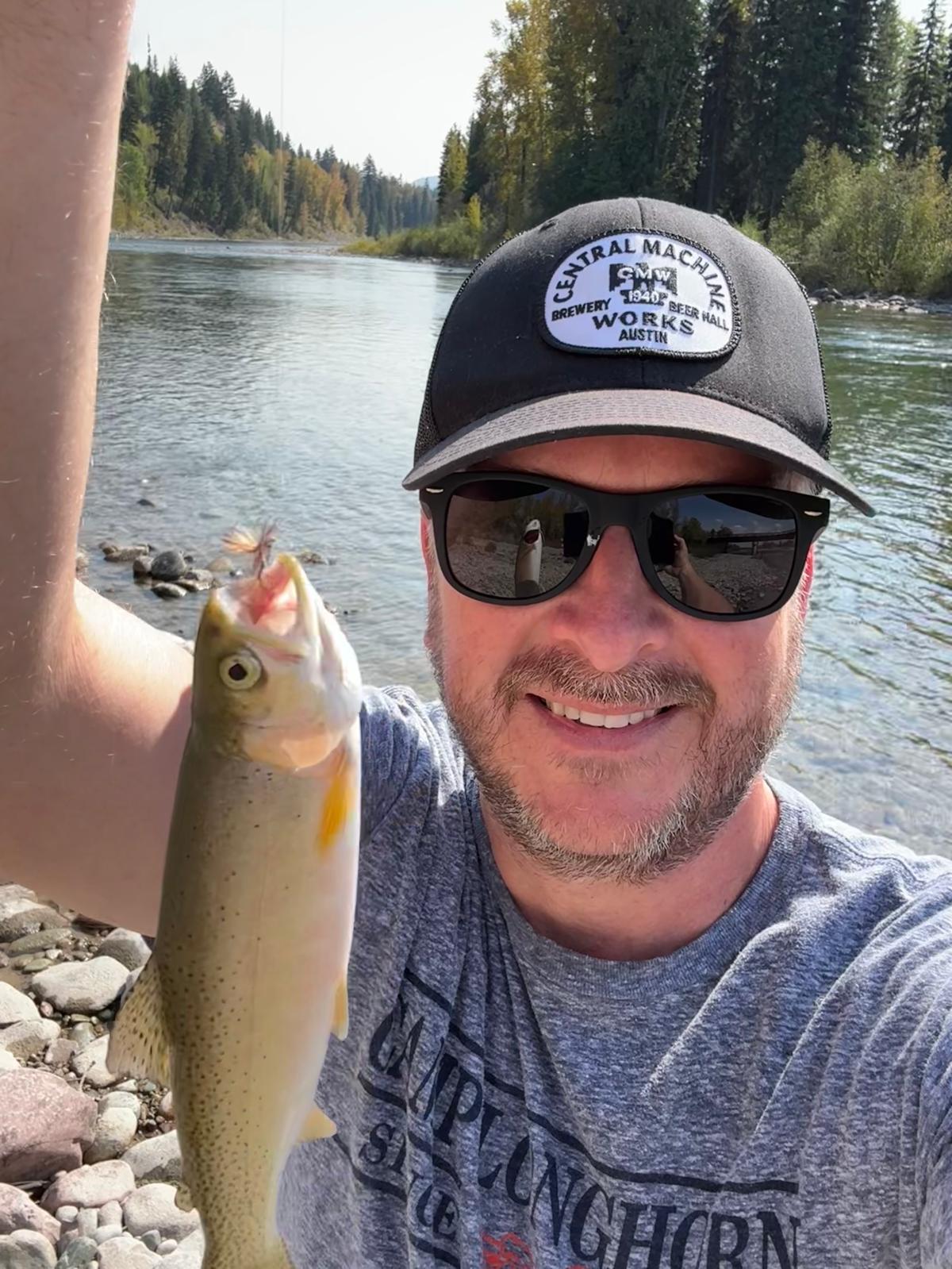
Then, all of a sudden, there’s a disruption in the water where my fly is floating on the surface, and my line goes tight. I lift the rod and begin reeling it in. Holding the little trout in one hand, I pull my phone out with the other and snap a picture, if only to gloat later as the others have already admitted defeat.
Meanwhile, the river will keep moving and the glaciers will get older, and so will we. And as we head back to the car, I think to myself – I hope we won’t wait another 50 years to do this again.
How to do it
Alex hired a car with Turo, which is a car-sharing marketplace, where you can book a car from a community of local hosts across the US, UK, Canada, Australia and France. Rates start at $50 (£38) a day in Montana.
Alex’s trip was supported by Western Montana's Glacier Country tourist bureau and Turo.
Read more: The five-day trek in the Guatemalan jungle that’s worth every blister
Join our commenting forum
Join thought-provoking conversations, follow other Independent readers and see their replies
Comments
Bookmark popover
Removed from bookmarks