Do I need a new passport to travel around the UK by air?
Simon Calder answers your questions on domestic travel, connecting flights, Aer Lingus troubles and package holiday cover

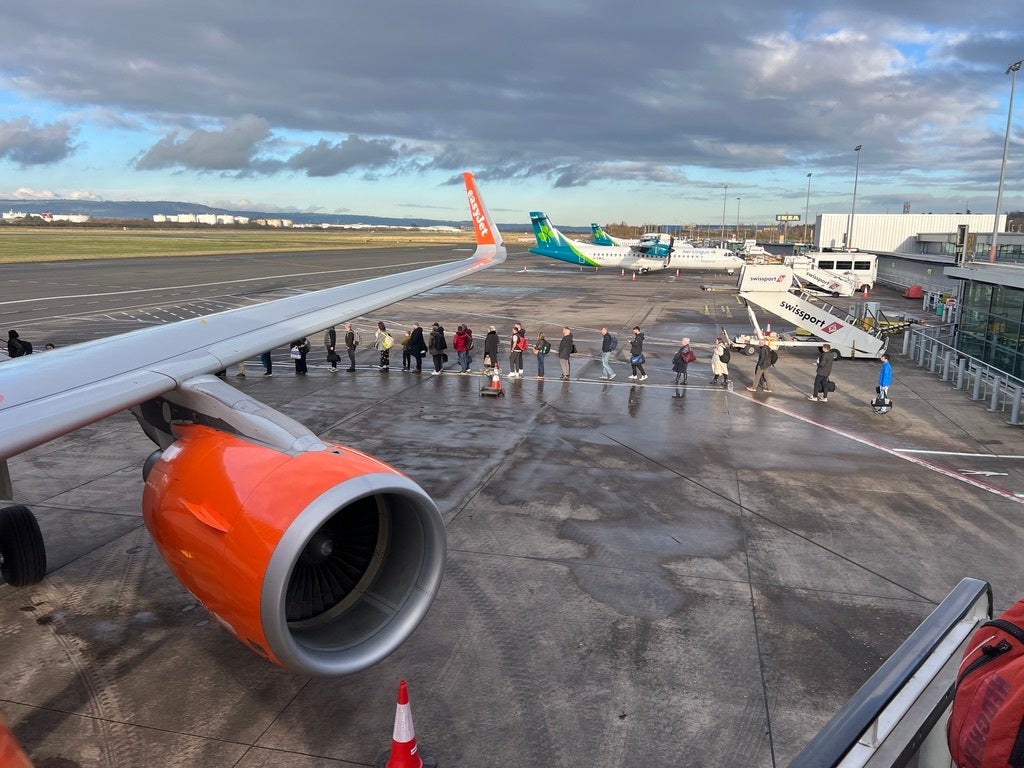
Q I am a British citizen, living in England. My passport expired a year ago. I have no intention of visiting Europe or farther afield, but am tempted to use flights to visit various parts of the UK. Can this be done without a passport? Or is it best just to bite the bullet and renew?
Steve C
A For a compact kingdom, the UK has an extraordinarily dense network of domestic air routes. Often, intercity flights such as London or Bristol to Edinburgh or Glasgow are significantly cheaper and faster than rail journeys – regrettable, but a fact. To reach Northern Ireland from Great Britain is easy and inexpensive by air, and rather more difficult by train and ferry.
For any journey within the UK, you need not produce a valid passport. Each airline requires photographic ID of some sort, but all their rules are different. Starting with Britain’s biggest budget carrier, easyJet, the obvious choice for many people will be a valid driving licence. If you do not have one, then a passport that expired no more than five years ago is acceptable; yours will be fine.
British Airways is stringent, saying: “Your ID should be valid for your date of travel and show your photo as well as your name to match your booking.” BA gives a very short list of possible forms of identification. In your case, you may have a “valid police warrant card or badge” or an armed forces ID for serving personnel or veterans. If not, the only option is a driving licence.
Many of the regional flights linking Great Britain with Belfast City airport are operated by BA’s sister airline, Aer Lingus Regional. It accepts a passport only if still valid; otherwise a bus pass, work ID or even an International Student Identity Card will work. Rounding things off, Loganair has a busy network of domestic flights within Scotland and England. Besides an old passport up to five years out of date, staff will be happy with a bus pass – or, of course, a driving licence.
Just in case you are tempted to stray beyond the UK, all of those rules extend equally for travel to the common travel area (encompassing Ireland, the Isle of Man and the Channel Islands) – except in the case of Ryanair between Britain and Ireland, for which a valid passport is demanded.

Q How much time would you allow to connect between two separate Ryanair flights?
“Reeve 9286”
A Last week I found myself considering just that subject. To explain the backdrop: “legacy carriers” such as British Airways, Air France and Lufthansa sell connecting flights. Buy a “through ticket”, for example, from Manchester via Frankfurt to Athens on Lufthansa, and you have a built-in guarantee: if the first flight is late and you miss the onward departure, you will be found a seat to your destination as soon as possible. This is an expensive and complex promise to keep.
As perhaps the most cost-conscious airline worldwide, Ryanair does not sell connecting flights. Plenty of people instead “self-connect”: buying two separate tickets and hoping the first flight is on time. In order to reach Zagreb at a reasonable fare on Ryanair, I flew from Birmingham to Beauvais in northern France, and on from there to the Croatian capital. But the practice comes with some jeopardy: if you miss the connection, you lose the second flight and must repair your itinerary at high cost.
Last week I was a passenger on the early Ryanair flight from Leeds Bradford to Dublin. As I wrote in my Friday newsletter, the flight was half an hour late. The person sitting next to me had booked an onward flight on Ryanair to Funchal, Madeira. Instead of a comfortable 80 minutes to transfer, her connection became touch-and-go. You must be “landed” between flights: traipsing all the way to passport control and waiting in line. I last saw her hurtling towards Flight Connections at the Irish airport. I hope she made the plane.
The more time you allow, clearly, the lower the risk of a missed connection. For my Beauvais adventure, I had five hours – long enough to pop into town and visit the remarkable cathedral. As a minimum, I suggest you draw a line at four hours. My thinking: one hour should be more than enough to self-connect even at a big, busy airport such as London Stansted. Should your first plane arrive at its intended destination over three hours behind schedule, and it’s the airline’s fault (as my Leeds Bradford-Dublin flight was), you will be entitled to compensation of £220 or £350 – hopefully enough to rescue your travel plans. So four is the magic number of hours.
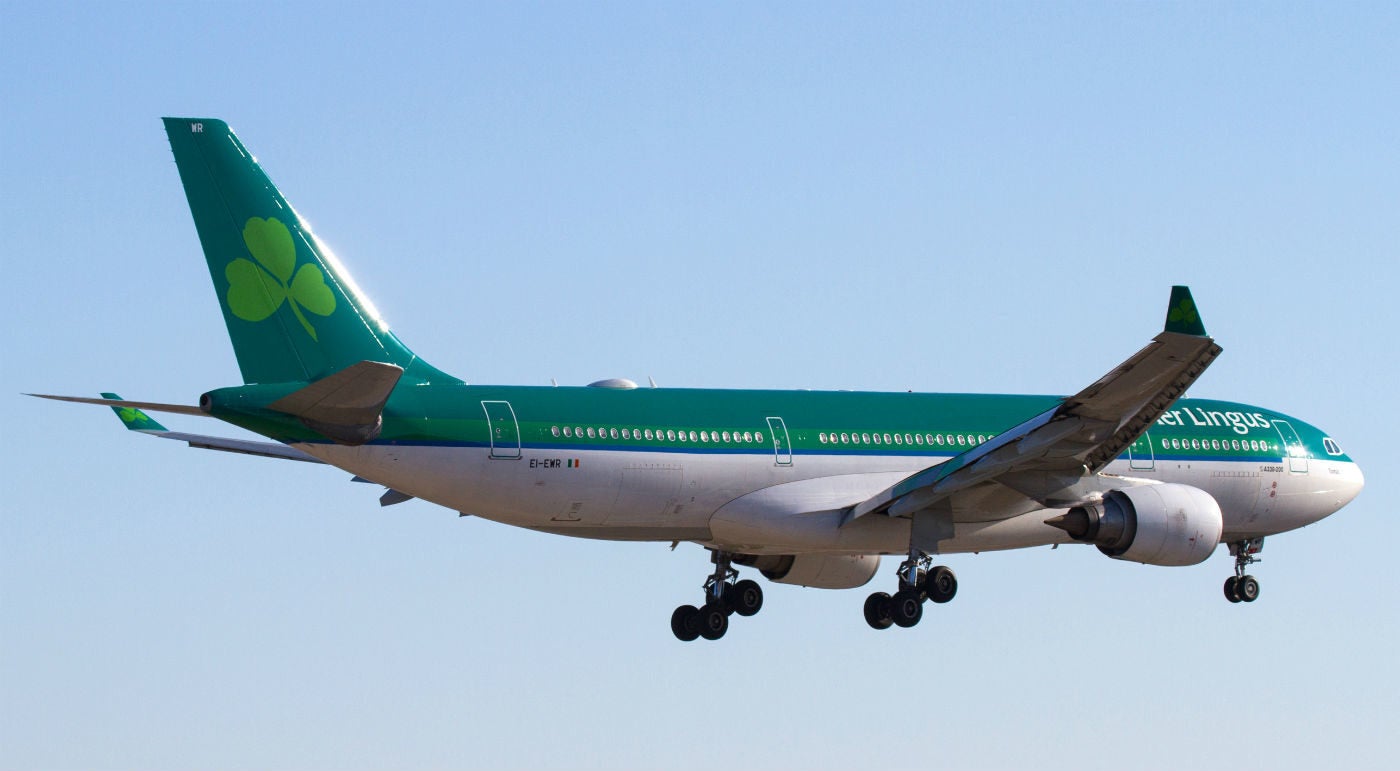
Q I have been reading your coverage of the Aer Lingus closedown of their Manchester operation. You have reported that they will not transfer passengers to Virgin Atlantic. Why not? I thought they were obliged to transfer cancelled bookings to other carriers?
Chris L
A Aer Lingus mounted an enticing transatlantic offer from Manchester airport: flights to New York JFK, Orlando in Florida and the Caribbean island of Barbados. Unfortunately for the 200 Aer Lingus employees based in Manchester, the operation failed to make enough money. Facing a summer when demand for the US is slumping, the airline decided to close down the base.
The final Aer Lingus transatlantic flights will return to the hub in the northwest of England on the morning of 31 March; the New York link will end earlier, on 23 February 2026.
Passengers are, of course, entitled to a full refund since Aer Lingus will not provide the contracted service. But most travellers will want to avail of the legal obligation for an airline that cancels a flight to arrange for the affected passengers to be flown to their final destination “under comparable transport conditions”.
In my opinion, people who book a non-stop flight are paying for a premium product. Looking at Aer Lingus fares in the coming week, a direct flight from Manchester to Orlando is selling for £110 more than the one-stop version via Dublin – which takes over three hours longer and involves a lot more hassle. Given that Virgin Atlantic flies non-stop from Manchester to both New York and Orlando, you would think the obvious solution would be to buy seats on that airline. But Aer Lingus wants to keep the cash itself rather than paying a rival.
The Irish airline contends that the passenger rights rules “do not require an airline to replicate every aspect of the original journey structure or to provide an identical non-stop service on another carrier”. In other words: have your money back or fly with us via Dublin.
The Civil Aviation Authority declined to take sides and said it is a question for a court or alternative dispute resolution body to determine. All of which is infuriating for passengers who have paid for a non-stop flight.

Q I know that package holidays bring extra consumer protection. But I like to make plans as I go along. If I just booked a first night’s accommodation in the city where I fly in, would this be enough to qualify it as a package holiday, with the extra protection that provides?
Mark Ogilvie
A Congratulations on coming up with an important question that has never been asked of me before. A brief bit of background on package holidays involving travel by air. These are trips where the outbound and return flights are booked, as well as another component – usually accommodation, sometimes car rental. The Package Travel Regulations cover such trips.
While the law is long and detailed, the main consumer protection benefits are twofold. The first involves Atol protection. This addresses the minimal risk that the holiday company might go bust between when you pay for the trip and when the holiday is due to take place (or the even rarer case of the firm shutting down while you are actually away). Atol cover means you are guaranteed your money back. (In practice, the credit card firms comprise the first line of financial protection.) You will also pay £2.50 per person as a contribution to the rescue fund. To secure such cover, buying a return flight plus a single night in a hotel is quite sufficient. But, in my opinion, it is not particularly valuable cover.
I believe the other key benefit of the Package Travel Regulations is much more important. In a nutshell, the holiday firm has to deliver the trip as it promised when you booked – and to make matters right if not everything goes according to plan. For a “continuous” booking, eg, return flights and a series of hotel nights, the travel company unquestionably is responsible for elements such as hotel overbooking. In the circumstances you envisage, though, the obligation to step in and support you will apply only if something goes awry with the flights, or with the first night’s stay. After that, you are on your own. Were you also to book a rental car for the extent of your trip, that part of the venture would also be protected.
Email your question to s@hols.tv or tweet @SimonCalder
Join our commenting forum
Join thought-provoking conversations, follow other Independent readers and see their replies
Comments
Bookmark popover
Removed from bookmarks