What is the best-value way to see the US national parks?
Simon Calder answers your questions on the great outdoors, a Spanish Christmas and more


Q Does the new US national parks fee apply for every park visited or does one fee cover all parks for a period of time? On our honeymoon, we visited six national parks.
Andy J
A “Non-residents age 16 and older must pay a $100 (£74.50) non-resident fee in addition to the regular entrance fee” for 11 of the top national parks in the US, starting on 1 January. These include Yellowstone, Yosemite and the Grand Canyon – as well as my favourites, Bryce Canyon and Zion in Utah. US interior secretary Doug Burgum says the move is to ensure “international visitors contribute their fair share to maintaining and improving our parks for future generations”. For a couple travelling together, a visit will cost $35 for the car – the fee that applies to Americans – plus $200 for the surcharge. That’s the equivalent of £175 for two to see one of the world’s natural wonders. It applies every time, so if your six national parks were all in the top 11, you would pay over £1,000 for the privilege.
The way that the pricing structure works, though, means that for any more than a single visit, the $250 non-resident America the Beautiful pass is the appropriate option. It allows even foreigners into all parks all year for all occupants in one passenger vehicle. This works out cheaper than President Trump’s punitive per-person pricing for overseas visitors.
A much better deal is available for the next two weeks for anyone who plans to visit one of the premier league parks during 2026: buy an America the Beautiful pass by New Year’s Eve. At present the price is just $80 and it also allows everyone in the vehicle to get into a park without an additional fee. A spokesperson for the National Park Service has confirmed to me: “We honour those passes under the terms at the time of purchase.” Accordingly, I have bought one – and it is valid through to the end of 2026.

Q I have decided, late on, that I am going to try to go abroad over Christmas, ideally flying from Manchester. I have in mind something semi-warm, cheap and cheerful in Spain. Malaga and the Canary Islands look tempting.
Name supplied
A Spain is excellent territory for late December “semi-warm” and definitely cheerful holidays, but cheap is not a term that usually crops up in conjunction such trips. Also, with other people also deciding that the bleak midwinter (or possibly family pressure) is proving too much, the deals I researched yesterday evening may sell out.
I started by looking for really cheap deals from any British airport for travel out to Spain on Christmas Eve, back on Boxing Day. These tend to be the best-value days, because most people want to fly out earlier and come back later. Jet2 has a flight from Edinburgh to Tenerife on 24 December, getting you there in time for lunch, returning after dinner on 26 December, for just £58. One problem I foresee: accommodation may be difficult to find on the island, which could explain why the fare for 4,000 miles of round-trip air travel is so low.
From Manchester, the deal I would go for is clear: a £55 deal with Ryanair to northern Italy. The outbound flight on 24 December is at 9.40am to Milan Malpensa, arriving at a civilised 12.55pm. You should be in the fine city centre in time for lunch. While it is not much closer to the equator, there will be plenty of city life. The return flight on 26 December, at an equally civilised 7.05pm, happens to go from Bergamo – Milan’s “third” airport (after Malpensa and Linate). While there are plenty of direct buses from the city to the airport, instead I recommend that you take the afternoon to explore Bergamo. The Trenord train from Milan Lambrate station takes 48 minutes to reach Bergamo, and there are frequent buses to the airport.
Finally, if you want to a proper package holiday the best deal I can see for departure this Saturday, 20 December, is £323 for a week from Liverpool airport to Albufeira on the Portuguese Algarve, with Tui. The flights are with Ryanair and with minimal baggage, so if you want to take anything more substantial it will cost perhaps £80 extra.

Q You wrote about Guatemala’s tourism minister criticising the Foreign Office travel advice for his country. Do you scrupulously follow the rules, Simon?
‘A1 Bloke’
A No. But I go against Foreign, Commonwealth and Development Office (FCDO) warnings only rarely and with plenty of thought. The government says its main concern “is always the safety of British nationals” and that staff “constantly review our travel advice”. During the Covid pandemic, the travel advice team rather lost the plot: at one point, Portugal was put in the same risk category as parts of Kabul. This was a consequence of trying to align advice with the “traffic light” rating for each country’s infection levels. The FCDO surrendered some credibility.
When the Foreign Office specifies a no-go zone, the effect is to invalidate standard travel insurance policies of British visitors; special policies are available, but expensive. So I accept that I am not covered. Why would I take the risk of going against official advice, without insurance? Because I judge that the rewards make it worthwhile.
Earlier this month I had the chance to go on a government of Punjab open-top bus trip from the city of Amritsar to the Attari–Wagah border crossing. The frontier is closed, but each afternoon a fabulous flag-lowering ceremony takes place. It is a standard tourist outing, run by excellent, professional staff, but the trip goes into the FCDO “exclusion zone” within 10km of the India-Pakistan border. Having taken local advice, the risk looked minimal for a two-hour stay in the grandstand watching a performance that resembled a Bollywood take on the Berlin Wall.
I suggest that Foreign Office advice in this context is over-cautious. Diplomats stationed abroad feed in intelligence to help shape the advice on their domain, and I do not pretend I know better. But there is a potential emotional cost to obeying the travel advice to the letter: the trip to the border was a highlight of my visit to India.
One more element of my calculation: young travellers should be extremely risk averse, because they have decades of adventures ahead of them. But older people have less to lose.
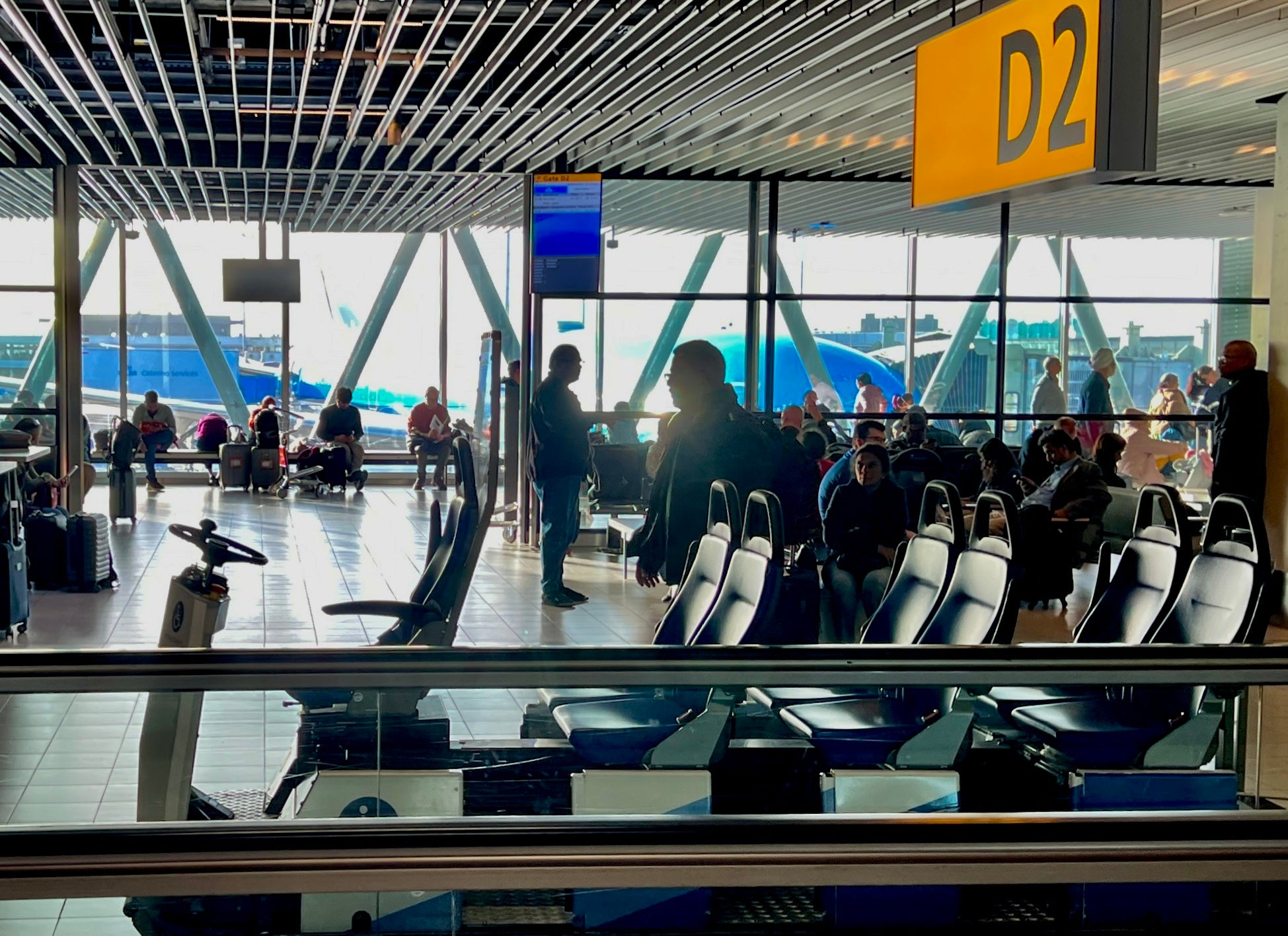
Q How does the new EU entry-exit system affect a UK passport holder who is just transiting through an airport from the UK via Amsterdam to Thailand?
Nigel B
A Your question is particularly pertinent given the present public row between the European airports’ body, ACI Europe, and the EU about the digital border scheme known as the entry-exit system (EES). As a reminder, third-country nationals such as the British are now liable to be fingerprinted and photographed on entry to the Schengen area. ACI Europe says the rollout of EES is causing three-hour waits at passport control as officials struggle with a 70 per cent increase in the time taken to carry out border checks. The European Commission in Brussels refutes this, saying: “Since its start, the system has operated largely without issues, and any initial challenges typical of new systems have been effectively addressed.”
Why is this relevant? Because there is a (small) possibility that the way your trip is structured will require you to go through Dutch border control. Some online travel agents sell “self-connect” tickets that might, for example, combine an easyJet flight to Amsterdam with a service on the Taiwanese carrier Eva Air to Bangkok. If you have checked baggage, you will need to go through passport control and check in again. This could take an hour or more. You might be quizzed on having accommodation booked (which you won’t have) or a ticket out of the zone after a short visit (which you will have). With cabin baggage only you can remain within the transit area, but easyJet will want to be sure you meet the conditions for entry to the Netherlands.
There is a much stronger chance, though, that you are flying on the Dutch airline KLM for the whole trip. In that case, your baggage will be checked through to the final destination. There is no need to go through border control. Oddly, though, KLM insists your passport is valid for the Schengen area: no more than 10 years old on the day of arrival, at least three months remaining.
Email your question to s@hols.tv or tweet @SimonCalder
Join our commenting forum
Join thought-provoking conversations, follow other Independent readers and see their replies
Comments
Bookmark popover
Removed from bookmarks