What are the unmissable highlights of Buenos Aires?
Simon Calder answers your questions on Argentinian adventures, Cambridge, and passport conundrums


Q First time visit to Buenos Aires. Where should I stay and what should I not miss?
Annabel G
A Buenos Aires is the most appealing big city in South America – with intense energy, culture and cuisine. It’s a while since I last visited the Argentinian capital, but David Nichols of Journey Latin America confirms: “Recoleta is a perfect all-rounder for sightseeing, strolling and eating out. If you are passing through Buenos Aires more than once, mixing up your neighbourhoods is a great idea: leafy Palermo is perfect for the second visit with streets lined with upscale shops and trendy cafés, lively and fun especially at the weekend.”
Palermo Viejo, with its atmospheric streets and Art Nouveau villas, is where you’ll find the most interesting shopping. The optimum place to stay, in my view, is the Miravida Soho – a boutique hotel occupying a restored Thirties mansion in a quiet cobbled street in Palermo. As you should be enjoying warm early summer sunshine, grab a cold beer and some bar food at nearby Meridiano 58. The Recoleta Cemetery contains the elaborately designed final resting places of the city’s rich and well connected, including the tomb of the actor Eva Duarte – better known as Evita.
Begin your wider exploration in the hub of the city: the Plaza de Mayo. The east side of this rectangle is filled by the Casa Rosada (Pink Palace). Evita and her husband, president Juan Peron, waved to adoring crowds from the balcony here. East of the Plaza de Mayo, beyond a pair of busy highways, is the spectacular Puente de la Mujer – a rotating footbridge created by Santiago Calatrava, and intended to resemble the leg of a tango dancer. It leads to the rejuvenated dockland area, Puerto Madero.
To the south, the colonial streets of San Telmo are busy on Sundays – with a flea market plus street tango. Continue to La Boca, where Buenos Aires was founded by the Spanish in 1536. The highlight here is the Caminito: a former railway siding turned open-air gallery known as the Museo de Bellas Artes al Aire Libre.
Finally, David Nichols says: “If you have just arrived, The Argentine Experience is a great way to find your feet with the local menu – a sociable and interactive night out introducing empanadas, provoleta, chimichurri and dulce de leche, and no shortage of malbec.”
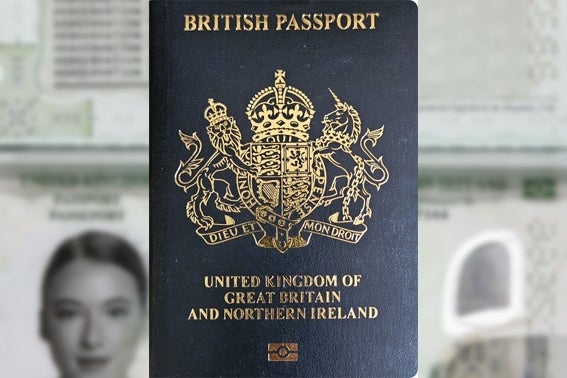
Q I’m changing my passport. Should I wait for the new one before making airline bookings? Or would I get a chance to change the details?
Hamlin L
A Book as many flights as you like before your new passport arrives – but not through one of those annoying online travel agents (OTAs) that demand to know your passport details at the point of purchase. The only thing that the intermediary should insist upon is that the name you use for the booking is exactly the same as it appears on the passport. Presumably this will not change on your replacement document.
People frequently change their passports between booking and flying, and I have never heard of this being a problem. With very few exceptions (such as RAF-run flights from Brize Norton to the Falklands), the airline only wants to know about your passport when you are checking in. Usually this formality takes place online 24 hours before departure, or at the airport. All the airline expects is that the name matches, and that you are properly documented for your destination.
I do not know why some OTAs want to know your passport number. People who are even more cynical than me may infer an ulterior motive: the more information you provide, the more scope there is for you to mess up and for an unscrupulous online travel agent to cash in. I think it is more a case that they think, “we might as well ask”. There is some sense in asking for the issue and expiry dates if (and only if) the agent is going to alert you to a possible problem.
While I’m here, let me also urge you and other readers never to include one or more middle names when booking flights. Again, airlines don’t need to know that your parents gave you a middle name of Alastair or Adelaide – and it just increases the possibility of a muddle.
Q I’m choosing a city break and thinking of Cambridge. Any thoughts?
Black Bea
A For the short-break visitor, Cambridge is a superb location. Its greatest cultural hit is a world-class museum in the imposing neo-Classical shape of the Fitzwilliam. You can wander in free of charge any day except Monday and enjoy a brief history of the world as well as some outstanding pieces – from the head of Amenemhat III to works by Degas, Monet and Matisse.
I am also a big fan of the Scott Polar Research Institute, a branch of the university’s geography department. Its Polar Museum is the next best thing to being in the Arctic or Antarctic, and is considerably easier to reach: just a 10-minute walk from Cambridge station. Note that it is closed on Sundays and Mondays.
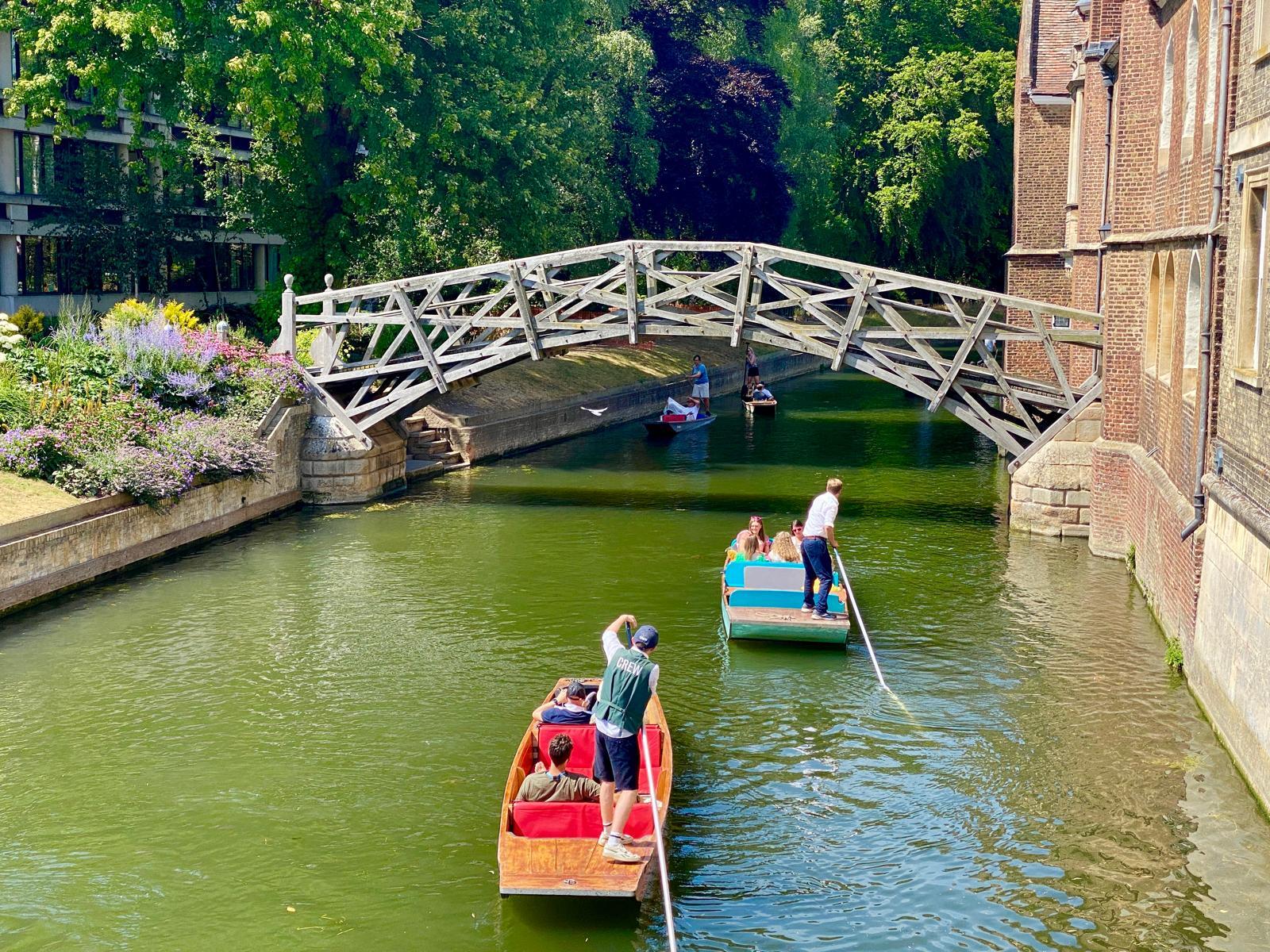
Close by, the Botanic Gardens has a vast range of species – some of which are said to have inspired Charles Darwin – in a beautiful setting insulated from the city. Punting on the Cam is available 365 days a year, though at its best in spring and summer. Look out for the elegant wooden Mathematical Bridge.
For a thoroughly 21st-century city, Cambridge has a remarkable amount of green space – again, best appreciated in the warmer months. You might enjoy the spectacle of cows grazing on Midsummer Common to the northeast, as they have done since the 12th century.
For ideas on atmospheric locations to eat and drink, I turned to the team at BBC Radio Cambridgeshire. Their initial nomination is the Eagle pub, where, in 1953, Francis Crick and James Watson first revealed they had found “the secret of life” (DNA, not beer). Next, Fitzbillies for a Chelsea bun; the original branch of the cake shop is on Trumpington Street.
Finally, the Orchard Tea Garden offers another slice of history while you indulge: the poet Rupert Brooke was a regular, along with Virginia Woolf and Bertrand Russell.

Q I have two passports, a British and a Norwegian one. When at the border, I often use whichever gives me access to the shortest queue. Are there any rules about travelling in and out of a country with the same passport? Usually the trips are between the UK and Norway only.
Ingunn C
A Life has become rather more complicated in the past year for you and other dual-national travellers. But be happy that the value of being in the enviable position of having two passports – one from the UK and the other from a Schengen area nation – has increased substantially. You are able to swerve plenty of intrusive red tape if you play your cards, or rather your passports, right.
The principle is that you must always enter your arrival country using that nationality of passport: Norwegian when flying to Oslo, Bergen, etc, and British when heading for London, Manchester or Edinburgh. For Norway (and anywhere else in the Schengen area), holding a Schengen passport enables you to avoid the new EU entry-exit system. Were you to try to enter on your UK passport, you might have to provide fingerprints and a facial biometric.
For entry to the UK, any foreigner without the good fortune to be Irish must apply for an electronic travel authorisation (ETA) before travelling. Naturally you will want to be British for that journey. Crucially, the airline will want to know before you travel that you are properly documented for the UK. So when completing the advance passenger information while checking in, you must use your British passport to avoid further palaver.
With many airlines that is just fine. But some of them, on round-trip bookings, insist you use the same travel document out and back. Accordingly, you should always use your UK passport when checking in; it will be acceptable by the airline for allowing you on board a flight to Norway (or anywhere else in Schengen) . You can then simply produce your Norwegian passport on arrival in that country.
A year from now, things will get even more complicated. The Etias (electronic travel information and authorisation system, an online “euro-visa”) is due to take effect. But we can tackle that another time.
Email your questions to s@hols.tv or tweet @SimonCalder
Join our commenting forum
Join thought-provoking conversations, follow other Independent readers and see their replies
Comments
Bookmark popover
Removed from bookmarks