After five years of mass killing, it is time for a radical rethink on Burma
The military junta has shown it is not interested in transition, only in annihilation, writes Christopher Gunness


Burma, or Myanmar as the dictatorship prefers to call it, has passed a grim milestone: the fifth anniversary of the coup in which Senior-General Min Aung Hlaing seized power, triggering the most deadly and widespread violence the country has seen since the 1988 democracy uprising against military rule.
Junta attacks on civilians have reached unprecedented levels. According to the authoritative Armed Conflict Location and Event Data (Acled) project, nearly 14,000 people were killed in Myanmar last year, making it the most violent of the 50 conflicts it tracks globally. Airstrikes with drones, commercial paramotors and gyrocopters increased by around 30 per cent last year compared with 2024, while conscription-related abductions of civilians increased by 26 per cent. Myanmar is one of the very few countries that continue to use internationally banned cluster munitions and antipersonnel landmines, with devastating impact on civilian life.
The campaign of state-sponsored terror has seen the junta perpetrate a catalogue of massacres – indiscriminate and disproportionate aerial attacks – which have given a grim new nomenclature to the annals of man’s inhumanity to man: the Pazigyi massacre in April 2023, the most deadly since the coup, which saw the slaughter of at least 165 villagers; the Hpakant massacre in October 2022, in which airstrikes hit an outdoor concert, killing 80 civilians; and, most recently, military jets struck the general hospital in the town of Mrauk-U, killing at least 33 people, the deadliest recorded attack on a health facility since the coup. It took place on 10 December last year, International Human Rights Day.
These barbarities are born of weakness. In October 2023, a powerful alliance of ethnic armies in the north launched what became known as Operation 1027, which saw resistance forces capture dozens of towns in the northern areas and the Mandalay region, along with huge swathes of western Myanmar. Operation 1027 saw the Arakan Army (AA) transition from a largely regional force to a key national resistance actor, dislodging the junta from most of Rakhine state, and adjacent regions, and taking control of all of Myanmar’s border with Bangladesh.
The AA’s territorial gains have also disrupted junta control of areas around Chinese mega projects such as a planned deep-sea port on the Bay of Bengal and oil and gas pipelines, as well as rail and road links, running between southern China and the Indian Ocean. The junta’s response to these battlefield losses, which have seen it cede control of more than half the country, has been to ramp up its air campaign, hence the massacres.
The military, which, since independence, has erroneously positioned itself as the only institution capable of holding the Republic of the Union of Myanmar together, faces the greatest nationwide challenge to its authority in decades. Its response, under strong Chinese pressure, was to hold general elections, hoping to stamp its authority on a nation in rebellion and shore up its legitimacy. This strategy has backfired spectacularly. The army’s crisis of legitimacy has deepened, as has its isolation.
The sham election served only to illustrate to domestic, regional and global audiences just how illegitimate the junta is. Most credible parties were banned, including the National League for Democracy party of imprisoned leader Aung San Suu Kyi, which won a landslide in the 2020 elections. Many non-junta-aligned politicians not already incarcerated were locked up, some tortured, and draconian laws were used to imprison anyone who dared criticise the electoral process.
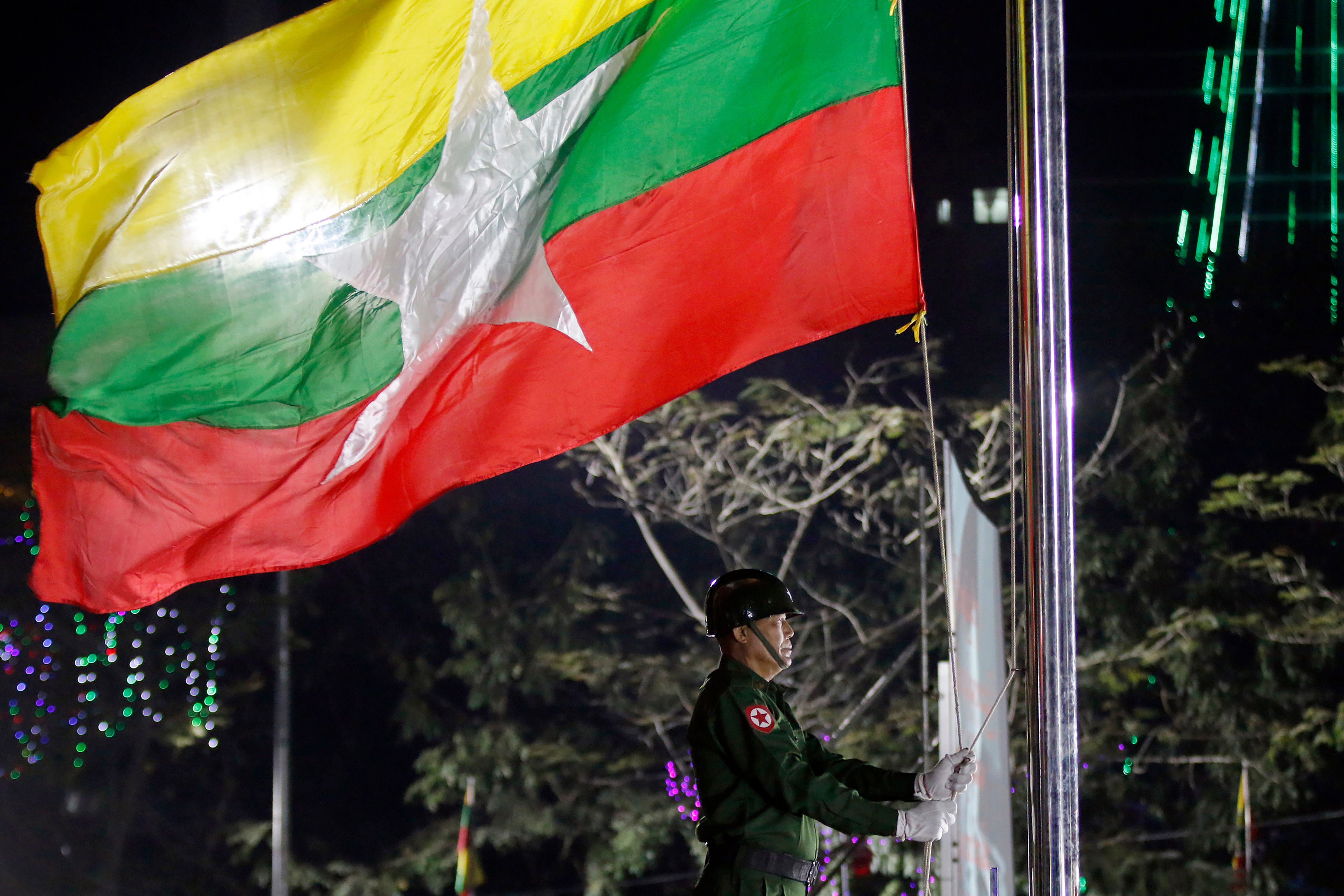
Voter turnout in townships where the junta did manage to hold a vote was, according to anecdotal evidence, well below the 55 per cent claimed by the junta. To no one’s surprise, the military-backed Union Solidarity and Development Party won an “overwhelming victory”, despite having secured just 6 per cent of the vote in the last election. China and Russia sent election observers and rubber-stamped the poll. Few others did.
Underlining the poll’s illegitimacy, the United Nations recently announced that during the voting period, at least 170 people were killed in 408 junta airstrikes. One of the deadliest incidents occurred on 22 January in Kachin state’s Bhamo township, where an airstrike killed as many as 50 civilians.
Through five years of revolution, the people of Myanmar have demonstrated that they will not be ruled by mass murderers. Five years of sacrifice and struggle have shown that the will of the people is mightier than all the weaponry the junta can muster, even with Chinese and Russian support, and that current international strategies can only lead to further instability and an environment in which transnational crime – scam centres, the drugs trade, human trafficking – will thrive.
The people of Myanmar have demonstrated their unshakable belief that there can be no place in Burma’s political dispensation for an army that commits genocide, burns down entire towns, forces hundreds of thousands of its own citizens across international borders, gang-rapes women, launches airstrikes against first responders to natural disasters, uses civilians as human shields, forcibly conscripts young people as cannon fodder in battles against their own communities, imprisons 30,000 political prisoners: the list of junta war crimes and crimes against humanity goes on.
Five years of revolutionary struggle have demonstrated that though the junta can massacre whole communities, it will never extinguish a people’s thirst for freedom, justice and dignity. Burma right now is unsustainable by any standards. The army is not interested in transition. It is waging a war of annihilation. Time, then, for a radical rethink, one that acknowledges, respects and sees the realisation of the legitimate aspirations of the Burmese people.
Chris Gunness is the director of the Myanmar Accountability Project
Join our commenting forum
Join thought-provoking conversations, follow other Independent readers and see their replies
Comments
Bookmark popover
Removed from bookmarks