Donald Trump has insulted and humiliated America’s closest allies
Editorial: For the US president to dishonour the sacrifice of nations that have fought as partners in countless conflicts is graceless and shameful – and no way for a supposedly friendly head of state to behave
Donald Trump is a divisive figure. But with his careless, callous and disgraceful remarks about the service given by British and other allies in Afghanistan, he has succeeded in uniting nations – if only against him.
“A little off the front line” was the smear against Nato troops that he tossed into a television interview. Rather than concede that, after 9/11, many non-Americans made the ultimate sacrifice or suffered life-changing injuries when Article 5 of the North Atlantic Treaty was triggered – for the first and only time in the organisation’s 76-year history – by the United States.
So, far from never helping the US, as the commander-in-chief alleged, when it was needed in the global “war on terror”, the West, through Nato, stood united with America. When the then president George W Bush asked allies for support, it was freely given. It was also entirely within well-established international rules of law, and backed by a United Nations resolution.
For nearly 20 pitiless years, the blood of allied soldiers mingled in the streets of Kabul and the dust of Helmand province. It is worth recalling that, when the time came for the young Donald Trump to serve his country in Vietnam, he did not do so; instead, he received a medical exemption for bone spurs. His own war record speaks for itself.
Such is the president’s grim combination of vanity, childishness and insecurity, he has rarely been able to properly respect what he now likes to call “warriors”. When he was running for office in 2015, he mocked the late senator John McCain, suffering from a permanent disability after years of torturous captivity in Hanoi, because: “He’s a war hero because he was captured. I like people who weren’t captured.”
Yet, without shame, Mr Trump is the first civilian president to salute the national anthem in the military style, while downplaying the history of people of colour in and the valour of trans people today. What, the world should wonder, would Dwight Eisenhower have made of this man?
Either Mr Trump has forgotten relatively recent history, doesn’t care about it, or was merely displaying his customary lack of grace; but in any case, he crossed a line. It was no way for the head of state of any nation to behave.
For some reason, President Trump has made it his mission to insult and humiliate America’s closest friends and allies, nations that have fought as partners in countless conflicts over more than a century. To dishonour them is shame enough; to do so while appeasing the bullies and dictators of today is inexplicable.
Even if he thinks, misguidedly, that Europe isn’t worth defending and that America doesn’t need allies, he doesn’t need to try to justify that by disregarding sacrifice and history. The derangement, not for the first time, is all his. And all because Denmark and Greenland refused to allow him to occupy their territory and place their people, unwillingly, under American rule. The British, Danes and others were there when America called for help; despite everything, they will be there again for America in future.
Sir Keir Starmer, who is using increasingly forceful language towards the president, initially called his comments “wrong” – then later went much further, saying they were “insulting and frankly appalling”. His call for the president to apologise for his remarks signals a clear shift in tone and approach that will not have gone unnoticed.
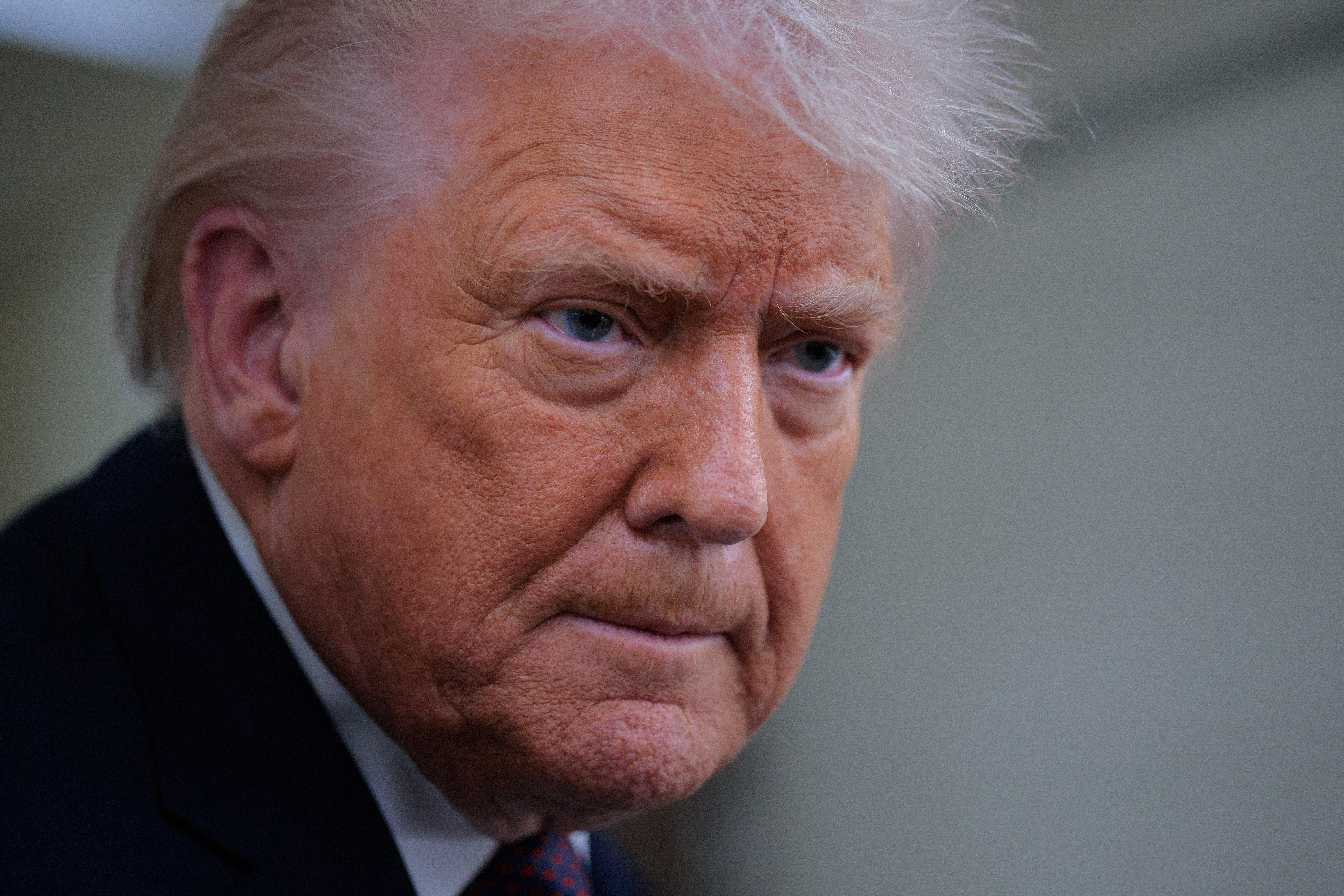
The leader of the opposition, Kemi Badenoch, who has grown as a stateswoman during the Greenland crisis, was combative. Despite her party’s traditional affinity with the Republicans, and her desire to build a relationship of her own with Mr Trump, she too has demanded an apology, plus a retraction or at least a clarification. Other politicians and service people have done the same, and with barrack-room language.
Prince Harry, who served in Afghanistan, released a statement saying that British troops’ sacrifices “deserve to be spoken about truthfully and with respect”.
It has to be said that Mr Trump is unlikely to oblige the world with a retraction, and is more likely to double down on what we may call “fake history”. That is why it is difficult for Sir Keir to make such demands on Mr Trump.
In recent days, the prime minister’s pragmatic “quiet diplomacy” has been getting incrementally louder and more principled, and it has carried public opinion in Britain and had the necessary impact. He does not need to resort to histrionics, which would doubtless prove counterproductive.
The only prominent figure in British politics who failed immediately to condemn President Trump’s words was Nigel Farage. Our most performative patriot and amateur military historian curiously went awol when his friend disdained those who lost life and limb in Afghanistan. It is about time the leader of Reform UK put Britain, not America, first and revised his views on the Maga movement.
Mr Trump’s words were callous and hurtful, but it is at moments such as this that Britain should remember that the “special relationship” is old and enduring, and has never depended entirely on the personal chemistry between leaders, though that has sometimes helped. Nato and the transatlantic alliance as a whole, not to mention economic and cultural relationships with America, will survive Mr Trump’s fever dream of a presidency.
Yet the Greenland crisis has marked – as the Canadian prime minister Mark Carney put it this week – a “rupture”. It feels like things will never quite be the same again. It is obvious now that Europe will need to act together, and match words with cash and action – not least to help Ukraine win its war, or at least not lose it.
If the harsh contempt shown by President Trump has done any good, then it is to remind the world’s “middle powers”, as Mr Carney styles them, that they need to combine against the military superpowers that surround them and their interests: Japan, South Korea, Australia and Canada as much as Germany, France, Italy and Britain – all wealthy and technologically advanced and, in principle and in concert with smaller like-minded nations, more than a match for any adversaries.
When it won the Cold War, Nato proved that unity brings victory and avoids armed conflict through deterrence. To rebuild that kind of unconditional alliance is a duty with which the governments of what is left of the West can honour those who died for our freedom in wars past.
Join our commenting forum
Join thought-provoking conversations, follow other Independent readers and see their replies
Comments
Bookmark popover
Removed from bookmarks