The Epstein files reveal a horrifying truth about British politics: a paedophile was, in effect, a secret member of the cabinet
What is yet to truly sink in is the allegation that the infamous financier effectively found himself with a seat slap-bang in the middle of the UK government, says Chris Blackhurst


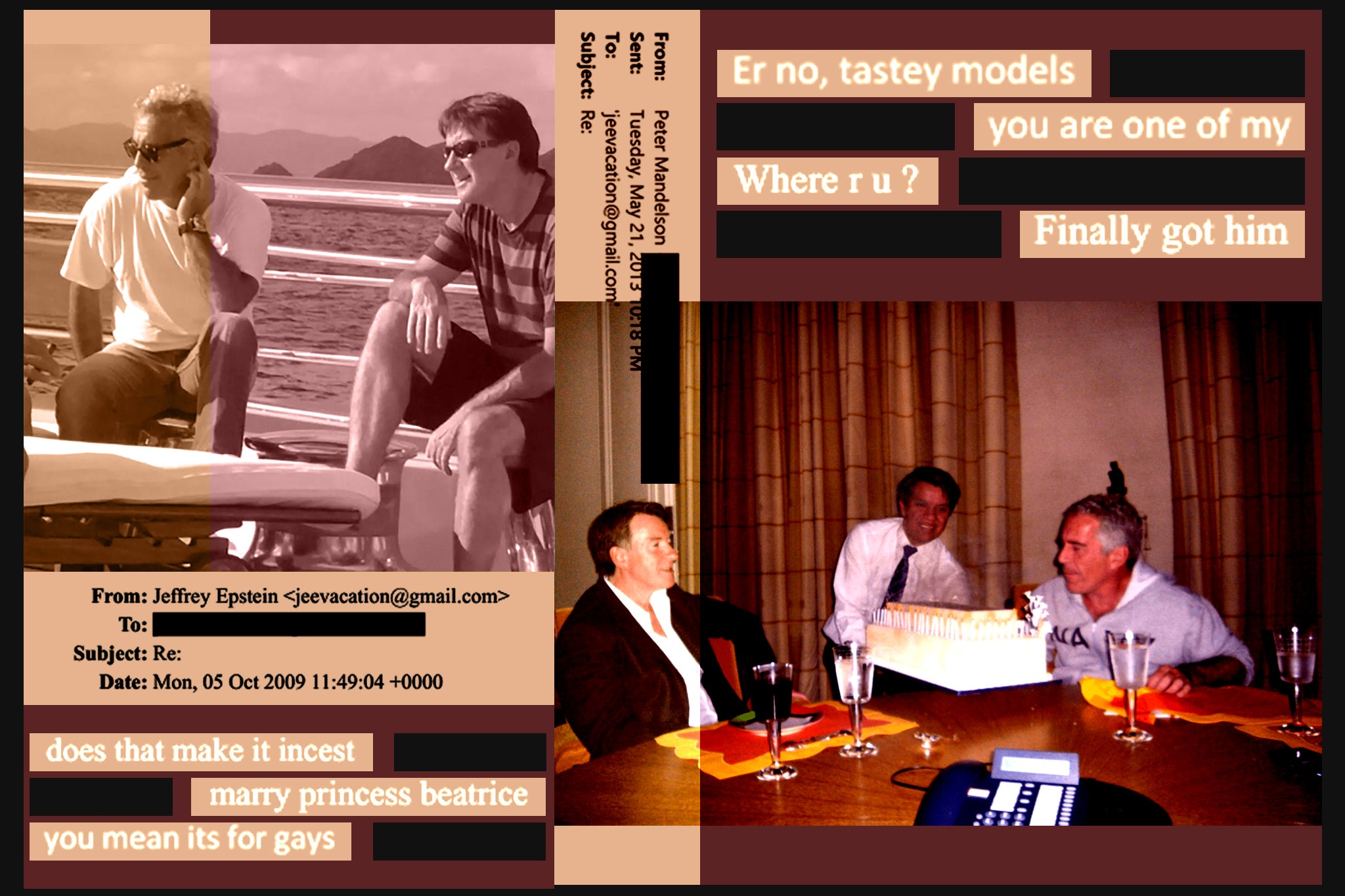
Jeffrey Epstein might as well have been a paid-up, sworn-in member of the British cabinet, such was the closeness of his relationship with Peter Mandelson and the constant two-way messaging between them.
It’s clear from their many texts and emails, now made public, that the American sex offender was completely across Mandelson’s world, which included affairs of state.
Epstein was not just receiving information, but guiding his friend on a wide range of subjects, and Mandelson was heeding what Epstein (along with those Epstein was in turn briefing) was saying. In effect, Epstein was more or less a secret member of the cabinet – a foreigner and a convicted felon; someone who had hidden, unknown interests and paymasters, who owed no allegiance to our government or to this country.
No one in government at the time knew that, of course. Mandelson would ask all manner of questions, poke his nose into a variety of issues, hoover up information, and opine on anything that appeared to take his fancy. Always, seemingly, he was doing so for the good of the nation; for Gordon Brown, the prime minister, and his colleagues, and for the Labour Party. Except he wasn’t.
What was known was that Epstein was a social butterfly, a wealthy American with a circle of admirers and hangers-on, who courted a gilded elite. Among others, he was friends with Mandelson and with the then Prince Andrew, along with Sarah Ferguson. Epstein was heavily into sex with young girls, and had done some jail time for it, but apart from that, he seemed to pose little threat to the government. In security terms, he was exotic, harmless, not to be taken seriously.
Today, we realise that was not the case. Because unknown to Brown, or to the equally conscientious, patriotic and straight-as-a-die chancellor, Alistair Darling – not to mention their advisers, and presumably the security services who kept watch on these things – Mandelson via Epstein was serving not the UK, but the other side. Not the Russians, the usual foe – though who knows, he might have been – but the banks.
In the bleak days of the credit crunch, the pressure on Brown, Darling, Bank of England governor Mervyn King and the other financial regulators, was fierce and unrelenting 24/7. Mandelson, through Epstein, was helping the banks, members of the very same sector that had caused the disaster in the first place. They were not the corporations directly responsible, but they were bound up in the same industry, and it was they that Brown and co were helping to save – the same institutions they thought should be penalised, and made to acknowledge their collective wrongdoing and compensate the state for its efforts.
The banks, as is their wont, refused to admit their failings. They could not see how their practice of rewarding employees with vast sums for investing other people’s money was excessive, and dangerous, and had almost brought the world’s capital markets to their knees. Thousands of jobs would be lost, sound businesses would go to the wall, public services would be cut, but the bankers glided on, aloof and impervious.
Mandelson was a quisling at the heart of the machine, tipping them off, advising them, ferrying messages to Epstein – the pair of them combining to ensure that the banks knew what was under discussion, and were forewarned and thus forearmed. But not only the banks.
Epstein was partnering with Mandelson on both policies and political tactics. They discussed pretty much everything together. Apparently, nothing – absolutely nothing – was off limits. In addition to the matter of bankers’ bonuses, there was Brown’s future as PM (Mandelson was no fan, it transpires, despite Brown having brought him back into office), and whether Mandelson himself should seek the leadership. Subsequently, they talked about the negotiations to form a coalition and the country’s next administration.
It was deeply sensitive material, much of it only for the eyes and ears of those in the room, or on the official distribution list. Yet there was someone who was not physically present, who did not appear in the “cc” field, but whom Mandelson copied in, once within minutes of receiving a confidential, top-level bulletin. Epstein knew, and his well-connected friends knew, and he told Mandelson what he and they thought.
It was remarkable: a degree of deception the likes of which we have never seen before, not even at the height of the Cold War. Because, make no mistake, during this febrile period, it felt like a raging conflict. There were no dead bodies or injuries – though some people did commit suicide as a consequence of their monetary losses, while others saw their health suffer – but the ferocity was similar. Different but similar. Brown was fighting to save the UK and the world’s financial systems; one of his comrades was secretly fighting for another team.
Mandelson should hang his head in shame.
Join our commenting forum
Join thought-provoking conversations, follow other Independent readers and see their replies
Comments
Bookmark popover
Removed from bookmarks