Lord Mandelson’s fate is now intertwined with that of the Labour government
Editorial: The fall of Keir Starmer’s disgraced former US ambassador may not bring down the prime minister, but it hasn’t helped the administration’s chances of survival
Usually, when public figures have “questions to answer”, they have some choice about how they do so. This is more complicated in the case of Baron Mandelson of Foy in the County of Herefordshire and of Hartlepool in the County of Durham, as a public figure he will soon no longer be.
Having resigned from the Labour Party to “prevent further embarrassment” over the Epstein files, he has since stepped down from the House of Lords. The prime minister – after unnecessary delay – has committed to removing the peer’s title, and Lord Mandelson’s place in the Privy Council, which confers the title “right honourable”, may also be withdrawn, in another highly unusual step.
These, however, are the least of Lord Mandelson’s challenges.
Rather than picking from the very wide range of media interviews available to him, it is quite plausible that he will instead be answering questions put to him by police officers. Such is the seriousness of the allegations now being levelled against him that he might even end up with a custodial sentence.
As such, this growing scandal – prompted by the release of a cache of millions of new files relating to the American financier and child sex abuser Jeffrey Epstein – seems set to be one of the most significant in recent times, not least because it also inevitably calls into question the decision by Sir Keir Starmer, a year ago, to appoint Lord Mandelson Britain’s ambassador to Washington.
Awkward accusations of misconduct in public office and the sharing of market-sensitive inside knowledge are being considered by the authorities. The Cabinet Office says that material relating to the reputed leaks of sensitive information by Lord Mandelson during his time as a minister from 2008 to 2010 has been referred to the police.
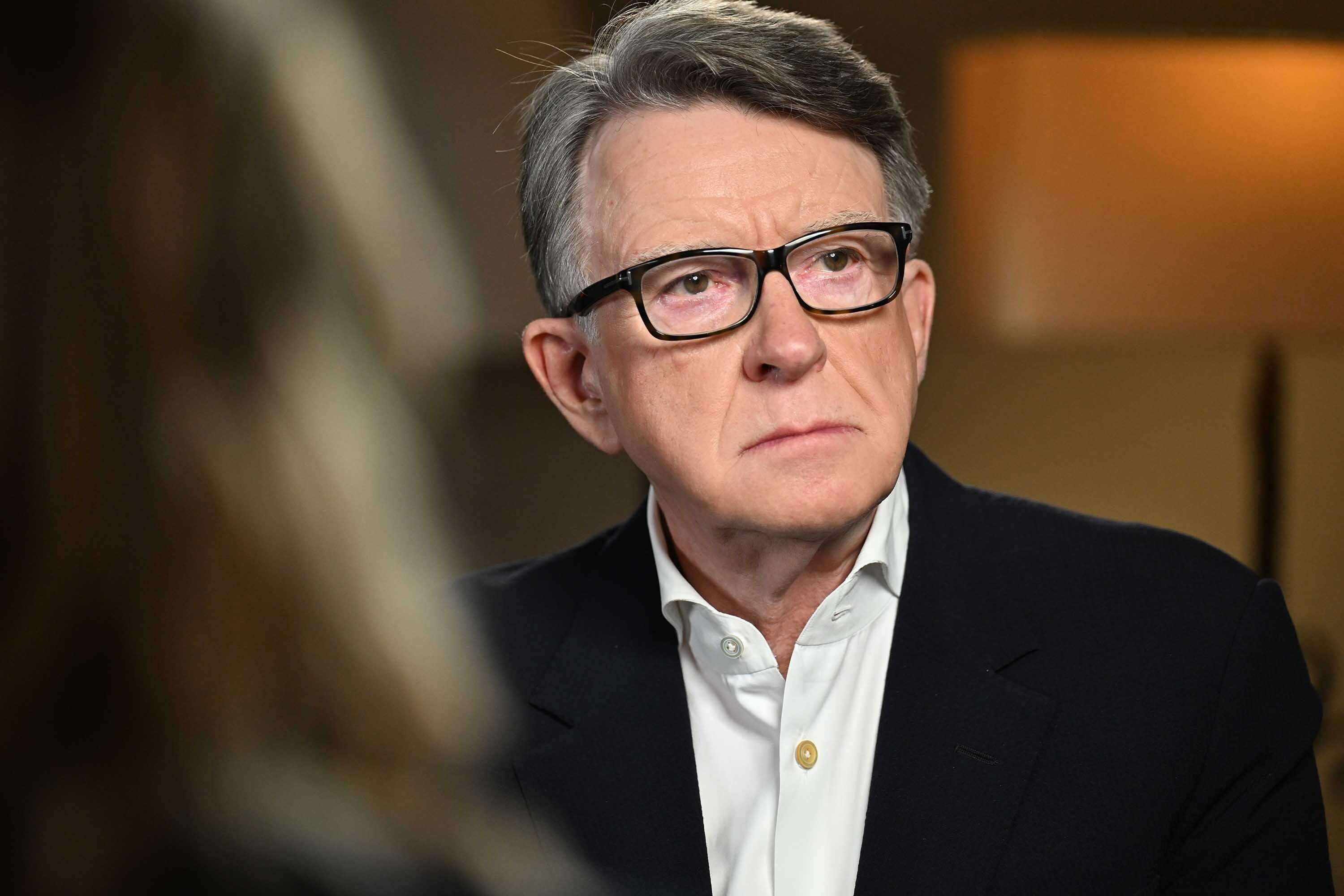
That is clearly bad for confidence in politics itself, let alone the prime minister, the Labour Party, and Lord Mandelson himself. No one can know where, if anywhere, all this will lead. It is extremely serious, if not historic. It will certainly not bolster public support for the prime minister and his administration.
It should be stressed, in all fairness, that Lord Mandelson maintains that he has not done anything wrong, aside from being too trusting in his past dealings with Epstein. Yet questions arising from the Epstein files are growing more pressing, aside from the longstanding and important ones about what, if anything, the former peer knew about Epstein’s crimes of a sexual nature – of which, again, Lord Mandelson maintains he knew nothing. “Never were there any young women or girls, or people that he was preying on or engaging with in that sort of ghastly, predatory way.”
Lord Mandelson says that there’s nothing he can tell any US congressional inquiry that it doesn’t already know – but that is a matter for Congress, not him, to determine. He’d be well advised to volunteer to give evidence, if only to clear his name and help establish that he committed no offence, and that he really did have no knowledge of wrongdoing.
In Britain, the emergence of certain documents pertaining to Lord Mandelson is clearly problematic, to say the least – for example, bank statements suggesting a total of $75,000 was sent from Epstein to Lord Mandelson and his partner in 2003-2004, in a series of transactions he denies any recollection or knowledge of, and says he is investigating.
Also, why were emails relating to sensitive government matters apparently being forwarded to Epstein? In particular, why was Epstein seemingly tipped off about a €500bn bank bailout in 2010, a future sell-off of UK public assets, and international talks about bank regulation? Why did Lord Mandelson apparently advise JPMorgan, via Epstein, to “mildly threaten” his own cabinet colleague, Alistair Darling, the chancellor of the Exchequer?
Lord Mandelson pleads that all the banks were making their arguments in public anyway – but that is no reason to encourage them or betray a political comrade. Gordon Brown, the former prime minister, has rightly called for another inquiry to be held into all these leaks – but why did the one he asked the government to carry out last September uncover nothing?
For Sir Keir, the problem is to find a satisfactory explanation for why Lord Mandelson was appointed ambassador to Washington in the first place. Was the vetting rigorous enough? What kind of due diligence was carried out? (For such a prominent role, it should be wide and deep.) What was the role played by the prime minister’s senior adviser, Morgan McSweeney? Were warnings from the Secret Intelligence Service ignored?
The fall of Lord Mandelson may not take the prime minister with it, but it hasn’t improved this government’s chances of survival.
Join our commenting forum
Join thought-provoking conversations, follow other Independent readers and see their replies
Comments
Bookmark popover
Removed from bookmarks