Caring fathers aren’t ‘soft’ – they’re showing us a new kind of strength
If we’re serious about tackling ‘lost boys’, toxic influencers and men’s mental health, the answer may not be found in therapy or classrooms, says Dr Katie Splevins – but in the nursery


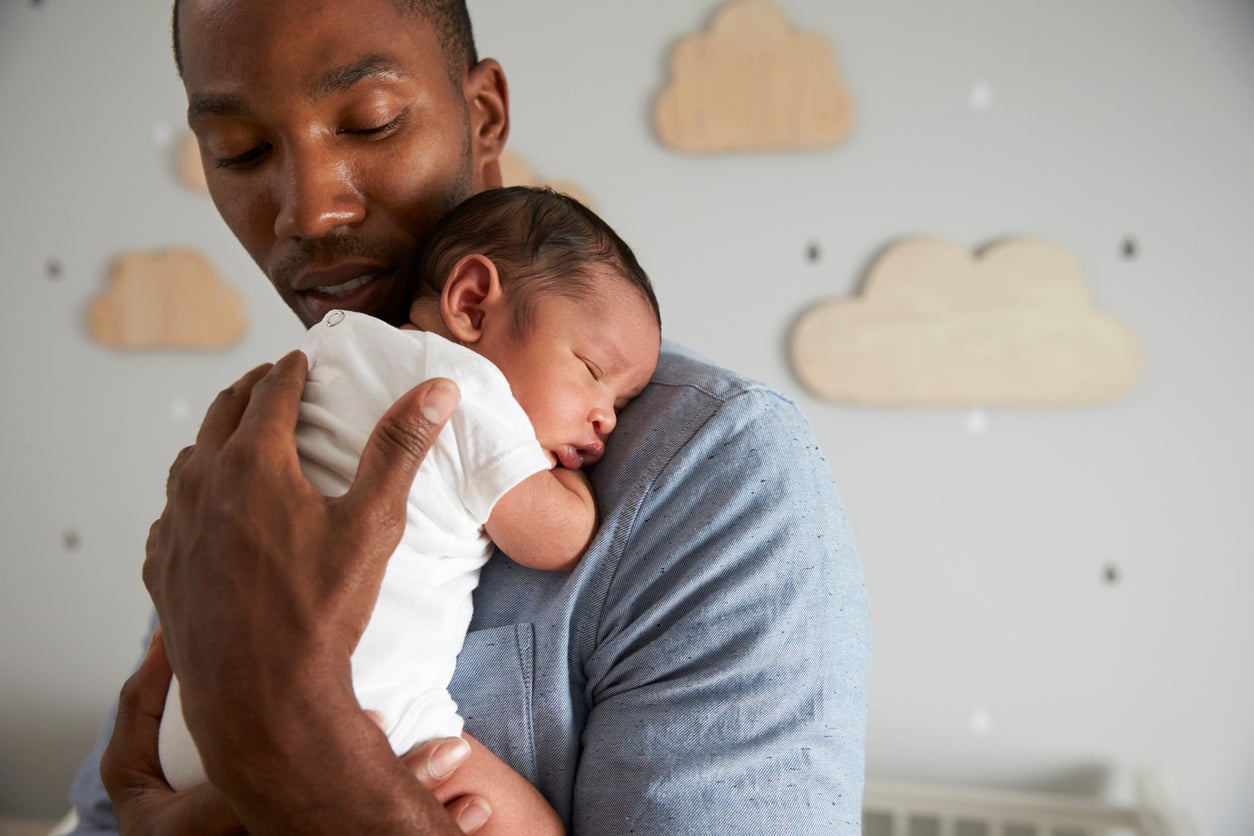
Picture a father at 3am, pacing the floor with a baby pressed against his chest. He’s exhausted, bleary-eyed – but something extraordinary may be happening. fMRI studies show that when men – heterosexual or gay – care for their infants, their brains adapt. Activity increases in circuits that heighten alertness to a baby’s signals, motivate fathers to their infant’s presence, and help them interpret and respond to their child’s needs (Abraham et al., 2014; Feldman et al., 2014). In short, caregiving can lead to measurable changes in men’s brains.
This truth is strangely absent from Britain’s conversation about masculinity. We rightly worry over “lost boys”, toxic influencers and men’s mental health, with men accounting for three-quarters of suicides in England and Wales in 2023 (ONS, 2024). Yet when we talk about boys and men, the focus is often on urging them to be independent and tough. Rarely do we consider the ordinary but transformative act of men caring for children.
Evolution tells a different story. Anthropologists such as Sarah Blaffer Hrdy describe humans as cooperative breeders. For much of our history, babies were raised by networks of mothers and “alloparents” – fathers, grandparents, siblings and the wider community who all played their part. Ethnographic studies show that in some societies men carry infants, soothe them and act as primary caregivers (Hrdy, 2024), illustrating that paternal caregiving is part of the human repertoire. It is our culture that has written men out of the nursery.
Today, that disconnect takes a toll. UK law allows only two weeks of statutory paternity leave, paid at a flat rate well below average earnings, which can be taken in one or two blocks within the first year. Uptake is lowest among fathers on modest incomes, who are least able to afford time off, and access to enhanced leave varies sharply across employers and sectors. Many fathers feel pushed straight back into work, their role reduced to breadwinner. Workplaces quietly signal that caring is a career setback. And socially, men who lean into fatherhood risk being labelled “soft” or less ambitious.
The cost is high. Mothers carry the mental load and pay the career penalty, fuelling a stubborn gender pay gap. Children lose out on the consistent involvement of a second, emotionally available parent. Fathers themselves miss benefits too: around one in ten fathers experience post-partum depression (Paulson & Bazemore, 2010), yet those who take paternity leave appear less likely to do so (Barry et al., 2023). When men do step fully into caregiving, the gains are visible. Research links father involvement with more secure infant attachment and children developing better cognitive and social skills (Sarkadi et al., 2008). Recent UK research found that fathers who took more than four weeks of parental leave reported greater psychological wellbeing, describing it as a valuable opportunity for self-reflection, growth and building parenting skills and confidence (Hobbs, 2024). Of course, not every father or partner will want or be able to take extended leave – but those who do should not be penalised for it.
Far from making men weak, the sleepless nights, endless care and daily routines demand courage, patience, resilience, time management, empathy, perspective-taking and emotional regulation. These skills and qualities that can develop alongside infant care are not flaws to be hidden. They are strengths, and a developmental route to the very skills we say we want in our leaders. If we are serious about addressing the crisis in masculinity, this is where to look. Fatherhood isn’t a private indulgence or a professional derailment. It is a natural opportunity for men to grow in ways that support wellbeing, strengthen connection and build the social capacities that families and communities rely on.
Britain is missing an untapped opportunity. Only a minority of fathers take the two weeks on offer. Those on low incomes are least able to take leave, which only deepens inequality. Those who do often describe the return to work as brutal – emotionally raw, sleep-deprived, and expected to act as if nothing has changed. Meanwhile, our debates on gender equality stall because the assumption lingers that mothers will always pick up the slack.
It doesn’t have to be this way. In countries with longer, well-paid paternity leave, the benefits ripple across society. In Sweden, each additional month of paternity leave taken by fathers is linked to an almost seven per cent rise in mothers’ future earnings (Johansson, 2010), and OECD analysis finds that countries offering more than six weeks of paid paternity leave have narrower gender pay gaps (CPP, 2023). For fathers too, longer leave is tied to greater wellbeing (Philpott et al., 2022), and increased life satisfaction that can last for decades (Korsgren & van Lent, 2022). These are not just family policies – they are cultural investments.
If we want healthier men, families that share care more equally and stronger leaders, the answer may lie not in classrooms or online campaigns. It may be in the quiet hours of the night, with a father rocking his baby in the dark.
Dr Katie Splevins is a Principal Perinatal Clinical Psychologist in the NHS and founder of Life-Work (www.life-work.me), which uses the parenting transition as a vehicle for leadership development
Join our commenting forum
Join thought-provoking conversations, follow other Independent readers and see their replies
Comments
Bookmark popover
Removed from bookmarks