Deaths in the Gaza ‘ceasefire’ are not statistics but people I have known and loved
Helplessly watching his former home from London, Ahmed Najar notes that the goal of Donald Trump’s Israel-Hamas ceasefire seems not to end apartheid and occupation but to manage them more efficiently


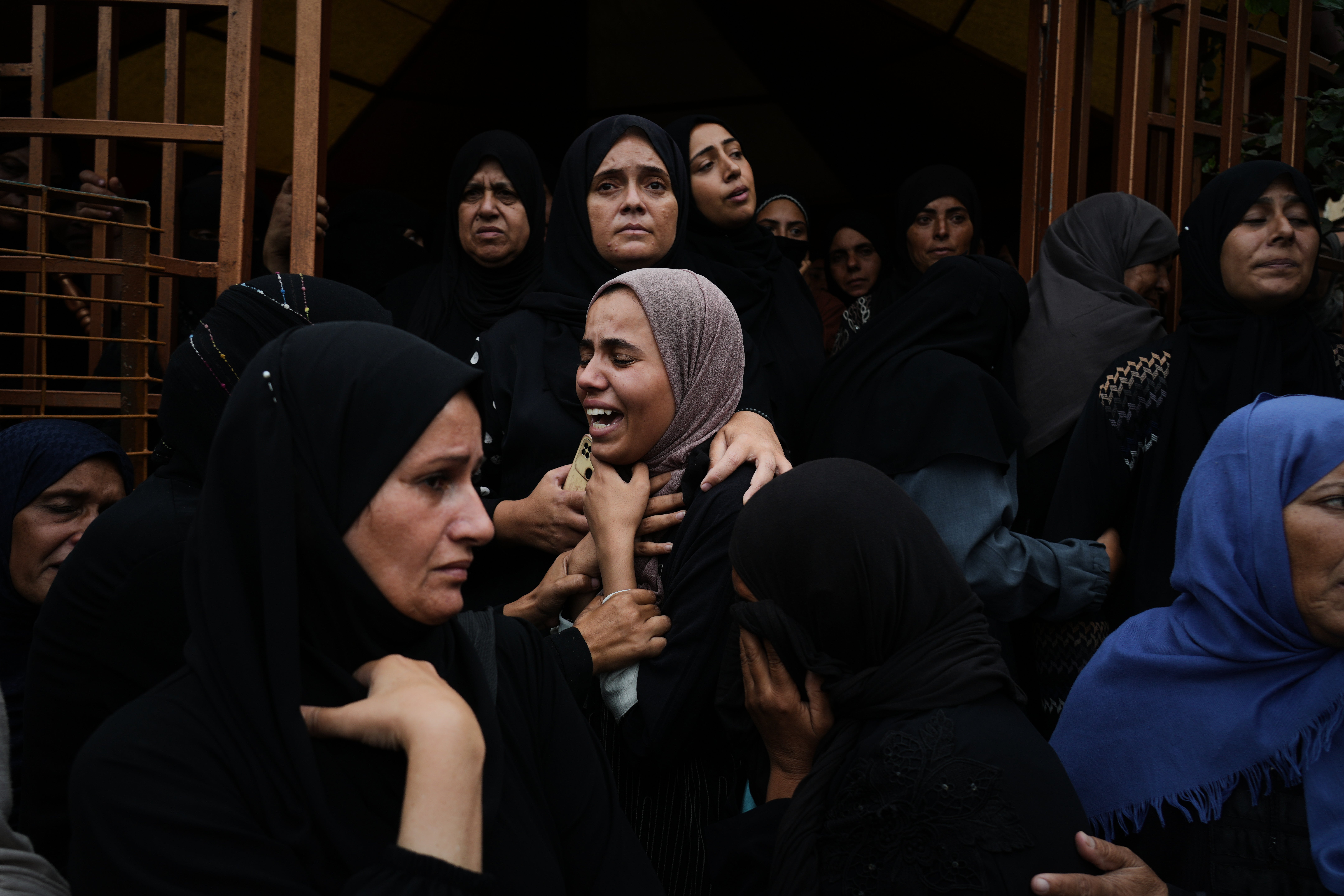
When I heard the news on Tuesday that Benjamin Netanyahu had ordered his military to “immediately carry out powerful strikes on Gaza”, a familiar fear set in. I wondered what that meant – had the so-called ceasefire come to an end? Was Gaza about to face another night of mass killing? My stomach tightened as I imagined the scenes that might follow: the crushed buildings, the children’s bodies pulled from the rubble, the frantic messages from relatives searching for one another.
For me, this fear is not abstract. My family’s home in Gaza was destroyed months ago, along with the homes of several of my siblings. I lost my niece, my nephew and my grandmother to this ongoing mass killing, so I know what it means when the bombs start falling again. These are not headlines to me; they are memories that return every time I hear the word “strike”.
Initial reports were unclear, but by the following morning, the scale of the assault became devastatingly clear. Israel had killed 104 Palestinians overnight, including many children, in the deadliest attack since the ceasefire began. In the weeks before that, Israeli forces had already killed nearly 100 others during what the world still dares to call a ceasefire. When I read those numbers, they are not statistics to me. They are people I could have known, voices I might have grown up with, faces that resemble my own nieces and nephews.
From London, I watch this pattern unfold again and again – the world counting Palestinian deaths with the same tired language of “restraint” and “self-defence”. The distance does not make it easier; rather, it only adds another layer of helplessness. The genocide continues while its perpetrators speak the language of peace and are invited to negotiate as though they were partners, not criminals. And the world plays along.
This is why any talk of “peace plans” or “negotiations” feels obscene. A genocide cannot end through dialogue with its architects. It ends when those who carry it out are finally held accountable. Until then, every truce is merely a pause between massacres.
There is a brutal truth the world refuses to confront. A genocide does not end because its perpetrator agrees to a temporary halt in killing. Nor does it end because the victims are told to compromise. It ends only when the perpetrators are held accountable and stripped of impunity. Anything less is a performance of diplomacy that allows the violence to continue under a different name.
Negotiating while genocide is ongoing creates a grotesque paradox. The victims are expected to plead for the right to live, while the perpetrator dictates the terms. The aggressor gains legitimacy simply by sitting at the table. The world calls this negotiation. Palestinians know it as coercion.
Some voices claim that new diplomatic initiatives, such as the “peace plan” advanced by Donald Trump, offer a way forward. Yet these proposals remain built on one principle: Israel’s impunity must remain untouched. They do not demand accountability. They do not reverse land theft or ethnic cleansing. They merely repackage domination as “stability” and occupation as “security”.
Under such frameworks, Palestinians receive conditional promises instead of rights. Administrative autonomy instead of sovereignty. Economic incentives instead of freedom. The goal is not to end apartheid and occupation. The goal is to manage them more efficiently.
Meanwhile, in the West Bank, ethnic cleansing continues in plain sight. Settlements expand. Land is seized. Palestinians are displaced or killed by soldiers and armed settlers who act without fear of consequence. The so-called peace agenda pretends these are negotiable issues. They are not. They are crimes.
There is no lasting peace built on the foundations of injustice. There is no stability in a system that requires a population to live without equal rights. International law is clear: genocide, war crimes and crimes against humanity cannot be resolved through deals that preserve the perpetrators’ power. Impunity does not lead to peace. It leads to repetition.
The international community has allowed this outcome. Powerful states continue to supply weapons. Diplomatic allies provide political cover. Media platforms frame genocide as a “conflict” between sides. Even humanitarian aid is instrumentalised to sustain the status quo and prevent collapse just long enough for the system of domination to continue.
The result is a global system in which Israel can commit atrocities while still claiming the language of moral legitimacy. Every act of violence is justified as a necessity. Every Palestinian death is rendered invisible under the fog of geopolitics. The structures that make the killing possible remain untouched.
Ending genocide requires more than a pause in killing. It requires dismantling the system that creates the killing. It requires accountability in international courts. It requires sanctions on those who supply the weapons and the political protection. It requires recognising Palestinians as full human beings, not as subjects whose rights can be negotiated away.
If negotiations maintain inequality, the result is oppression. If negotiations reinforce dispossession, the result is colonisation. If negotiations preserve impunity, the result is genocide.
Up to this moment, the world has asked Palestinians to surrender freedom in exchange for survival. It has demanded silence in exchange for temporary calm. It has treated justice as optional. This approach has failed for 76 years. It must end.
Peace is not an agreement that Palestinians are expected to sign while still bleeding. Peace is justice. Peace is accountability. Peace requires ending the perpetrator’s power to continue the crime. Without that, every ceasefire is simply preparation for the next massacre.
Israel’s genocide and settler-colonial occupation of Palestine are not isolated acts: they are the outcome of a global system of complicity. Through their diplomatic, military, economic and so-called “humanitarian” support, third states have allowed Israel to pursue its crimes unabated. International law does not permit the luxury of ignorance or delay. States have a duty to act and we, the people, must make it happen.
Join our commenting forum
Join thought-provoking conversations, follow other Independent readers and see their replies
Comments
Bookmark popover
Removed from bookmarks