Why is Keir Starmer so good at appointing all the wrong people?
By forcing out cabinet secretary Chris Wormald, the candidate he picked to run the civil service, the prime minister has added another name to the list of top-tier appointments he has swiftly lost confidence in – and it’s an implicit admission that he is a terrible judge of character, says John Rentoul


Keir Starmer overruling civil servants to pay a quarter of a million pounds to get rid of the top civil servant he appointed 14 months ago is quite an admission of failure. Especially because it fits a pattern of bad choices – from Sue Gray, his chief of staff in government for three months, through Peter Mandelson, ambassador to Washington for seven months, to Matthew Doyle, Labour peer for four weeks.
“He’s completely incurious,” said one of the people quoted by Tim Shipman of The Spectator in his round-up of the case against Starmer by those who have worked for him. “He’s not interested in policy or politics. He thinks his job is to sit in a room and be serious, be presented with something, and say ‘Yes’ or ‘No’.”
Such a limited and passive role for a prime minister – excluding that of persuader-in-chief, which is such an essential part of leadership – might just work if enough of those decisions are the right ones. But Shipman mines a deep seam of despair among those who have been in Starmer’s No 10, and who think he gets too many decisions wrong.
No prime minister can be expected to get everything right. The reason that a choice has reached their desk is that there is no easy answer, or that all options are bad, or that irreconcilable interests have clashed. But Starmer has made so many mistakes in both personnel and policy that the U-turns are impossible to brush aside.
He chose Chris Wormald as cabinet secretary and head of the civil service little more than a year ago. It was a surprise choice: Tamara Finkelstein, the top civil servant at the Department for Environment, Food & Rural Affairs, was thought to have been the favourite. Anthony Seldon, the chronicler of No 10, has suggested that Peter Mandelson – before he became ambassador to the US – advised Starmer to switch at the last moment.
Wormald was hardly an exciting choice, but he seemed to know what he was doing. Yet in no time at all, he was being briefed against by political sources around Starmer. Normally, if a prime minister fails to get on with the cabinet secretary, both sides can work round each other, but the breach between Starmer and Wormald seems to have been so serious that Starmer decided to replace him – and he pressed ahead with that decision, even as speculation about his own future reached a peak and he lost his chief of staff and director of communications.
Not only that, he pressed ahead even though other civil servants refused to sign off Wormald’s severance payment, reported to be £260,000, because – without any reason given for Wormald’s departure – it was not a good use of taxpayers’ money.
That meant that Starmer had to take the unusual step of issuing a “direction” – an instruction to civil servants to go ahead even though they had objected.
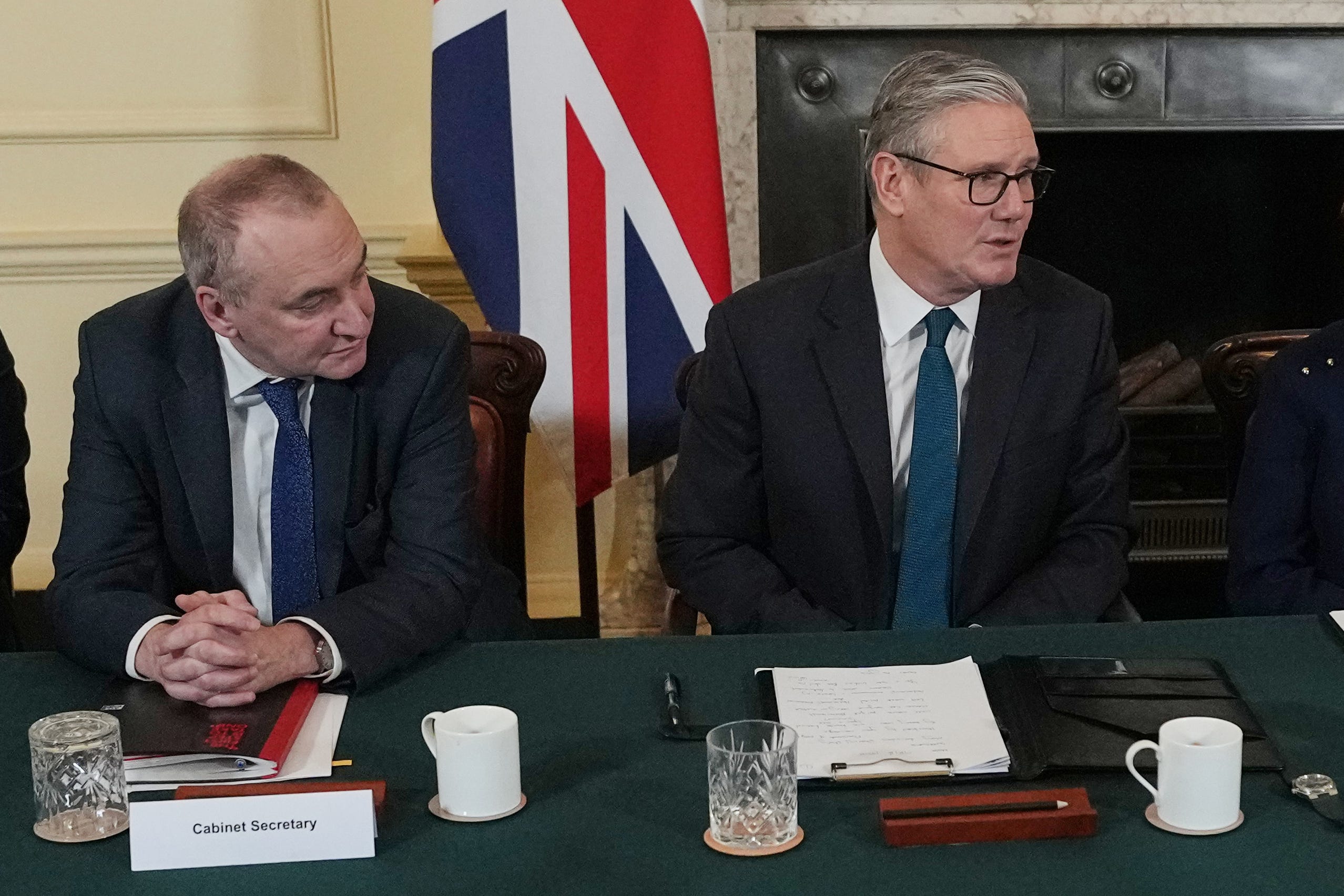
Nor is that the end of it. Starmer was so desperate to get Wormald out that he didn’t have a replacement ready. The post will temporarily be filled by three permanent secretaries, one of whom, Antonia Romeo of the Home Office, was on the shortlist for the job 14 months ago. After Wormald’s departure, she was reported to be Starmer’s choice for the post, until she hit a pothole in the form of Simon McDonald, her former boss at the Foreign Office, who said this week that the appointment requires “more due diligence”.
Her allies have fought back hard against this rearguard action from what they call the “boys’ club” – but Starmer may be so weakened that he would now regard appointing Romeo as risky. Whoever he chooses will be in a strong position, however, and the civil service will have been strengthened by the turmoil. It is now the common view, for example, that it would have been better to keep Karen Pierce, the Foreign Office lifer who was displaced by Mandelson in Washington.
Starmer’s strange speech around the time he appointed Wormald, when he said that “too many people in Whitehall are comfortable in the tepid bath of managed decline”, has been long forgotten.
His personnel mistakes have handed power to the civil service, just as his political mistakes have handed power to the “soft left” faction of Labour MPs. Some of his few defenders argue that, with Morgan McSweeney gone and the right-wing Labour, Reform-facing strategy abandoned, Starmer has been liberated to be his true “soft left” self. The reality is that, more than ever, he is a prisoner in No 10.
Join our commenting forum
Join thought-provoking conversations, follow other Independent readers and see their replies
Comments
Bookmark popover
Removed from bookmarks