The Independent's journalism is supported by our readers. When you purchase through links on our site, we may earn commission.
The anti-immigrant rhetoric of rising Tory star Katie Lam sounds a lot like the 1930s
The Kent MP has impressed many on the right with her stance against migration and her calls to put Britons first. Yet she’s espousing the same views that would have prevented her own ancestors from fleeing Nazi Germany and settling on these shores, writes Alan Rusbridger


It doesn’t take much these days to be marked out as a “rising star” in the Conservative Party, or what remains of it. But in recent weeks, the hitherto unknown MP for the Weald of Kent, Katie Lam, has surged from the distant shadows into the spotlight, chiefly because of her robust views on immigration.
Given all that is going on in the world today, she seems slightly obsessed with the issue. Most notably, she gave an interview to The Sunday Times in which she spoke menacingly of “a large number of people in this country who came here legally, but in effect shouldn’t have been able to do so. It’s not the fault of the individuals who came here; they just shouldn’t have been able to do so. They will also need to go home.”
The reporter did not press her on who these people are, how many “a large number” is, and where their real “home” might be. But she was confident that, once this group had been forcibly repatriated, “what that will leave is a mostly, but not entirely, culturally coherent group of people”. The reporter did not ask her to explain what that meant. But she was clear about where she stood: “We don’t owe anybody access to our country other than people that we choose for our own benefit.”
She had written something similar in The Telegraph last month: “Britain,” she argued, “does not exist simply to offer those from abroad a better life, and the point of the British state isn’t to take care of global welfare. Its primary purpose – indeed, its only purpose – is to advance and protect the interests of the British people.”
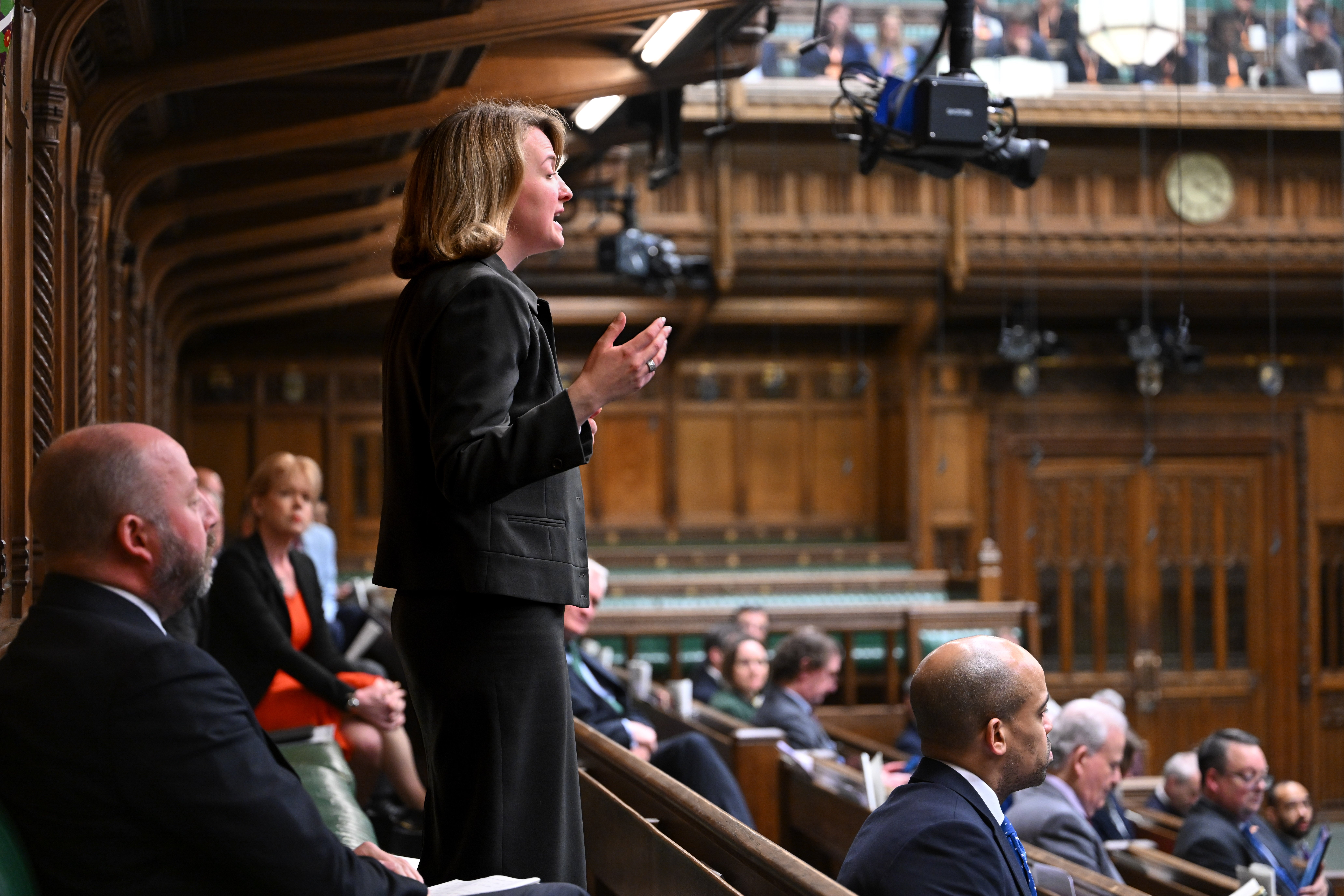
And here she is again, last month, in a Westminster Hall debate, arguing that the UK has no responsibility to foreigners, only to British people: “It is our sacred duty to put them first, and to act in their interests and their interests alone.”


-1.jpeg?quality=75&width=230&crop=3%3A2%2Csmart&auto=webp)
Such talk plays well to the modern Tory party, and perhaps we shouldn’t be surprised that, when George Osborne recently dropped in on vice-president JD Vance on his Cotswolds holiday, he took with him the 34-year-old Lam. They seem like they could be soulmates.
Now let me introduce you to Katie Lam’s ancestors, and the reason why Lam lives in the UK and is able to represent the good people of Kent.
On the maternal side, her grandmother came to Britain in 1937, aged 13, as a refugee from Nazi Germany. Lam’s great-great-grandfather was a remarkable social democratic politician, Paul Heide, who was imprisoned by Hitler in 1933, escaped, and fled to Czechoslovakia before finding refuge in England.
Lam’s paternal side were not so lucky: her grandfather’s family were Jews from Amsterdam, and almost all of them were murdered in Sobibor and Auschwitz, though a few survivors did eventually come to the UK.
Lam frequently references these origin stories. In her maiden speech, she recognised Britain as a country that “saved my family and saved the free world”. Elsewhere, she has said: “I stand here only because this country offered them hope when tyranny had taken everything else.”

To my ears, it feels like there’s a jarring disconnect here between praise for the country that gave refuge to her family in the moment of their greatest need, and the disparaging way in which she sometimes talks about others who may be fleeing persecution and seeking sanctuary.
She has acknowledged this paradox, telling The Spectator’s Katie Balls of a conversation she’d had with her 90-year old grandfather, who was much more pro-immigration than his then teenage descendant. But I wonder if she has fully reflected on the similarity between her words, and the political positions she now strikes, and those of the people in the 1930s who would gladly have turned away her own family from these shores.
Oswald Mosley’s British Union of Fascists talked about the death of the “true” national culture, with Mosley himself lamenting the disappearance of “the Britain we knew and loved”. With Jews very much in mind, he warned of how the “entry of alien standards and alien life ... is going to change the whole character of English life and English people ... destroy[ing] the things that were noble and the things that were beautiful”.
This is not exactly the same as Lam warning that – even after forcibly repatriating people with a legal right to live here – we would be left with “a mostly, but not entirely, culturally coherent group of people”. But nor is it so very different.
As desperate Jews sought to reach the safety of Britain in the 1930s, it was not only the Mosleyites who were agitating against their admittance. The Daily Express demanded in March 1938: “Shall All Come In? We need to ask, for there is a powerful agitation here to admit all Jewish refugees without question or discrimination. It would be unwise to overload the basket like that.”
The Daily Mail regularly railed against German Jews “pouring into this country”. Like the Express, it warned: “To be ruled by the misguided sentimentalism ... would be disastrous ... once it was known that Britain offered sanctuary to all who cared to come, the floodgates would be opened, and we should be inundated by thousands seeking a home.”
GK Chesterton’s England was a place for the English – in his view, Jews could be treated kindly, but never quite belong. They were, as he put it, “a nation within a nation, an ancient people whose faith and habits made them forever alien to the English spirit”.
Britain was, indeed, a haven for around 80,000 Jews fleeing antisemitism and fascism between 1933 and 1939 – including Lam’s relatives – but it was also a hostile environment for people from an apparently different culture who were frantically seeking sanctuary.
Lam is worried about numbers today: so were the anti-immigration warriors in the 1930s. In interviews, she draws a distinction between families like her own – which she insists became “totally assimilated into British life” – and others. But in the 1930s, there were similar sentiments about Jews: that they would never truly blend in. They were, as Chesterton wrote, considered alien.
Fears of people’s inability to assimilate, or integrate, were very much on Enoch Powell’s mind in his notorious “rivers of blood” speech in April 1968. That speech got him fired from Edward Heath’s shadow cabinet. Today, Lam’s rhetoric has her earmarked by some for future greatness.
In many ways Lam seems energetic, clever and likeable. But perhaps she could reflect on the way that she talks about desperate people trying to find a better life for themselves and their families. Is it so very different from the language of those who would gladly have prevented her own family from building a new life in safety?
History offers echoes, not exact parallels. But I can’t help wondering what Heide, who died in 1973, would have made of his great-great-granddaughter and her dog-whistle remarks. My guess: not much.
Join our commenting forum
Join thought-provoking conversations, follow other Independent readers and see their replies
Comments
Bookmark popover
Removed from bookmarks