I didn’t see my friend’s suicide coming – and as a nation, we’re blind to mental health
As Prince William has highlighted in a radio interview, England is too ‘stiff upper lip’ to take mental health seriously – and it is killing us. Unless we open our eyes, says Kat Brown, we won’t reverse the shocking statistic that suicide is still the biggest killer of men under 50


One of the first funerals I attended that wasn’t a relative was that of an old school friend. Everyone adored Sally – she was so clever, funny, cool and charming. That she died by suicide absolutely floored me.
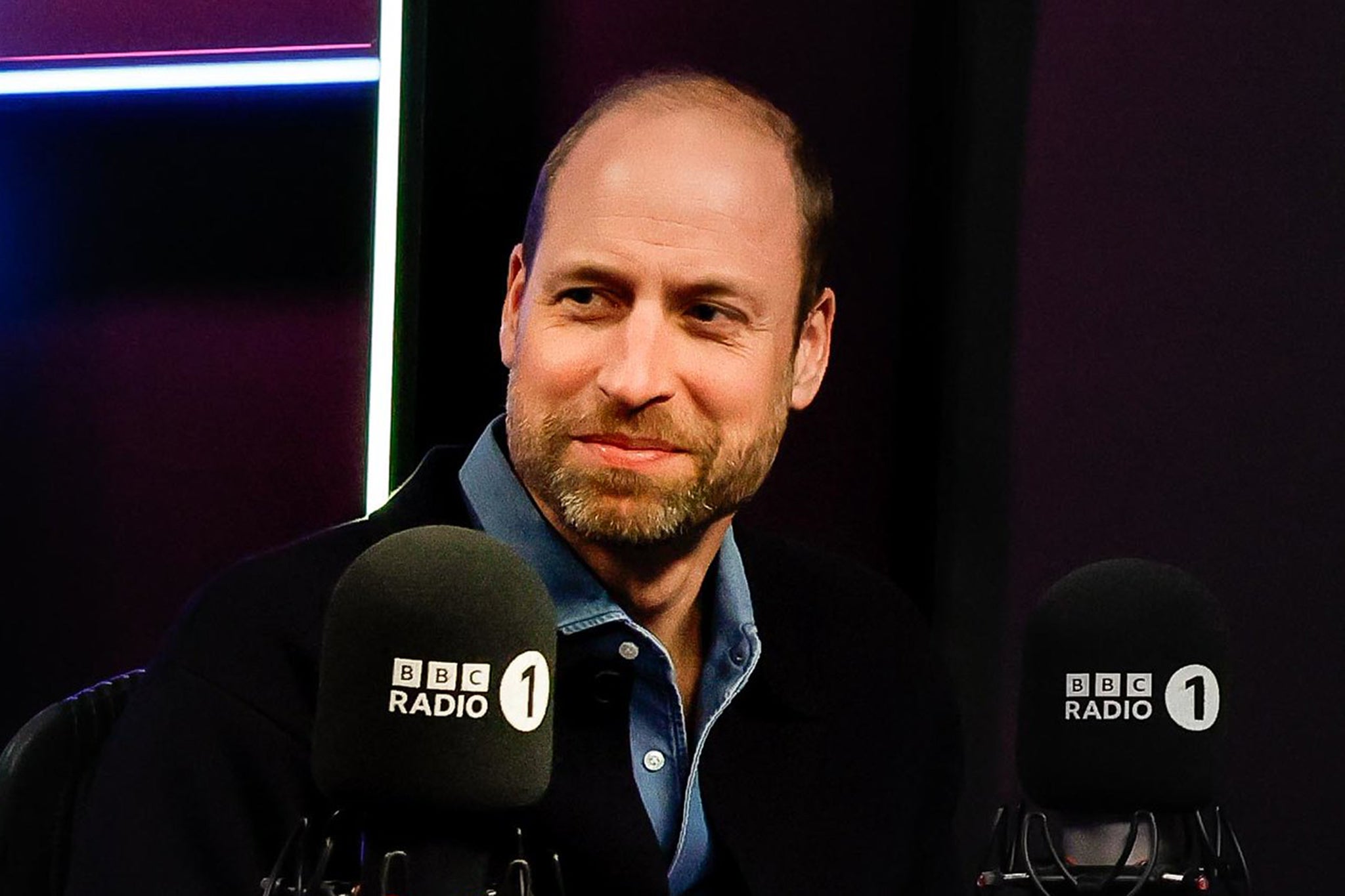
Of literally anyone I have ever met, Sally would have seemed the least likely to do so. I thought of Sally as I listened to Prince William on Radio 1 calling the taboos around mental health and suicide prevention “a national catastrophe” and again as I read the president of the Royal College of Psychiatrists (RCP) today warning that there is a “silent mental health pandemic” affecting people across England, because of stigma minimising funding, because people “can’t see” mental illness.
“People can’t see it, they think it’s not as important," said Dr Lade Smith, pointing out that mental health gets under 9 per cent of NHS funding despite comprising 20 per cent of Britain’s disease burden, and that health service money is more likely to be diverted to people waiting on trolleys in corridors because “the cog that squeaks gets the oil”.
I couldn’t “see” Sally’s illness, but that didn’t stop her from dying.
England, historically, is not a squeaky country. We pride ourselves on our stoicism, even at the same time as being nimby-ish. The old Monty Python joke of the Black Knight missing both arms and stating, “It’s just a flesh wound,” is underpinned by our relatives drawing a silent line around what they experienced in wartime.
Yet, staggeringly, less than a third of people who need mental health care can access it. For the longest time, it was because we didn’t know that we did need it. If reasonably wealthy, the “absent-minded” or “eccentric” man was held together by a team of secretaries and, most likely, a wife.
Shame has long been used to “treat” mental health problems in the UK. Shame has suppressed it, making people live horrified and secretive lives. What is now PTSD was known as “lack of moral fibre” in the RAF during the Second World War to shame psychological casualties into returning to active duties.
I hadn’t faced anything like that. I was just a little girl, clever and tall, and so moved up a year at school at seven. I was 10 when I first tried alcohol and developed the binge-eating disorder that wouldn’t be identified until I was 35. Twelve, when I developed the insomnia, depression and anxiety that I wouldn’t be treated for until I was 18 and outlining how to kill myself.
Yet all this happened quite silently. I didn’t want to bother anyone. Indeed, I genuinely only didn’t kill myself because I didn’t want someone to have to find my body. I used alcohol and cigarettes as an escape, but otherwise I was trapped by my own, terrifying brain for decades.
All that while I worked, I studied and fulfilled my social responsibilities and filed my tax returns. Does that make me more or less deserving of relief? The cost of a “silent” mental health crisis must be paid. I paid it when I had physical health problems in my late thirties, which meant that all the invisible pain I had been carrying since I was a little girl was transferred onto the visible pain that was socially understood.
There is always a cost. Investing in those people – and yes, those children – who are suffering is not only a pragmatic way to address economic inactivity in the UK, but a kind way to help people to live rather than to simply endure. Suicide is the leading cause of death among men under 50 in the UK, and 75 per cent of all people who die by suicide are male. An average of 19 people died by suicide every day in 2023. Now, imagine the number of people living with that pain.
I do accept that the burden on the state is significant. I also believe the government cannot have its cake and eat it, too, regarding SEND (special educational needs and disabilities), welfare, and the economically inactive. According to the RCP, up to 80 per cent of mental illnesses are driven by poverty, debt, trauma and other social determinants. If the government wants more people to be in work, it requires children to receive a diagnosis and support from a young age, so that they don’t fall through the cracks into Neet (not in education, employment or training). It requires sensible thinking on hybrid, remote and part-time working (all of which your gentle author and her fellow columnists benefit from – as indeed do our MPs). And it probably requires a judicious muting of the landlord-sponsored blasts on how everyone who works from home is a laundry-addicted lazybones, and that work is only work if you tap into a building once a day. Some of the laziest people I’ve ever met have been gold stars of presenteeism, counting down until retirement.
Above all, it requires understanding. Everyone knows someone who has struggled – or worse – with invisible health issues. The silent pandemic of mental illness has only ever been silent to keep things looking nice and polite. When it becomes too much of an effort to stay silent, the reverberations are truly shocking.
If you are experiencing feelings of distress or are struggling to cope, you can speak to the Samaritans, in confidence, on 116 123 (UK and ROI), email jo@samaritans.org, or visit the Samaritans website to find details of your nearest branch
If you are based in the USA, and you or someone you know needs mental health assistance right now, call or text 988, or visit 988lifeline.org to access online chat from the 988 Suicide and Crisis Lifeline. This is a free, confidential crisis hotline that is available to everyone 24 hours a day, seven days a week. If you are in another country, you can go to www.befrienders.org to find a helpline near you
Join our commenting forum
Join thought-provoking conversations, follow other Independent readers and see their replies
Comments
Bookmark popover
Removed from bookmarks