Forget the under-16s – will somebody please ban TikTok for politicians?
Trying out new media is all very well, but what about the message, asks John Rentoul


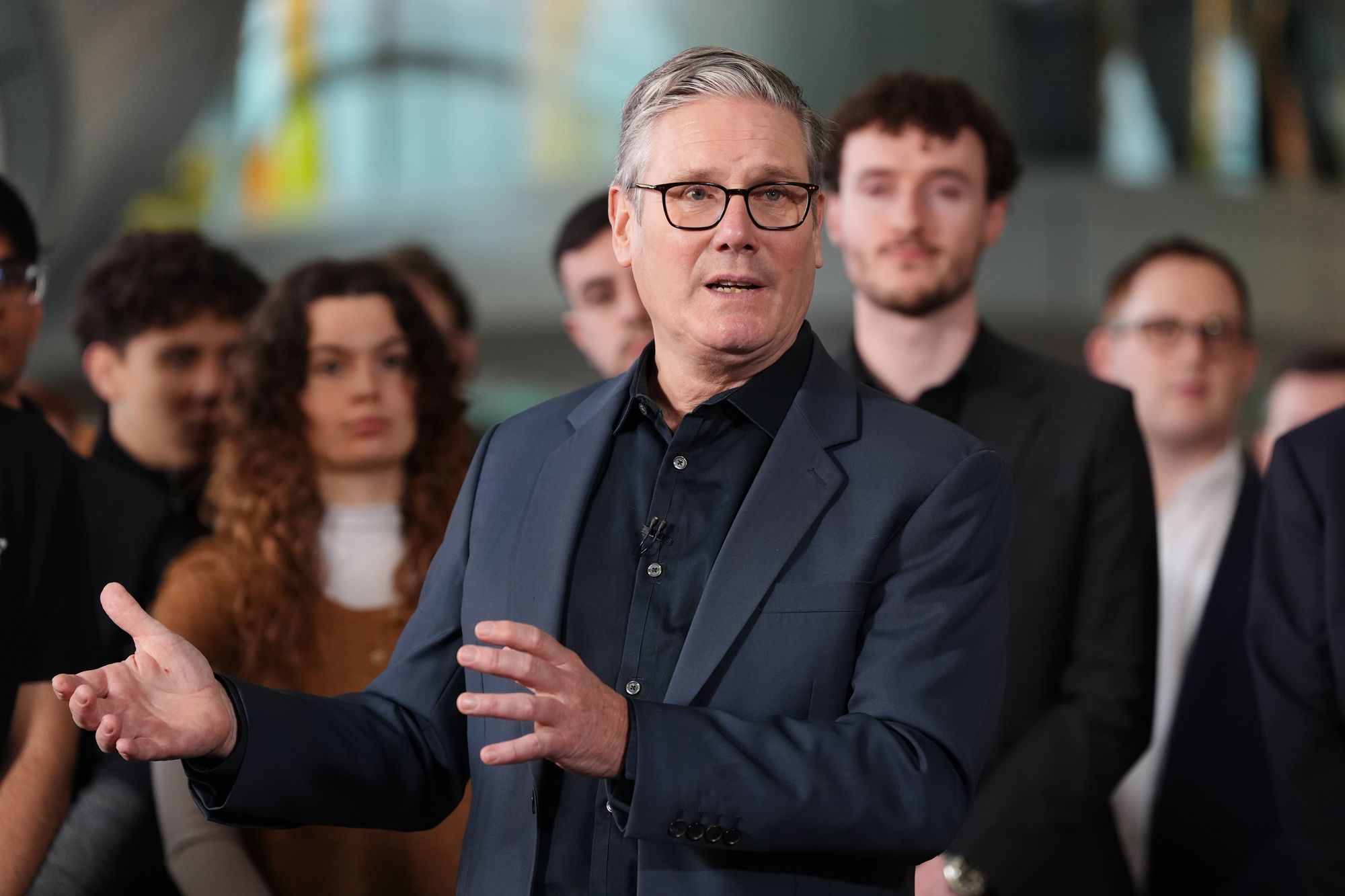
Keir Starmer is on TikTok. It doesn’t mean much to me because I am a Twitter person, so much so that I pretend that Elon Musk never happened. But I assume that any serious politician ought to use the media that most people use – except that TikTok is banned on government devices because of security fears about its Chinese owner, ByteDance.
Those security concerns do not seem to have been resolved. They have simply been ignored. The prime minister’s spokesperson said “mitigations” were in place to operate the account.
That is only one of many puzzles about the new account. Another is why anyone would watch it. For the purposes of public service journalism, I have watched the first four posts on the prime minister’s account. It didn’t take long: they lasted for a total of 80 seconds.
In the first, Starmer says, “TikTok, follow me,” as he walks out of No 10 holding hands with his wife Victoria, before counting down to a boy switching on the Downing Street Christmas tree lights.
The second and third feature Volodymyr Zelensky, the Ukrainian president, arriving at No 10 and a group chat with Starmer, Emmanuel Macron of France and Friedrich Merz of Germany. The Christmas tree features again, and the third also features Larry, the Downing Street cat. Starmer says: “Larry? Larry will have to wait.”
The fourth starts with the prime minister being ambushed by the videographer as he walks down the stairs in No 10 and goes into his office. Starmer is affable, making a joke about whether his interviewer has been “waiting all night” to intercept him, and then chatting about Tyrone Mings, the England footballer, who is coming to No 10 that day.
It is not terrible. There is a hint of the amiable side of Starmer that we saw the other day when he joined in the “six-seven” meme – a TikTok phenomenon – with primary school children and was told off by their teacher.
But another puzzle is why, if TikTok is not actually a threat to national security, he was not on it before. Why has he waited until he was so unpopular that no self-respecting teenager would watch him, making it unlikely that TikTok’s sugar-rush algorithm will promote him to their peers?
A further puzzle is why he didn’t use the existing 10 Downing Street TikTok account, last updated when Boris Johnson was prime minister, and featuring Larry the cat predicting England would win the 2021 Euros – when Mings, coincidentally, played his first international game.
That account has 266,000 followers, which could have been a useful start for Starmer’s account, which has 13,000 followers on its second day.
A final puzzle is why Starmer’s communications team decided last week that he also ought to be on Substack, the blogging platform. He, or someone under his name, posted a long article about his child poverty strategy, and said: “Communication is changing, and I want to be a part of that. People have a right to know how decisions that affect them are taken and why. That’s why I’m now on Substack.” It was as dull as any policy paper on the Department for Work and Pensions website.
But these are quibbles. It ought to be taken for granted that any half-competent political operation would use social media as well as conventional ones. Starmer has had a presence since he was leader of the opposition on YouTube, Facebook and Instagram, the biggest platforms in Britain. TikTok, on which people in the UK spend more time than on Instagram, was an anomaly.
Another reason for being on TikTok is that it is a young person’s medium – although that can be exaggerated. There is a zombie statistic that I have seen on Twitter, that seven in 10 young people get their news from TikTok. This is not the case. Ofcom’s latest report found that 11 per cent of 12- to 15-year-olds say they get most of their news from TikTok, although for that age group it is the single most popular source (partly because many of them are not interested in “news” at all).
But social media works when someone has something they want to communicate and when they have an engaging way of doing it. Starmer comes across on TikTok as someone bemused by the interest in him, who has a job to do but doesn’t see what business it is of anybody else.
In the end, communication can be done well or badly, but the only thing that really matters is the message. It is unclear what Starmer’s message is – or, which is the same thing, he has so many different messages, each more important than the last, some of them contradicting earlier positions, that the best communications operation in the world would still convey only a jumble.
Join our commenting forum
Join thought-provoking conversations, follow other Independent readers and see their replies
Comments
Bookmark popover
Removed from bookmarks