Yes, Trump crumpled – I was there to witness it – but the madness isn’t over yet
So European leaders finally got their act together and catastrophe was avoided over Greenland, writes Anne McElvoy from Davos. But in Trumpworld, anything can happen and unhappen – and Europe is still left with a major headache: How far can it indulge his next wild plan?


Donald Trump’s cavalcade rolled into the Swiss Alps with two competing messages for the business and tech titans and politicians gathered in Davos. The first was Trump’s latest idee fixe – namely that the US needs to “have Greenland” (under its full control) in order to boost Arctic security against Russia and China threats.
The president’s warm-up had been a massive fight with European allies to secure that goal, including wielding the threat of an extra torturous tariff squeeze on countries, including the UK, for backing Denmark’s authority over Greenland and treating Nato as a mere toy of US hobby horses.
The second, and paradoxical, message is being spread by the more worldly pragmatists of the US administration, notably the Treasury secretary Scott Bessent, who has been on the dining circuit reassuring the world’s leading entrepreneurs that they should stay calm and let events play out.
This turned out to be the right advice in a nerve-wracked week: a fire-and-fury Trumpian discourse was followed a few hours later by the news that a framework deal on the Arctic with Nato had been agreed in a meeting with Nato secretary-general Mark Rutte, and the tariff threat has disappeared into the icy Alpine air.
On a strictly logical level, the Trump position is massively contradictory. On a practical level, that is relatively good news because it stops the cycle of bad-tempered escalation, which was becoming the hallmark of transatlantic relations. But as Europe stepped forward with a new majority view on the continent that it needed to prepare for serious tariff retaliation – otherwise known as a trade war with the US – over Trump’s menacing deployment of trade levies, the US stepped back.
It is too easy in the heat of the moment to take Trump literally, as one veteran opponent who has sparred with him over his two presidencies and now over the Greenland issue, Chris Coons, the Democratic senator for Delaware told me on the evening of the president’s speech: “It will either be annoying and insignificant – or it will be a catastrophe.”
Catastrophe was avoided, but the irritations and anxieties persist. The European side will claim that it was its standing up to Trump’s barrage in defence of Denmark, which oversees Greenland’s security, that helped swing the retreat. Keir Starmer will claim that the channels his team has to the administration, including via his business adviser Varun Chandra – who has befriended even the most heated Maga characters around Trump, such as the bruising Homeland Security advisor Stephen Miller (who had called for the Greenland annexation) – helped find a compromise.
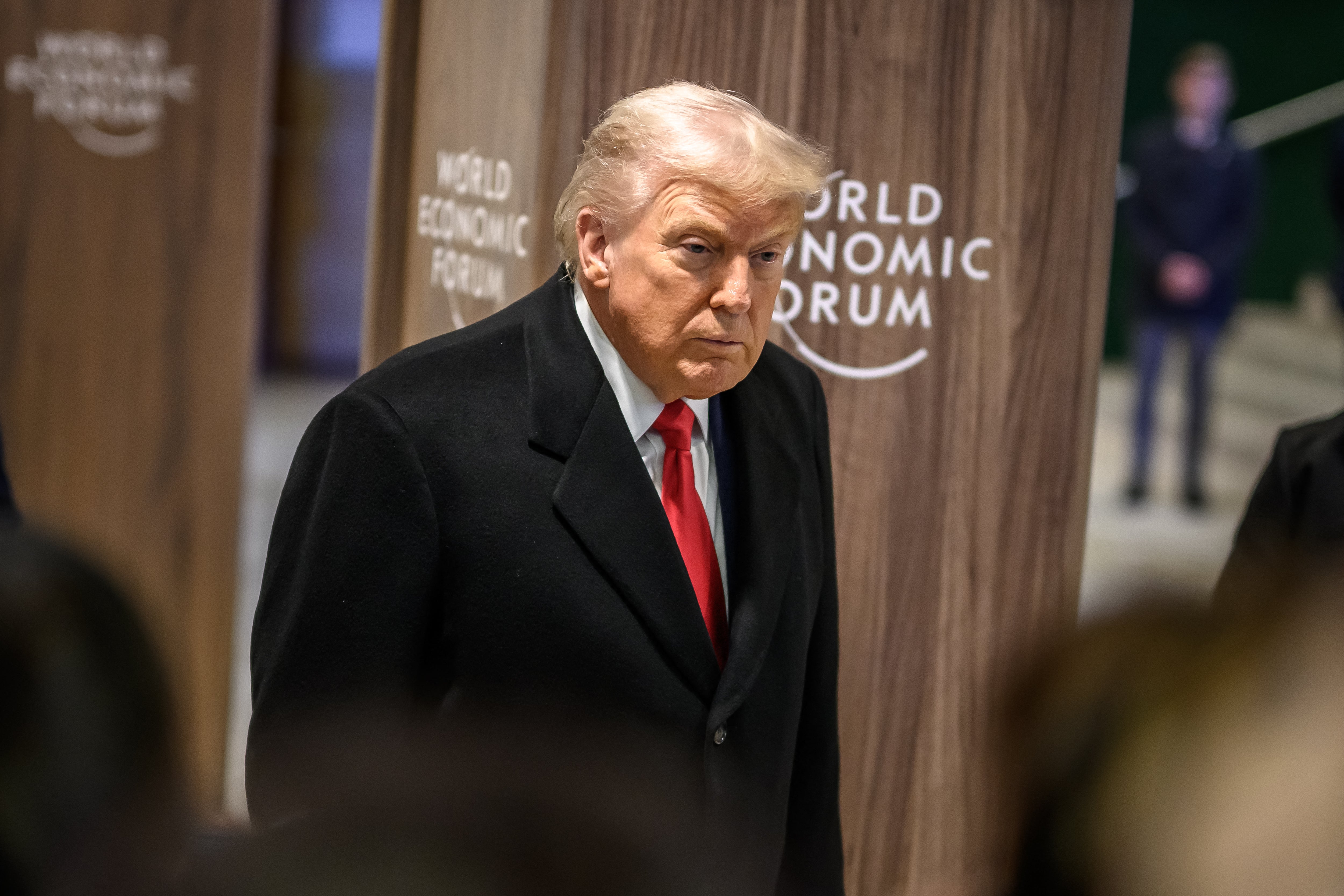
The US will be given a bigger, more visible role in the Arctic, without a full-on fall-out with Nato. Somehow, Denmark will be placated, although Trump continues to say that the US should run Greenland.
But there is also a midterms year angle to the retreat. The Arctic lunge has not landed well with US voters; twice as many are opposed to purchasing Greenland as support doing so.
So the most likely explanation for the switchback events of this week is that Trump refused to change his speech and is keen to reserve the rights for more aggressive action, making clear that the US could take Greenland by force if it wanted to, then saying that it would not. It was, as one EU veteran foreign minister put it, “like being locked in an abusive relationship, in which you end up being grateful that you escaped a beating”.
It does, however, leave Europe’s leaders with the headache of how far to indulge any wild or threatening plan the administration now embraces. Whims are turning into demands very quickly these days.
Trump’s contempt for Europe was also evident in his comments. “I love Europe, and I want to see it go good, but it’s not heading in the right direction,” he said. However many state visits, blandishments and attempts at bonhomie European leaders engage in with Trump, the underlying message of this week is that he basically regards “Yurrup” as a place of slow-growing economies and leaders he can tease and belittle. Look at Keir Starmer over the “stupid” Chagos lease deal, which Trump once greeted as a sound outcome. Sometimes, it is amusing – a very funny passage about aloof Emmanuel Macron (“I like him, believe it or not”) and the French leader’s dandy aviator sunglasses to hide an eye injury was delivered with a slyly suggestive tease: “What was that all about?”
But the big problem with Europe, in Trump’s view, is that it does not conduct itself like his America.
That gave Mark Carney, the Canadian leader and former UK Bank of England governor, material for the counter-speech of the conference. America’s turn away from international institutions was not just a blip, he insisted, but a full-on “rupture”, and that there was no point in “nostalgia” from liberal elites: “The old order is not coming back.”
The giddy events of this week in the Alpine resort underline that truth. The flashpoint of Greenland has been a reminder that, in Trumpworld, anything can happen and then unhappen. This pattern is becoming even more erratic and unpredictable than it has been so far. The result is a wave of relief with an undertow of sheer exhaustion. As one Nordic foreign minister put it to me late last night: “I just want to get out of here.” A lot of her fellow leaders know that feeling all too well this week.
Join our commenting forum
Join thought-provoking conversations, follow other Independent readers and see their replies
Comments
Bookmark popover
Removed from bookmarks