When you’re in a wheelchair, well-meaning people are one of your biggest obstacles
Crouching down to talk to me is the first on a long list of things I don’t like as a wheelchair user, says James Moore. It’s what people do with children – and I don’t even think they like it


Something weird happened to me over the weekend: I got into an argument. I’d rocked up at a regular spot where I love to meet my friends for coffee and a game or two of backgammon, and where there are stacks of movies on DVD that can’t be easily found on streaming services.
However, the place where I usually park was deemed a problem. I was told that it might get in the way of the talent sweeping into a film festivalin their posh motors. But the weirdness, in fact, came when the usher squatted on his haunches while we debated disability rights, inclusion, exclusion, and the fact that people like me always seem to get shoved to one side.
Squatting. It is not the first time I’ve come across this tactic. A part of me wanted to say, “Sir, please, stand up while we argue. You don’t need to squat. It’s patronising. It’s what people do with children, and I don’t even think they like it.” I sure as hell know that I’m fed up with being infantilised.
It’s something people get wrong about talking to people in wheelchairs. Believe me, there’s a long list. The squat was well-intentioned, I think. Maybe some disabled people like it, perhaps because otherwise they keep having to crane their necks.
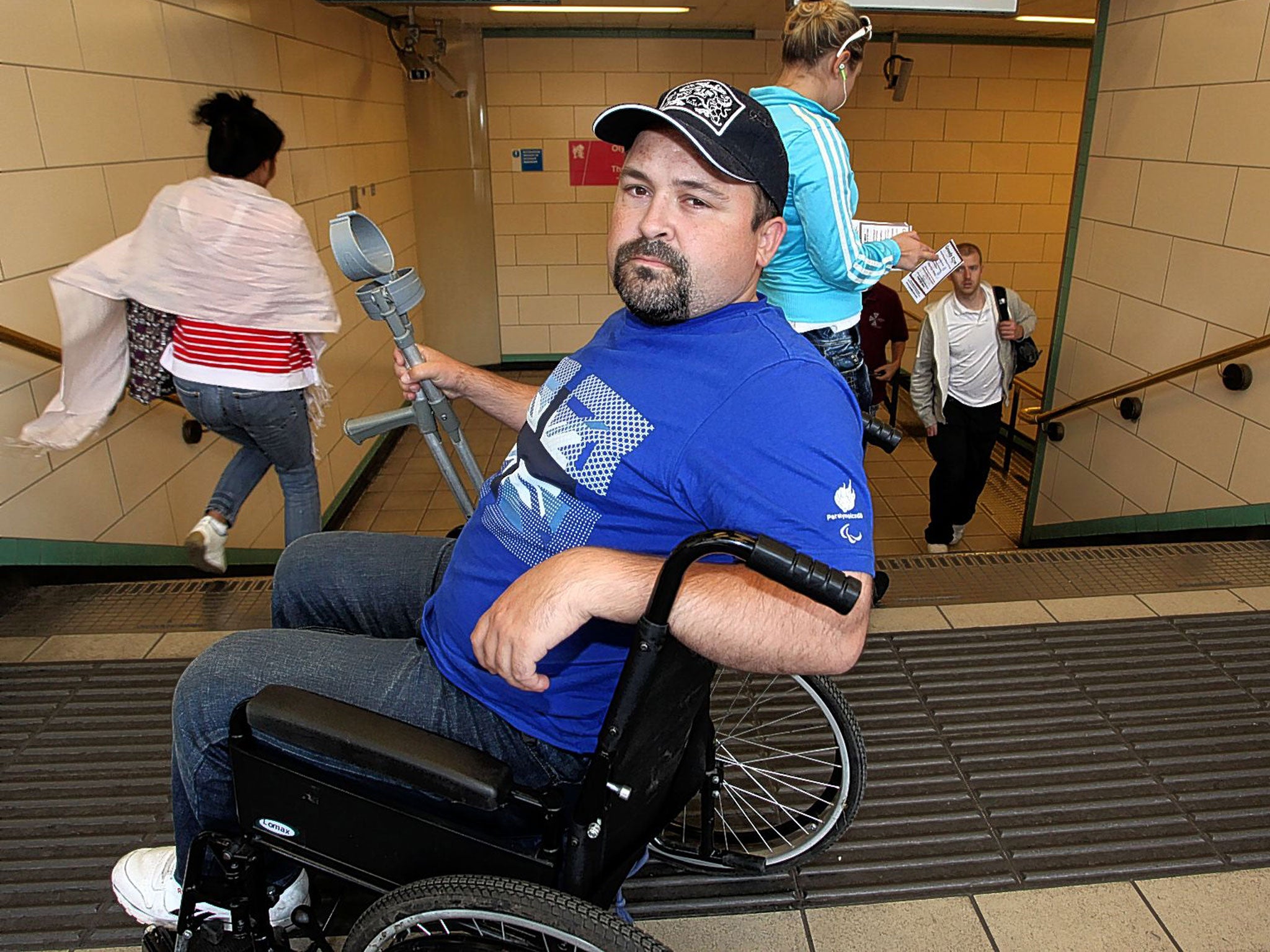
However, I’d really rather people just talk to me as they would anyone else. If they’re standing, and it means they’re taller, so be it. It’s not as if I’m not used to people talking to me from on high. As a 5ft 6in bloke, most of my friends are taller than me. Ditto some of my relatives. My brother, for example, tops 6ft and did a lot better in the genetic lottery, height-wise.
I’ll give the usher credit for this: at least he was addressing me. Too often, whether it’s a server, a shop assistant, or a receptionist, they talk straight over my head to my partner as if I, the wheelchair user, am not there.
This is still a regular occurrence, and it too is weird. How is it that in 2025, people still find it impossible to address me directly? It’s as if I somehow gain the powers of Sue Storm – Marvel’s Invisible Woman – when I head out the door.
The sort of everyday abuse I have to put up with – the catcalls, the insults, which are still depressingly common – is almost better. The people behind it might hate and despise me. They might see me as an acceptable target for the bile festering in their unpleasantly dispeptic stomachs. It’s no fun being on the receiving end of such ugliness. But at least they see me.
However, what strikes me, in retrospect, about the row is that I was witnessing an over-correction from what wheelchair users typically face. This means that instead of acting as if we’re not there, we’re now handled like strange creatures who require a weird and uncomfortable position to be adopted by people who are speaking to us.
Handling is also where things can go a bit haywire. The rush to “help” by touching and then pushing, without asking first. Or just pushing us to get us out of the way. It frightens me when people put their hands on me without so much as asking. Why wouldn’t it? How would you feel about someone coming up from behind and shoving you? I put a colourful badge on the back of my chariot bearing the legend “please don’t touch my wheelchair”. But people act as if that’s invisible, too.
I am learning to get used to people offering to help even when I quite obviously don’t need it. Their asking is good practice, not least because the mobility-impaired “community” is not a single, amorphous blob. We are all very different, with different conditions and requirements. Some people (like me) endure a lot of pain. Some don’t. Some can walk – I can a bit, with a pair of sticks, although I’ve never got good at it. Some can’t. Sometimes we need a bit of assistance. Sometimes we don’t. So, yes, let’s talk about that. And if what I’ve written here makes it all seem terribly complicated and awkward? It isn’t if we do that.
If the conversation ends with the disabled person saying, “Thanks, but I’m good,” then move on. I find it completely incomprehensible that people get snotty when I don’t want pushing. It’s as if I’ve denied them some karmic boost they had a right to simply by saying, “It’s OK. I can move this thing. If it gets too steep, I’ll shout, ‘Help, please?’”
Try just imagining you’re speaking to an ordinary person, because you are. You don’t need an expensive DEI course to work out how to follow the rules. It’s not that deep. Ordinary, everyday courtesy will usually do the job.
I suppose I should look on the bright side. After all that debating and squatting, we departed sans coffee and DVDs and my credit card escaped unscathed. You want to miss out on the purple pound? Your loss.
Join our commenting forum
Join thought-provoking conversations, follow other Independent readers and see their replies
Comments
Bookmark popover
Removed from bookmarks