Dissident Ai Weiwei hits out at Western hypocrisy over raising human rights with China
Artist said the West is ‘not even (in a) position to accuse China’ as he accused governments of hypocrisy
Chinese dissident artist Ai Weiwei has hit out at the West for hypocrisy and said it is not in a position to accuse China of human rights abuses due to its own dubious record.
Ai said he had previously insisted that Western leaders visiting China should openly denounce human rights abuses in China before agreeing to business deals.
“But today I changed my mind, completely,” he told Reuters. “The West (is) not even (in a) position to accuse China. (They must) just check on their record (of) what they did on international human rights, (their) freedom of speech record.”
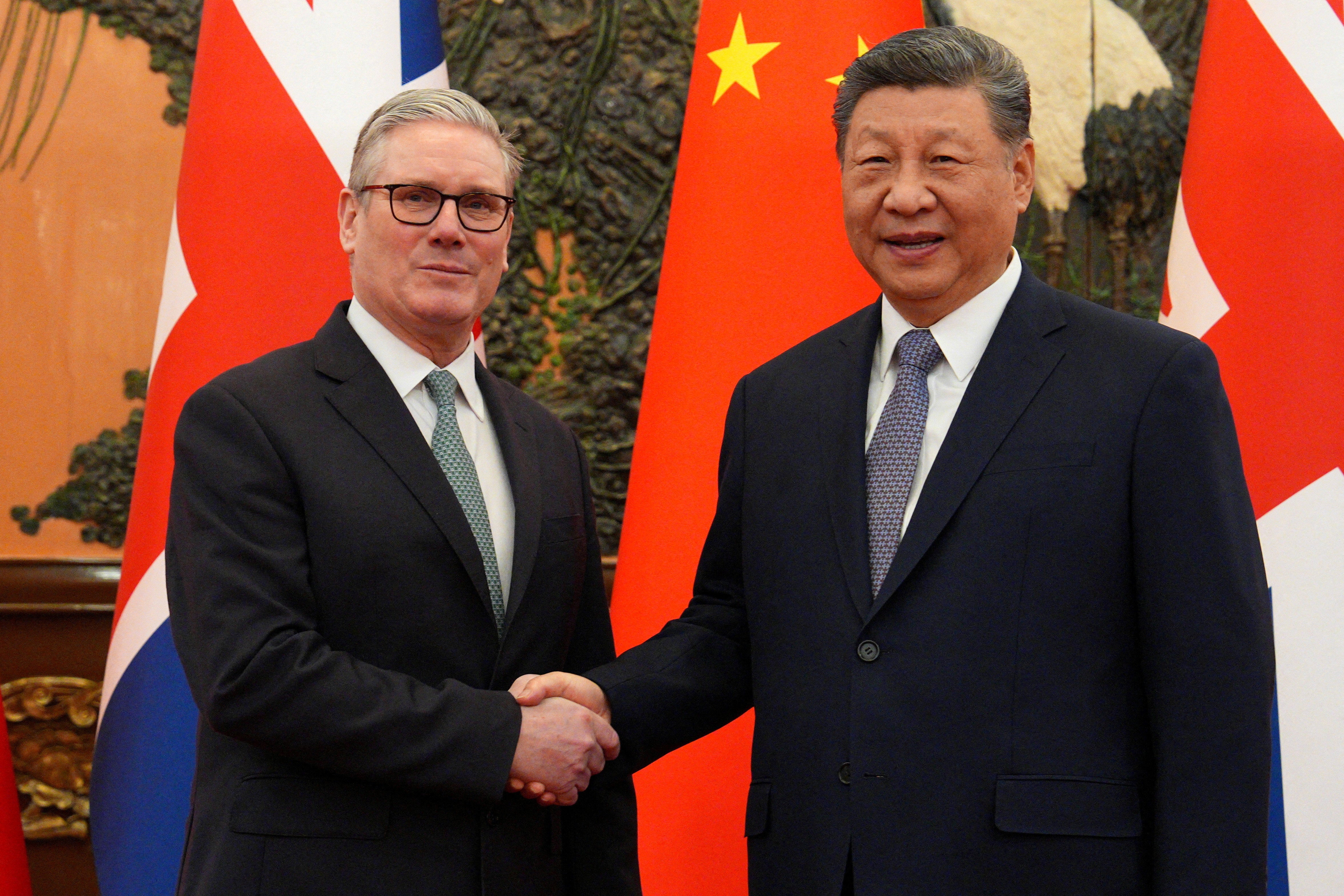
The comments come as British prime minister Keir Starmer commences a four-day visit to Beijing in an effort to improve relations with the country despite concerns around human rights abuses.
Hosting events for his new book, On Censorship, he said that audiences listening to Western leaders raising issues about human rights, free speech and censorship would be seen as deeply hypocritical and would “make people laugh”.

“I think they (Western leaders) are shy even to talk about those things (human rights),” Ai said.
As examples to illustrate his point, Ai pointed to the UK’s handling of the case of Julian Assange after a 14-year legal battle over classified US military files.
He explained that he had faced censorship in the West personally too, including the decision by a London gallery to postpone an exhibition in 2023 over a social media post about the war in Gaza.
But he considered Starmer’s visit to the UK a pragmatic one saying that the decision to work with the world’s second-largest economy was both “rational and practical” and a “very good move” that would benefit Britain and be well received in China.
Starmer’s visit marks the first to the country by a British leader in eight years.
Meanwhile, Ai spoke about his experience returning to China for the first time in around a decade after Chinese authorities returned his passport. He described his return as like a “phone call that had been disconnected for 10 years suddenly reconnecting”.
Ai’s passport had been seized four years earlier when he was subject to tax evasion charges that saw him detained for 81 days and being forced to live under surveillance after his release.
His phone and internet use were strictly monitored and he spent much of the last few years living across Europe, including in Germany, the UK and Portugal.
“What I missed most was speaking Chinese,” he said. “For immigrants, the greatest loss is not wealth, loneliness or an unfamiliar lifestyle, but the loss of linguistic exchange.”
Join our commenting forum
Join thought-provoking conversations, follow other Independent readers and see their replies
Comments
Bookmark popover
Removed from bookmarks