Japanese government warns megaquake could kill 300,000 and halve GDP
In a worst-case scenario, projections show a magnitude-9 earthquake would trigger massive tsunamis and cause hundreds of buildings to collapse
Japan on Tuesday issued its first high-level warning that a so-called “megaquake” could follow the previous night’s 7.5-magnitude offshore tremor.
The authorities cautioned that the coming days would be critical for coastal regions facing an elevated risk of aftershocks.
The Japan Meteorological Agency said there was an increased possibility of an earthquake of magnitude 8 or stronger along the Japan Trench and the Chishima Trench, marking its first activation of a top-tier alert since the system was introduced in 2022.
The alert covers a broad stretch of the Pacific coast from Hokkaido to Chiba.
Authorities urged the public to review evacuation routes, secure heavy furniture and prepare emergency supplies, stressing that communities should remain “vigilant through next week” even in the absence of any evacuation order.
The earthquake on Monday struck at around 11.15pm local time, about 50 miles off the coast of Aomori, and generated tremors strong enough to produce “long-period ground motions”, slow swinging waves that left high-rise buildings swaying violently.
Some parts of Aomori recorded shaking severe enough that people in upper floors struggled to stand, NHK reported.
Tsunami warnings were issued for parts of Aomori, Iwate and Hokkaido before being downgraded and lifted on Tuesday morning. Waves of up to 70cm were observed in several coastal locations.
Officials said while a large aftershock was possible, it wasn’t certain.
The warning came months after the Cabinet Office released a major update on its planning for a long-feared “megaquake” scenario, projecting that in a worst-case scenario, a massive offshore rupture could kill about 300,000 people and cause damage equivalent to half of the country’s GDP.
The report estimated that a magnitude 9 quake would result in damages worth ¥270 trillion (£1.3 trillion), a sharp increase from earlier projections. The change reflects inflationary pressures as well as new terrain and flood data showing the potential impact could go further inland than previously thought.
In January, Japan’s earthquake investigation panel had increased the probability of a megaquake happening within the next 30 years to over 80 per cent.
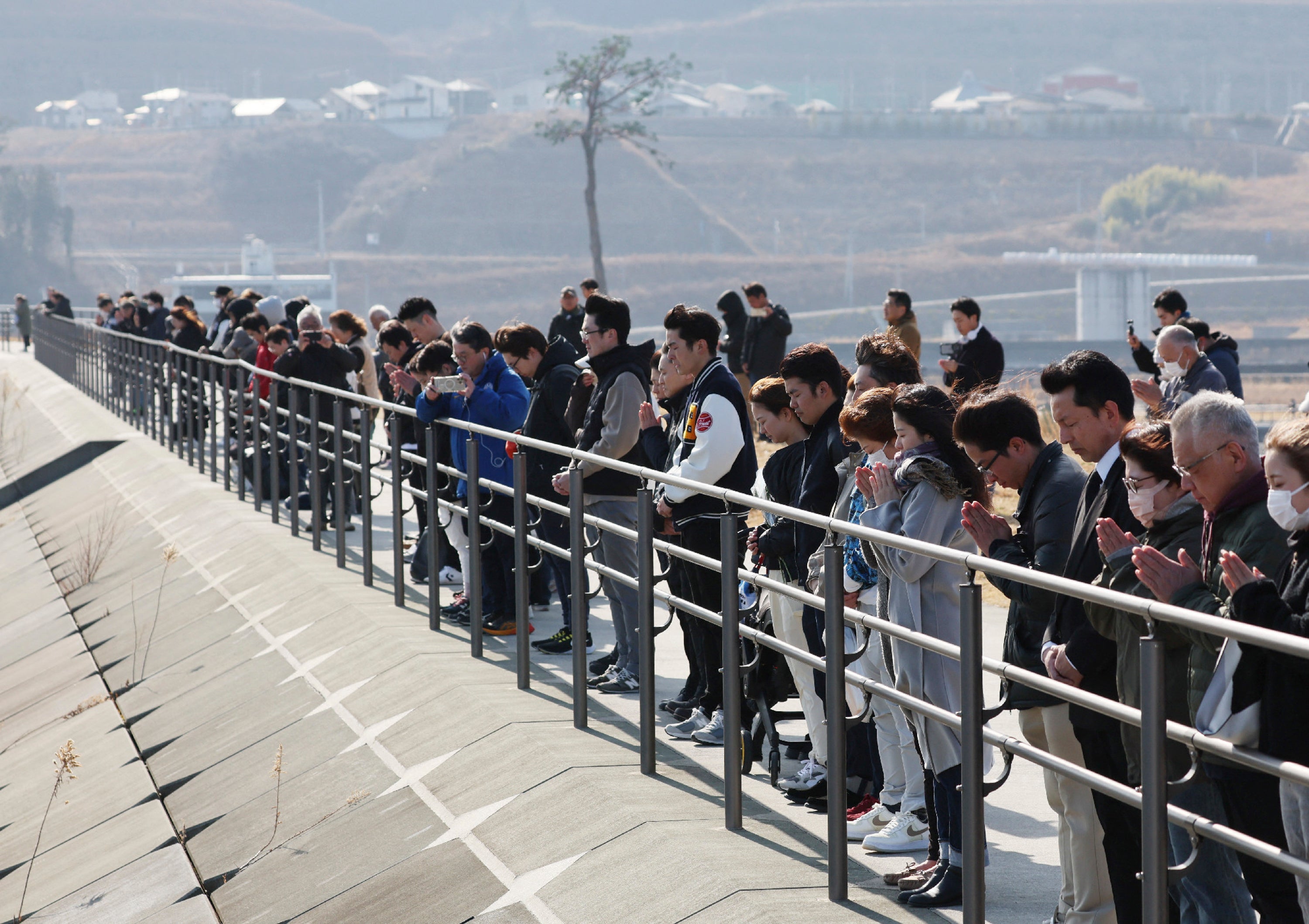
A megaquake is an earthquake of magnitude 8 or higher, capable of causing more damage than a typical quake, especially when it occurs close to the surface or in densely populated regions.
One is expected to strike along the Nankai Trough, a 900km seabed zone where the Philippine Sea Plate is subducting under the Eurasian Plate. A magnitude 9 earthquake along this trough could spark massive tsunamis and the collapse of hundreds of buildings.
The impacts on the population would be particularly severe if the quake were to strike late at night during winter, with most people inside their homes.
The Nankai Trough, off Japan’s southwestern coast, is known to produce major earthquakes every 100 to 150 years. The last major events were in the 1940s, and seismologists say strain has been building steadily since.
In 2011, a magnitude 9 quake struck off northeastern Japan, triggering a tsunami that killed more than 15,000 people and caused a meltdown at the Fukushima Daiichi nuclear power plant, the worst nuclear disaster since Chernobyl.
Last year, Japan issued its first-ever advisory warning of a “relatively higher chance” of a megaquake in the Nankai region following a 7.1-magnitude tremor near the edge of the trough.
Japan, one of the most earthquake-prone countries in the world, has heavily invested in early warning systems and infrastructure upgrades, but officials say more preparation is needed to protect communities from a disaster of this scale.
Additional reporting by agencies.
Join our commenting forum
Join thought-provoking conversations, follow other Independent readers and see their replies
Comments
Bookmark popover
Removed from bookmarks