Tesla’s cheapest Model 3 offers a 332-mile range and stunning value – here’s our verdict
This entry-level Model 3 targets buyers with strong efficiency, competitive pricing and Tesla’s trademark technology
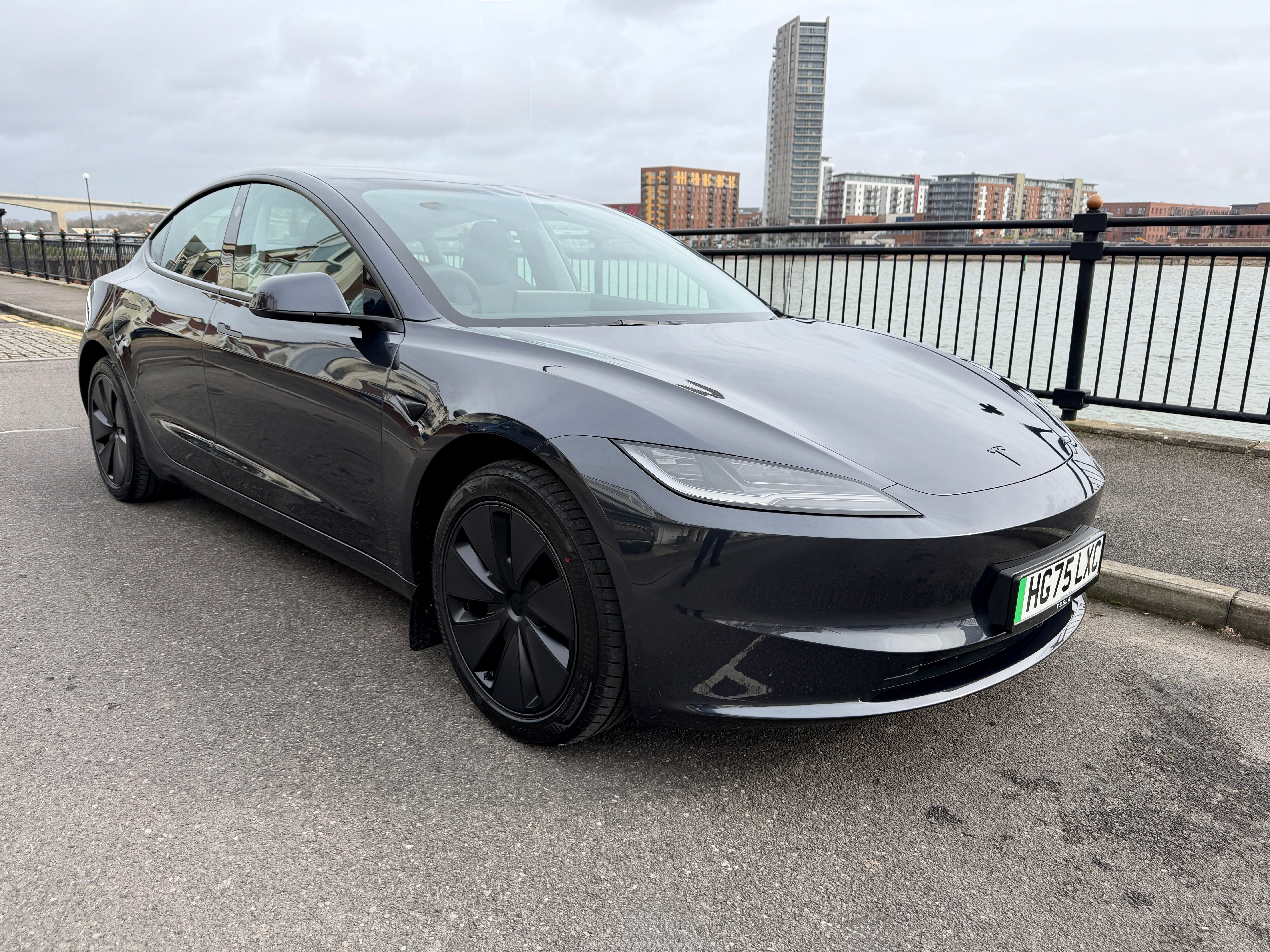
Tesla’s Model 3 has played a pivotal role in bringing electric cars into the mainstream, combining long range, strong performance and advanced software in a relatively accessible package. In fact, it’s been consistently known as the electric car that other EVs are judged by.
Now the firm is doubling down on that mission with the introduction of the Model 3 Rear Wheel Drive, positioned as the most affordable Tesla available in the UK and aimed at expanding EV adoption even more. When it was launched, this Rear Wheel Drive was called the Model 3 Standard. But in true Tesla fashion, a quick change meant the Standard name was dropped and it became known as Rear Wheel Drive. Tesla says there’s nothing standard about its cars – and I’d tend to agree.
This version retains the core attributes that have made the Model 3 successful, while introducing targeted changes designed to reduce total cost of ownership. These include adjustments to top speed and acceleration to achieve a lower insurance group rating and the use of 18-inch wheels selected for efficiency, durability and better residual values.
The pricing of £37,990 places it within reach of a wider audience than previous Tesla offerings, but for a limited time after launch, there’s also the offer of £3,750 extra in part-exchange allowance.
Tesla’s wider strategy also extends beyond the car itself – it even has a new strapline: ‘to build a world of amazing abundance’. If, like me, you’re not sure what that even means, it’s worth knowing this brand vision encompasses three headings: car, energy and personal chauffeur. The first is easy enough to understand and the second includes a home charger, a Tesla Powerwall battery solution and Tesla’s burgeoning plans to take on the likes of Octopus as a home energy supplier. The personal chauffeur bit? Well, with Full Self Driving plus the fully-autonomous Cybercab on the horizon, you can guess where that leads.
As The Independent’s EV editor, I’ve got decades of experience putting vehicles to the test – and will always bring you my honest opinion. Keep reading for my full verdict on the new Tesla Model 3.


How we tested
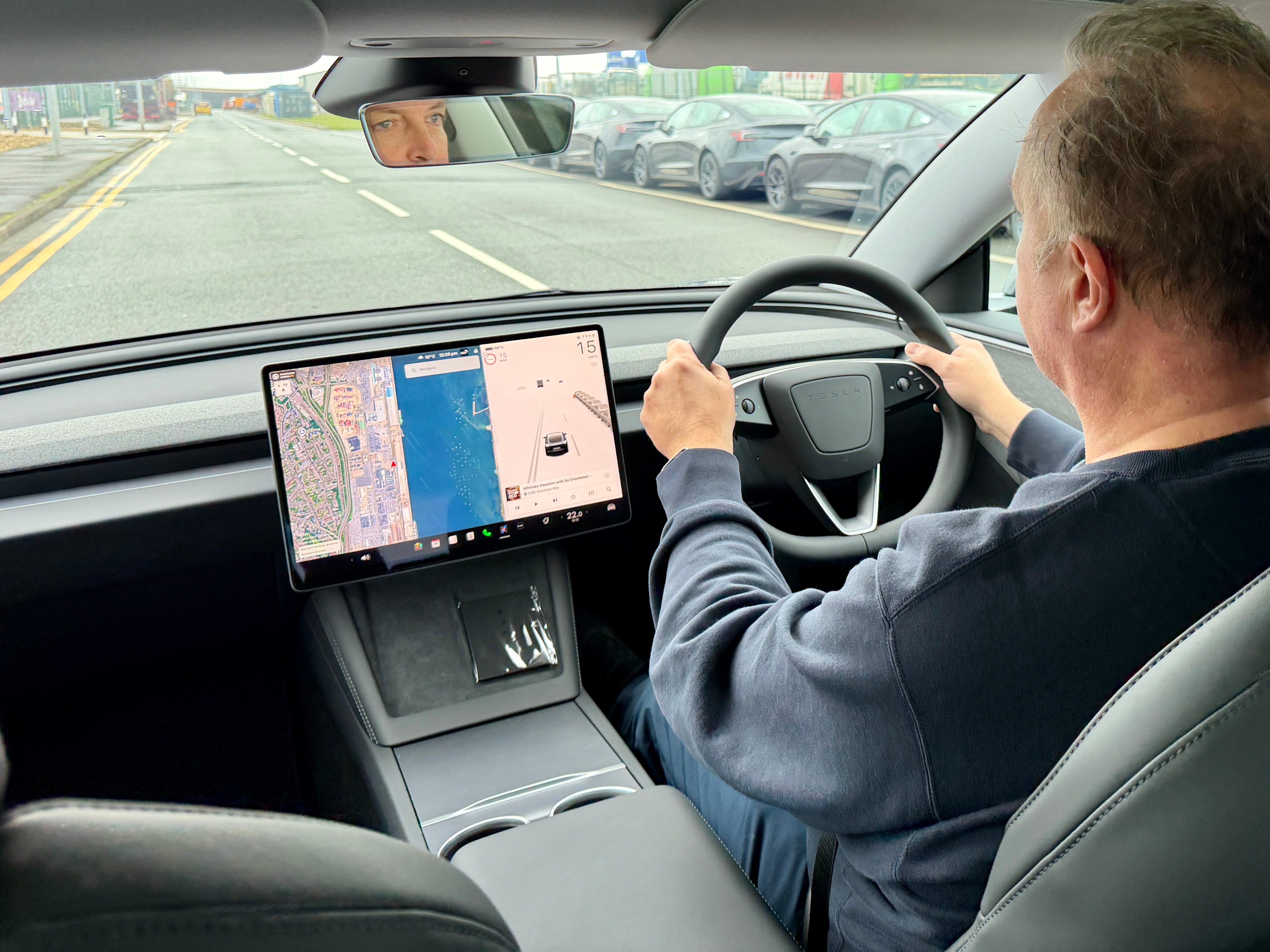
Tesla invited me down to its ‘Certified Pre-Owned’ used car centre in Southampton to try out its cheapest new model. I drove around the city streets of Southampton, out onto the country lanes of Hampshire and on the motorways to give this new Tesla model a thorough, dynamic test. As usual, I checked on the practicality inside the car and in the boot and frunk, as well as investigating all the tech. Finally, I played with Tesla’s configurator to see how much value the finance packages provide.
Tesla Model 3 Rear Wheel Drive: from £39,990, Tesla.com
Independent rating: 9/10
- Pros: Strong range and efficiency; attractive pricing for a premium EV; seamless software ecosystem; comfortable ride improvements; low maintenance requirements
- Cons: Limited colour choice; no rear wiper; rear visibility compromised by boot design
Tesla Model 3 Rear Wheel Drive specs
- Price from: £37,990
- Battery size: 63kWh (estimated)
- Maximum claimed range: 332 miles
- Miles per kWh: 4.78
- Maximum charging rate: 175kW
Battery, range, charging, performance and drive
At the core of the Model 3 Rear Wheel Drive’s appeal is its efficiency. Tesla quotes a maximum claimed range of 332 miles from a battery that we reckon is 63kWh (Tesla steadfastly refuses to quote battery sizes), achieved through a combination of aerodynamic design, energy-dense battery technology and software optimisation. This positions the car competitively, not only against similarly priced EVs, but also against many larger and more expensive models.
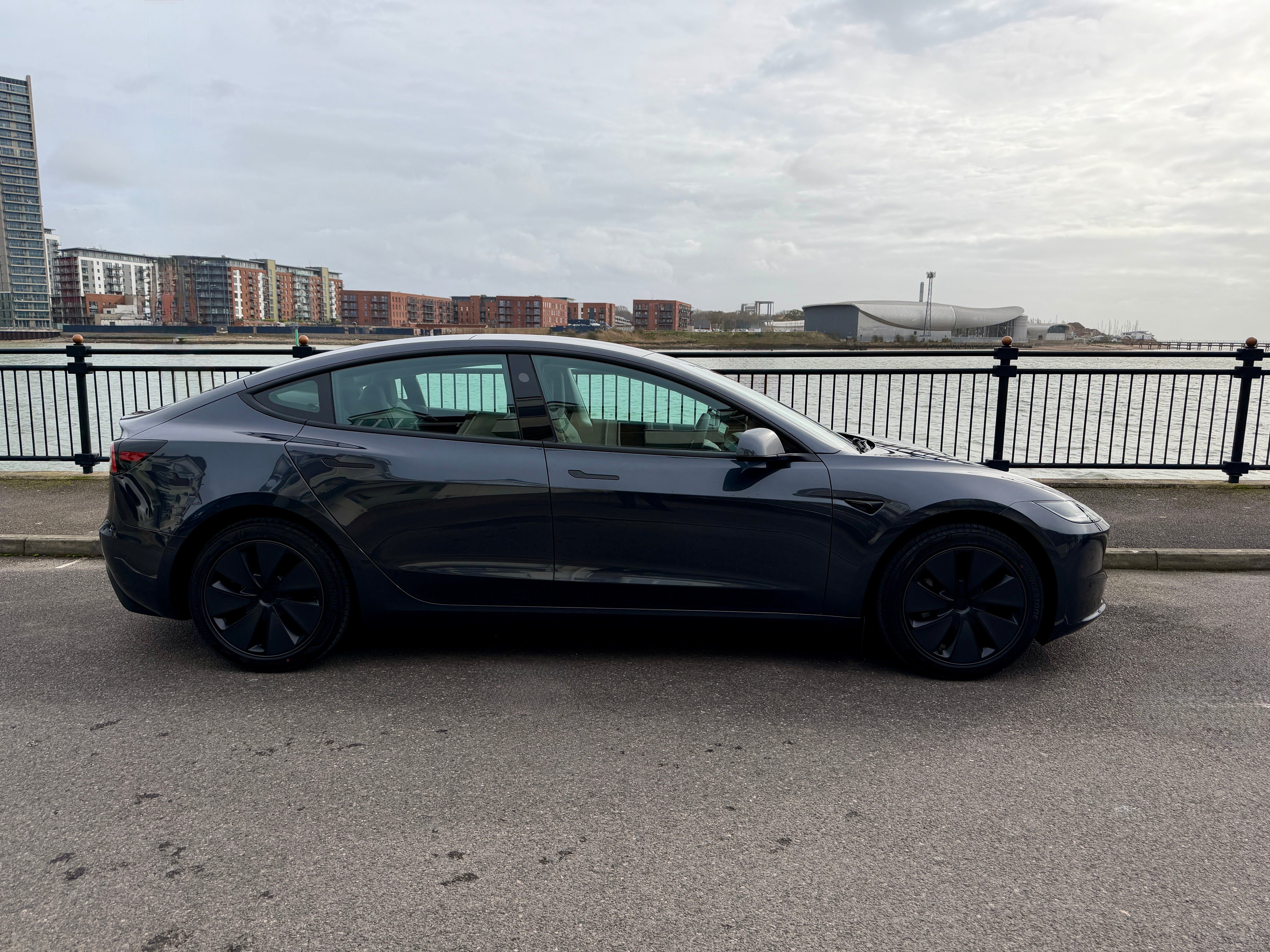
For Tesla, it’s all about efficiency, with claimed consumption figures reported at 4.78 miles per kWh, reinforcing the car’s credentials as a cost-effective long-distance EV. Charging performance peaks at 175kW DC, enabling rapid replenishment when using compatible infrastructure, while access to Tesla’s Supercharger network – including more than 2,000 UK units – provides a key ownership advantage.
Performance figures underline that this may be the entry model, but it is far from slow. The 0-60mph time of 6.2 seconds delivers brisk acceleration suitable for everyday driving and motorway merging alike. On the road, there feels like a very brief initial pause before power delivery builds strongly, creating an effect reminiscent of mild turbo lag before the expected EV surge arrives.
Ride comfort has improved massively compared to the original Model 3. Earlier versions were often criticised for their firmness, but these latest cars feel much more comfortable – and that includes this Rear Wheel Drive version. The ride quality is now compliant while still communicating road surface changes.
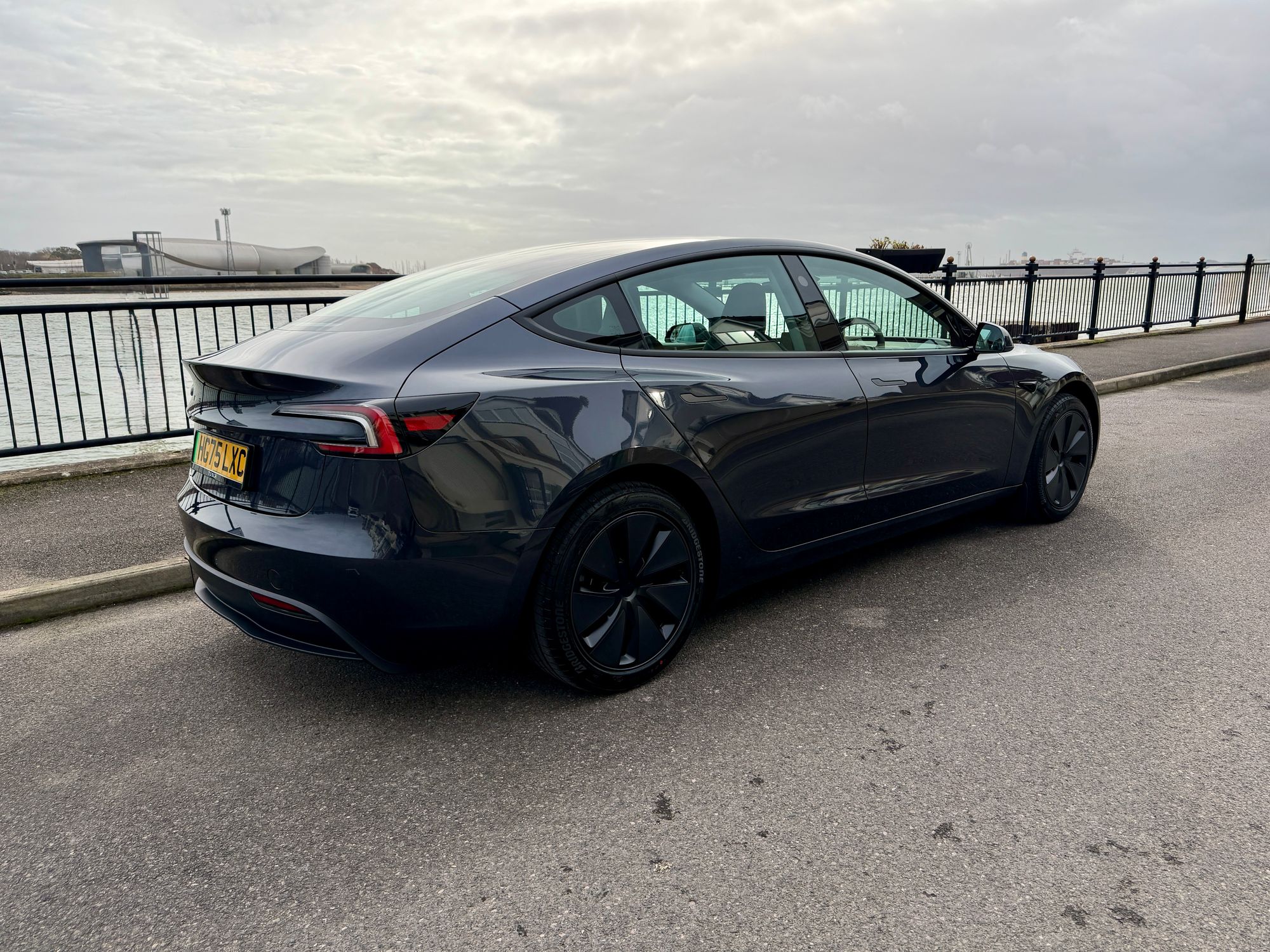
Cabin refinement is strong, with low noise levels contributing to a relaxed driving environment. Steering is responsive and natural, again supporting the feeling that this is a thoroughly well-engineered car with mechanics and software all working in perfect harmony.
Overall, the driving experience balances efficiency, comfort and decent performance in a way that aligns with the car’s positioning as a high-value EV that’s perfect for daily use.
Interior, practicality and boot space
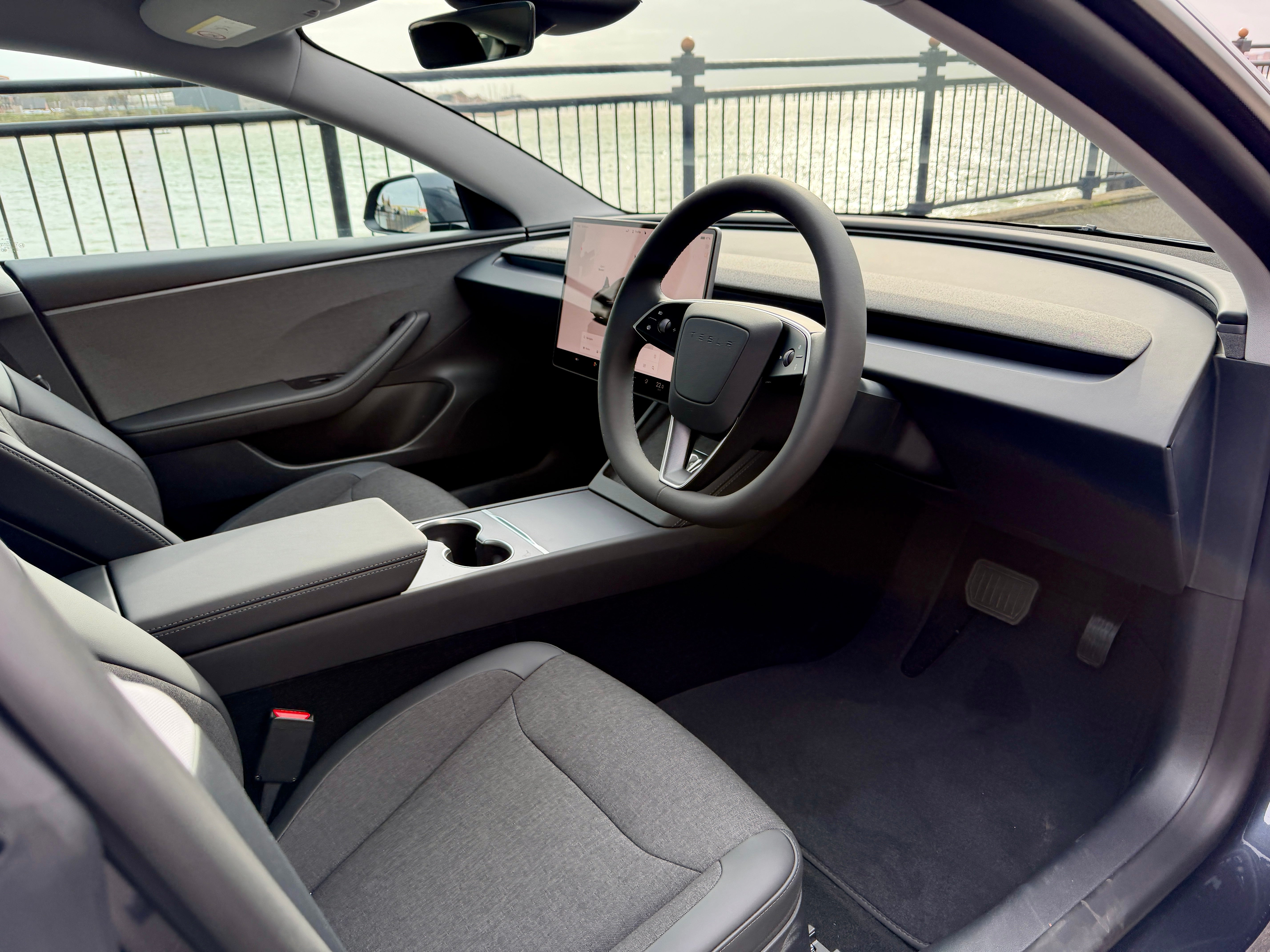
Inside, the Model 3 Rear Wheel Drive continues Tesla’s minimalist design approach, centred around a large central touchscreen and the absence of traditional instrumentation. Material quality is again much improved – there was nothing I could fault about this latest Tesla, with good-quality materials and tight panel gaps. It’s a cool-looking cabin.
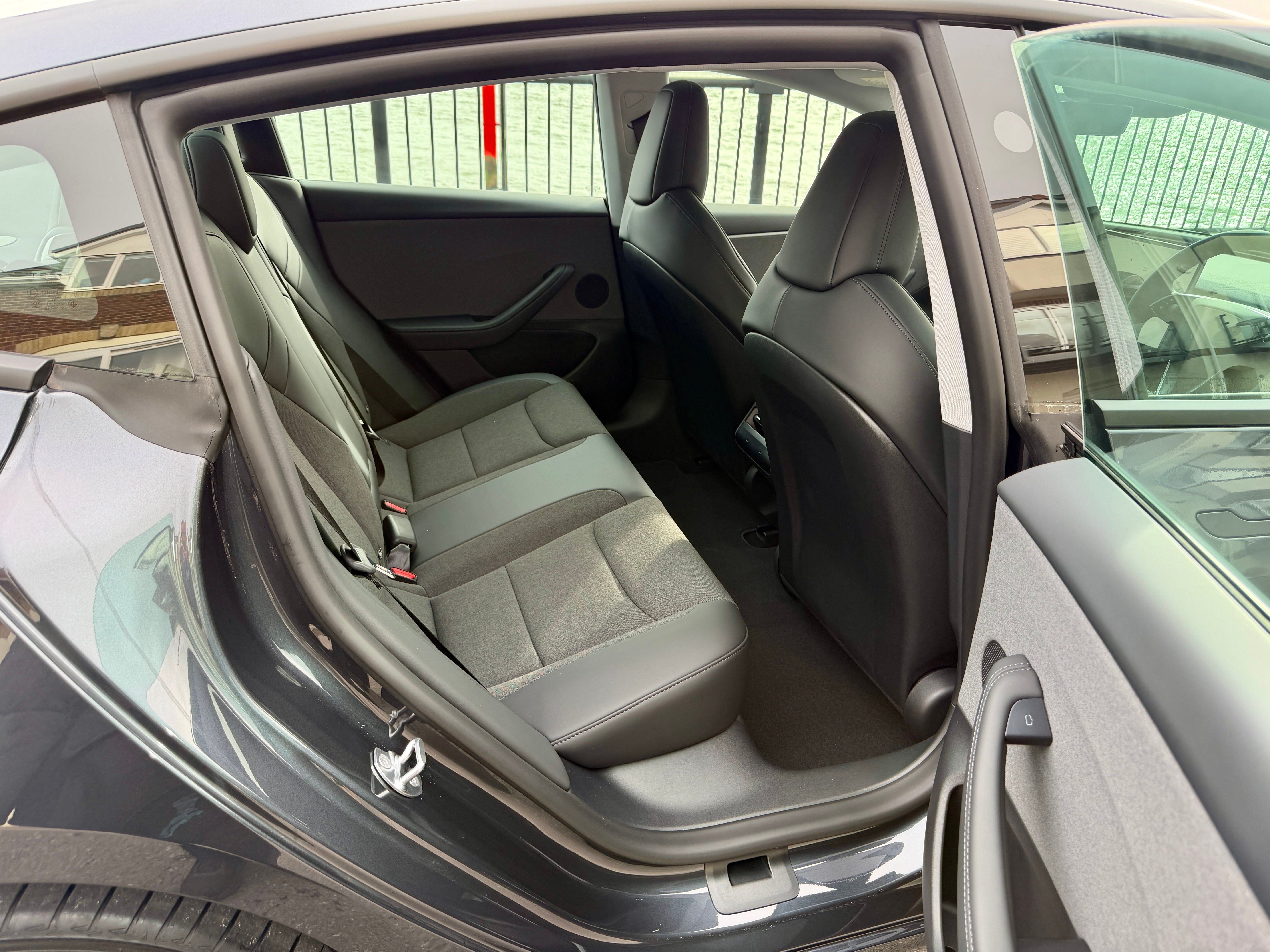
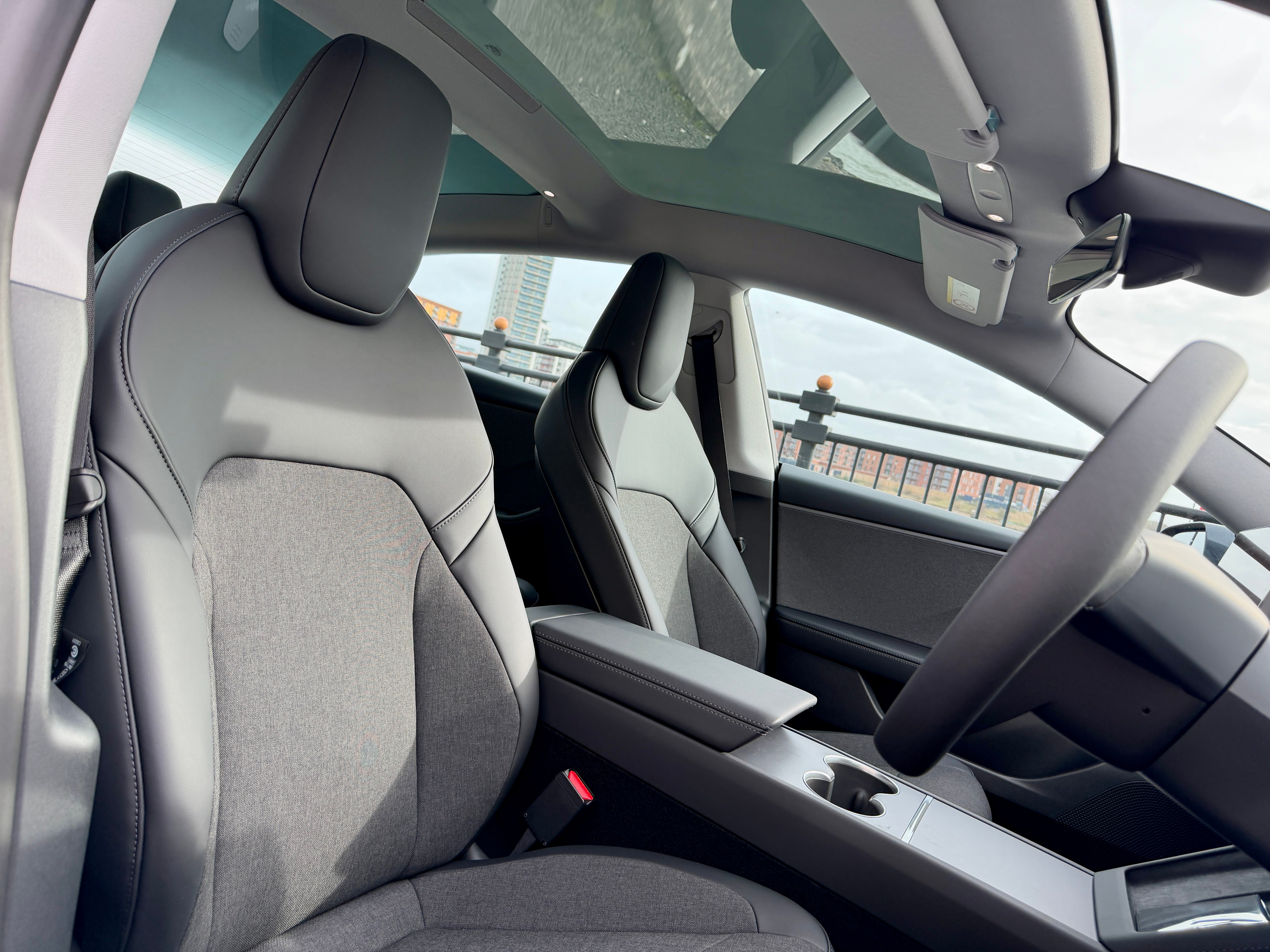
You’ll struggle to tell the difference between this entry-level Model 3 and the Premium versions – with the biggest difference being the updated seats that are covered in a combination of vegan leather and smart-looking fabric, rather than the full leather look of the posher models.
The front seats are still power-adjustable and heated, with memory functionality linked to individual user profiles through the Tesla app on a smartphone. All you need to do is use your smartphone as the key and the seats and mirrors (the steering now has manual adjustment) will set to the right position for you.
Space is decent for a saloon at this price with good rear knee room, while the full-length glass roof enhances the sense of openness. Those in the back also benefit from generous headroom and visibility.
Talking of which, one of my favourite Model Y features is the deep front windscreen that gives you a great view forward. The view backwards is slightly hampered by the high bootline, but it’s no deal breaker. For once, I could even live without a rear wiper.
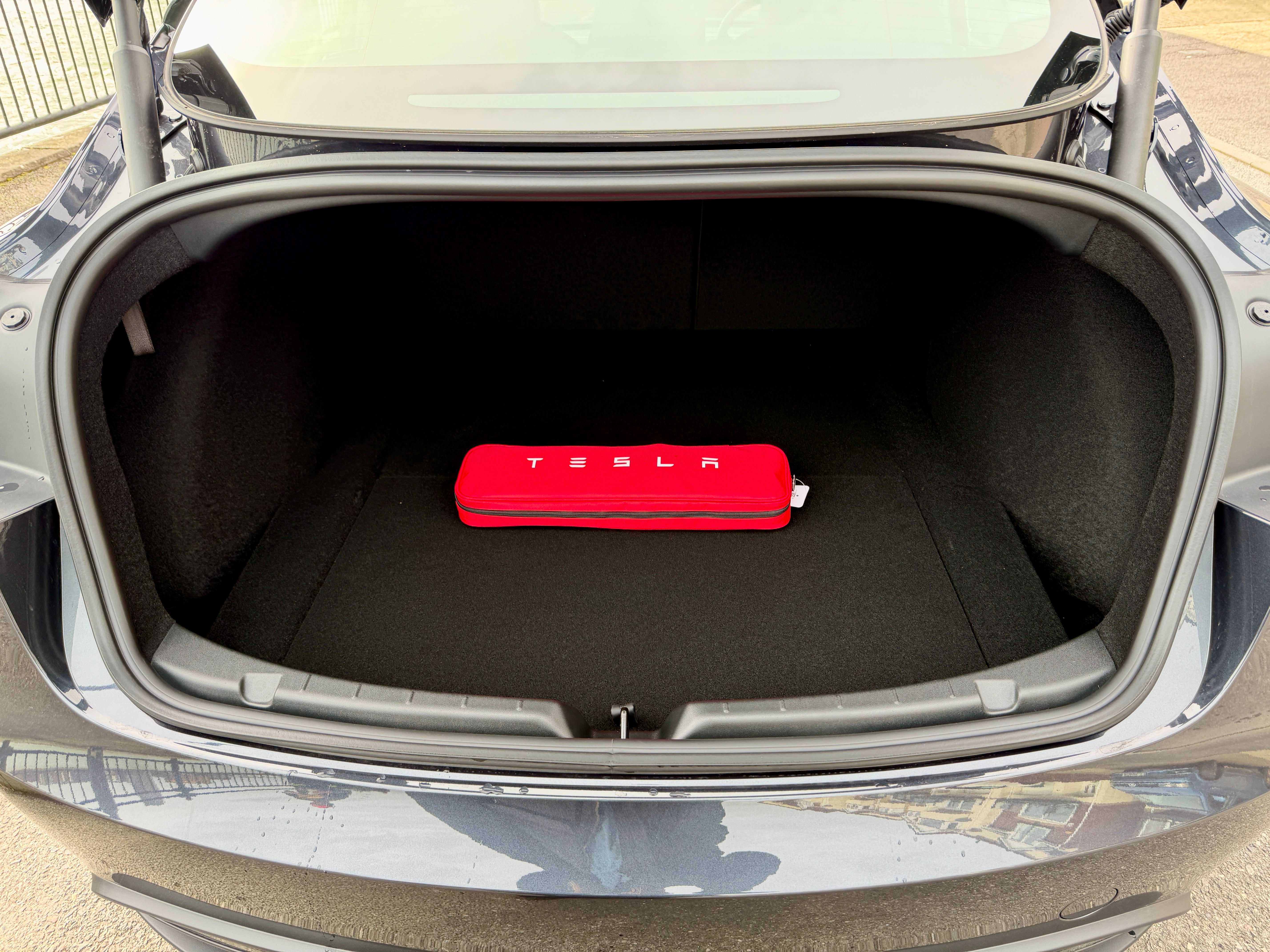
Boot space remains a strength, with the powered tailgate revealing 594 litres of luggage room with all seats in place, expanding to 1,659 litres with the rear bench folded. The addition of an 88-litre front trunk is a bonus and the perfect place to keep your charging cables.
Technology, stereo and infotainment
Technology continues to be a defining attribute of the Model 3. Standard features include Tesla’s Autopilot driver assistance system, remote mobile app integration (Tesla’s is one of the best as it’s so easy to use), Google-based navigation and a range of entertainment applications accessible through the infotainment system – including some fun and games to be had. Tesla is a car company with a sense of humour.
Enhanced Autopilot is a £3,600 upgrade, but then the car is hardware-ready for Full Self-Driving (Supervised), allowing future activation via software update if and when it gets UK government approval. Over-the-air updates remain central to the Tesla ownership experience with frequent improvements to functionality and even the car’s efficiency.
Additional hardware updates introduced across the Model 3 range include a front-facing camera with integrated washer and heating system, adaptive headlights capable of pixel-level high-beam control and redesigned indicator stalks aimed at improving usability.
Connectivity is well supported, with two wireless pads in the front plus USB-C ports delivering up to 65W. The audio system, while not up to the impressive standards of the one in the Premium models, still delivers solid performance for everyday listening.
All Model 3 Rear-Wheel Drive models will come with the latest update that includes the Grok AI assistance with the help, information and fun that it brings. You can personalise it with different moods and use conversational language to set the navigation system.
Taken together, the technology package reinforces Tesla’s software-centric identity and remains one of the most comprehensive and impressive packages available, especially at this price point.
Prices and running costs
With a starting price of £37,990, the Model 3 Rear Wheel Drive is the most accessible Tesla in the brand’s UK lineup. PCP and PCH finance examples suggest monthly costs from £249 and £299 respectively (the former with a larger deposit and longer term), broadening affordability for private buyers.
Business contract hire users do even better, with pre-VAT prices from £225 per month on the same 12-month deposit, three-year, 8,000-mile deal as Private Contract Hire.
If you opt for the PCP, you can use Tesla’s launch offer of a £3,750 part-ex allowance to either lower your monthly payments or reduce the deposit – but that’s likely to be available for a limited time only.
Running costs benefit from the car’s efficiency and low maintenance requirements. There are zero requirements to ever visit a Tesla service centre if you don’t need to – unlike many rivals, there aren’t set service schedules that need to be stuck to if you want to keep the warranty intact. All you’ll need to keep an eye on is tyre wear, but if you’re on a three-year, 8,000-mile per year lease, that’s unlikely to be a problem, either.
Insurance costs have also been addressed, with acceleration and top speed slightly limited to achieve an insurance group rating of 32. The Rear Wheel Drive car’s 18-inch wheels are expected to help boost resale values, too – European cars get less attractive steel wheels with wheel covers.
Overall, the combination of strong efficiency, charging access and reduced maintenance supports a really compelling total cost of ownership proposition for this Model 3.
The verdict: Tesla Model 3 Rear Wheel Drive
The Model 3 Rear Wheel Drive shows how Tesla continues to broaden its appeal and value without fundamentally altering the core formula. You still get the range, software integration and Supercharger access that define the brand, now delivered at a much more accessible price point.
Performance remains brisk, ride comfort has improved and efficiency is strong, while the technology ecosystem continues to set the benchmark. Minor compromises such as limited colour choice and saloon practicality do little to dilute the overall package.
As an entry point into Tesla ownership, the Model 3 Rear Wheel Drive feels carefully judged and highly competitive. At the launch prices – especially the PCP and contract hire figures – I’d definitely consider one as the Fowler family’s car of choice, if only our current lease was up soon.
Tesla Model 3 Rear Wheel Drive rivals
FAQs
How long does it take to charge?
With a maximum charging speed of 175kW, the Tesla Model 3 Rear Wheel Drive can add up to 166 miles of range in just 15 minutes at a Tesla Supercharger or other suitable fast charger.
How much does it cost – is it worth it?
At £37,990 with extensive technology, strong range and low maintenance requirements – plus an enjoyable and engaging drive – the Model 3 Rear Wheel Drive is one of the best buys within the premium electric saloon segment.
Does Tesla replace batteries for free?
Yes, as will all car companies, Tesla offers an eight-year warranty on its electric cars’ batteries, plus seven years’ cover on the rest of the car.
Why trust us
Our team of motoring experts have decades of experience driving, reviewing and reporting on the latest EV cars, and our verdicts are reached with every kind of driver in mind. We thoroughly test drive every car we recommend, so you can be sure our verdicts are honest, unbiased and authentic.
With more than 30 years of experience, Steve Fowler is one of the UK’s best-known automative journalists. Steve has interviewed key industry figures, from Tesla’s Elon Musk to Ford’s Jim Farley, and is a judge for both Germany’s and India’s Car of the Year Awards, as well as being a director of World Car of the Year. When it comes to electric vehicles, Steve reviews all the latest models for The Independent as they launch, from Abarth to Zeekr, and he uses his expert knowledge of car buyers' needs to provide a comprehensive verdict.
Join our commenting forum
Join thought-provoking conversations, follow other Independent readers and see their replies
Comments
Bookmark popover
Removed from bookmarks