MG4 Urban review: Big space, small price – but is that enough in 2026’s EV market?
MG’s new £23,495 family hatchback majors on practicality and kit, but faces fierce competition among sub-£25k electric cars
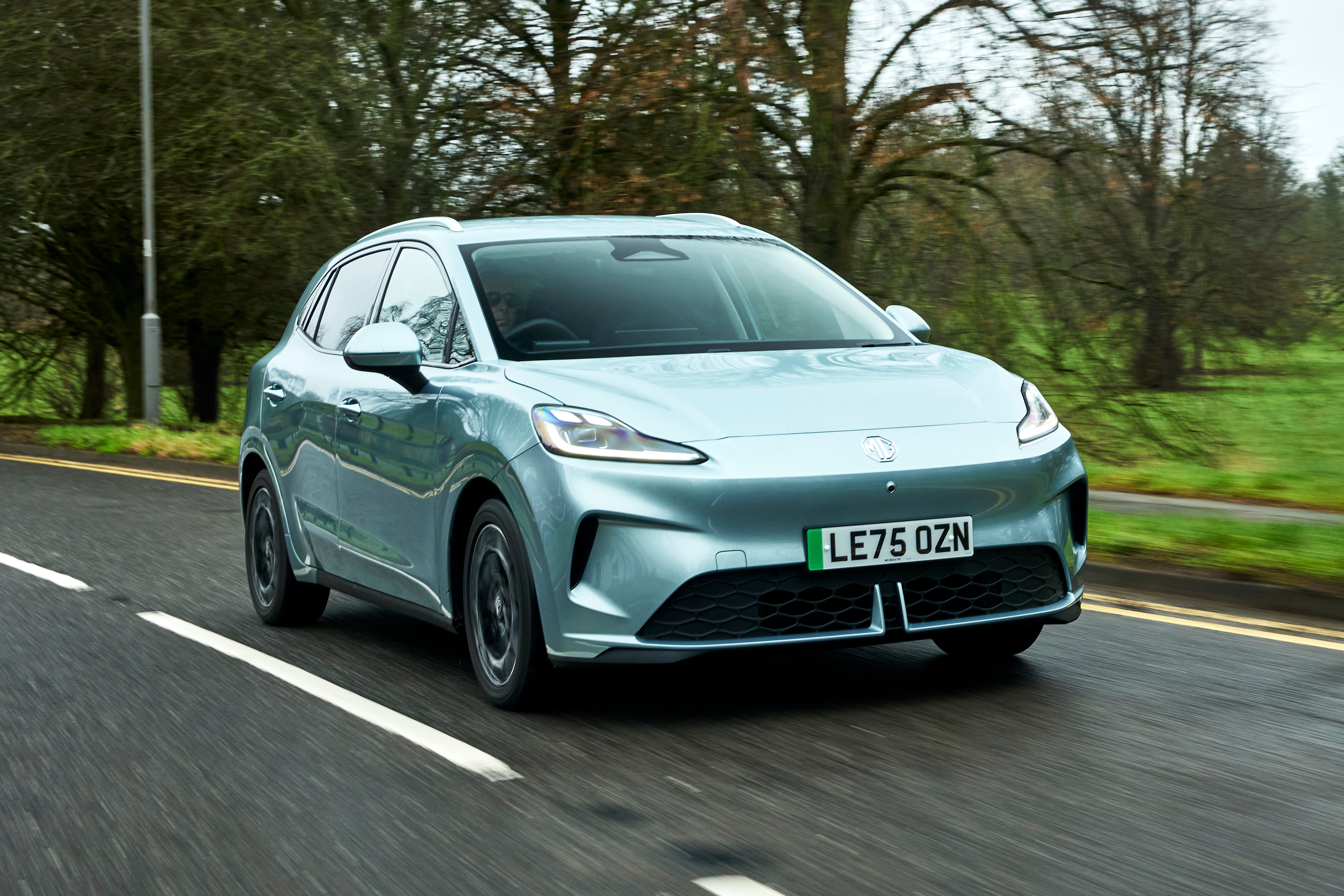
MG’s success in the UK has been built on delivering cars (especially electric models) at prices that would have seemed unrealistic just a few years ago. The MG4 EV has been central to that success, with nearly 50,000 sold in the UK since 2022 – accounting for roughly half of MG’s 100,000 British EV sales.
For 2026, MG is expanding the MG4 nameplate with revisions (and lower prices) for the MG4 and this all-new MG4 Urban, aimed squarely at buyers who want maximum space and equipment for minimal outlay.
Despite its Urban badge, this is not a shrunken city car. In fact, it’s 110mm bigger overall than the MG4 – at 4,395mm long, 1,842mm wide and 1,549mm tall, with a 2,750mm wheelbase, it sits firmly in family hatchback territory. The Urban name is really shorthand for accessibility: this is the MG4 positioned to make EV ownership even more attainable.
Pricing starts at £23,495 for the Comfort Standard Range, rising to £25,495 for the Comfort Long Range and £27,995 for the Premium Long Range. That places it directly in the crosshairs of a rapidly evolving sub-£25,000 EV segment, where new arrivals such as the Fiat Grande Panda and Citroen C3 Aircross are raising the bar on comfort and refinement.
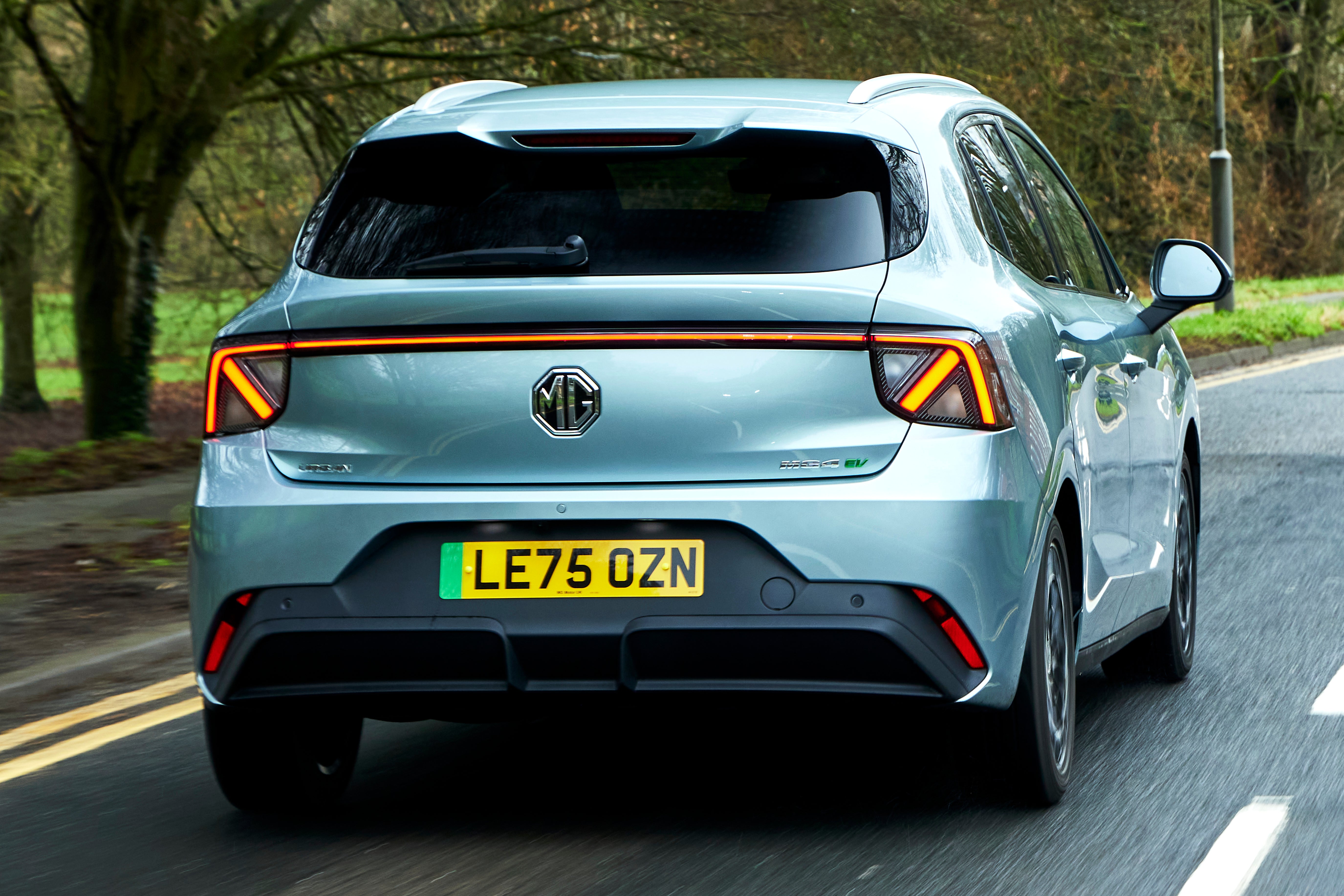
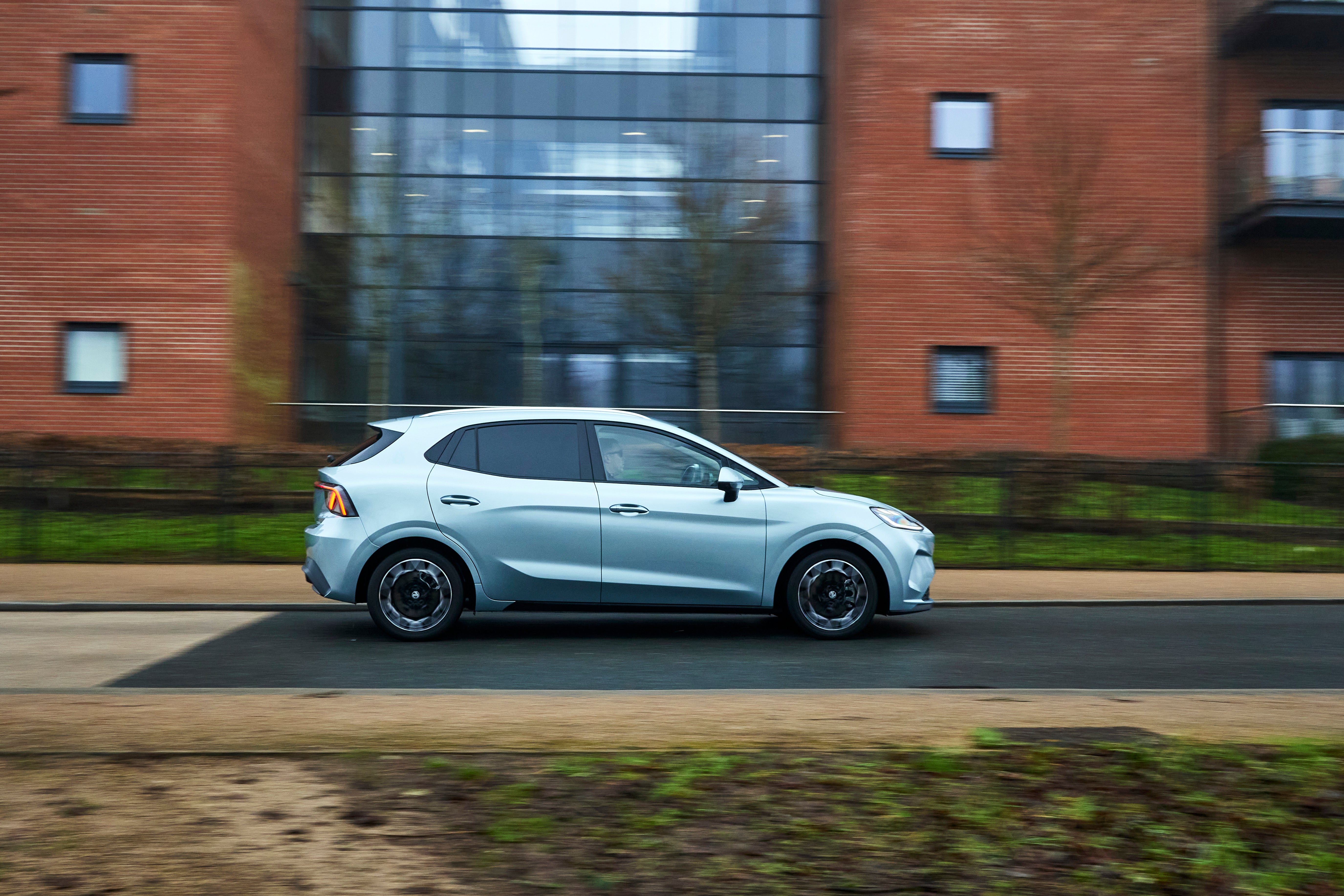
On first acquaintance, the MG4 Urban is a smart-looking car. I particularly like the rear treatment, where the full-width light bar and arrow-shaped graphics give a subtle union jack-esque feel (and a bit Mini-like). It looks modern and distinctive, even if the overall proportions are more conventional than the sharper-edged original MG4.
The promise here is clear: class-leading space, generous technology and sensible range at a price that undercuts much of the competition. The challenge is whether the driving experience and cabin quality feel contemporary enough for buyers.


How we tested
Handily, the MG4 Urban launch took place not too far from my home in Buckinghamshire. That meant I could test the car on roads I knew well – and over the county’s many potholes. As well as on town and country roads, I trialled the car and its tech on the M40 motorway, and while parked at a local shopping centre. I tested everything from the touchscreen to the stereo system and even the practicality with some friends in the back.
MG4 Urban: from £23,495, MG.co.uk
Independent rating: 7/10
- Pros Huge boot and rear space; strong standard equipment; physical climate controls; competitive pricing
- Cons Firm and noisy ride; underwhelming audio system; touchscreen occasionally slow to respond; seats lack support
MG4 Urban specs
- Price from: £23,495
- Battery size: 43kWh Comfort Standard Range; 54kWh Comfort Long Range and Premium Long Range
- Maximum claimed range: 258 miles
- Miles per kWh: 4.0
- Maximum charging rate: 87kW
Battery, range, charging, performance and drive
The MG4 lineup is straightforward. The entry-level Comfort Standard Range uses a 43kWh LFP battery paired with a 148bhp motor, delivering a claimed maximum range of 201 miles and a 0-62mph time of 9.6 seconds.
Step up to the Comfort Long Range or Premium Long Range and you get a 54kWh battery with a 158bhp motor. Range rises to 258 miles in the Comfort and 251 miles in the Premium, with both managing 0-62mph in 9.5 seconds.
Rapid charging peaks at 82kW for the 43kWh model and 87kW for the 54kWh versions – not bad for such a small cheap car. In real-world terms, that means a 10-80 per cent top-up in under half an hour under ideal conditions.
Under the skin, the MG4 Urban sits on MG’s next-generation E3 platform with cell-to-body battery integration. That means the battery pack is integrated into the structure to enhance rigidity and lower the centre of gravity. Front-wheel drive is standard, with MacPherson struts up front and a reinforced torsion beam at the rear – a cheaper arrangement than in the MG4.
Five drive modes – Snow, Eco, Standard, Sport and Custom – are available, along with four regenerative braking levels including one-pedal mode. On paper, it’s a comprehensive setup for a car at this price.
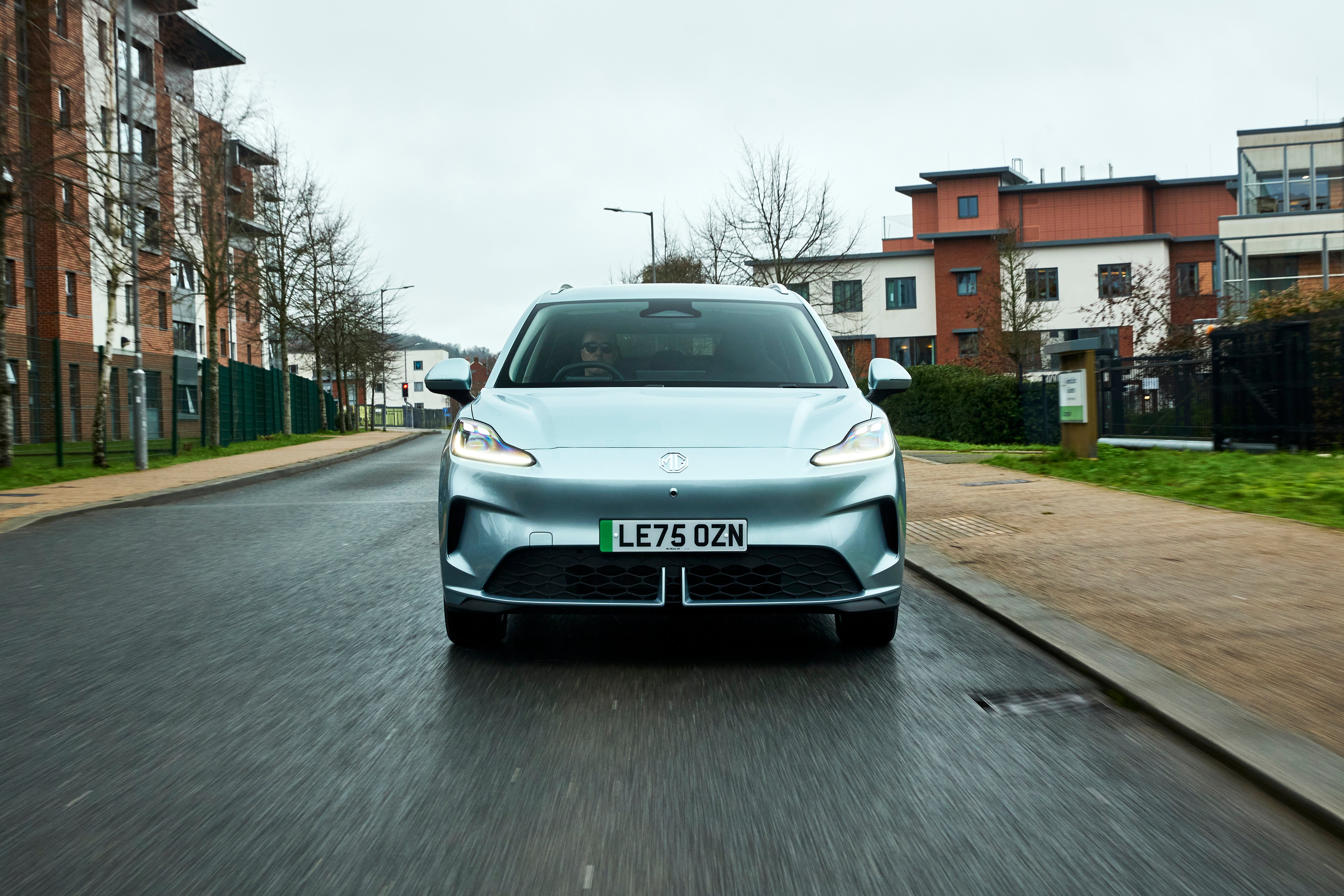
Out on the road, though, the MG4 Urban feels more old-school than some of its rivals. The ride is firm and can feel crashy over broken surfaces. There’s a noticeable level of road noise, too, and on the wet roads I tested the car on, the sound of rain and spray around the wheel arches was particularly noticeable.
Performance is perfectly adequate for everyday use, but this is not a car that encourages enthusiastic driving. Steering is light and easy in town, helped by a tight turning circle, but there’s limited feedback through the wheel. The overall impression is competent rather than engaging.
That wouldn’t necessarily be a problem in a budget-focused family EV, but in 2026 the competition has moved on quickly. Rivals are now offering more supple ride quality and better sound insulation at similar prices, making the MG4 Urban feel slightly behind the curve dynamically.
Interior, practicality and boot space
If there is one area where the MG4 Urban makes an immediate impression, it’s space. Rear legroom is quoted at 984mm with 107mm of knee room, and headroom front and rear is generous. In practice, there is a huge amount of room in the back – at close to six foot tall, I set the front seat for my perfect driving position and there was plenty of space for me to sit in the back, too. Families will appreciate the sense of openness thanks to the large, deep windows – more so than in the MG4.
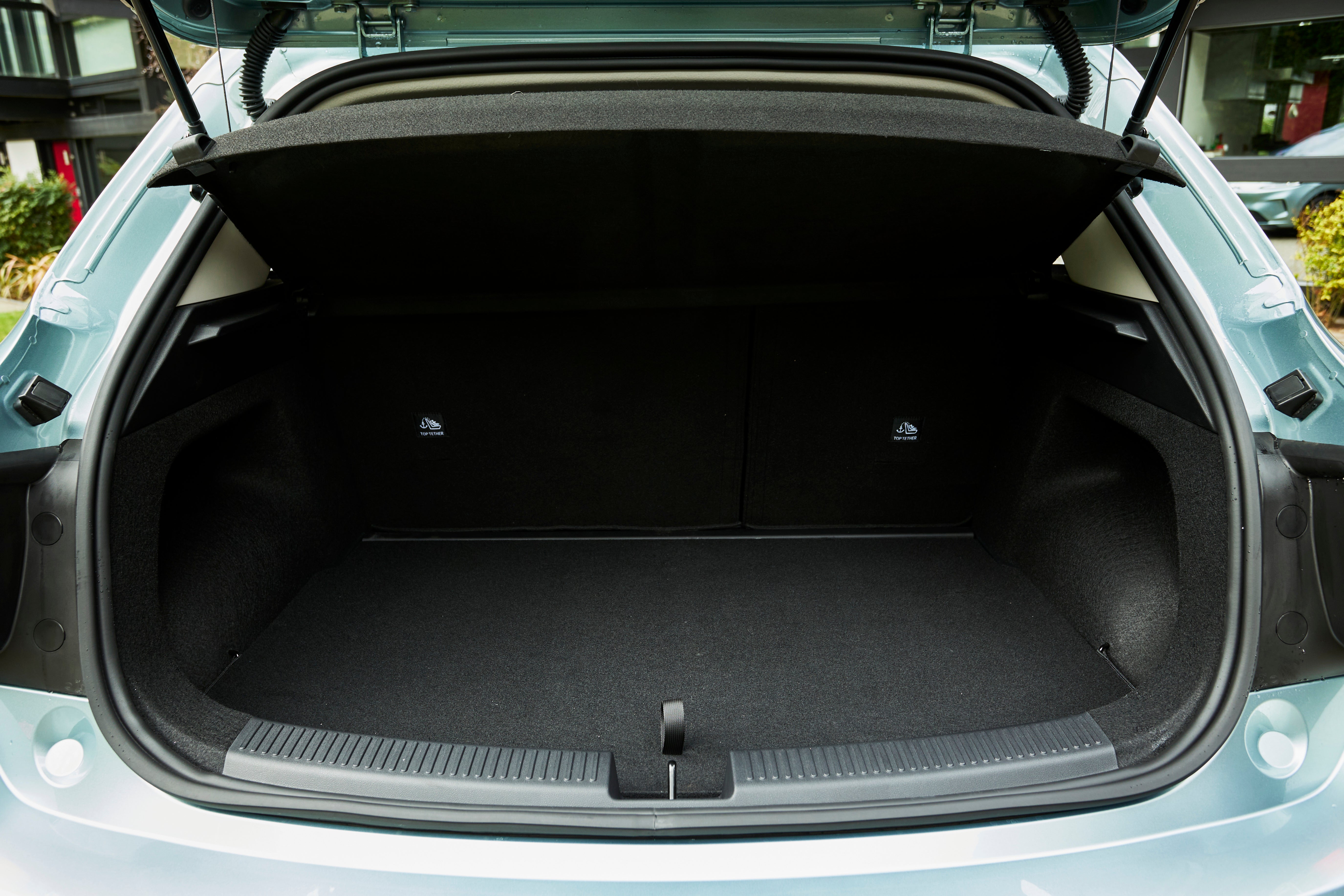
Boot capacity is 479 litres to the roof, plus an additional 98 litres under the floor, giving a combined total of 577 litres. With the rear seats folded, space rises to 1,364 litres. Handily, there are also more than 30 storage spaces throughout the cabin.
For the price, the practicality is genuinely impressive. It reminds me of the way Skoda built its reputation on delivering more space than expected for the money – something that’s not apparent in the new Skoda Epiq.
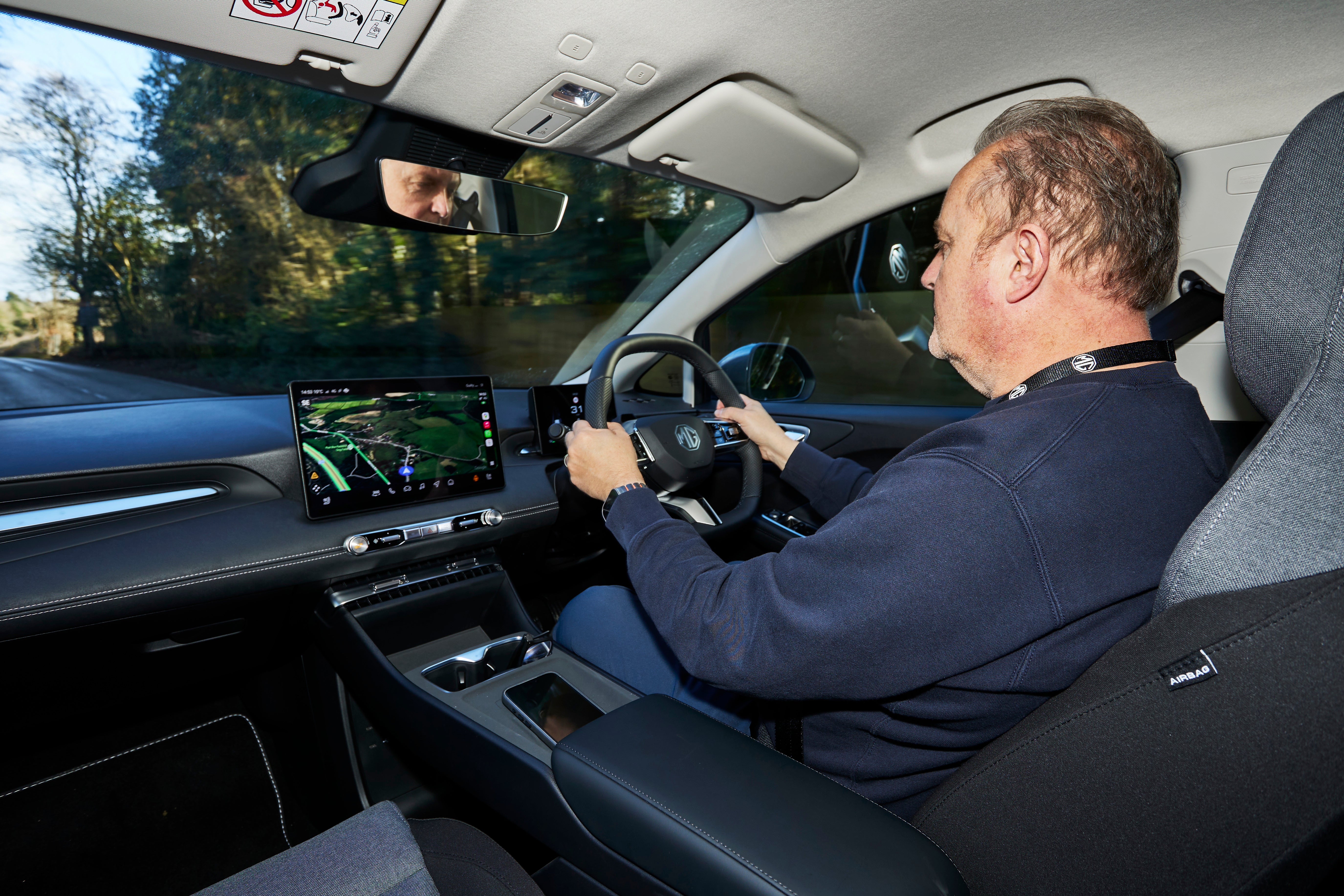
Material quality is mixed but sensible. Soft-touch materials are used where they matter most, and it’s good to see proper physical dials for air conditioning and media volume rather than burying everything in menus. The dual-screen setup comprises a 12.8-inch central touchscreen and a 7-inch driver display.
However, the touchscreen occasionally needs more than one prod to react. The audio system in the test car was disappointing, too, lacking clarity and depth, while the seats felt very firm with limited support. I’m not sure I’d want to spend too long sitting on those seats – perhaps that’s another reason why the car’s called Urban.

Overall, the cabin feels functional rather than plush. You get plenty of space and a decent level of kit, but it doesn’t quite deliver the sense of modernity and polish that some newer competitors now manage.
Technology, stereo and infotainment
MG has built a reputation for generous equipment levels, and the MG4 Urban continues that trend. All versions come with MG Pilot, the brand’s suite of advanced driver assistance systems. This includes forward collision warning, active emergency braking, lane keep assist, adaptive cruise control, blind spot detection and more.
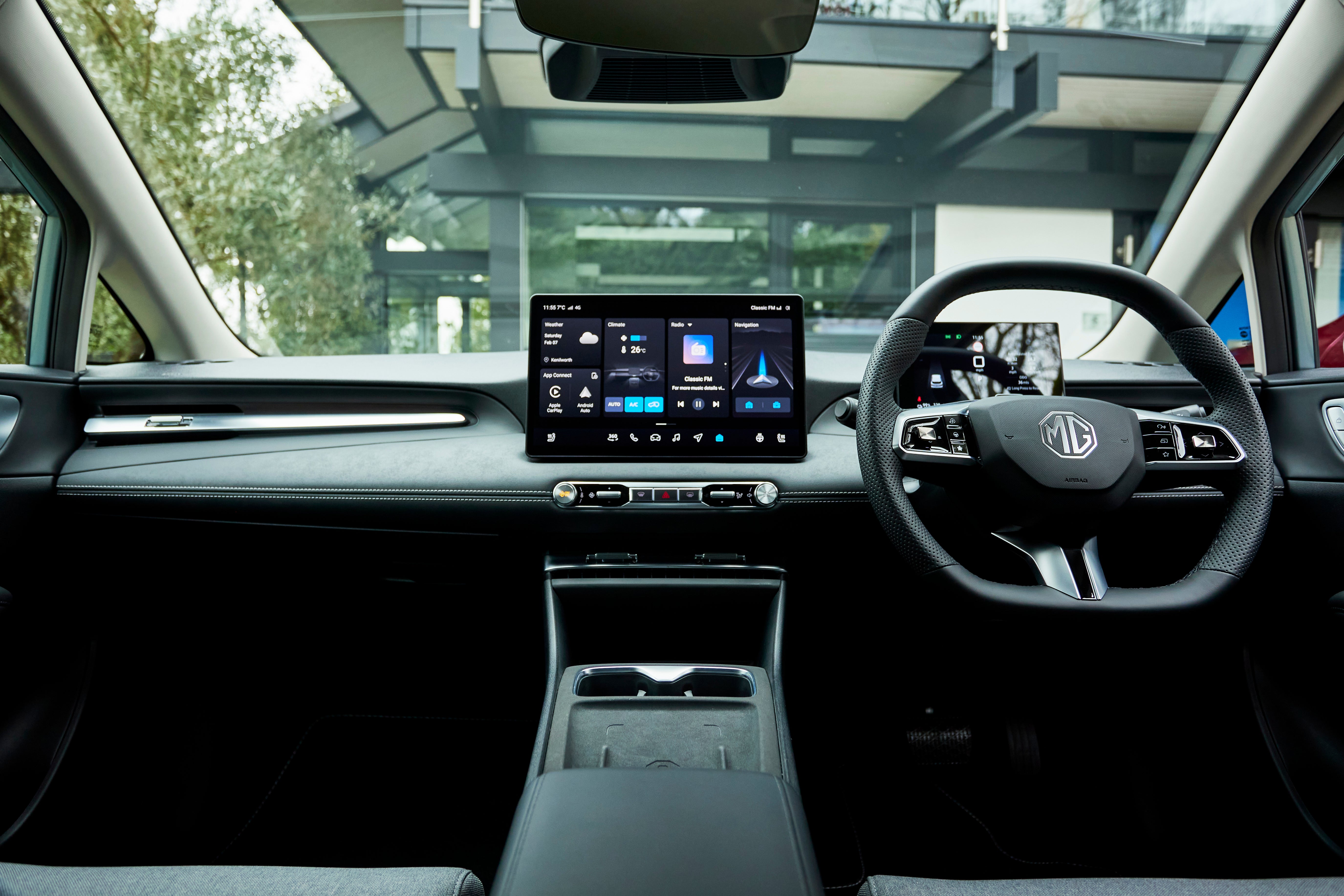
Wireless Apple CarPlay and Android Auto are standard, along with MG’s iSMART connectivity system. Premium models add a 360-degree camera, wireless charging and additional comfort features.
Safety credentials include a five-star Euro NCAP rating and a body structure made up of 90 per cent high-strength or ultra-high-strength steel.
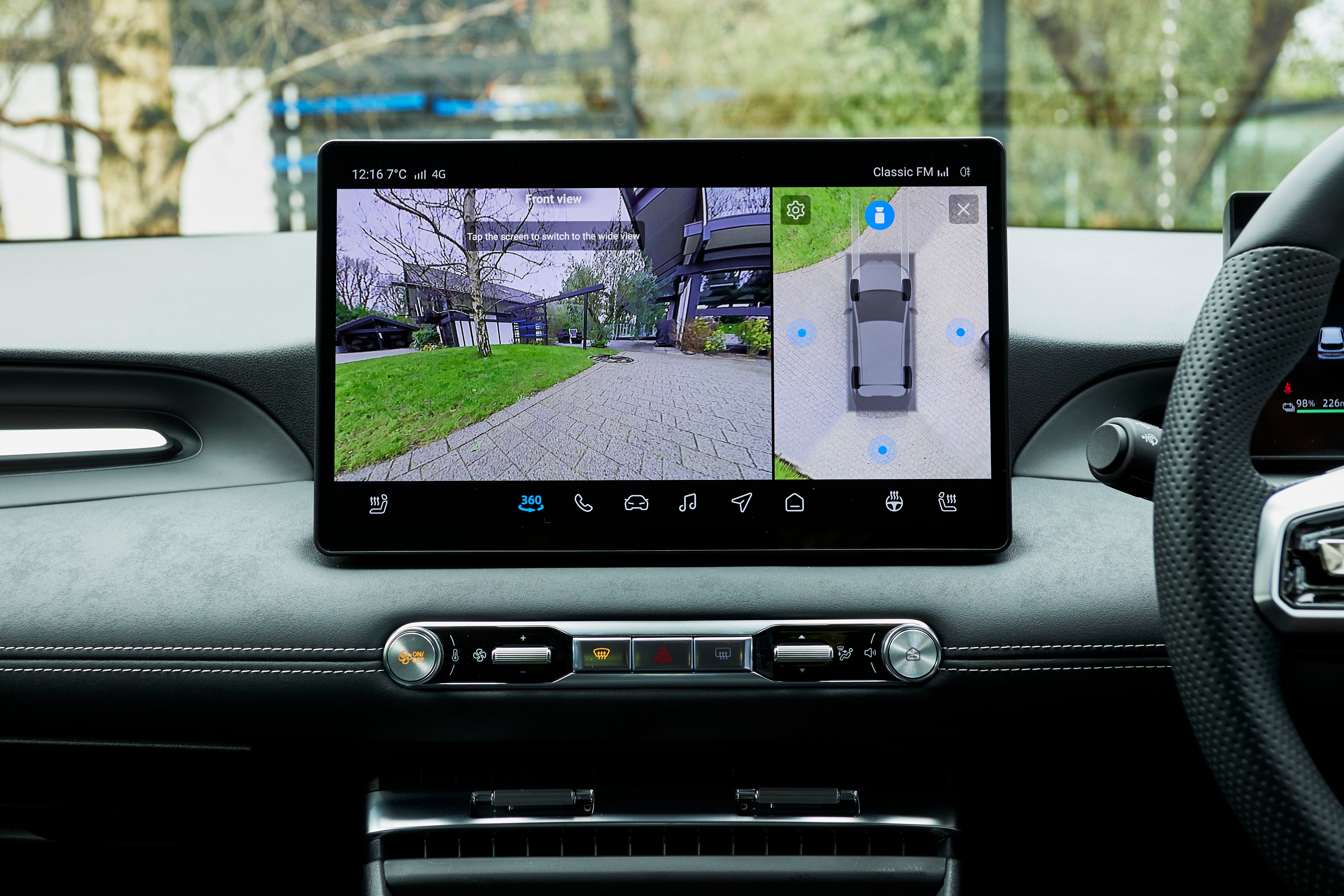
On paper, the technology package is strong for the price. In day-to-day use, the system is generally easy to navigate, but the occasional lag in touchscreen response and the weak audio system detract from the experience.
The MG4 Urban delivers plenty of features, but it doesn’t quite feel like a cutting-edge car.
Prices and running costs
With prices starting at £23,495, the MG4 Urban Comfort Standard Range is one of the most affordable family-size EVs on sale. The Long Range versions at £25,495 and £27,995 remain competitive given the size and equipment on offer, but it’s at the lower end of the range where the value really is.
Energy consumption of 4 miles per kWh suggests reasonable efficiency, and MG backs the car with a seven-year, 80,000-mile warranty. That level of coverage adds reassurance for buyers making the switch to electric for the first time.
However, the sub-£25,000 EV market is no longer short on choice. Buyers now have alternatives that match the MG on price while offering improvements in refinement, ride comfort and perceived quality. The MG4 Urban’s value proposition is strong, but it’s not unchallenged.
The verdict: MG4 Urban
The MG4 Urban is exactly what you expect it to be: a lot of car for the money. You get huge space, a big boot and generous equipment at a price that still feels impressively accessible.
But the class has moved on. Ride quality, refinement and cabin polish don’t quite match the best new entrants in this sector. If space and value are your top priorities, the MG4 Urban makes a convincing case. If you want the most modern-feeling small EV in 2026, there are rivals that edge it out.


MG4 Urban rivals
FAQs
How long does it take to charge?
Rapid charging peaks at 82kW for the 43kWh model and 87kW for the 54kWh versions – not bad for such a small cheap car. In real-world terms, that means a 10-80 per cent top-up in under half an hour under ideal conditions. The 54kWh Long Range versions offer up to 258 miles range, while the 43kWh Standard Range delivers up to 201 miles.
How much does it cost – is it worth it?
With prices starting at £23,495 and generous space and equipment levels, it represents strong value on paper. However, buyers should compare it carefully with newer rivals that may offer greater refinement and comfort at a similar price.
Does MG replace batteries for free?
Yes, as will all car companies, MG offers an eight year warranty on its electric cars’ batteries, plus seven years’ cover on the rest of the car.
Why trust us
Our team of motoring experts have decades of experience driving, reviewing and reporting on the latest EV cars, and our verdicts are reached with every kind of driver in mind. We thoroughly test drive every car we recommend, so you can be sure our verdicts are honest, unbiased and authentic.
With more than 30 years of experience, Steve Fowler is one of the UK’s best-known automative journalists. Steve has interviewed key industry figures, from Tesla’s Elon Musk to Ford’s Jim Farley, and is a judge for both Germany’s and India’s Car of the Year Awards, as well as being a director of World Car of the Year. When it comes to electric vehicles, Steve reviews all the latest models for The Independent as they launch, from Abarth to Zeekr, and he uses his expert knowledge of car buyers' needs to provide a comprehensive verdict.
Join our commenting forum
Join thought-provoking conversations, follow other Independent readers and see their replies
Comments
Bookmark popover
Removed from bookmarks