Collapse in aid for climate crisis is fuelling wars around the world, says David Miliband
The former foreign secretary and head of the International Rescue Committee NGO, tells Nick Ferris that aid cuts must be reversed if the world’s most fragile countries are to have a chance at adapting to the climate crisis
Rich countries should provide significantly more foreign aid – in the form of grants and donations, rather than loans – to help the world’s most fragile countries adapt to the climate crisis, David Miliband has told The Independent.
The former foreign secretary, who has been the CEO of humanitarian NGO the International Rescue Committee (IRC) since 2013, said that the escalating climate crisis is fuelling conflicts around the world, and more aid for climate adaptation is needed to help combat this.
“We need grant-based aid not just for vaccinations and to treat things like malnutrition, but also to fund climate resilience,” he tells The Independent after a speech at Chatham House. Such financing is important not only because the “last thing fragile states need is more debts”, Miliband continues, but also because it is very hard for climate adaptation efforts to attract money in such countries.
“Protecting communities so that their livestock don’t get washed away in a flash flood is a long-term benefit that is worth funding,” he continued. “But [these interventions] are hard to make investable for the private sector – and that’s triply or quadruply hard in fragile or conflict-affected states.”
Pointing to a recent IRC report listing 20 countries most likely to face worsening humanitarian crises this year, Miliband says: “I think the contribution of climate change to conflict is underestimated”. He points out that the majority of the 20 countries featured in the IRC report are situated around the equator, which is known to be a highly climate-stressed part of the world.
“Some of the biggest conflicts that exist at the moment, notably in Ukraine and Gaza, aren't climate conflicts, so it's important that we are disciplined in how we speak about this,” he continued. “But climate change is a major contributing factor to resource stress, which is known as one of the major factors driving conflict globally.”
‘The poorer you are, the less help you get’
Climate adaptation can include everything from mangrove forests to protect coasts, to the distribution of seeds for drought-resistant crops, to the construction of flood defences. That is different to “mitigation”, which is about reducing carbon emissions, and is an area that experts are much more confident around attracting non-aid-based investment in fragile countries, due to the plummeting costs of renewable energy technologies.
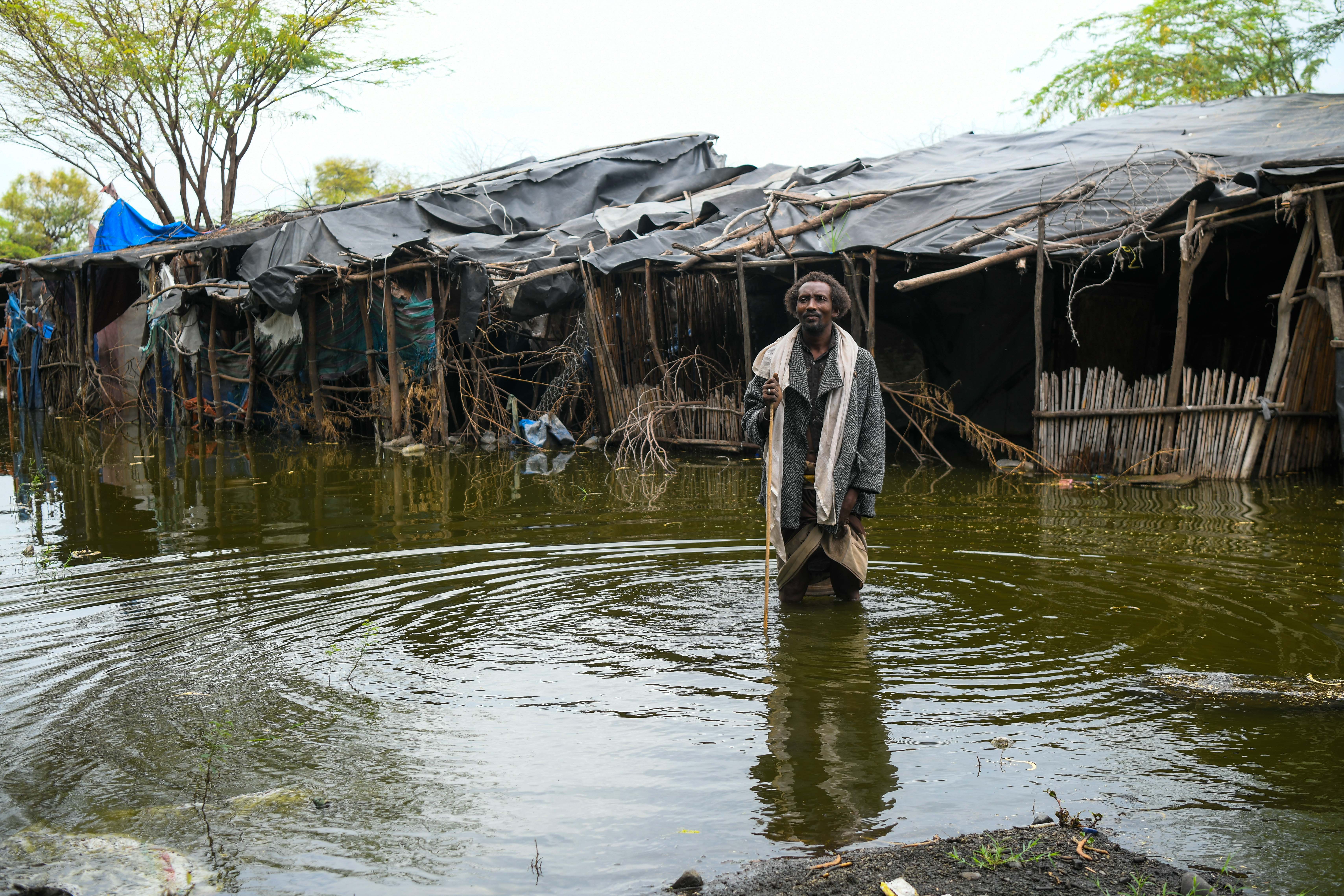
Given the immense pressure that aid budgets have come under over the past year, with Donald Trump slashing US funding and the UK also planning significant cuts – as well as the hugely inadequate levels of foreign aid made available for adaptation in recent years – aid agencies have told The Independent in recent months that they have been working hard to drive private investment in climate adaptation.
However, data from the Organisation for Economic Co-operation and Development (OECD) shows that only around 10 per cent of money directed towards climate adaptation in developing countries has traditionally come from the private sector. What’s more, analysis produced last year from the NGO Mercy Corps modelled that, even in a best case scenario, only around 15 per cent of adaptation needs could be met by the private sector in developing countries.
“The challenge that we face is about helping people sustain their livelihoods in the face of a changing climate which in some cases is very difficult, but not impossible, to adapt to,” Miliband tells The Independent.
“We have to really shift this inverse relationship at the moment, where the poorer and more exposed you are to climate change, the less money you get for climate adaptation,” he adds.
‘Unprecedented moment’
The IRC report Miliband mentions, Emergency Watchlist for 2026: An assessment of the 20 countries most likely to face worsening humanitarian crises this year was released last month. In it, Sudan and the Occupied Palestinian Territories top the list. Collectively, the 20 countries represent 12 per cent of the world’s population, but 50 per cent of people in extreme poverty, and 89 per cent of people in humanitarian need.
The report describes the world as being at an “unprecedented moment”, while “global support to address them is collapsing”. Indeed, IRC itself had to cut its budget by some $400m (£290m) in the wake of aid cuts announced by the US and others last year, which led to some 6,000 staff being made redundant.
The report, which supports Miliband’s view that the climate crisis is an underappreciated factor in amplifying conflicts around the world, stresses how conflicts across the world are driving humanitarian situations, highlighting how the 61 conflicts recorded globally in 2024 was more than had been recorded in any year since the Second World War. Some 18 countries recorded more than 1,000 conflict deaths in 2025, and the 1,000 people killed seeking medical care in the first six months of 2025 is a total 60-times greater than during the same period in 2024.
Miliband’s comments come several months after 10 of the world’s conflict-affected countries told The Independent at the Cop30 UN climate talks in Brazil that war and conflict has been a “blind spot” consistently overlooked in climate talks.
They warned that they are among the most vulnerable to impacts of the climate crisis, but are only receiving 10 per cent of global climate aid, which is preventing them from adapting and building resilience to the devastating impacts of the climate crisis.
The comments came a year after a network of conflict-affected and climate-vulnerable countries was formed at Cop29 in Azerbaijan in 2024, which came with a call for $20 billion in aid annually to meet these countries’ climate adaptation needs.
At Cop30, however, the Brazilian presidency had ignored the countries’ calls for the subject to be a key part of the agenda, despite high-profile conversations around climate finance in other areas.
This article was produced as part of The Independent’s Rethinking Global Aid project
Join our commenting forum
Join thought-provoking conversations, follow other Independent readers and see their replies
Comments
Bookmark popover
Removed from bookmarks