I used ChatGPT to plan my workout – then asked personal trainers to review it
More and more people are turning to AI chatbots for fitness advice – but personal trainers tell Harry Bullmore that, while it is a useful tool, there are some things to consider before relying on it too heavily


My ChatGPT request for a workout plan is simple; beginner-friendly, zero equipment, 10 minutes long. In seconds, it returns a session matching these criteria – it’s a frictionless process and explains why so many people are now outsourcing their exercise regimes to artificial intelligence.
ChatGPT owner OpenAI found that fitness is one of the top three reasons people are turning to the platform, with “69 per cent [of young Brits] using or considering AI like ChatGPT to support their fitness journeys”. Other persuasive perks include the fact that, unlike a personal trainer, you can use most AI chatbots for free. For many people, typing something into a computer also triggers fewer inhibitions than stepping foot inside a gym.
But is it really a smart move to use AI as your PT? As a fitness writer and coach, I’ve spoken to plenty of trainers on this topic, and they have mixed opinions. Some say it is a useful tool, others see it as a signpost pointing newer exercises in the wrong direction, and all believe in-person coaching still holds plenty of value.


The response you get on ChatGPT is only ever as good as the question you ask it. After speaking to the ChatGPT team, I used one of their suggested prompts to generate a workout: “Create a 10-minute full-body workout I can do in my living room with no equipment and make it beginner-friendly but challenging."
It suggested performing the 10 exercises below in turn, completing each one for 40 seconds, resting for 20 seconds, then repeating this sequence with the next move:
- March plus reach
- Bodyweight squats
- Wall or incline press-ups
- Standing knee-to-elbow crunch
- Reverse lunges
- Plank
- Glute bridge
- Shadow boxing
- Dead bug
- Low-impact mountain climbers
Each move came with notes including a couple of brief technique pointers and a list of the target muscles, as well as a suggestion on how to “make it harder”. I was advised to “move with control, focus on good form and breathe”. There was also an optional cool-down comprising three stretches, and a list of “tips for success” – “aim for controlled movement over speed, shorten the work time to 30 seconds if needed, repeat the circuit if you want a 20-minute workout”.
But can ChatGPT can truly act as a “pocket-sized PT”. This is what the experts said.

The pros of using ChatGPT for exercise plans
The boxer and author Ed Latimore once said: “The heaviest weight at the gym is the front door.” In other words, the hardest part of going to the gym is just that: going to the gym. Once you’re there, it only feels natural to exercise, but motivating yourself to go on a regular basis is easier said than done – especially while navigating life’s many curveballs.
AI chatbots can help make exercise more accessible by putting advice, ideas and equipment-free options at your fingertips. And the more accessible a workout is, the more likely someone is to do it.
“AI can lower barriers to entry for beginners,” says Kain Monks, founder of Science for Athletes. “Simple, time-efficient workouts can reduce intimidation and help people take the first step, particularly for those who are unsure where to start or uncomfortable in gym environments.”
To illustrate the benefits of this, the World Health Organisation updated its physical activity guidelines in 2020 to emphasise that “every move counts towards better health”.
“I’m a big advocate for movement in any form – if an AI plan is the only way someone feels comfortable starting, I support that 100 per cent,” adds certified personal trainer Emma McCaffrey, AKA Move with Emma.
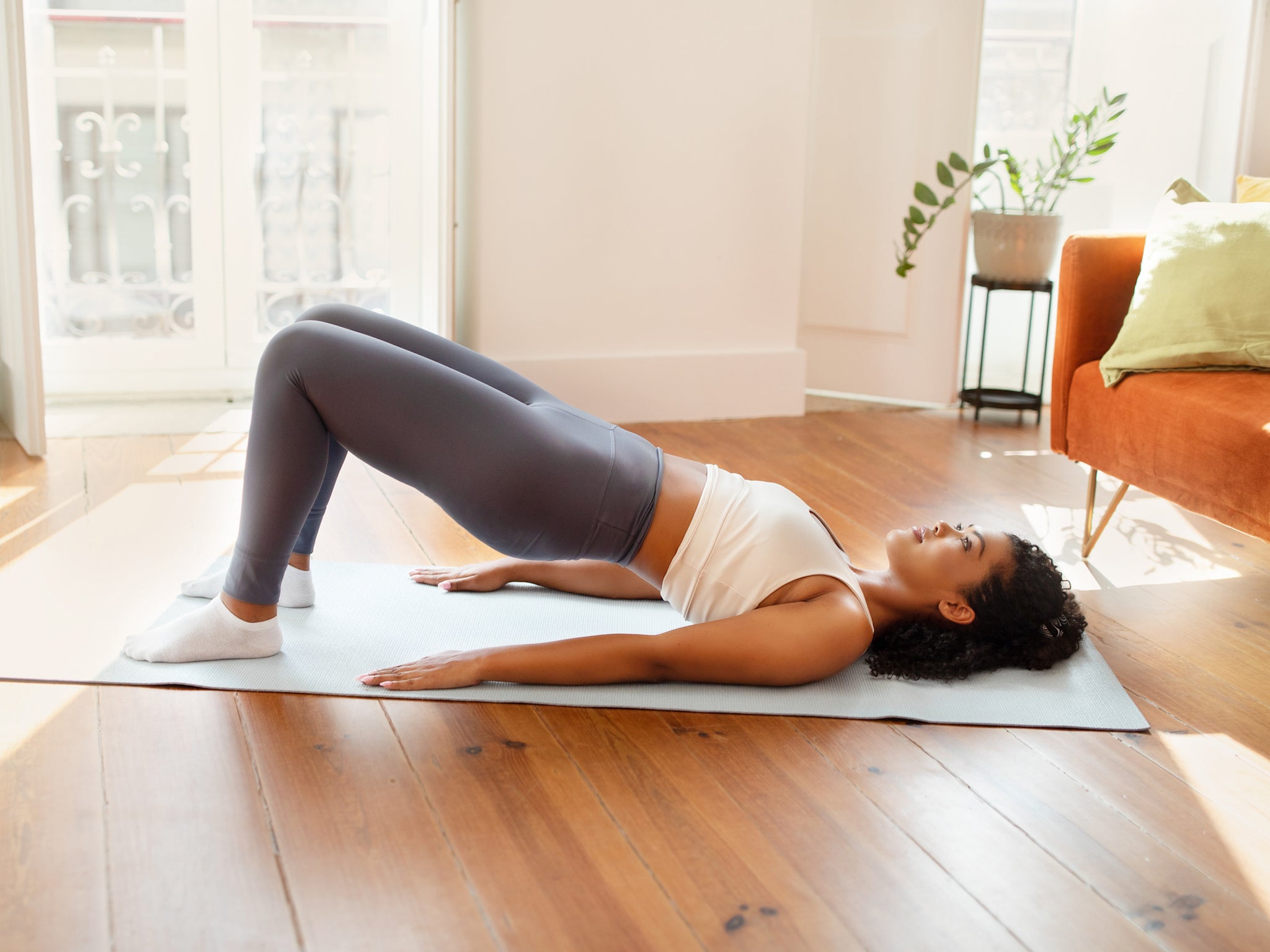
At this time of year in particular, many people will find themselves sitting in their living room, wanting to exercise but unsure of what to do. If, instead of staying still, they used ChatGPT to source a 10-minute session like the one above, chances are it would push their health and fitness in the right direction.
The workout I’m given uses most of the major muscle groups (although those in the back are largely overlooked), raises the heart rate and may contribute to cardiovascular fitness and strength increases in beginners. The bodyweight exercises require zero kit and are accessible to most people – although accessible is a relative term that cannot be catered to without more information about the individual.
For this reason, it feels like ChatGPT is a good source of exercise ideas and inspiration. If it helps people bridge the gap between zero exercise and some exercise, that is a good thing. I’ve also successfully used it to help shape my own exercise plans, and many of the suggestions have been helpful, marrying up with my pre-existing knowledge on the topic.
The platform is evolving, too. Speaking to the ChatGPT team, they shared some fitness functions of the platform beyond simply generating workouts. For example, voice-guided cool downs, technique checks through uploading photos and videos, workout scheduling around your calendar and even timed motivational prompts.
Again, if these functions can remove or shrink any of the hurdles that stand between people and regular exercise, that is a net positive in my eyes.
Read more: What foods nutrition experts really eat to stop chronic illness in old age (and always avoid)
The cons of using ChatGPT for exercise plans
While it is true that the better your prompt, the better the answer ChatGPT can provide, it is also the case that when it comes to creating exercise plans, this can be both a perk and a drawback.
To illustrate why, imagine someone was handed a lump of clay. If that person is a seasoned sculptor, they could probably shape it into something pretty impressive. If that person is me, someone with next-to-no artistic bones in their body, the result would look pretty underwhelming. The same applies to AI chatbots and fitness.
ChatGPT gives you the clay – workout ideas, inspiration and information. But it doesn’t know you, your body or your training history, so it is down to you to prompt and mould what it gives you into something valuable. A fitness buff will have no problems doing this, but a newcomer to exercise might struggle.
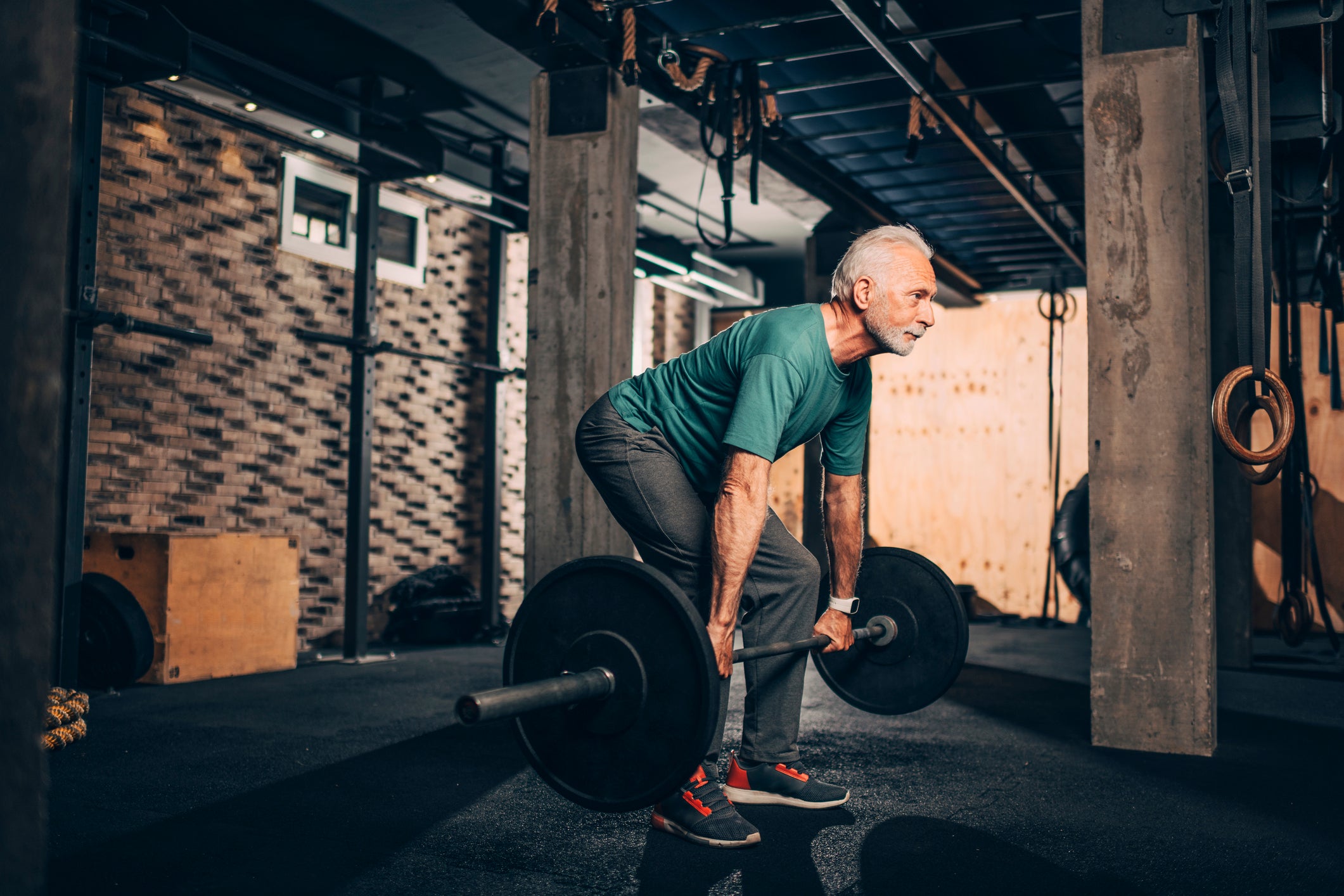
“There is a ‘watchful eye’ gap in the workout you’ve been given,” McCaffrey says. “The plan tells a beginner to ‘focus on good form’, but a beginner often doesn't know what good form feels like. “For example, during lunges or planks, an AI can’t see if a pelvis is tilting or a knee is tracking incorrectly. Without an expert eye to guide and correct, ‘anything is better than nothing’ can quickly turn into an injury.”
With no one there to flag incorrect technique, there is no feedback loop, and this poor form will persist, she adds.
ChatGPT Pro and Peloton’s latest AI training tech, Peloton IQ, can use images, videos and (in Peloton’s case) movement-tracking cameras to analyse your form, though I’m yet to take either for a spin.
Read more: If you struggle to walk 10,000 steps a day, a scientist recommends trying this instead

Even so, I would rather have a human with an understanding of the nuances of exercise and human physiology tweak my exercise technique. After all, a good squat will look very different on different people depending on their dimensions.
No one workout can make or break a successful exercise routine either. The key to continued results from exercise is consistency over time, and while ChatGPT can be asked to provide exercise plans that last weeks or even months, coaches I spoke to were unconvinced this was a good idea.
“In general, I think large language models such as ChatGPT can do a great job creating certain specific workouts,” says John Singleton, founder of leading functional fitness coaching company The Progrm. “There is, however, a catch and that is that they can make some very big errors as well.”
As mentioned above, a seasoned gym-goer might spot any slip-ups and amend them. But in those simply looking to exercise for better health, they could be missed.
“Using it as a standalone tool to follow [in the longer term] will probably lead to suboptimal programming, and if you followed it exactly, you would end up doing some crazy – possibly dangerous – workouts,” Singleton says.
Monks agrees, adding that individual AI workouts should not be mistaken for training programmes.
“A programme requires decision making,” he says. “Someone has to decide when to increase the difficulty, when to hold steady and when to reduce load to manage fatigue. It also requires monitoring how a person responds over time, not just how a session looks on paper. This is where human coaching still plays a critical role.
“Evidence-based personal training is not about assembling exercises; it is about integrating scientific principles, professional judgement and the individual’s circumstances. Two people can follow the same workout and respond very differently due to differences in sleep, stress, injury history, confidence or prior training experience. AI currently struggles to account for this nuance without ongoing feedback and interpretation.”
Read more: The common foods that can reduce inflammation and improve heart health, according to experts
So, should you use AI to plan your workouts?
AI continues to solidify its place in most areas of society. Fitness is no exception, and it undoubtedly has a part to play in the future of the industry. However, I believe it’s too early to determine its most effective role.
“None of the previous points mean AI has no place in fitness,” says Monks. “Used well, it can be a powerful support tool. It can reduce intimidation, provide structure and help people take the first step towards regular exercise. In a population where physical inactivity remains a major public health challenge, that has real value.
“The danger comes when convenience is mistaken for effectiveness. AI can generate workouts, but it cannot yet replace coaching judgement, long-term planning or the ability to adapt training based on how a real person responds over time.”
The word “yet” feels prescient here. But for now, rather than providing an oven-ready replacement for personal trainers, Monks sees AI as another string to their bow.
The other thing AI cannot provide is humanity. I coach the 6am and 7am Monday classes at a gym, and in the midst of a bleak British winter, I can’t help but feel seeing friends and socialising is as much of a motivator for turning up as getting a sweat on.
“In my experience, people don’t just show up [to classes] for the exercises; they show up for the accountability,” says McCaffrey. “They show up because they know I’ll be there and the rest of the community will be there. That cheerleading and the feeling of being part of something is what keeps my members consistent.
“AI is great for suggesting what to do, but it misses the how of expert form correction and the who of community. I’m all for movement, but I worry about people navigating their fitness journeys without the support and safety of a real coach.”
Read more: I interview fitness experts as my job – these are the exercises they agree work best for beginners
Join our commenting forum
Join thought-provoking conversations, follow other Independent readers and see their replies
Comments
Bookmark popover
Removed from bookmarks