I’m a nutritionist and these are the biggest mistakes people make when they want to lose fat
Nutritionist and personal trainer Luke Hanna tells Harry Bullmore six things that most people should do differently when it comes to nutrition


Fat loss is a common fitness goal. It’s also a more complex topic than many would have you believe.
The laws of thermodynamics apply; if you burn more calories than you consume, you will achieve a calorie deficit and lose weight. But there is a matrix of individualised factors such as genetics, appetite and environment that make this difficult for many.
Luke Hanna has more insights into this nuance than most. Having studied sport and exercise science and worked as a coach for several years, he did a master’s degree in obesity and clinical nutrition. Now, alongside his work as a coach and nutritionist, he uses peer-reviewed research to pick apart prevalent food and fat-loss myths for the benefit of his six-figure social media following.
“There is a lot of misinformation around nutrition out there,” Hanna says. “Things like the carnivore diet have gained traction because they’re novel. But I think the things that are going to move the needle and actually improve people’s health are the boring things.”
Below, he shares six of the biggest mistakes people make when it comes to fitness, fat loss and nutrition.



1. Unrealistic goals
“One of the biggest mistakes I see new clients make is being overly ambitious,” says Hanna. “If we set unachievable goals, it can be disheartening when we don’t reach them. It’s important to remember that even small, incremental improvements are very beneficial over time.”
He advises looking at healthy behaviours you can add into your routine – a refreshing alternative to the food cull that comes with many restrictive diets. His go-to prescriptions are:
- Incorporate oily fish into your diet twice per week to improve heart health
- Increase your fibre intake by 10g per day to boost gut health and longevity
- Consume an extra 20g of protein each day to support tissue strength
- Aim for two weekly strength training workouts to build a more resilient body
- Increase your daily step count by 1,000-2,000 to increase calorie expenditure and improve heart health
“These wins will add up over time,” he says. “A lot of people I work with are trying to lose weight, and they might get disheartened if they don’t see immediate results or because they’re not doing more. But these habits, done regularly, will help them a lot in the long term.
“If you improve your overall diet quality by eating more protein or high-fibre foods such as vegetables, that also leads you to feel more full. A happy by-product of that is you will likely eat less of the other things that are less nutritious.”
Read more: I specialise in coaching people aged 40-plus – do these six things for immediate results

2. Restrictive diets (which can be bad for your health)
Various restrictive diets have taken it in turns to hog the spotlight over the years. The current culprit is the carnivore diet, which predominantly comprises animal products such as meat, fish, seafood, eggs and some dairy.
The popularity of these diets is often fuelled by anecdotal evidence and personal success stories. But Hanna advises approaching them with scepticism.
“The carnivore diet is a recipe for disaster long-term,” he says. “It can seriously impact people’s health.
“If people go from a diet high in processed food and refined sugar to one focusing on whole foods, like the carnivore diet, it’s not too much of a shock that they feel better initially. But there are also plenty of stories about people who have suffered really bad health effects.”
There are some positive elements to the diet, Hanna says. It is straightforward, high in protein and centred around minimally processed foods.
However, he continues, “decades of studies” have linked diets high in animal products to several negative health outcomes. For example, the high doses of saturated fat the carnivore diet delivers can contribute to preferential storage of visceral fat – the fat that surrounds organs and can impact their function – as well as increased heart disease risk.
The carnivore diet also omits ingredients such as whole grains, fruits and vegetables, which contain vitamins, minerals and dietary compounds the body needs to be at its best. This is a problem consistent with most restrictive diets.
Instead of restrictive diets, his recipe for success is a balanced diet containing predominantly healthy, whole food ingredients in Goldilocks quantities – not too much, not too little.
Read more: Expert warns why this daily habit is shortening your life – even if you exercise
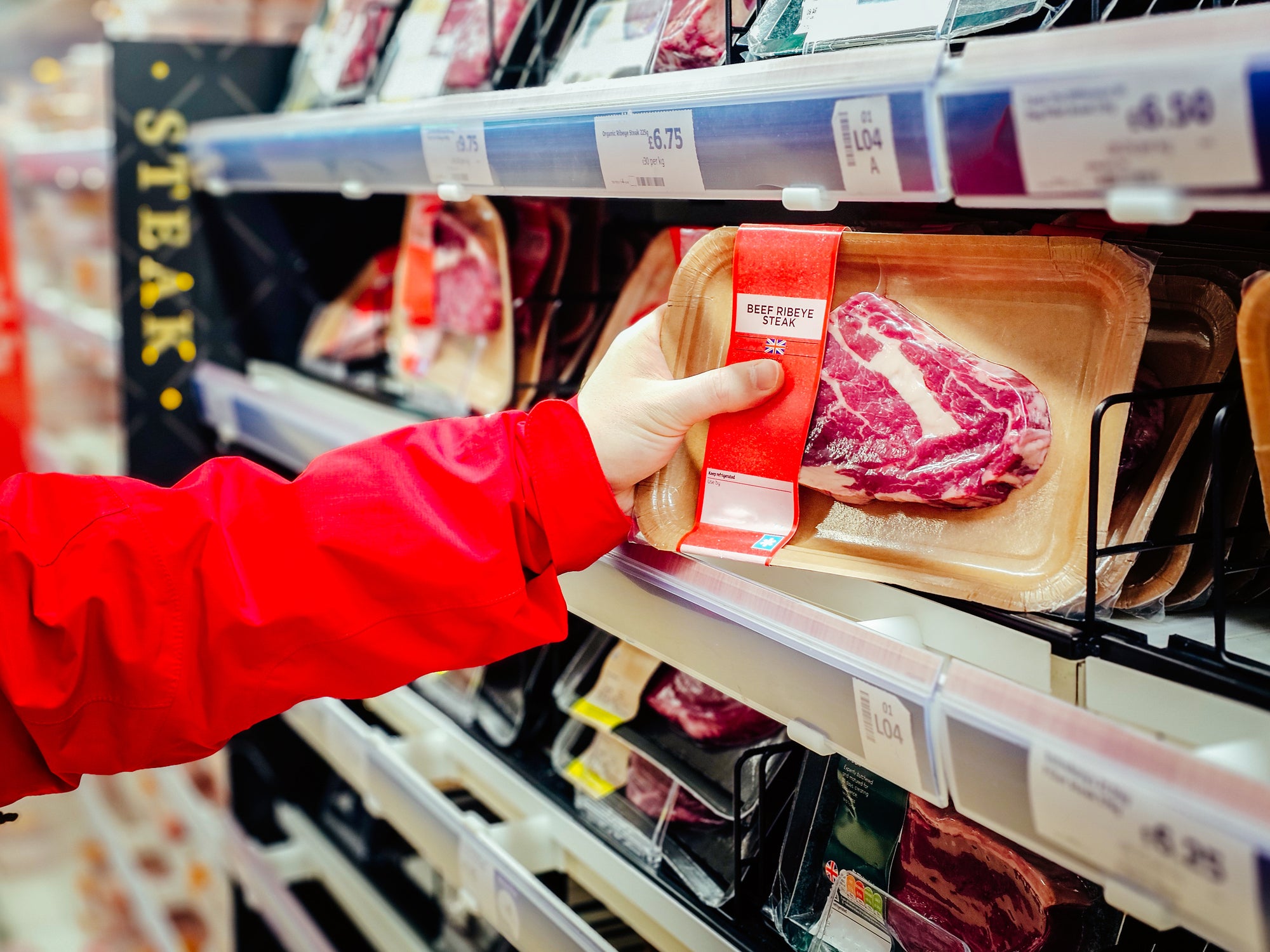
3. Ignoring good advice because it’s boring
To summarise the Goldilocks dietary approach above, Hanna says: “Make sure you’re getting fruits and vegetables, whole grains, fibre and protein sources that are lower in saturated fat, while minimising alcohol and refined sugars.”
The NHS’s EatWell Guide does a good job of encompassing this approach. The problem lies in the fact that less than one per cent of Brits adhere to this advice, according to data from the National Diet and Nutrition Survey. This may be a result of our food environment, alongside several other factors.
“People are bombarded with adverts and you see food everywhere,” Hanna says. “Companies spend millions of pounds trying to get you to buy specific products, so it’s not surprising that people are eating more.”
To counter this, he believes awareness is key.
“I normally get clients to keep an honest and accurate food diary for a week,” Hanna says. “It’s less about the technical aspect – looking at protein or calories or sugar – and more about identifying the biggest problems, then choosing one or two things to work on.
“For example, if you struggle with snacking or stress eating, you can identify when in your day that is happening. Once you know that, you can come up with some strategies to counter it – again, looking to include a new healthy habit rather than just removing something.”
Read more: Scientist recommends doing this if you struggle to walk 10,000 steps a day

4. Seeing food as ‘good’ and ‘bad’
“I see this all the time: clients have a takeaway, grab an ice cream or go out for food, then they feel guilty because it wasn’t the most nutritious thing they could have eaten,” Hanna says.
“But people know that if they eat one nutritious meal, they won’t suddenly be healthy. So why would you assume that having one pizza makes you unhealthy?”
Instead, he says, it is the way you consistently eat that matters most for your long-term health.
“It’s not beneficial for people to feel guilty for enjoying food,” Hanna continues. “If anything, labelling your food as ‘good’ and ‘bad’, or ‘clean’ and ‘dirty’, just worsens your relationship with it and creates binge-restrict cycles. If people stop assigning morality to food, they’ll be better off because this ‘good food-bad food’ mindset will probably lead you to consume more of the latter over time.”
It’s far better, he says, to adopt a mindset that allows you to enjoy all foods in moderation. But this can be difficult when less nutritious options are designed to be easy to consume. One strategy to counter this is to avoid keeping these less nutritious foods in the house, lowering temptation.
Read more: What foods nutrition experts really eat to stop chronic illness in old age (and always avoid)

5. Prioritising fat loss over fitness
“Excess body fat can increase your risk of chronic disease in the long term,” Hanna says. “But that doesn’t mean your weight is the only thing that matters for your health.”
One meta-analysis he cites from the British Journal of Sports Medicine suggests that cardiorespiratory fitness is a strong predictor of heart disease and mortality, and higher fitness levels can reduce the risks associated with overweight and obesity.
For this reason, Hanna recommends prioritising increasing your fitness levels over lowering your body fat levels – the latter will likely come as a welcome byproduct of doing so.
“As we know, losing weight and keeping it off long-term is incredibly difficult,” he says. “People need to know that exercise is a fantastic option, regardless of whether it helps you lose weight or not. It is one of the biggest levers you can pull to improve your health.”
Read more: I’m a personal trainer – this is what I’d tell a client who wants to lose belly fat

6. Seeing all processed food as bad for you
Ultra-processed food (UPF) can be described as food that contains ingredients you wouldn’t expect to find in a traditional kitchen, such as emulsifiers and flavourings.
“We’ve known for a long time that a high intake of UPF is going to negatively impact your health,” Hanna says. “But now anything remotely processed is being viewed as bad for you, which is not the case.”
He points to a 2024 analysis from The Lancet medical journal, which suggests that certain sub-groups of UPF are worse for your health than others.
“Unsurprisingly, things like sugar-sweetened beverages and processed meat – calorically dense items high in sugar, saturated fat and sodium – are associated with higher cardiovascular disease risk,” Hanna says.
“But other foods that are technically considered processed, such as certain types of yoghurts, whole grain breads, cereals and even savoury snacks, also contain beneficial factors such as protein, fibre, minerals, phenolic acid and other micronutrients.”
The analysis above found these foods had “inverse associations” with heart disease risk.
“It’s obviously a good idea to focus predominantly on whole foods in our diet,” Hanna concludes. “But processed foods are not all the same, so we should stop lumping them all in together.”
Read more: What foods nutrition experts really eat to stop chronic illness in old age (and always avoid)
Join our commenting forum
Join thought-provoking conversations, follow other Independent readers and see their replies
Comments
Bookmark popover
Removed from bookmarks