Expert says daily step count could soon become part of exercise guidelines – this is how many you should be doing
Described as the ‘perfect exercise’ by experts, walking can reduce your risk of everything from cardiovascular disease and cancer mortality to dementia, as well as improving mental health and reducing your risk of falls. New research aims to pinpoint the number of daily steps associated with each benefit. Harry Bullmore finds out more.


This statement might sound ridiculous, but walking is in vogue right now; not as a means of getting from A to B, but as a vehicle for improving your health. As a fitness writer and coach, I’m happy this is the case.
Almost one in three people are failing to meet the World Health Organisation’s (WHO) physical activity guidelines, according to a large-scale study published in The Lancet last year. Walking is one of the most effective ways to combat this.
“In the past, researchers and clinicians have described walking as ‘the perfect exercise’, and based on the body of evidence that has accumulated over the past few years, this is now truer than ever before,” says Dr Elroy Aguiar, an associate professor of exercise science at The University of Alabama.
“It is easy to perform, has a low barrier to entry and can elicit the full range of intensity, from light to moderate to vigorous, by simply adjusting your pace... It is likely that future iterations of physical activity guidelines by the WHO and individual countries will feature a steps per day target.”
But how much do you need to walk to benefit your health?
Previous studies have focused heavily on the number of steps required to reduce all-cause mortality. But, while this is a desirable outcome, it isn’t the most relatable metric – few people are scribbling “reduce all-cause mortality” among their fitness goals.


Another study, also published in The Lancet, recognised this, so researchers set out to “synthesise the prospective dose-response relationship between daily steps and health outcomes including all-cause mortality, cardiovascular disease, cancer, type 2 diabetes, cognitive outcomes, mental health outcomes, physical function and falls”. In layman’s terms: how many daily steps are needed to see benefits in each of these areas?
Here are the results, and how you can apply these findings to improve your health.
10-second takeaway
The latest research suggests that walking 7,000 steps per day can significantly reduce your risk of cardiovascular disease, cancer mortality, type 2 diabetes, dementia, depressive symptoms and falls.
All movement counts towards improved health, with a separate study finding “as few as about 2,600 and about 2,800 steps per day yield significant mortality and cardiovascular disease benefits, respectively”.
“The optimal combination [of weekly movement] comes from maintaining a solid baseline level of step-related movement plus a brief amount [21 minutes or more] of moderate-to-vigorous intensity physical activity per day,” Aguiar says. This includes two full-body muscle-strengthening sessions each week, as per the WHO guidelines.
How many steps do you need to take per day to improve your health?
Unless you’ve been living under a rock, you’ll be familiar with walking 10,000 steps per day as a fitness goal. You will also likely know by now that this figure originated from a 1960s marketing campaign for a Japanese pedometer called the “manpo kei” – roughly translated as “10,000 steps metre”.
The number 10,000 is satisfyingly round and easily marketable, but it has no solid scientific basis. However, its adoption as a default daily goal by many popular fitness trackers saw it become an unofficial holy grail for health in some circles.
In 2023, a study by the University of Granada challenged this notion, finding that the number of steps you need to take per day “to significantly reduce the risk of premature death” is 8,000, while “if we focus on the risk of dying from cardiovascular disease, most of the benefits are seen at around 7,000 steps”.
The latest research in The Lancet – a systematic review and meta-analysis of existing scientific literature – aimed to identify how many daily steps are needed to achieve a broader range of health outcomes. Despite its wider scope, it settled on a similar conclusion.
“For all-cause mortality, cardiovascular disease incidence, dementia and falls, an inverse non-linear dose-response association was found, with inflection points at around 5,000-7,000 steps per day,” it states.
In other words: the more steps you take, the less likely you are to fall foul of these outcomes. This still applies when walking more than 5,000-7,000 steps per day, but there are diminishing returns.
“An inverse linear association was found for cardiovascular disease mortality, cancer incidence, cancer mortality, type 2 diabetes incidence and depressive symptoms,” the report continues.
It found that, compared with walking 2,000 steps per day, 7,000 steps per day was associated with:
- 47 per cent lower risk of all-cause mortality.
- 25 per cent lower risk of cardiovascular disease incidence.
- 47 per cent lower risk of cardiovascular disease mortality.
- 6 per cent lower risk of cancer incidence.
- 37 per cent lower risk of cancer mortality.
- 14 per cent lower risk of type 2 diabetes.
- 38 per cent lower risk of dementia.
- 22 per cent lower risk of depressive symptoms.
- 28 per cent lower risk of falls.
Researchers concluded: “Although 10,000 steps per day can still be a viable target for those who are more active, 7,000 steps per day is associated with clinically meaningful improvements in health outcomes and might be a more realistic and achievable target for some.”
But, they add, the study should be interpreted “in light of its limitations”; the small number of studies available for most outcomes, a lack of age-specific analysis and biases at the individual study level.
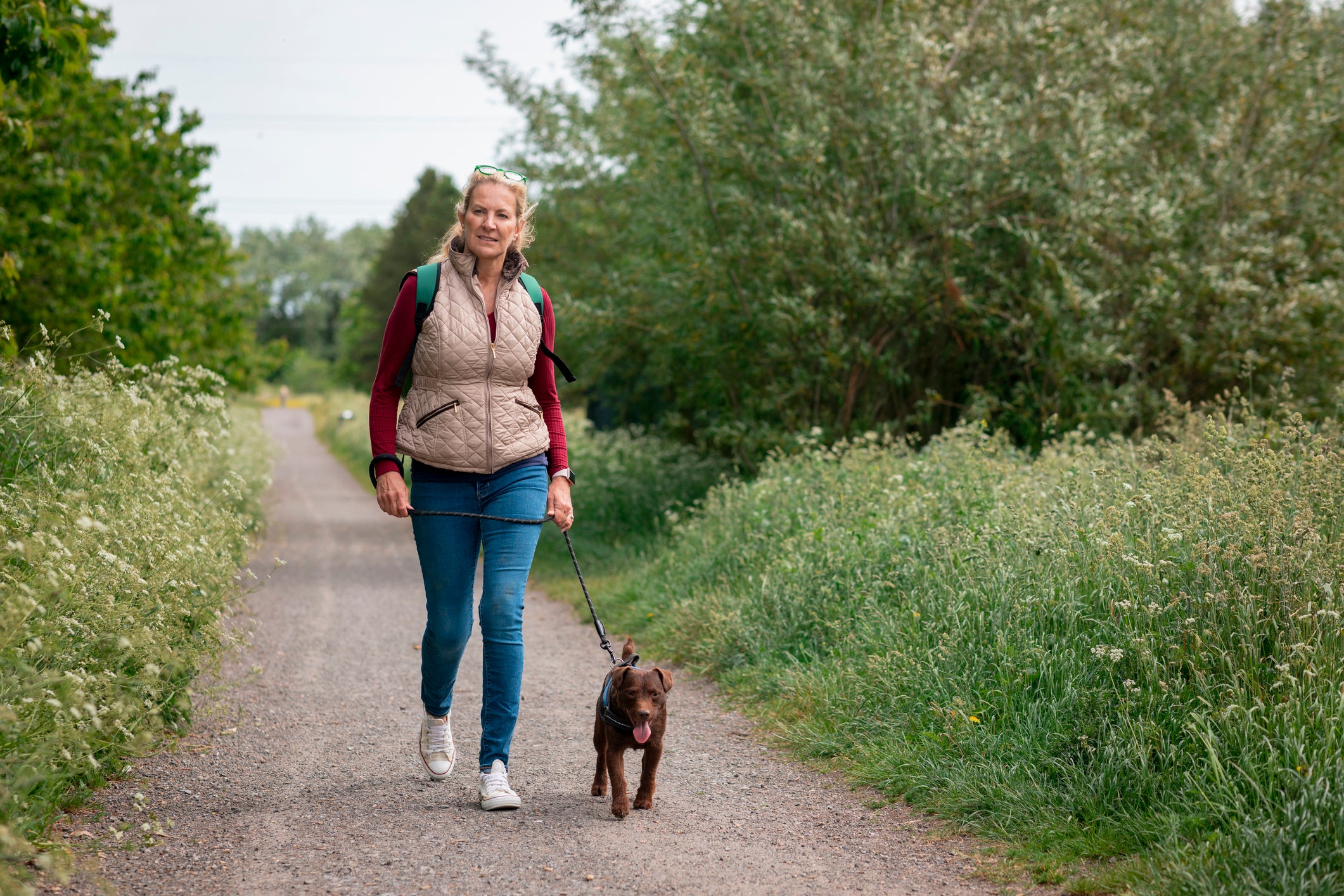
Can you build fitness from walking alone?
“Walking has previously been dismissed by some as lacking the intensity needed to generate tangible health benefits for the masses. But this latest research shows it to be “meaningful movement that can improve a wide range of health outcomes”, says Aguiar.
This is particularly true for those currently leading a sedentary lifestyle – the move from zero exercise to even a small amount of daily movement will likely have a dramatic effect.
But is walking alone enough to represent a comprehensive fitness plan?
The WHO’s physical activity guidelines, mirrored by the NHS, recommend adults do “at least 150 minutes of moderate-intensity activity per week, 75 minutes of vigorous-intensity activity, or an equivalent combination of the two”.
The NHS also says adults should aim to “do strengthening activities that work all the major muscle groups – legs, hips, back, abdomen, chest, shoulders and arms – at least two days a week”.
Moderate-intensity exercise is any activity that raises your heart rate and quickens your breathing, but isn’t so intense that you can’t hold a conversation – in the context of walking, this has been equated to a brisk pace, or a cadence of around 110 steps per minute.

Read more: The three short weekly workouts that can transform your fitness
As an experiment, I went for a 30-minute walk under these conditions and racked up a little over 3,000 steps. If I did this daily, I would surpass the WHO’s weekly physical activity guidelines and could potentially hit The Lancet review’s suggested target of 7,000 steps per day, when incidental daily movement was considered. But ideally, there would also be some form of formal exercise in my weekly routine, Aguiar tells me.
“To meet physical activity guidelines, you need to perform about 21 minutes of moderate-to-vigorous physical activity – roughly 1.5 per cent of the day,” he explains. “But what about the remaining 98.5 per cent, or 23.6 hours, in the day? Is it OK to do 21 minutes of exercise, then sit or sleep for the remainder?
“While the evidence is not clear on this just yet, it’s reasonable to say that we need to be moving throughout the day and avoiding prolonged sedentary time, which is independently known to be harmful.”
He describes walking as “the base of the physical activity pyramid”. Formal exercise is just the tip of the iceberg, while walking accounts for most of your wider daily movement.
“The optimal combination comes from maintaining a solid baseline level of step-related movement plus a brief amount of moderate-to-vigorous intensity physical activity per day,” Aguiar adds. “It is likely that future iterations of physical activity guidelines by the WHO and individual countries will feature a steps per day target. Importantly, a daily target should not be viewed as a replacement for the current guidelines, but rather it should be viewed as complementary, so it’s a both/and scenario.”

Read more: Five stretches you should be doing every day according to a flexibility expert
How to set a suitable daily step goal
If you can fit a 30-minute walk into each day, excellent. If you can do two full-body strength training sessions per week on top of this, even better. And if you can gradually introduce some added intensity into a few of your weekly workouts, be that through running, swimming, cycling, HIIT or any other means, you’re well on your way to a comprehensive exercise plan.
But this isn’t always an option. One possible reason why a growing number of people are insufficiently active is that 21st-century living is rather busy.
If you struggle to include movement in your day, 7,000 steps is likely to sound like a metaphorical mountain to climb. But, to quote the WHO, “all physical activity counts”, and any extra exercise you can crowbar into your week will still have a positive effect on your health.
A 2023 study published in the Journal of the American College of Cardiology found that “as few as about 2,600 and about 2,800 steps per day yield significant mortality and cardiovascular disease benefits, with progressive risk reductions up to about 8,800 and about 7,200 steps per day, respectively”.
In short, more movement is better, but a little can still have an impressive positive impact on your health. To reap the benefits of bite-sized exercise options, try the two tips below:
Exercise “snacking”: The stereotypical workout lasts an hour, but given all movement matters for your health, it makes sense to squeeze some exercise in whenever you can – especially if you have a hectic schedule. This is called exercise snacking, and it could be anything from stretching at your desk to doing a few squats while brushing your teeth – our handy exercise “snacking” guide can help you get started.
If you want to up your daily step count using this method, you can implement it by parking slightly further away from the supermarket, getting off the bus before your usual stop or swapping the escalator for the stairs where possible. You can also inject some extra intensity into your walks by tackling a hill or upping the pace, as research has linked a higher walking cadence (the number of steps taken per minute) with improved health benefits – you can find out more about this by following the link below.
Read more: Four science-backed ways to make your daily walk even better for your health
Set achievable goals: People tend to set lofty fitness goals then lose motivation when they fall short. For example, aiming to walk 7,000 steps per day when they currently average 2,000, or going from zero weekly workouts to five. Instead, start small and work your way up – the feel-good hit of achieving these manageable goals can be a powerful stimulus for sticking with an exercise plan.
In the case of walking, take a look at your current average daily steps per day via the health app on your phone or a fitness tracker. Divide it by five or 10, then add that figure to your average and try to hit this slightly higher target each day for the next couple of weeks. When this starts to feel easy, repeat the process, slowly taking yourself towards 7,000 steps per day.

Why is walking ‘the perfect exercise’?
Walking is brilliant, but it’s by no means magic. I would just as readily recommend other forms of exercise – strength training being premier among them, thanks to its body-strengthening benefits – to those able to access them. The problem is, for various reasons from physical limitations to opportunity, many people are unable to access other forms of exercise.
Walking is one of the easiest, most accessible ways people can improve the amount they move and enjoy the many health benefits of doing so, making it a great way to supplement your weekly exercise plans.
But if you swap your walk for a cycle and fall short of your daily step goal as a result, this isn’t something to get hung up on. Your body has still enjoyed a workout, and your heart and lungs are likely to enjoy a similar stimulus from the two activities – all movement counts. The trick is to find an individualised approach that makes you feel good and allows consistent movement to become a habitual part of your life.
Join our commenting forum
Join thought-provoking conversations, follow other Independent readers and see their replies
Comments
Bookmark popover
Removed from bookmarks