Why fewer lights can actually make your home look better and lower energy bills
Interior lighting experts explain why better-placed lights can transform how your home looks, feels and performs, while also cutting energy use
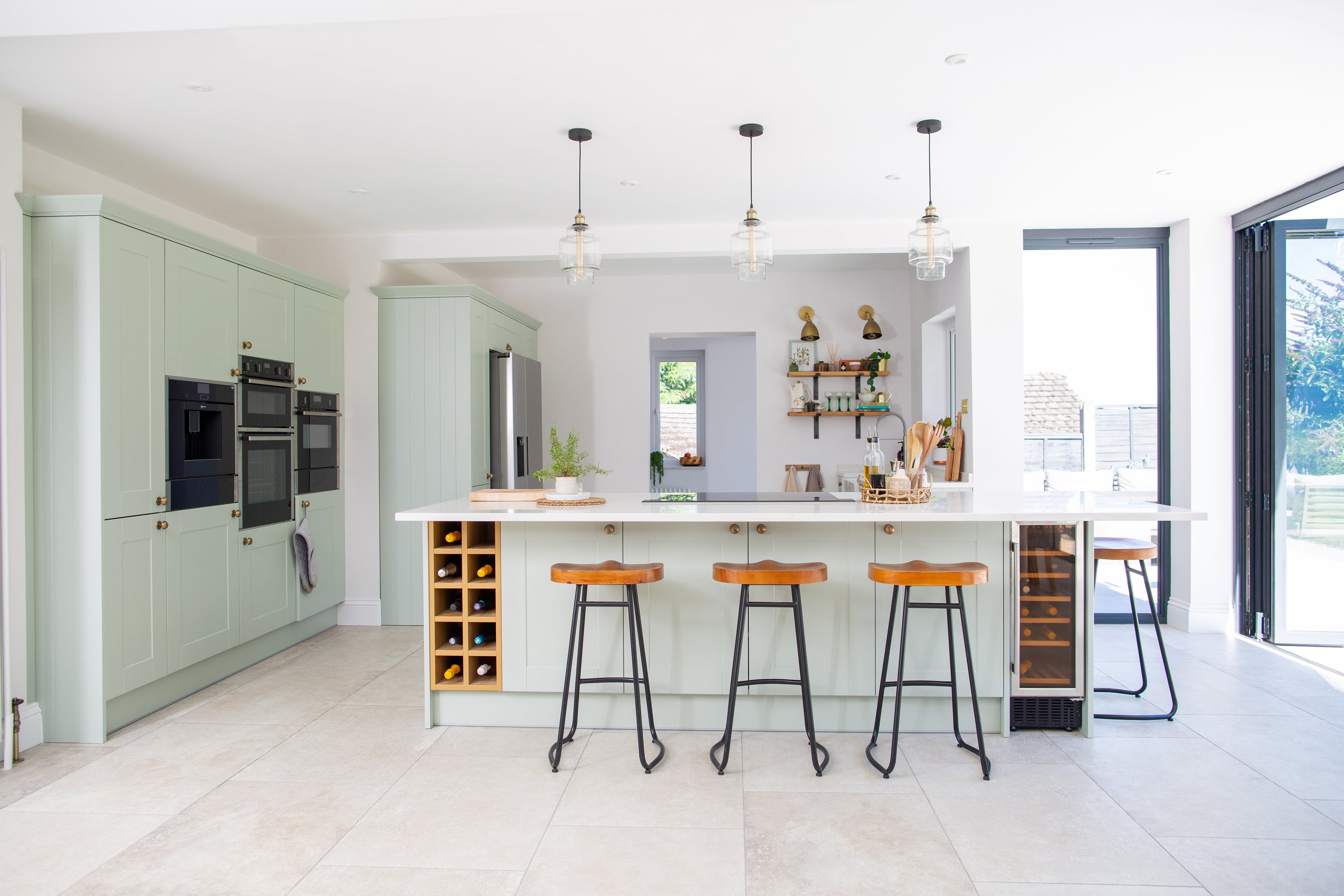
These days, multi-spot ceilings, downlights and LED panels are now the default, often installed with little thought beyond achieving maximum illumination. But lighting is so much more than that: many interior experts think it should be considered a decorating tool in its own right, alongside wallpaper and paint.
“Lighting is very often the last thing people think about,” says Luke Thomas, design director at John Cullen Lighting. “But a poor lighting scheme can make a £100,000 piece of artwork look like it came from Ikea. Conversely, good lighting can make an Ikea kitchen look truly premium.”
How to improve your lighting at home
To improve your existing lighting, it’s essential to go back to the basics. Lighting mostly falls into three categories: ambient (general, often overhead lighting), task (bright, for focused work) and accent lighting (for highlighting things in your room). Using a combination of all three, what designers call ‘layering your lighting’, creates a space that feels both functional, atmospheric and interesting.
“Ambient lighting provides overall illumination, task lighting focuses on specific activities like reading or cooking, and accent lighting highlights architectural features or artwork,” explains Chris Bawden, founder of Simple Lighting. “By layering light strategically, you avoid over-illumination, which unnecessarily drives up energy consumption.”
Aim for fewer lights, and use them better. Zoom in on what you do in that particular room and what you need for it – very often investing in strategic (and cheaper to run) task lighting, such as a single well-placed table light next to your armchair, a pendant lamp over a dining table or under-cabinet LEDs placed over a kitchen surface will give you all the light you need. Flexibility is also essential; many people have open-plan living spaces, so it’s important to consider how your space is used at different times.
Fewer lights will make your decor scheme look better, too. Texture, colour and materials appear richer in gentler light, while softer, lower light aids relaxation and better sleep, and is far more flattering on people, too. Lamp placement matters just as much: position lights near pale walls, mirrors or other reflective surfaces to help bounce light back into the room and maximise their effect.
Of course, good lighting isn’t about keeping things dim at all times; brighter light still has its place for cleaning or working. This is where dimmer switches can be your friend. “Dimmers are a simple yet powerful tool,” says Bawden. “They allow you to adjust light levels according to need, further reducing your energy use. Motion sensors can also be used in hallways, bathrooms or outdoor areas to ensure lights are only on when required.”
Is it better to turn off the lights for low electric consumption?
There’s a practical benefit to less lighting: fewer fittings mean lower energy bills. With many households looking for cost-effective ways to heat their homes in winter, there’s a lot of attention on which suppliers offer the best deals on energy. Octopus Energy is currently the only major supplier pricing its standard tariff below the Ofgem energy price cap.
Turning off when you leave the room is also important. While savings aren't huge (the Energy Saving Trust estimates up to £8 a year for UK households), it's a simple habit that adds up over time. And it’s a myth that turning a light back on uses more electricity than leaving it running. With all light bulbs, new and old, there’s no meaningful energy penalty or added wear from switching them on and off.

Advertisement
Advertisement
What is the most efficient form of lighting?
If you want to double down on reducing your energy bill, upgrade your old incandescent bulbs to LED (light-emitting diode) lighting. LEDs convert a far higher proportion of electricity into light rather than heat, making them significantly more efficient. A typical LED bulb uses around 75-90 per cent less energy than an old-fashioned (incandescent) bulb and lasts 15-25 times longer.
Low-wattage incandescent bulbs are still available to buy in the UK through specialist retailers but higher-wattage versions have been phased out.
One common mistake homeowners make is choosing the wrong strength of LED bulb for a room or fitting. When shopping for LEDs, remember that brightness is measured in lumens – the higher the number, the brighter the bulb and the more electricity it will use (although still far less than a high-wattage incandescent equivalent).
While many households have gradually switched to LEDs in recent years, it’s worth checking every light in your home for any you may have overlooked. The Energy Saving Trust estimates that replacing any remaining halogen spotlights with LED bulbs could save around £45 a year in the UK, while reducing CO₂ emissions by 35kg.
How to avoid poor lighting?
Poor lighting at home is rarely caused by a lack of light and more often by not planning it early enough or by choosing the wrong kind.
Thomas says a common mistake is leaving lighting decisions to the electrician, who will typically think only in functional terms. A lighting designer, by contrast, can “decorate” a space with light, enhancing its character and helping to avoid costly mistakes in the long run.
One of the most frequent errors, he adds, is relying on a single light source – usually an overhead ceiling fixture – which can create glare, flatten a room, and leave faces or work surfaces in shadow. “When there’s too much brightness and it’s too uniform, the effect becomes washed out,” he says. “You lose hierarchy, depth, and texture across the space, and it becomes difficult to accentuate certain finishes, particularly textured surfaces.”
Turn all lights off, then add them back one by one, and stop as soon as the room feels right. Line heavy, light-sucking lampshades with reflective lining and use diffuser discs to soften glare downwards from pendant lights (both are just a few pounds from Amazon). If you have a lamp not connected to a dimmer switch, invest in a smart bulb so you can adjust brightness.
Another common error is choosing the wrong colour temperature of the bulb. Colour temperature, measured on the Kelvin (K) scale, affects the mood of a space. The higher the Kelvin rating, the whiter and cooler the light appears, while lower Kelvin values produce a warmer, more atmospheric glow. LEDs with lower Kelvin ratings (around 2700K to 3000K) create a cosy, inviting atmosphere which is perfect for living rooms, bedrooms and dining areas, while high-colour-temperature bulbs (above 4000K) are perfect for task-focused areas such as kitchens or home offices.
Join our commenting forum
Join thought-provoking conversations, follow other Independent readers and see their replies
Comments
Bookmark popover
Removed from bookmarks