2021: The year of the vaccine and changing political fortunes
We thought we might put the pandemic – and Brexit – behind us. Unfortunately, John Rentoul doesn’t think we will be done with either of them by the end of next year

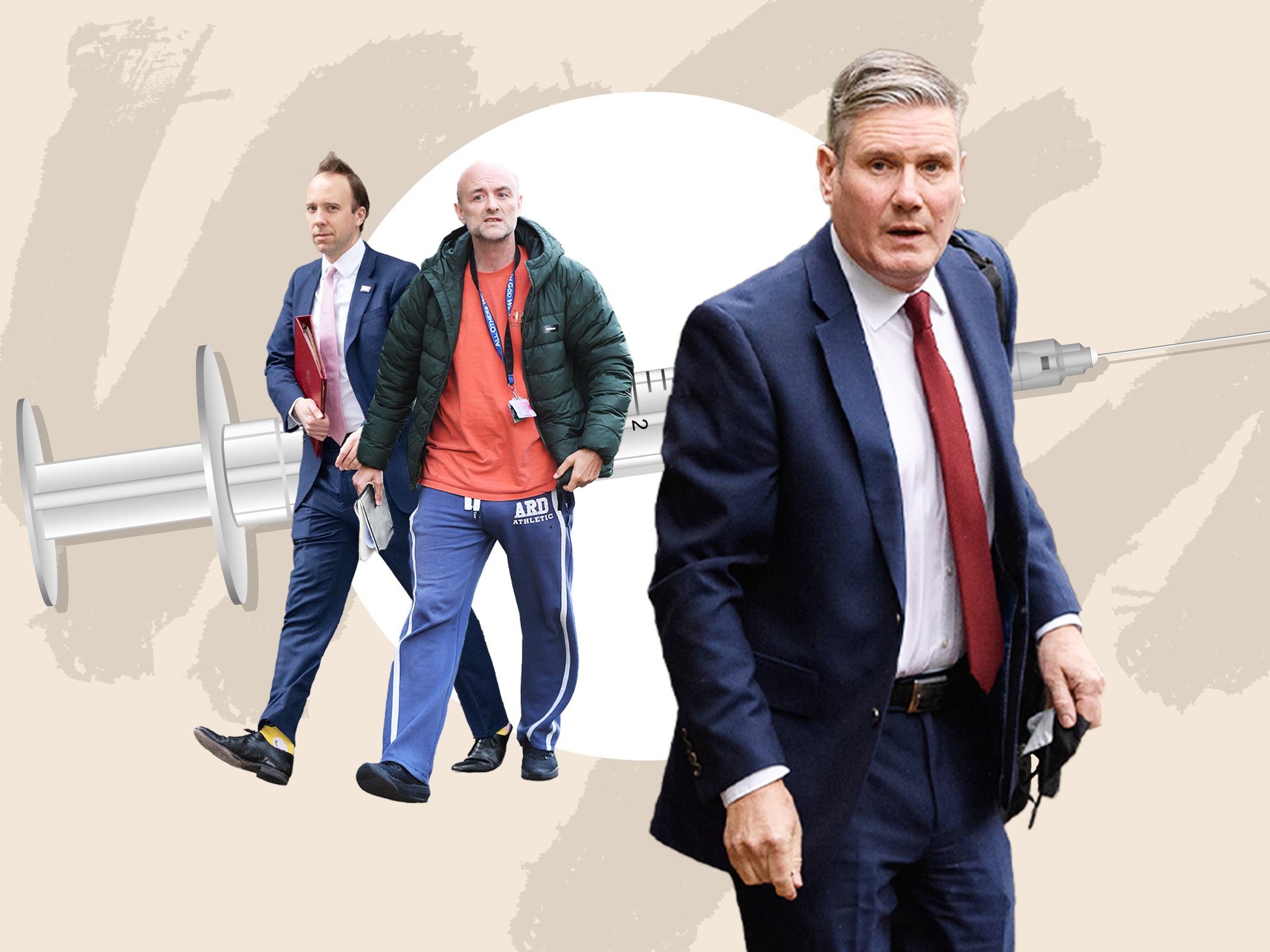
A year ago, some deluded optimists looked forward to 2021 as a year without coronavirus or Brexit. “Now that the vaccine is here, and more vaccines are on their way, we can imagine life after coronavirus again,” one of them wrote. Not only that: “Brexit really will be done, and Europe will go back to being a ‘normal’ story.”
That was me. How wrong I was. This Christmas is a lot like last Christmas: socialising is restricted, and the Conservative Party is divided over the infringement of liberties. This time last year there was some premature talk among Tory MPs about “letters going in” – letters to the chair of the 1922 Committee demanding a vote of no confidence in Boris Johnson as leader. This year, the talk is louder, although it is still premature.
And Brexit, although it is a lower-order story, is still with us. The talks are still going on, a year after our departure from the EU took effect. David Frost, the prime minister’s chief negotiator, has just resigned after his hardline bargaining tactics were contradicted by an order from No 10 to do a deal. There remains nothing “normal” about our relations with the EU.

Brexit is so far from being “done” that it was only this month that the government invited bids from companies wanting to run a pilot scheme to test computerised customs forms that haven’t been introduced yet, a year after the end of the transition period.
Looking back, 2021 was a year in which a lot happened, but in which things seemed to end up roughly where they started, although that apparent symmetry might obscure deeper changes. In American politics, the year started with the storming of the Capitol, an anti-democratic outrage incited by Donald Trump, and ended with Trump being booed by his own supporters for saying that he had had the coronavirus booster vaccination.
The vaccine effect was real, and it sustained Johnson, surrounding him with an artificial glow. It meant that Dominic Cummings’s vendetta seemed to leave its target untouched
In British politics, it started with a fuss about the prime minister going for a cycle ride in the Olympic park in east London – an innocent harbinger of darker furies to come at the end of the year over the apparent breaking of lockdown rules that had taken place even earlier.
Important things happened away from centre stage. Support for Scottish independence fell, while Nicola Sturgeon failed to gain a majority in the Scottish parliament elections. The Democratic Unionist Party ditched Arlene Foster, its modernising leader, responding to the loss of support to unionist rivals with the short-lived leadership of Edwin Poots and the inconclusive leadership of Jeffrey Donaldson. And the Liberal Democrats are still there, winning two spectacular by-elections this year precisely because they stand for nothing, meaning they can adopt whatever protest posture will maximise the local vote.
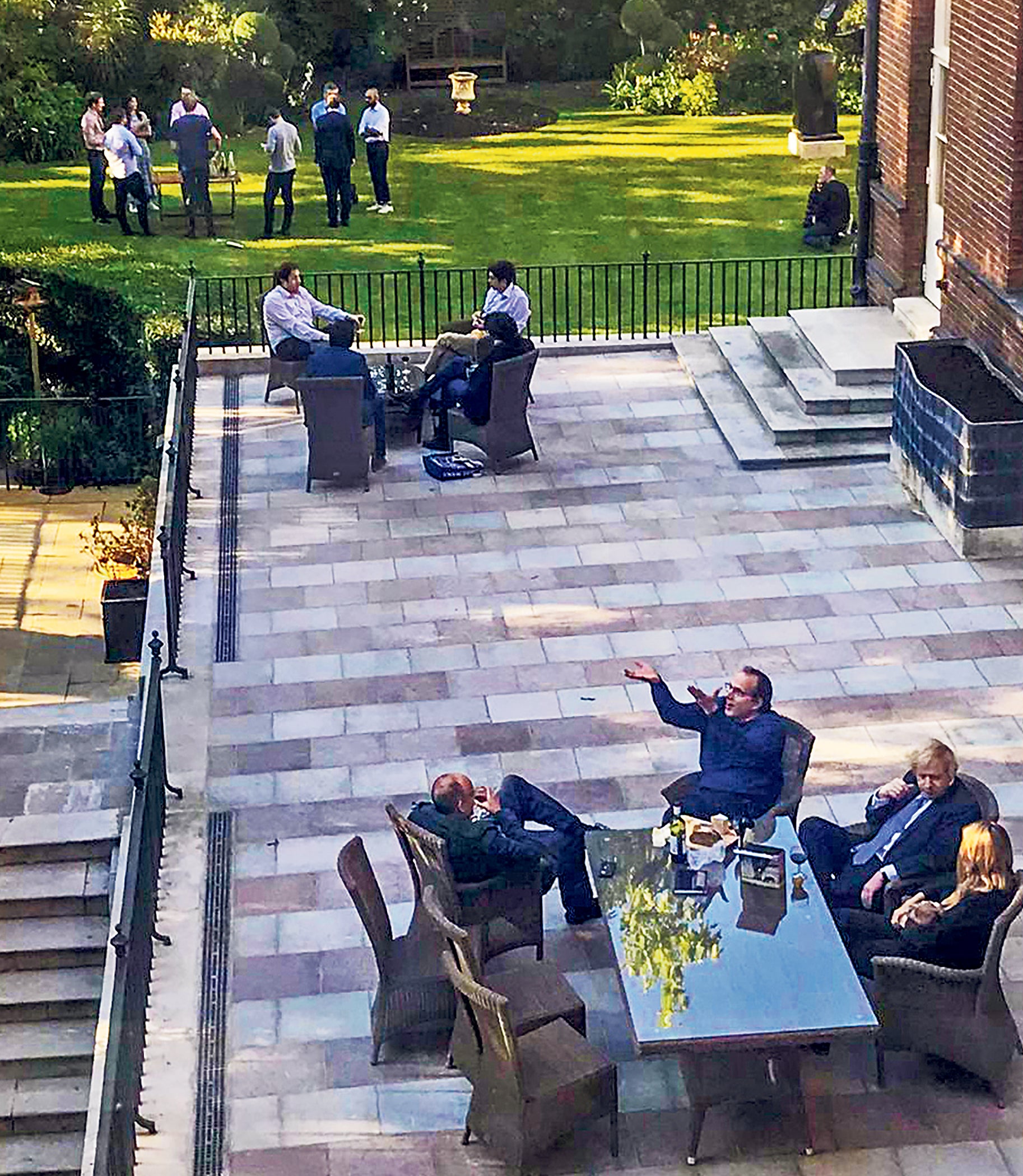
If there is a story arc over the year of British politics, though, it is the curve of Conservative opinion-poll ratings, rising gently like a souffle until the middle of the year before declining gently for the rest of the year – and then collapsing suddenly this month. The vaccine effect was real, and it sustained Johnson, surrounding him with an artificial glow. It meant that Dominic Cummings’s vendetta seemed to leave its target untouched, while the prime minister’s former chief adviser was left like a soot-covered cartoon character wondering why the blunderbuss had blown up in his face. I don’t know who leaked the story of Johnson’s attempt to get Conservative donors to pay to refurbish the Downing Street flat, but Cummings later revealed in a seven-hour select committee hearing that he had told the prime minister at the time that it was unethical and probably illegal, and that he, Cummings, would have nothing to do with it.
In American politics, the year started with the storming of the Capitol, an anti-democratic outrage incited by Donald Trump, and ended with Trump being booed by his own supporters
By the time of the select committee session in May, Johnson had tried to kill the story by settling the bill himself – a cool £112,000. This left all kinds of awkward questions unanswered about how the payments should have been declared before that point, but they were shuffled off to an Electoral Commission inquiry, which would come back to haunt the prime minister at the end of the year.
The central charge in Cummings’s indictment of his former boss, however, was that he had mishandled the pandemic, and thousands of people had died as a result. It was an unconvincing charge, because in the early stages, the government – with Cummings at the heart of it – closely followed the advice of the scientific advisers, whom Cummings respected, occasionally sitting in on their deliberations. His onslaught on Johnson, and even more so on Matt Hancock, the health secretary, seemed to be driven by personal dislike, and so was easily turned aside in the vaccine euphoria, as the country approached the lifting of the last set of restrictions on 19 July.

Before that, however, the story took another twist. Hancock, having survived the worst that Cummings could throw at him, destroyed his own career by breaking the lockdown rules that he himself had drawn up. He might have survived if he had noticed that there was a CCTV camera in his own office, but once the evidence was committed to video he was done for. Indeed, by then, all the evidence of alleged similar hypocrisies had been recorded, ready for publication at the end of the year, by which time the vaccine effect had faded and the people had withdrawn the benefit of the doubt from their prime minister. Someone had a photo on their phone of “people at work talking about work” (as Johnson put it) in the Downing Street garden, a photo taken from the chancellor’s suite of offices at the back of No 11. Someone else had a video of Allegra Stratton, the prime minister’s former spokesperson, rehearsing a news conference.
Almost as if in a bad novel, Johnson was oblivious to what lay ahead, and May and June were good times for him. Conversely, they were testing times for Keir Starmer, whose early success had been built on not being Jeremy Corbyn and on the prime minister’s uncertain handling of the virus before the vaccines. For most of this year, Starmer had to endure people shaking their heads and saying “He hasn’t got it”, just because a lighter-than-air Johnson was on the other end of the see-saw.

Thus Labour lost the Hartlepool by-election in May, when losing traditional Labour seats in the north to the government party was something abnormal that Corbyn did (Copeland, 2017) and that the new management was supposed to get away from. “Everyone hates us, everyone hates us, why do they hate us? Why won’t anyone tell me anything?” Starmer is alleged to have raged to his team during the by-election campaign, when opinion polling made it clear that Labour was heading for defeat.
My record of clairvoyance is patchy, but I did write that Starmer had made the first serious mistake of his leadership in choosing a defeated Remainer MP from a nearby seat as the candidate. I had also written in February about the jostling to take over from Anneliese Dodds as shadow chancellor, but when Starmer made the change, replacing her with the more combative Rachel Reeves, he made such a mess of the rest of the reshuffle that he had to have another go in November.
It wasn’t obvious at the time, but Starmer passed the test in the summer. He didn’t lose his nerve. Two months after Hartlepool, Labour held Batley and Spen in another by-election. I described it as one of the greatest by-election upsets in history, because it should have been even harder to hold than Hartlepool thanks to the intervention of George Galloway, an enemy of the Labour Party posing as the embodiment of its founding virtues. But Kim Leadbeater, sister of Jo Cox, showed how important a strong candidate can be, and Starmer’s fortunes started to turn.
Meanwhile, the effect of the vaccines on the prime minister’s popularity was waning, just as the protection from the first and second doses was beginning to fade. The withdrawal from Afghanistan in August was embarrassing, but as those most opposed to Johnson didn’t think British troops should have been there in the first place, the effect of the humiliation – mainly at the hands of the new Biden administration – was muffled.

Perhaps the most important political decision of the year was taken in September, when an impromptu Budget bounced through cabinet and parliament, raising national insurance contributions from next year to cover the cost of clearing the NHS coronavirus backlog. That transformed perceptions of the two main parties on taxation, not just preparing the ground for Reeves as the advocate of fiscal responsibility, but opening up a sudden ideological divide in a Tory party that had been united by Brexit.
At this point, Starmer, having held his nerve, started to capitalise on the prime minister losing his. On 3 November, Johnson made a huge mistake in trying to save Owen Paterson, Brexiteer and former cabinet minister, from being punished for breaking the rules on paid lobbying. Once things started to go wrong, they didn’t stop. A new variant of coronavirus, B.1.1.529, was identified in South Africa on 24 November. On 1 December, reports emerged of a Christmas party in Downing Street last year.


By the week before Christmas, the bad news for Johnson, much of it self-inflicted, had sped up so much that he simply abdicated, allowing a three-hour cabinet meeting (by Zoom) to decide – by not deciding anything – what the coronavirus policy should be.
I assume he will resume being prime minister again in the new year – when, incidentally, some new Brexit customs checks are supposed to begin at our ports – so I won’t predict getting Brexit finally done, or the end of coronavirus, by the end of 2022.
Join our commenting forum
Join thought-provoking conversations, follow other Independent readers and see their replies
Comments
Bookmark popover
Removed from bookmarks